
Who should pay for environmental damage?
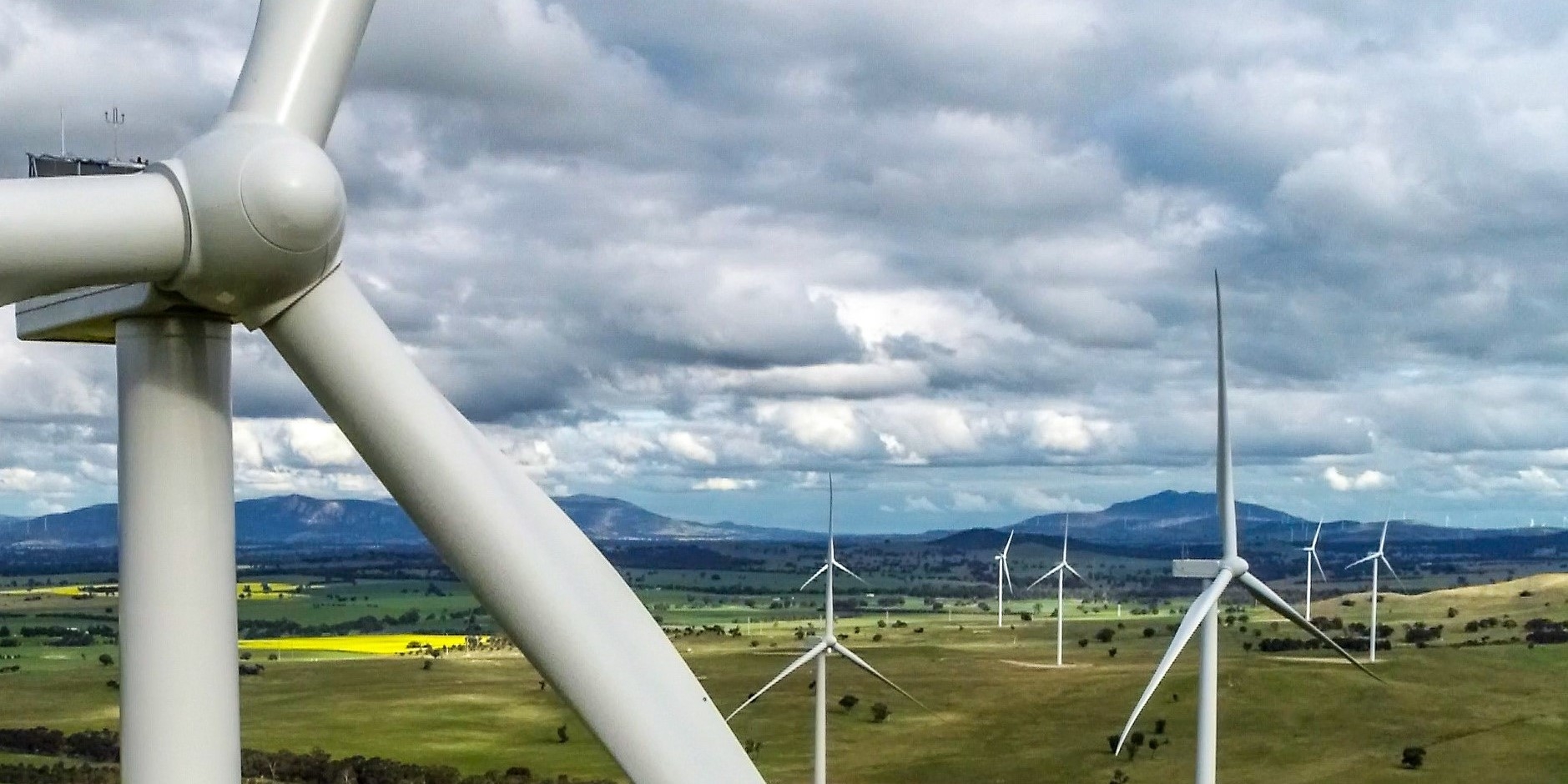
Who Should Pay for Environmental Damage?
The Bill Is Coming Due
A few years ago, I sat in a boardroom listening to a heated discussion about a manufacturing expansion. The numbers were attractive. Revenue projections looked strong. Jobs would be created. Investors would be happy.
Then someone raised a question that changed the tone of the room.
What would happen if the project contaminated nearby groundwater twenty years from now?
Silence.
Not because nobody cared. Quite the opposite. Everyone suddenly realized something uncomfortable: profits appear on quarterly reports, but environmental costs often arrive decades later. By then, the executives are gone, the shareholders have moved on, and the community is left staring at a cleanup bill that nobody wants to claim.
That conversation taught me a lesson I have never forgotten. Environmental damage is unique because it creates a gap between who benefits today and who pays tomorrow.
And that leads to one of the most important economic questions of our time:
Who should pay for environmental damage?
Governments? Corporations? Consumers? Taxpayers? Everyone?
The answer is neither simple nor ideological. It requires honesty about incentives, responsibility, and human behavior.
Because eventually, every environmental bill gets paid.
The only question is by whom.
The Core Principle: The Polluter Pays
If I spill oil on your property, nobody argues about responsibility.
I caused the damage.
I pay.
Simple.
Economists have spent decades applying this same logic to environmental issues. The principle is known as the "polluter pays" approach. It sounds obvious because it is obvious.
When a factory releases pollution into a river, the factory should bear the cost. When a mining operation destroys a landscape, the mining company should fund restoration. When a corporation profits from activities that create environmental harm, those costs should not magically disappear.
For a functioning market economy to work properly, prices must reflect reality.
If environmental damage is free, markets become distorted.
A company appears efficient not because it actually is efficient, but because part of its costs have been transferred onto society.
That isn't capitalism.
That's accounting fiction.
The Problem With Hidden Costs
Environmental damage creates what economists call an externality.
The terminology sounds academic, but the concept is straightforward.
Imagine a power plant produces electricity cheaply because it emits pollution into the atmosphere without paying for the consequences.
The company earns revenue.
Customers enjoy lower prices.
But nearby communities experience health problems.
Future generations face climate risks.
Governments spend money on mitigation.
The company receives the benefits while others absorb part of the costs.
That imbalance creates a dangerous illusion.
Something appears inexpensive when it is merely underpriced.
Who Actually Pays Today?
The surprising reality is that environmental damage already gets paid for.
Just not always by those who caused it.
A Comparison of Environmental Cost Bearers
| Stakeholder | How They Pay | Advantages | Drawbacks |
|---|---|---|---|
| Corporations | Cleanup costs, fines, remediation programs | Aligns responsibility with actions | Can increase business costs |
| Consumers | Higher prices for goods and services | Reflects true production costs | May disproportionately affect lower-income households |
| Taxpayers | Government-funded cleanup efforts | Allows rapid response to disasters | Often shifts responsibility away from polluters |
| Future Generations | Reduced resources and environmental quality | No immediate economic disruption | Ethically questionable |
| Local Communities | Health impacts, property loss, ecosystem damage | Rarely any advantage | Often bear costs without consent |
This table reveals something uncomfortable.
Environmental damage is rarely unpaid.
Instead, costs are redistributed.
Sometimes quietly.
Sometimes unfairly.
Why Corporations Cannot Escape Responsibility
There is a tendency in modern debate to frame corporations as villains.
I think that's too simplistic.
Businesses create jobs.
They drive innovation.
They build prosperity.
The overwhelming majority of business leaders are not waking up every morning trying to damage the environment.
But good intentions do not eliminate consequences.
Responsibility follows impact.
If a company profits from activities that create measurable environmental harm, it must be part of the solution.
Not because punishment is the goal.
Because accountability is.
A market economy depends on accountability.
Without it, profits become disconnected from responsibility.
That is not sustainable economically or morally.
The strongest companies understand this.
They recognize that environmental stewardship is not merely a public-relations exercise. It is risk management.
It protects shareholders.
It protects communities.
It protects long-term value.
The Consumer's Role Nobody Likes to Discuss
Now let's address an uncomfortable truth.
Corporations do not operate in isolation.
They produce what consumers demand.
Every purchase sends a signal.
Every dollar acts like a vote.
People often criticize industries for environmental harm while simultaneously demanding cheaper products, faster shipping, larger homes, and greater consumption.
Those preferences matter.
A retailer can promise sustainability.
But if consumers consistently choose lower-cost alternatives produced under weaker environmental standards, market pressures become difficult to ignore.
This doesn't absolve corporations.
Far from it.
But it does remind us that environmental responsibility is not exclusively a boardroom issue.
It is also a kitchen-table issue.
Consumers influence environmental outcomes every single day.
Whether they acknowledge it or not.
When Taxpayers End Up Holding the Bag
One of the most frustrating patterns in environmental policy occurs when taxpayers become the default insurer of environmental mistakes.
A company operates for years.
Profits are distributed.
Executives receive compensation.
Investors earn returns.
Then environmental damage emerges.
Cleanup costs exceed expectations.
The company declares bankruptcy.
The public inherits the liability.
This arrangement creates what economists call moral hazard.
If decision-makers believe someone else will absorb the consequences, incentives become distorted.
The lesson is straightforward.
Environmental liabilities should be anticipated before disasters occur.
Not after.
That means stronger bonding requirements, better insurance mechanisms, and more rigorous environmental accounting.
The objective is not to discourage business.
The objective is to prevent privatized gains and socialized losses.
Those are two very different things.
Climate Change Complicates Everything
Local pollution cases are relatively easy to understand.
Climate change is different.
The scale is enormous.
The responsibility is distributed.
The timeline stretches across generations.
Every major economy has contributed.
Every modern society benefits from fossil-fuel-driven development.
That reality complicates the question of who should pay.
Should today's companies bear responsibility for emissions generated decades ago?
Should developing nations face the same obligations as wealthy countries that industrialized first?
Should consumers pay carbon taxes?
Should governments subsidize the transition?
Reasonable people disagree.
But one principle remains useful.
Responsibility should generally correspond to contribution and capability.
Those who contributed more to environmental harm and possess greater financial resources should shoulder a larger share of the burden.
Not all of it.
But more of it.
That strikes me as both economically practical and ethically defensible.
The Innovation Argument
Some people assume environmental accountability automatically means economic sacrifice.
History suggests otherwise.
In many cases, environmental standards have sparked innovation.
Companies develop cleaner technologies.
Engineers create more efficient systems.
Entrepreneurs discover entirely new industries.
Consider what happened with energy efficiency.
What initially looked like an additional cost often became a competitive advantage.
Less waste meant lower operating expenses.
Lower operating expenses improved profitability.
Profitability attracted investment.
Innovation accelerated.
The relationship between economic growth and environmental protection is not always adversarial.
Often, they reinforce each other.
The challenge lies in designing incentives that encourage creativity rather than bureaucracy.
The Danger of Extreme Positions
The debate frequently gets trapped between two extremes.
One side argues that businesses should bear virtually all environmental costs regardless of complexity.
The other argues that environmental regulation inevitably harms economic growth.
Both positions miss reality.
The economy and the environment are not opposing teams.
They are interconnected systems.
A thriving economy depends on natural resources, stable ecosystems, reliable infrastructure, and public health.
Likewise, environmental progress requires economic resources, technological development, and investment capital.
When either side pretends one can succeed without the other, bad policy usually follows.
The best solutions emerge from balancing incentives, accountability, and practicality.
Not slogans.
Not outrage.
Not wishful thinking.
A Better Framework for Responsibility
If we are serious about assigning environmental costs fairly, several principles should guide decision-making.
First: Polluters Should Pay
Organizations that directly cause measurable environmental damage should bear primary responsibility.
This remains the strongest foundation for accountability.
Second: Consumers Should See Real Costs
Prices should reflect environmental realities whenever possible.
Artificially cheap products often create hidden expenses elsewhere.
Third: Governments Should Set Clear Rules
Markets function best when expectations are predictable.
Clear standards reduce uncertainty and encourage long-term investment.
Fourth: Future Generations Deserve Representation
People who cannot vote today will still live with tomorrow's consequences.
Policy should account for their interests.
Fifth: Innovation Must Be Rewarded
Companies that reduce environmental harm through technology and efficiency should benefit from doing so.
Progress depends on incentives.
The Real Question Isn't Who Pays
The deeper issue is who pays when.
For decades, many environmental costs have been deferred.
Pushed into the future.
Transferred to communities.
Shifted onto taxpayers.
Ignored in financial statements.
That strategy can work for a while.
Eventually, though, reality arrives.
Contaminated land requires cleanup.
Infrastructure must be adapted.
Ecosystems need restoration.
Health consequences emerge.
The bill appears.
And someone writes the check.
Conclusion: Responsibility Cannot Be Outsourced Forever
Whenever I hear someone ask who should pay for environmental damage, I think back to that boardroom conversation years ago.
Everyone wanted the project.
Everyone liked the projected returns.
Nobody wanted the future liability.
That's human nature.
We love benefits.
We dislike costs.
Yet sustainable prosperity requires connecting the two.
The party that receives the reward should also bear an appropriate share of the risk.
That principle applies in investing.
It applies in business.
And it applies to environmental stewardship.
The environmental debate often becomes emotional, ideological, and tribal. Strip all that away, and the issue becomes remarkably straightforward.
Environmental damage is not free.
It never has been.
It never will be.
The only real choice society faces is whether the costs are paid by those who create them, those who benefit from them, or those unfortunate enough to inherit them.
A responsible society aims for the first option.
An irresponsible one drifts toward the third.
And history suggests that the longer we postpone accountability, the more expensive the final invoice becomes.
- Arts
- Business
- Computers
- Spellen
- Health
- Home
- Kids and Teens
- Money
- News
- Personal Development
- Recreation
- Regional
- Reference
- Science
- Shopping
- Society
- Sports
- Бизнес
- Деньги
- Дом
- Досуг
- Здоровье
- Игры
- Искусство
- Источники информации
- Компьютеры
- Личное развитие
- Наука
- Новости и СМИ
- Общество
- Покупки
- Спорт
- Страны и регионы
- World

 English
 Russian
 French
 Spanish
 Portuguese
 Deutsch
 Turkish
 Italiano
 Arabic
 Romaian
 Portuguese (Brazil)
 Greek
Greek
