
What is free enterprise?
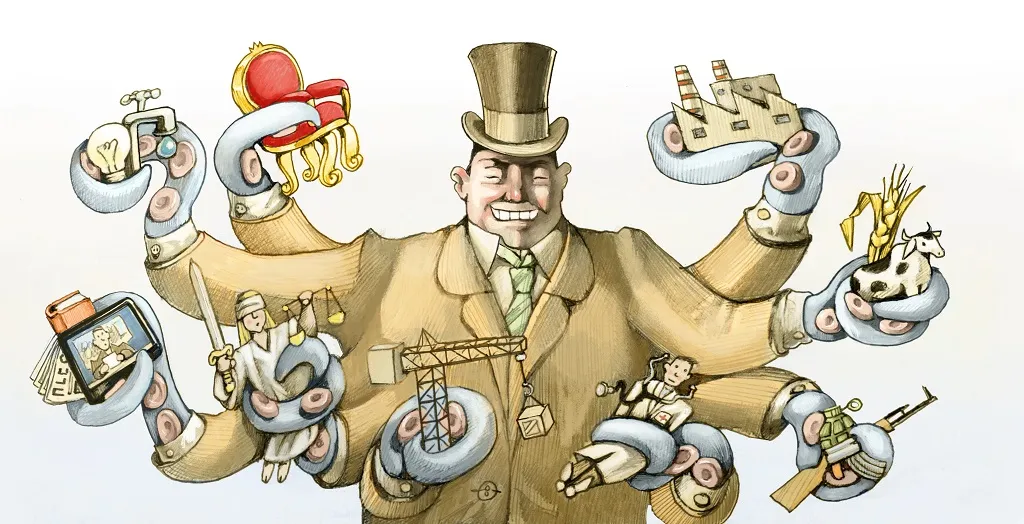
What Is Free Enterprise?
The Most Misunderstood Engine in the World
Mention the phrase “free enterprise” at a dinner party and watch what happens.
Someone will call it capitalism. Someone else will call it greed. A third person will say it’s the reason innovation exists. Before long, the conversation drifts into politics, personalities, and ideology.
That’s unfortunate because free enterprise is neither a slogan nor a political campaign. It is an economic mechanism. And when people misunderstand mechanisms, they make poor decisions about how to use them.
I’ve spent enough time around entrepreneurs, executives, investors, and workers to know one thing: free enterprise is not perfect. No system created by human beings ever is. But I’ve also learned that many of its critics attack a caricature rather than the real thing.
The real thing is far more interesting.
At its core, free enterprise is a system in which individuals and businesses are largely free to create, compete, invest, produce, and exchange goods or services with limited government interference. Success is determined not by political favor but by the willingness of customers to voluntarily spend their money.
That sounds straightforward.
Yet inside that simple definition sits one of the most powerful wealth-creation systems ever developed.
Not because it guarantees success.
Because it guarantees opportunity.
And there’s a difference.
The Basic Idea Behind Free Enterprise
Free enterprise rests on a remarkably simple premise: people should be allowed to pursue economic opportunities and bear the consequences of their decisions.
If you open a restaurant and customers love your food, you grow.
If nobody shows up, you close.
No committee votes on your future.
No central authority assigns your market share.
The public decides.
Every purchase becomes a tiny referendum.
Every customer becomes a voter.
Every day.
That dynamic creates something extraordinary. Millions of independent decisions generate signals about what people value, what they need, and what they are willing to pay for.
Those signals drive production, investment, hiring, and innovation.
The process is messy.
It is also remarkably effective.
Why Competition Matters More Than Most People Realize
Many people assume profits are the defining feature of free enterprise.
They’re wrong.
Competition is.
Profit without competition becomes privilege.
Profit with competition becomes accountability.
That distinction matters.
A business owner may dream of raising prices indefinitely, but competitors stand in the way. A company may become complacent, but new entrants threaten its position. An executive may make poor decisions, but shareholders eventually notice.
Competition acts as a relentless pressure system.
It rewards efficiency.
It punishes waste.
It exposes arrogance.
Most importantly, it forces organizations to keep earning their place in the marketplace.
No matter how large they become.
History is filled with companies that once appeared invincible and later disappeared because they stopped listening to customers while competitors kept innovating.
The market can be brutally unforgiving.
That is precisely why it works.
The Four Pillars of Free Enterprise
Free enterprise is not one idea.
It is a collection of principles working together.
1. Private Property
People and businesses can own assets.
Property rights encourage investment because individuals are more willing to build, improve, and innovate when they know they can benefit from the results.
Without ownership, incentives weaken.
With ownership, ambition has a place to land.
2. Voluntary Exchange
Transactions occur because both parties believe they will benefit.
A customer buys a product because it solves a problem.
A business accepts payment because it earns revenue.
Neither side is forced.
That voluntary nature sits at the heart of market economies.
3. Competition
Multiple participants compete for customers, employees, capital, and resources.
Competition prevents stagnation and encourages continuous improvement.
It is often uncomfortable.
It is almost always necessary.
4. Profit and Loss
Profit signals value creation.
Loss signals resources are being used inefficiently.
These signals help direct capital toward productive activities and away from unsuccessful ones.
Think of profit and loss as economic feedback.
Without feedback, improvement becomes difficult.
Free Enterprise Versus Other Economic Models
The debate surrounding free enterprise often becomes emotional because people compare systems without defining them clearly.
The differences become easier to understand when viewed side by side.
| Feature | Free Enterprise | State-Controlled Economy | Mixed Economy |
|---|---|---|---|
| Ownership of Businesses | Primarily private | Primarily government | Combination |
| Pricing | Market-driven | Government-directed | Mostly market-driven |
| Competition | High | Limited | Moderate to high |
| Consumer Choice | Extensive | Restricted | Generally broad |
| Innovation Incentives | Strong | Often weaker | Moderate to strong |
| Resource Allocation | Market signals | Central planning | Combination |
| Risk Bearing | Individuals and firms | Government | Shared |
The reality is that no modern economy operates at either extreme.
Even countries known for market-oriented policies maintain regulations, public services, and government oversight.
Likewise, heavily planned economies often incorporate market mechanisms.
The real-world conversation is rarely about choosing one extreme.
It is usually about determining the appropriate balance.
The Human Side of Enterprise
Economic discussions often become sterile.
Charts.
Graphs.
Statistics.
They matter, but they miss something essential.
Business is fundamentally human.
Years ago, I watched a small business owner risk nearly everything to expand a company that employed fewer than twenty people. He refinanced assets, delayed personal purchases, and worked weekends for years.
There were no guarantees.
No safety net waiting to catch him.
What struck me wasn’t the financial risk.
It was the responsibility.
Every decision affected employees, families, suppliers, and customers.
The business eventually succeeded.
Not because success was inevitable.
Because someone accepted uncertainty and worked through it.
That experience reinforced a lesson I’ve never forgotten: free enterprise is not merely about making money. It is about creating value under conditions of risk.
People often celebrate the outcome.
They rarely appreciate the sacrifice required to reach it.
Why Innovation Flourishes in Free Enterprise
Innovation rarely emerges from comfort.
It emerges from necessity.
A company wants to outperform competitors.
An entrepreneur spots an unmet need.
An inventor sees a problem worth solving.
The pursuit of opportunity fuels experimentation.
Most experiments fail.
That fact is frequently overlooked.
For every breakthrough product, there are countless unsuccessful attempts that disappeared quietly.
Free enterprise allows that trial-and-error process to occur continuously.
Failure becomes information.
Success becomes scale.
The result is an environment where progress can happen unexpectedly.
Many of the technologies, services, and conveniences people use daily originated from individuals or organizations pursuing opportunities that initially appeared uncertain.
Innovation is not a side effect of free enterprise.
It is one of its defining characteristics.
Common Criticisms—and Why They Deserve Attention
Supporting free enterprise does not require pretending its weaknesses do not exist.
They do.
Economic inequality can widen.
Market power can become concentrated.
Short-term thinking can undermine long-term stability.
Certain industries can impose costs on society that are not reflected in prices.
These concerns are legitimate.
Dismissing them weakens the case for free enterprise rather than strengthening it.
The more productive question is not whether problems exist.
The question is how to address them without undermining the system's ability to create growth, innovation, and opportunity.
Effective regulation has a role.
Transparent rules matter.
Competitive markets matter.
Ethical leadership matters.
A healthy free-enterprise system requires all three.
The Difference Between Enterprise and Cronyism
One of the biggest mistakes people make is confusing free enterprise with cronyism.
They are not the same thing.
Not remotely.
Free enterprise rewards value creation.
Cronyism rewards connections.
Free enterprise relies on competition.
Cronyism seeks protection from competition.
Free enterprise encourages merit.
Cronyism encourages favoritism.
When businesses receive special treatment unavailable to competitors, market discipline weakens.
Consumers lose.
Innovation slows.
Trust erodes.
The strongest advocates of free enterprise should be among the strongest opponents of cronyism because favoritism undermines the very principles markets depend upon.
Why Opportunity Matters More Than Equality of Outcomes
This may be the most controversial aspect of the discussion.
Free enterprise does not promise equal outcomes.
It never has.
Different people possess different talents, ambitions, interests, resources, and risk tolerances.
Outcomes naturally vary.
What free enterprise seeks to provide is something different: the opportunity to compete, create, improve, and advance.
That ideal is not always perfectly achieved.
No society has ever achieved perfection.
But the aspiration remains important.
A system that allows people to transform effort, creativity, and initiative into economic progress creates possibilities that rigid structures often suppress.
The objective is not guaranteeing identical results.
The objective is expanding access to opportunity.
The Question We Should Really Be Asking
When people ask whether free enterprise is good or bad, they are asking the wrong question.
The real question is this:
Compared with what?
Compared with systems that concentrate economic decision-making in the hands of a few officials?
Compared with structures that reduce competition and limit choice?
Compared with environments where innovation depends more on permission than initiative?
Those comparisons matter.
Because every economic system involves trade-offs.
There are no perfect arrangements.
Only better and worse ones.
The historical record suggests that societies embracing entrepreneurship, competition, property rights, and market exchange have generally generated greater prosperity than societies that suppress those forces.
That does not mean every problem disappears.
It means more resources become available to solve them.
Conclusion: Freedom Comes With Responsibility
Free enterprise is often described as an economic system.
That definition is accurate.
It is also incomplete.
At its best, free enterprise is an expression of confidence in human potential.
It assumes that millions of people making independent decisions can create more value than a small group directing everything from above.
Sometimes that confidence is rewarded spectacularly.
Sometimes mistakes occur.
Sometimes markets fail.
Sometimes leaders fail.
But here is the provocative truth that critics and supporters alike should confront:
The greatest threat to free enterprise is not competition, regulation, or economic downturns.
It is success without responsibility.
When businesses forget customers, when executives prioritize privilege over performance, when profits become disconnected from value creation, public trust begins to erode.
And once trust disappears, the foundation weakens.
Free enterprise survives not because it produces billionaires.
It survives because, generation after generation, ordinary people believe they can build something better tomorrow than they have today.
That belief—fragile, ambitious, and profoundly American—is the real engine behind free enterprise.
Everything else is just machinery.
- Arts
- Business
- Computers
- Jocuri
- Health
- Home
- Kids and Teens
- Money
- News
- Personal Development
- Recreation
- Regional
- Reference
- Science
- Shopping
- Society
- Sports
- Бизнес
- Деньги
- Дом
- Досуг
- Здоровье
- Игры
- Искусство
- Источники информации
- Компьютеры
- Личное развитие
- Наука
- Новости и СМИ
- Общество
- Покупки
- Спорт
- Страны и регионы
- World

 English
 Russian
 French
 Spanish
 Portuguese
 Deutsch
 Turkish
 Dutch
Dutch
 Italiano
 Arabic
 Portuguese (Brazil)
 Greek
Greek
