
How to Build Brand Loyalty?
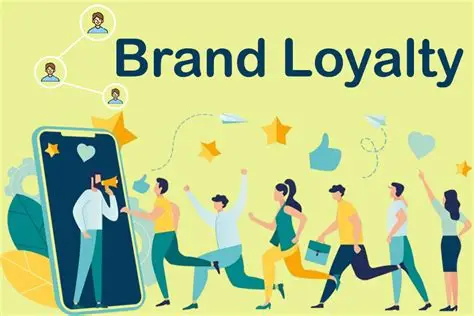
The most revealing moment in business often arrives when a customer has every reason to leave—and doesn't.
A competitor offers a lower price.
Another promises faster delivery.
A new entrant floods social media with attention-grabbing promotions.
Yet some customers stay.
Not because they're trapped. Not because alternatives don't exist. Quite the opposite.
They stay because loyalty, when genuinely earned, becomes something far more durable than a transaction.
Businesses frequently talk about customer acquisition. Marketing conferences celebrate growth. Dashboards glow with traffic metrics and conversion rates. Meanwhile, loyalty—the factor that often determines long-term profitability—receives far less attention than it deserves.
That's a costly oversight.
Because attracting a customer is difficult.
Keeping one is where the real challenge begins.
The question isn't whether loyalty matters. The numbers settled that debate years ago.
The more interesting question is why some brands inspire repeat purchases, recommendations, forgiveness after mistakes, and even emotional attachment while others remain permanently interchangeable.
The answer has less to do with points programs and promotional emails than many organizations would like to believe.
Loyalty Is Not the Same as Repeat Purchasing
The distinction matters.
A customer may buy repeatedly without feeling any genuine attachment to a brand.
Perhaps the store is convenient.
Perhaps switching feels inconvenient.
Perhaps alternatives aren't readily available.
That's not loyalty.
That's inertia.
True brand loyalty exists when customers actively choose a brand despite having other viable options.
The difference may seem subtle.
It isn't.
One survives competition.
The other disappears the moment a better offer appears.
Understanding this distinction changes how businesses approach retention.
The goal isn't merely encouraging another purchase.
The goal is becoming the preferred choice.
Why Customers Become Loyal
Consumers rarely wake up and decide to become loyal.
Loyalty develops gradually.
One positive experience leads to another. Expectations are met consistently. Trust accumulates.
Over time, confidence replaces uncertainty.
At its core, loyalty is a trust mechanism.
Customers remain loyal because they believe a future interaction will be as satisfying as previous ones.
That belief becomes valuable.
Especially in markets crowded with endless alternatives.
The Four Psychological Drivers of Loyalty
Most enduring customer relationships are built on four foundational elements:
- Trust
- Consistency
- Emotional connection
- Shared values
Remove any one of them and loyalty becomes more fragile.
Strengthen all four and customer retention often improves dramatically.
The Loyalty Equation: What Matters Most?
| Loyalty Driver | Customer Impact | Business Impact | Long-Term Value |
|---|---|---|---|
| Product Quality | Builds confidence | Reduces churn | Very High |
| Customer Service | Creates trust | Increases retention | Very High |
| Brand Values | Strengthens alignment | Encourages advocacy | High |
| Personalization | Enhances relevance | Improves engagement | High |
| Rewards Programs | Encourages repeat purchases | Supports retention | Medium |
| Community Building | Creates belonging | Generates referrals | High |
| Consistency | Reinforces reliability | Builds reputation | Very High |
| Transparency | Increases credibility | Strengthens trust | Very High |
An interesting pattern emerges.
The highest-performing loyalty drivers are rarely the most glamorous.
Reliability consistently outperforms novelty.
Start With a Product Worth Returning For
Some businesses attempt to solve loyalty challenges with marketing.
That's backward.
No retention strategy can consistently compensate for a disappointing product.
Customers may forgive occasional mistakes.
They rarely forgive repeated disappointment.
Before launching sophisticated loyalty initiatives, companies should ask a simpler question:
Would customers genuinely miss us if we disappeared tomorrow?
The answer reveals more than any survey.
Products create first impressions.
Consistent quality creates repeat behavior.
Consistency Is More Powerful Than Excellence
This sounds counterintuitive.
Many organizations chase exceptional moments.
Customers often value predictable ones.
A flawless experience followed by an inconsistent one creates uncertainty.
A reliably positive experience creates trust.
Consumers don't evaluate brands in isolated moments. They evaluate patterns.
That pattern influences future expectations.
The restaurant that delivers a great meal every visit often earns stronger loyalty than the restaurant that alternates between extraordinary and disappointing experiences.
The same principle applies across industries.
Consistency creates confidence.
Confidence creates loyalty.
The Most Important Loyalty Lesson I Learned
Several years ago, I worked with a company that invested heavily in customer acquisition.
Advertising budgets increased.
Traffic surged.
Lead generation exceeded expectations.
Yet retention remained stubbornly flat.
At first, leadership focused on pricing.
Then promotions.
Then rewards programs.
None produced meaningful improvement.
The breakthrough came from a much less dramatic discovery.
Customers felt ignored after the initial purchase.
The onboarding process was confusing. Follow-up communication lacked clarity. Small frustrations accumulated.
Nothing catastrophic.
Just enough friction to weaken trust.
Once those issues were addressed, retention improved without major changes to pricing or advertising.
The lesson was surprisingly simple.
Loyalty is often lost through neglect rather than competition.
Businesses frequently look outward for explanations when the real issue sits inside the customer experience.
Customer Service Is a Loyalty Engine
Many organizations view customer service as a cost center.
The strongest brands treat it as a strategic asset.
Customers remember how businesses respond when things go wrong.
In fact, service recovery can sometimes strengthen relationships.
A problem handled quickly, fairly, and transparently can increase trust rather than diminish it.
That outcome isn't automatic.
It requires empathy.
Speed.
Accountability.
Most importantly, it requires acknowledging that customers evaluate brands during moments of inconvenience, not just moments of satisfaction.
What Great Service Communicates
Effective customer service sends powerful signals:
- We value your time.
- We take responsibility.
- We respect your concerns.
- We are committed to fixing problems.
Those messages often matter more than the issue itself.
Emotional Connection Changes Everything
Not all loyal customers are emotionally connected.
The strongest ones usually are.
Emotional loyalty operates differently from transactional loyalty.
A customer driven solely by discounts becomes vulnerable to better discounts.
A customer who feels aligned with a brand becomes significantly harder to attract away.
This explains why some companies maintain strong customer bases despite charging premium prices.
Their value extends beyond product functionality.
Customers feel understood.
Represented.
Connected.
That connection creates resilience.
Build a Community, Not Just a Customer Base
A customer buys.
A community participates.
The distinction is important.
Communities create interactions that extend beyond individual transactions.
Members share experiences.
Recommend products.
Offer feedback.
Generate content.
Support one another.
Brands often benefit from these interactions without directly controlling them.
That's part of their power.
People trust people.
When customers begin advocating voluntarily, loyalty moves to a different level.
The relationship becomes self-reinforcing.
Transparency Builds Long-Term Trust
Consumers have become increasingly skilled at identifying inconsistencies.
Corporate messaging receives scrutiny.
Promises receive verification.
Claims receive investigation.
Brands that communicate openly tend to perform better over time than those relying on carefully managed appearances.
Transparency doesn't require perfection.
It requires honesty.
Customers understand mistakes happen.
What they evaluate is how organizations respond.
Trust grows when businesses tell the truth before they have to.
Personalization Without Intrusion
Personalization remains one of the most misunderstood loyalty strategies.
Customers appreciate relevance.
They do not necessarily appreciate surveillance.
The goal isn't collecting every available data point.
The goal is improving experiences.
Personalization works best when it feels useful rather than invasive.
Product recommendations.
Relevant content.
Customized communication.
Simplified purchasing experiences.
Each can enhance loyalty when executed thoughtfully.
The moment personalization feels unsettling, trust begins to erode.
Why Loyalty Programs Sometimes Fail
Businesses often assume loyalty programs create loyalty.
In reality, they usually reward existing loyalty.
That's a significant difference.
Points, discounts, and rewards can reinforce relationships.
They rarely create emotional attachment on their own.
A weak customer experience paired with a sophisticated rewards system remains a weak customer experience.
The program becomes an incentive.
Not a reason.
The strongest loyalty programs support a positive relationship rather than attempting to replace one.
Make Customers Feel Seen
Recognition remains one of the most underutilized business advantages.
Customers appreciate acknowledgment.
A thoughtful thank-you message.
A personalized response.
A meaningful interaction.
These moments create disproportionate impact because they feel human.
Technology enables efficiency.
Recognition creates connection.
The most successful brands balance both.
Measure Loyalty Correctly
Many organizations focus exclusively on repeat purchase rates.
Useful metric.
Incomplete metric.
A broader evaluation should include:
- Customer retention rates
- Customer lifetime value
- Referral activity
- Net Promoter Score
- Repeat purchase frequency
- Engagement levels
No single number captures loyalty completely.
Together, these indicators provide a clearer picture.
More importantly, they reveal trends before problems become obvious.
Loyalty Requires Patience
Perhaps the most challenging aspect of loyalty building is its timeline.
Acquisition campaigns often produce visible results quickly.
Loyalty develops gradually.
Trust accumulates through repetition.
Consistency.
Reliability.
Experience.
The process lacks dramatic moments.
Its impact is nonetheless profound.
Many organizations abandon loyalty initiatives prematurely because progress appears slower than expected.
The strongest brands understand that meaningful relationships compound.
What seems insignificant today often becomes valuable tomorrow.
Conclusion: Loyalty Is Earned Every Day
Businesses frequently discuss loyalty as though it were a destination.
It isn't.
It's a continuous process.
Every interaction either strengthens trust or weakens it.
Every experience contributes to reputation.
Every promise creates expectations.
The brands that inspire lasting loyalty are rarely the loudest, cheapest, or most visible. More often, they are the most dependable.
They deliver consistently.
They communicate honestly.
They resolve problems thoughtfully.
They understand that customers remember how a brand makes them feel long after they forget individual marketing campaigns.
The provocative reality is that loyalty cannot be purchased. It cannot be automated entirely. And it certainly cannot be demanded.
It must be earned repeatedly.
One interaction at a time.
One fulfilled promise at a time.
One customer at a time.
Because in a marketplace overflowing with choices, loyalty remains one of the few competitive advantages competitors cannot easily copy.
- Arts
- Business
- Computers
- Games
- Health
- Home
- Kids and Teens
- Money
- News
- Personal Development
- Recreation
- Regional
- Reference
- Science
- Shopping
- Society
- Sports
- Бизнес
- Деньги
- Дом
- Досуг
- Здоровье
- Игры
- Искусство
- Источники информации
- Компьютеры
- Личное развитие
- Наука
- Новости и СМИ
- Общество
- Покупки
- Спорт
- Страны и регионы
- World

 Russian
 French
 Spanish
 Portuguese
 Deutsch
 Turkish
 Dutch
Dutch
 Italiano
 Arabic
 Romaian
 Portuguese (Brazil)
 Greek
Greek
