
What Are Franchise Royalties?
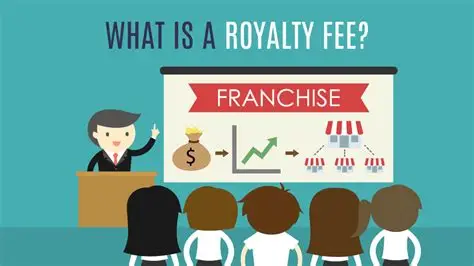
The first surprise for many franchise buyers isn't the franchise fee.
It's what comes afterward.
The initial franchise fee often receives the spotlight during the sales process. Prospective owners discuss startup costs, financing options, equipment expenses, lease agreements, and working capital requirements. Those numbers dominate conversations.
Then they encounter a different number.
A recurring one.
A number that never seems to disappear.
A royalty.
And suddenly, a fundamental question emerges:
Why am I paying the franchisor every month after I've already bought the franchise?
The answer lies at the heart of the franchise business model.
Because when franchisees purchase a franchise, they aren't buying ownership of the brand itself.
They're buying access.
Access to systems. Access to trademarks. Access to operational support. Access to an established business framework that, ideally, reduces uncertainty and accelerates growth.
Franchise royalties are the price of maintaining that access.
Simple in theory.
Far more nuanced in practice.
Because royalties influence profitability, cash flow, long-term returns, and even the relationship between franchisor and franchisee.
Understanding how they work is one of the most important steps any prospective franchise owner can take.
Not because royalties are inherently good or bad.
But because they are unavoidable.
And what is unavoidable deserves careful examination.
What Are Franchise Royalties?
Franchise royalties are ongoing payments made by franchisees to franchisors in exchange for continued access to the franchise system.
These payments typically support:
- Brand usage rights
- Operational support
- Ongoing training
- Research and development
- System improvements
- Franchise network management
Think of the franchise fee as the ticket to enter the system.
Royalties are the cost of remaining inside it.
Without royalty payments, the economic structure supporting most franchise systems would struggle to function.
The relationship is ongoing.
The payments reflect that reality.
Why Do Franchisors Charge Royalties?
Many first-time buyers ask a reasonable question:
"If I've already paid a franchise fee, why are royalties necessary?"
Because the franchise fee primarily covers onboarding.
Royalties fund continuation.
The franchisor continues providing:
- Brand oversight
- Operational guidance
- Technology updates
- Vendor relationships
- Training programs
- Marketing infrastructure
At least in well-managed systems.
The franchise model depends on mutual success.
Franchisees generate revenue.
Franchisors receive royalties.
When both parties perform effectively, incentives remain aligned.
At least that's the theory.
The Most Common Royalty Structures
Not all franchise systems calculate royalties the same way.
Several models exist.
Each creates different financial implications.
Percentage of Gross Revenue
This is the most common structure.
The franchisee pays a fixed percentage of sales revenue.
For example:
- 4%
- 5%
- 6%
- 8%
The percentage varies by industry and brand.
The key point is that royalties are often based on revenue rather than profit.
That distinction matters enormously.
If a business generates sales but struggles with expenses, royalties still apply.
The franchisor gets paid.
Whether the franchisee earns a profit is a separate question.
Fixed Royalty Fees
Some systems charge a predetermined amount each month.
Regardless of revenue.
Predictability improves.
Flexibility declines.
This structure can benefit high-performing locations.
It can pressure lower-performing ones.
Hybrid Models
Certain franchisors combine approaches.
A base fee may exist alongside percentage-based royalties.
Complexity increases.
So does the need for careful financial analysis.
Comparing Franchise Royalty Models
| Royalty Structure | How It Works | Advantages | Potential Drawbacks |
|---|---|---|---|
| Percentage of Revenue | Percentage of sales | Aligns with revenue levels | Paid regardless of profit |
| Fixed Monthly Fee | Flat payment amount | Predictable budgeting | Less flexibility during slow periods |
| Tiered Royalties | Percentage changes with volume | Rewards growth | More complex calculations |
| Hybrid Structure | Combination of fees | Balanced approach | Can increase costs |
| Minimum Royalty | Minimum payment threshold | Predictable franchisor income | Can strain low-volume operators |
Understanding which model applies is critical before investing.
Because royalty obligations influence profitability every month.
Not just at startup.
How Much Are Franchise Royalties?
Royalty rates vary considerably.
Industry.
Brand strength.
Support levels.
Business model.
All influence pricing.
Typical royalty rates often range between:
- 4% to 8% of gross revenue
- Occasionally lower
- Sometimes higher
Premium brands may command higher rates.
Emerging systems may charge less.
The percentage alone rarely tells the full story.
A lower royalty attached to a weak system may be less attractive than a higher royalty attached to a strong one.
Context matters.
Always.
Gross Revenue Versus Profit: The Critical Distinction
This is where many franchise buyers experience their first financial awakening.
Royalties are typically calculated using gross revenue.
Not net profit.
Let's consider a simplified example.
A franchise location generates:
- $100,000 in monthly sales
- 6% royalty rate
Royalty payment:
- $6,000
The franchisor receives $6,000 regardless of:
- Rent expenses
- Labor costs
- Inventory costs
- Insurance expenses
- Utility bills
The franchisee bears those costs separately.
This arrangement is standard.
It is also one reason careful financial forecasting matters so much.
What Do Franchisees Receive in Return?
A fair question.
Perhaps the fairest question.
Royalties represent ongoing costs.
What benefits justify them?
Brand Recognition
Consumers already recognize the brand.
Building comparable awareness independently may require substantial investment.
Operational Support
Many systems provide ongoing coaching and guidance.
The quality varies.
The availability usually exists.
Training
Staff training programs often continue beyond initial onboarding.
Technology Systems
Point-of-sale platforms.
Reporting tools.
Operational software.
These systems frequently evolve over time.
Research and Development
Franchisors invest in product development and operational improvements.
Ideally, franchisees benefit from those investments.
The keyword is ideally.
Not all systems deliver equal value.
A Lesson I Learned While Speaking With Franchise Operators
Several years ago, I interviewed franchise owners across multiple industries.
One conversation remains particularly memorable.
The owner initially viewed royalties as a burden.
Every month, he saw money leaving the business.
Naturally, he questioned the value.
Then he compared his operation to independent competitors in the same market.
Those competitors spent heavily on marketing.
Developed procedures independently.
Negotiated vendor relationships from scratch.
Built brand awareness slowly.
Suddenly, the royalty payment looked different.
Not smaller.
Different.
It became clear that the payment wasn't merely an expense.
It was part of a broader economic trade.
Support in exchange for fees.
Systems in exchange for independence.
That conversation highlighted something important.
The value of royalties cannot be evaluated in isolation.
They must be evaluated alongside what they provide.
Are Higher Royalties Always Bad?
Not necessarily.
This is a common misconception.
A low royalty rate sounds attractive.
And sometimes it is.
But low royalties paired with weak support can create challenges.
Conversely, higher royalties may support:
- Stronger training
- Better technology
- Greater brand investment
- Improved operational assistance
The better question is not:
"How high is the royalty?"
It's:
"What am I receiving for it?"
Cost without value is problematic.
Cost with value can be justified.
Royalties and Franchise Profitability
Royalties directly influence profitability.
Every percentage point matters.
Particularly in industries with narrow margins.
Consider two businesses generating identical revenue.
One pays 4% royalties.
The other pays 8%.
The difference compounds quickly.
Over years, the financial impact becomes substantial.
This is why franchise buyers should evaluate:
- Royalty rates
- Margin structures
- Revenue potential
- Operating costs
Together.
Never separately.
Common Misunderstandings About Royalties
Several misconceptions appear repeatedly.
"Royalties Are Pure Profit for Franchisors"
Not entirely.
Franchisors incur costs too.
Support teams.
Technology systems.
Training programs.
Brand management.
Network development.
Royalties often fund these activities.
"Lower Royalties Guarantee Better Returns"
Not necessarily.
Weak systems can undermine profitability regardless of royalty levels.
"Royalties Eventually End"
Typically, they don't.
As long as the franchise agreement remains active, royalties generally continue.
Understanding this from the beginning prevents disappointment later.
Questions Every Franchise Buyer Should Ask
Before investing, prospective franchisees should explore several areas.
How Are Royalties Calculated?
Gross sales?
Net sales?
Fixed fees?
Definitions matter.
What Support Is Included?
Specificity matters more than promises.
Have Royalty Rates Changed Historically?
Past behavior provides useful context.
How Do Existing Franchisees View the Value?
Current operators often provide the most practical insights.
These conversations can reveal far more than marketing materials.
The Future of Franchise Royalties
The royalty model has proven remarkably durable.
Why?
Because it aligns incentives.
Franchisees grow revenue.
Franchisors participate in that growth.
The structure encourages mutual investment in success.
Of course, tensions occasionally emerge.
Franchisees want greater profitability.
Franchisors want sustainable revenue.
Balancing those interests remains central to every franchise relationship.
And royalties sit directly at the center of that balance.
Conclusion: Franchise Royalties Are More Than a Fee
Many prospective franchise owners initially view royalties as a cost.
Technically, that's accurate.
Strategically, it's incomplete.
Royalties represent the ongoing economic engine of franchising. They fund support systems, maintain brand standards, enable innovation, and connect franchisees to a larger operating framework.
Whether they deliver value depends on execution.
A strong franchisor can make royalties feel justified.
A weak one can make them feel burdensome.
The distinction is crucial.
Because the real question isn't whether royalties exist.
They do.
The real question is whether the system receiving those payments consistently earns them.
And that answer often determines whether a franchise relationship becomes a profitable partnership—or simply an expensive obligation.
- Arts
- Business
- Computers
- الألعاب
- Health
- الرئيسية
- Kids and Teens
- مال
- News
- Personal Development
- Recreation
- Regional
- Reference
- Science
- Shopping
- Society
- Sports
- Бизнес
- Деньги
- Дом
- Досуг
- Здоровье
- Игры
- Искусство
- Источники информации
- Компьютеры
- Личное развитие
- Наука
- Новости и СМИ
- Общество
- Покупки
- Спорт
- Страны и регионы
- World

 English
 Russian
 French
 Spanish
 Portuguese
 Deutsch
 Turkish
 Dutch
Dutch
 Italiano
 Romaian
 Portuguese (Brazil)
 Greek
Greek
