
What are the major global markets?
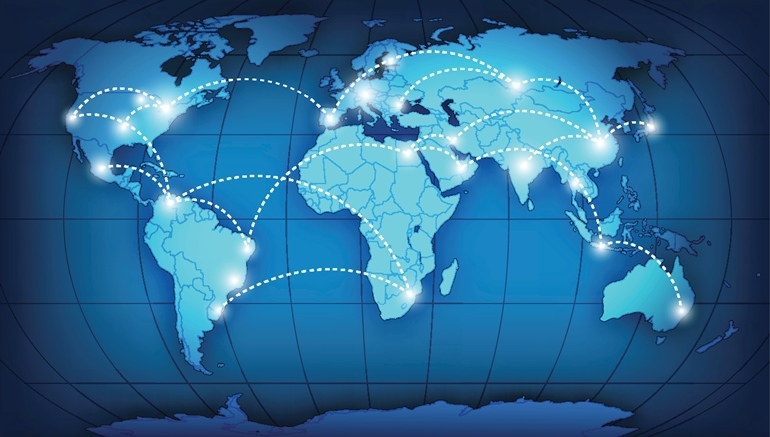
What Are the Major Global Markets?
The World’s Economic Engine Room Is Bigger Than Most People Realize
When people hear the phrase “global markets,” they often think about a trader staring at six computer screens, shouting into a headset while stock prices flash across a monitor. That image survives because it is dramatic. It is also incomplete.
The truth is that global markets are not a single arena. They are a vast network of interconnected systems through which money, goods, services, resources, labor, technology, and ideas move every second of every day. They determine the price of oil in Texas, wheat in Ukraine, semiconductors in Taiwan, and apartments in Manhattan. They influence whether a manufacturer expands a factory, whether a startup raises capital, and whether a retiree sees growth in a pension account.
I've learned over the years that one of the biggest mistakes people make is treating markets as isolated categories. They are not. Pull on one thread and another moves. A disruption in shipping can affect commodity prices. Commodity prices can affect inflation. Inflation can influence bond markets. Bond markets can reshape stock valuations. Everything touches everything.
Understanding the major global markets is not simply an academic exercise. It is a practical way to understand how the modern world actually functions.
The Five Major Global Markets
At the highest level, global economic activity revolves around five major markets:
-
Equity Markets (Stocks)
-
Bond Markets (Fixed Income)
-
Foreign Exchange Markets (Currencies)
-
Commodity Markets
-
Real Estate Markets
Each serves a distinct purpose, yet none operates independently.
Comparison of Major Global Markets
| Market | Primary Asset | Main Participants | Approximate Size | Key Purpose |
|---|---|---|---|---|
| Equity Market | Company ownership shares | Investors, institutions, corporations | Tens of trillions of dollars | Capital formation and wealth creation |
| Bond Market | Government and corporate debt | Governments, pension funds, banks | Larger than global stock markets | Financing and income generation |
| Foreign Exchange Market | Currencies | Banks, governments, corporations | Over $7 trillion traded daily | Currency conversion and international trade |
| Commodity Market | Raw materials and resources | Producers, manufacturers, traders | Multi-trillion-dollar ecosystem | Resource pricing and risk management |
| Real Estate Market | Property and land | Individuals, developers, institutions | Largest asset class globally | Wealth storage and economic development |
The numbers change constantly, but the hierarchy remains remarkably stable.
Equity Markets: Ownership as an Economic Force
The stock market receives the most attention because it tells stories people understand.
A company grows. Investors buy shares. The company expands. Shareholders profit.
Simple.
Yet beneath that simplicity lies one of the most powerful inventions in economic history.
Equity markets allow businesses to raise capital from millions of investors. Rather than relying solely on banks or wealthy families, companies can access enormous pools of funding.
Think about some of the world's largest corporations:
-
Apple Inc.
-
Microsoft Corporation
-
NVIDIA Corporation
-
Amazon.com, Inc.
Their ability to access public capital markets accelerated innovation on a scale that would have been impossible centuries ago.
Stock exchanges act as meeting places between capital seekers and capital providers. The result is an efficient mechanism for allocating resources toward businesses that investors believe will generate future value.
Of course, investors are not always right.
Markets overshoot. Markets panic. Markets become euphoric. Human nature has not evolved nearly as fast as financial technology.
Still, over long periods, equity markets remain one of the most effective wealth-creation mechanisms ever developed.
Bond Markets: The Quiet Giant
Ask the average person which market matters more, stocks or bonds, and many will choose stocks.
Professionals often know better.
The bond market is enormous.
Governments issue bonds to fund infrastructure, defense, education, and public services. Corporations issue bonds to finance expansion, acquisitions, and operations.
Unlike stockholders, bondholders do not own a piece of the company. They are lenders.
That distinction changes everything.
When bond investors become nervous, borrowing costs rise. When borrowing costs rise, economic activity can slow. A company considering a billion-dollar expansion suddenly faces higher financing expenses. Governments encounter the same challenge.
Many experienced investors spend as much time watching bond yields as stock prices because bond markets often signal economic changes before headlines do.
They are less glamorous. They are not less important.
Foreign Exchange Markets: The World's Largest Marketplace
If you want to see globalization in action, look at currencies.
The foreign exchange market—often called Forex—is the largest financial market on Earth.
Every day, trillions of dollars' worth of currencies change hands.
Why?
Because international commerce requires it.
A manufacturer in Japan sells products in Europe. Payment may arrive in euros, but expenses are denominated in yen. Currency conversion becomes essential.
A corporation headquartered in the United States acquires a business in the United Kingdom. Exchange rates suddenly become a major strategic concern.
Governments monitor currency stability. Central banks influence interest rates. Investors speculate on macroeconomic trends.
The result is a market that never truly sleeps.
As trading ends in one region, it begins in another. Financial centers in Asia, Europe, and North America effectively create a twenty-four-hour marketplace.
The movement of currencies often reveals broader economic realities before traditional economic reports do.
Commodity Markets: The Foundation Beneath Everything
People often underestimate commodities because they seem ordinary.
Oil.
Copper.
Natural gas.
Wheat.
Corn.
Gold.
Yet remove any of them and modern civilization begins to wobble.
Commodity markets determine the prices of essential inputs used throughout the global economy.
A rise in energy prices affects transportation costs.
Transportation costs affect retail prices.
Retail prices affect inflation.
Inflation influences interest rates.
Interest rates influence nearly every other financial market.
Notice the pattern?
Everything connects.
One lesson I learned years ago while studying market cycles is that investors frequently focus on the visible end products while ignoring the raw materials underneath. That's a mistake. Commodity markets often provide an early glimpse into future economic conditions because they sit so close to the foundation of production itself.
When copper prices rise sharply, manufacturers pay attention.
When oil prices spike, governments pay attention.
When agricultural prices move dramatically, entire regions pay attention.
Commodity markets are not peripheral. They are foundational.
Real Estate Markets: Wealth You Can Touch
Financial assets may dominate headlines, but real estate remains one of the largest repositories of wealth in the world.
There is a reason for that.
People need places to live.
Businesses need places to operate.
Governments need infrastructure.
Unlike many financial instruments, real estate has a physical presence. You can walk through it, improve it, rent it, develop it, or redevelop it.
This tangible nature creates a unique relationship between investors and assets.
Real estate markets also provide a fascinating intersection between local and global forces.
A neighborhood may appear highly localized, yet its fortunes can be influenced by international capital flows, migration trends, interest rates, demographic shifts, and government policy.
The global real estate market serves both practical and financial purposes. It provides shelter, supports commerce, and functions as a long-term store of wealth.
That combination makes it remarkably resilient over time.
The Emerging Market That Connects Them All
If there is a newer force reshaping traditional markets, it is technology.
Technology itself is not a separate asset class in the traditional sense. Rather, it acts as connective tissue linking every major market.
Artificial intelligence influences equity valuations.
Data analytics improves commodity forecasting.
Digital payment systems accelerate currency transactions.
Property technology transforms real estate operations.
Cloud computing enhances bond-market analytics.
The lines separating industries and markets are becoming less distinct.
What once looked like separate worlds increasingly resembles a single integrated ecosystem.
That integration creates efficiency. It also creates vulnerability. A disruption in one region or sector can travel faster than ever before.
Global markets have become more connected and, consequently, more sensitive.
Why Understanding Market Interdependence Matters
The biggest lesson is not learning the definition of each market.
The bigger lesson is understanding their relationships.
An investor who watches only stocks misses critical signals from bonds.
A policymaker focused solely on inflation may overlook commodity pressures.
A business leader who ignores currency markets can find international profits erased by exchange-rate movements.
Success comes from seeing the entire landscape.
Economic history repeatedly rewards those who recognize connections before they become obvious.
The market is rarely a collection of isolated events. More often, it is a chain reaction unfolding across multiple systems simultaneously.
The Real Story Behind Global Markets
When people ask, “What are the major global markets?” they are usually looking for a list.
Stocks.
Bonds.
Currencies.
Commodities.
Real estate.
That list is useful, but it is not the full answer.
The real answer is that these markets collectively form the operating system of the modern economy.
They allocate capital. They establish prices. They measure risk. They transmit information. They influence political decisions, business strategy, consumer behavior, and long-term prosperity.
And here is the provocative part.
Most people spend their lives experiencing the consequences of global markets without ever consciously participating in understanding them. They notice higher mortgage rates, changing fuel prices, rising grocery bills, or stronger retirement accounts. They feel the effects but rarely study the machinery.
Yet the machinery matters.
Because whether you are an entrepreneur, investor, executive, employee, or retiree, global markets are not some distant abstraction operating behind a curtain. They are the invisible framework shaping opportunity itself.
The people who understand that framework gain something far more valuable than market knowledge.
They gain perspective.
- Arts
- Business
- Computers
- Juegos
- Health
- Home
- Kids and Teens
- Money
- News
- Personal Development
- Recreation
- Regional
- Reference
- Science
- Shopping
- Society
- Sports
- Бизнес
- Деньги
- Дом
- Досуг
- Здоровье
- Игры
- Искусство
- Источники информации
- Компьютеры
- Личное развитие
- Наука
- Новости и СМИ
- Общество
- Покупки
- Спорт
- Страны и регионы
- World

 English
 Russian
 French
 Portuguese
 Deutsch
 Turkish
 Dutch
Dutch
 Italiano
 Arabic
 Romaian
 Portuguese (Brazil)
 Greek
Greek
