
Why Do Companies Use IaaS?
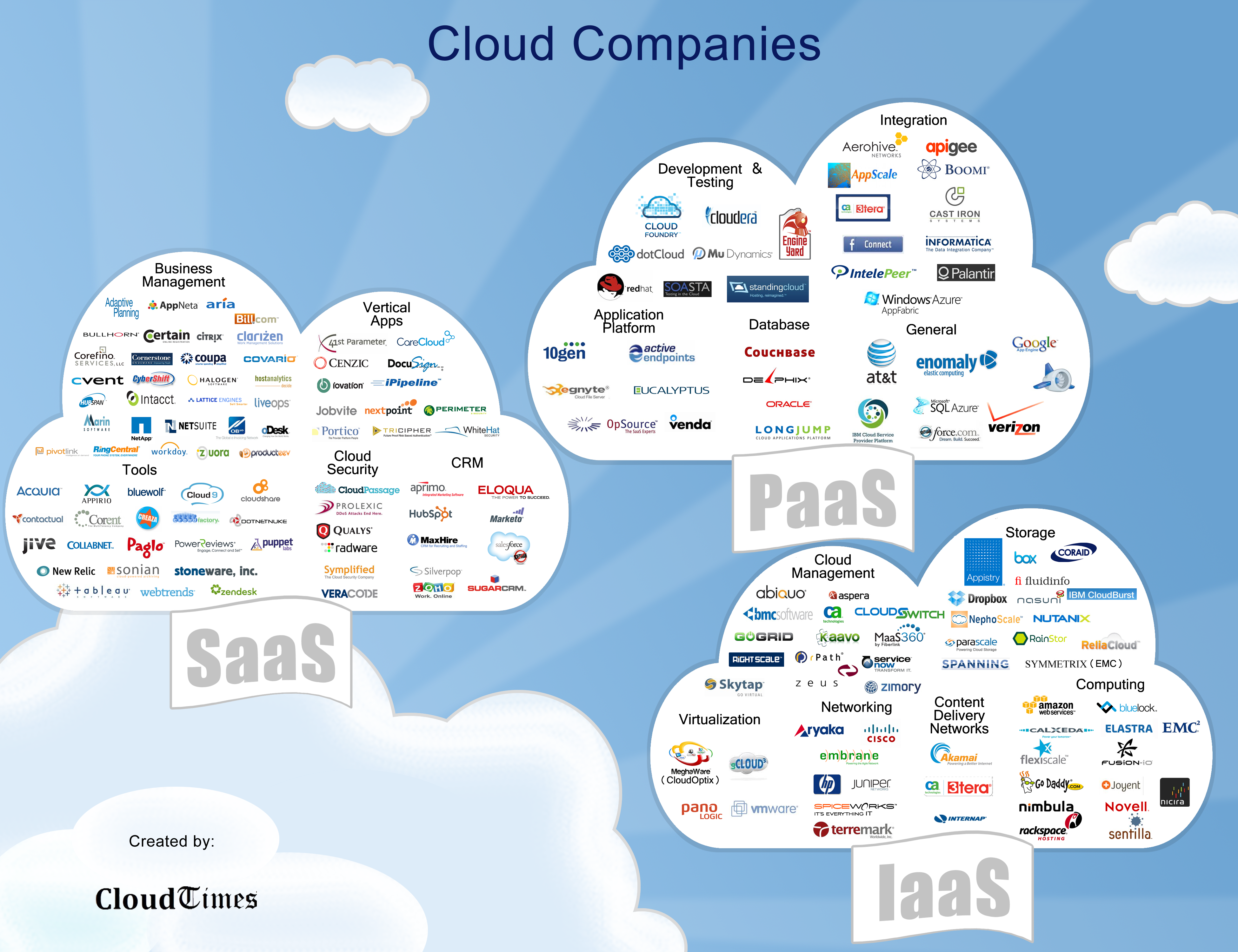
There is a fascinating contradiction at the center of modern business technology.
Organizations want more control.
They also want less responsibility.
They want greater flexibility.
They want lower risk.
They want infrastructure that can support explosive growth.
They do not necessarily want to own the hardware required to achieve it.
This tension helps explain the extraordinary rise of Infrastructure as a Service (IaaS).
For decades, companies built technology environments much the same way they built office buildings, warehouses, and manufacturing facilities. They purchased assets. They maintained those assets. They expanded those assets when growth demanded it.
Infrastructure was something you owned.
Today, for many organizations, infrastructure is something you consume.
Servers, storage, networking, and computing power can be accessed on demand through cloud providers, often within minutes. What once required months of planning, procurement approvals, installation schedules, and capital investment can now be delivered through software.
Yet speed alone does not explain why companies use IaaS.
The real story is more complex.
Organizations are not simply adopting a different technology model.
They are embracing a different operational philosophy.
One built around agility, scalability, resilience, and strategic focus.
Understanding why companies use IaaS requires looking beyond the technology itself and examining the business realities driving modern infrastructure decisions.
The Traditional Infrastructure Problem
Before understanding the appeal of IaaS, it helps to remember the challenges it was designed to solve.
Traditional infrastructure demanded substantial investment.
Organizations needed to purchase:
- Physical servers
- Storage systems
- Networking equipment
- Backup hardware
- Data center facilities
The costs extended far beyond acquisition.
Hardware required maintenance.
Facilities required power.
Systems required upgrades.
Teams required specialized expertise.
Even more problematic was uncertainty.
Businesses had to estimate future demand years in advance.
Predict too low, and performance suffered.
Predict too high, and expensive resources sat idle.
Neither outcome was attractive.
Infrastructure planning often became an exercise in educated guesswork.
IaaS fundamentally changed that equation.
Flexibility Has Become a Competitive Requirement
One of the primary reasons companies adopt IaaS is flexibility.
Business conditions rarely remain static.
Markets shift.
Customer behavior evolves.
Opportunities emerge unexpectedly.
Infrastructure must adapt accordingly.
Resources on Demand
IaaS enables organizations to provision resources when needed.
Not months later.
Not after procurement cycles conclude.
Immediately.
Virtual machines, storage volumes, and networking resources can be deployed within minutes.
This responsiveness allows businesses to move faster.
And increasingly, speed matters.
Supporting Rapid Change
Modern organizations frequently launch:
- New applications
- Pilot programs
- Digital services
- Customer experiences
Traditional infrastructure often struggles to support rapid experimentation.
IaaS removes many of those barriers.
Ideas can move from concept to execution far more quickly.
Scalability Solves One of Business's Oldest Problems
Growth is desirable.
Growth can also be disruptive.
Historically, infrastructure often became a constraint.
Companies could acquire customers faster than they could expand systems.
IaaS reduces this challenge significantly.
Scaling Up
Organizations can increase:
- Compute resources
- Storage capacity
- Network throughput
without purchasing additional hardware.
Scaling Down
Equally important, resources can often be reduced when demand declines.
This capability prevents businesses from paying for infrastructure they no longer need.
Scalability introduces operational efficiency that traditional environments frequently struggle to match.
Growth becomes easier to accommodate.
Uncertainty becomes easier to manage.
Financial Flexibility Changes Strategic Planning
Technology decisions inevitably become financial decisions.
Infrastructure investments are no exception.
One of the most compelling aspects of IaaS is its financial model.
Moving Beyond Large Capital Investments
Traditional infrastructure often requires substantial upfront spending.
Organizations invest heavily before realizing value.
IaaS shifts much of this spending toward operational expenses.
Companies pay for resources as they consume them.
This changes budgeting dynamics significantly.
Improved Cash Flow
Rather than committing substantial capital to hardware purchases, organizations preserve financial flexibility.
Resources remain available for:
- Innovation initiatives
- Product development
- Strategic acquisitions
- Market expansion
Infrastructure becomes more aligned with actual business activity.
That alignment appeals to both technology leaders and financial executives.
Faster Innovation Becomes Possible
Infrastructure should support innovation.
Too often, it delays it.
When infrastructure provisioning requires lengthy approval processes, innovation slows.
IaaS helps remove this friction.
Development and Testing Environments
Teams can quickly create environments for:
- Software development
- Quality assurance
- Performance testing
- Proof-of-concept projects
Resources can be deployed and removed as needed.
This accelerates experimentation.
Reducing Operational Delays
When infrastructure becomes readily available, teams spend less time waiting.
Momentum improves.
Productivity increases.
Innovation accelerates.
The infrastructure itself becomes less of a bottleneck.
Global Reach Without Global Infrastructure
Many organizations operate beyond a single geography.
Customers may be located across multiple regions.
Applications may require international availability.
Historically, supporting global operations required significant investment.
IaaS changes that dynamic.
Expanding Internationally
Cloud providers maintain infrastructure across numerous geographic regions.
Organizations can deploy workloads closer to users without building physical facilities.
This improves:
- Performance
- User experience
- Service availability
Supporting Distributed Teams
Modern workforces increasingly operate across multiple locations.
Cloud infrastructure enables consistent access regardless of geography.
Global capabilities become accessible to organizations of various sizes.
Not just the largest enterprises.
Reliability Matters More Than Ever
Technology downtime carries consequences.
Lost productivity.
Lost revenue.
Damaged reputation.
Organizations therefore place enormous value on reliability.
Built-In Redundancy
Many cloud environments provide:
- Multiple availability zones
- Geographic distribution
- Automated failover capabilities
These features improve operational resilience.
Disaster Recovery Advantages
Organizations can implement recovery strategies more efficiently than in many traditional environments.
Backups, replication, and recovery mechanisms become easier to establish.
Resilience becomes more achievable.
And often more affordable.
Comparing Traditional Infrastructure and IaaS
| Factor | Traditional Infrastructure | IaaS |
|---|---|---|
| Initial Investment | High upfront capital costs | Consumption-based spending |
| Deployment Speed | Weeks or months | Minutes or hours |
| Scalability | Limited by hardware purchases | Dynamic and elastic |
| Maintenance Responsibility | Organization-managed | Shared responsibility |
| Geographic Expansion | Requires physical infrastructure | Cloud-region deployment |
| Resource Utilization | Often overprovisioned | Usage-based allocation |
| Disaster Recovery | Complex and costly | More accessible and scalable |
| Innovation Support | Slower provisioning cycles | Rapid experimentation |
The comparison highlights why IaaS continues gaining momentum.
The benefits extend beyond technology.
They influence business performance.
Security Has Become More Sophisticated
Security concerns once represented a major barrier to cloud adoption.
Today, security often serves as a motivation for adopting IaaS.
Access to Advanced Security Capabilities
Cloud providers invest heavily in:
- Threat detection
- Encryption technologies
- Identity management systems
- Monitoring platforms
Many organizations gain access to security capabilities that would be difficult or expensive to build independently.
Shared Responsibility
IaaS does not eliminate security obligations.
Organizations still retain important responsibilities.
However, cloud providers help manage significant portions of the underlying infrastructure security.
This shared model allows businesses to focus attention where it matters most.
A Lesson I Learned About Infrastructure Agility
Several years ago, I worked with an organization preparing for a major product launch.
The marketing campaign exceeded expectations.
Interest surged.
Traffic forecasts were revised repeatedly.
Each revision raised new concerns.
Could the infrastructure handle demand?
Under a traditional model, expanding capacity would have required substantial planning and procurement.
Time was limited.
Fortunately, the company had already embraced IaaS.
Resources were expanded rapidly.
Additional capacity became available within hours.
The launch proceeded successfully.
Customers experienced stable performance.
The lesson was revealing.
The greatest value of IaaS was not cost savings.
It was optionality.
The organization gained the ability to respond when circumstances changed.
And circumstances always change.
That flexibility proved more valuable than any individual infrastructure component.
Focus Shifts Toward Business Priorities
Perhaps the most overlooked reason companies adopt IaaS is focus.
Infrastructure management consumes time.
Hardware maintenance consumes attention.
Procurement processes consume resources.
Organizations increasingly prefer to direct energy elsewhere.
Concentrating on Core Competencies
Most companies do not compete based on server ownership.
They compete through:
- Products
- Services
- Customer experiences
- Innovation
IaaS allows teams to focus more directly on these differentiators.
Reducing Operational Burden
Cloud providers manage significant portions of the underlying infrastructure.
Organizations gain opportunities to redirect talent toward higher-value initiatives.
The conversation shifts from maintenance to strategy.
That shift can be transformative.
The Future of Infrastructure Consumption
The popularity of IaaS reflects broader changes in business thinking.
Organizations increasingly value:
- Agility
- Flexibility
- Scalability
- Operational efficiency
Infrastructure is no longer viewed solely as a physical asset.
It is viewed as a service.
A capability.
A platform for growth.
As cloud technologies continue evolving, this trend is likely to deepen.
The infrastructure itself becomes increasingly invisible.
Its strategic impact becomes increasingly visible.
Conclusion: Companies Use IaaS Because Adaptability Has Become Essential
At first glance, Infrastructure as a Service appears to be a technology decision.
Servers move to the cloud.
Storage becomes virtualized.
Networks become software-defined.
All true.
Yet beneath these technical changes lies a more profound shift.
IaaS enables organizations to adapt.
To scale when opportunities emerge.
To reduce commitments when conditions change.
To innovate without waiting.
To expand without rebuilding.
To recover without starting over.
The most important advantage of IaaS is not a specific feature or service.
It is the freedom infrastructure provides when it no longer behaves like a fixed asset.
Because in a business environment defined by uncertainty, adaptability often becomes the most valuable resource an organization possesses.
And increasingly, that is exactly what companies are buying when they choose IaaS.
- Arts
- Business
- Computers
- Giochi
- Health
- Home
- Kids and Teens
- Money
- News
- Personal Development
- Recreation
- Regional
- Reference
- Science
- Shopping
- Society
- Sports
- Бизнес
- Деньги
- Дом
- Досуг
- Здоровье
- Игры
- Искусство
- Источники информации
- Компьютеры
- Личное развитие
- Наука
- Новости и СМИ
- Общество
- Покупки
- Спорт
- Страны и регионы
- World

 English
 Russian
 French
 Spanish
 Portuguese
 Deutsch
 Turkish
 Dutch
Dutch
 Arabic
 Romaian
 Portuguese (Brazil)
 Greek
Greek