
Why is behavioral economics important?
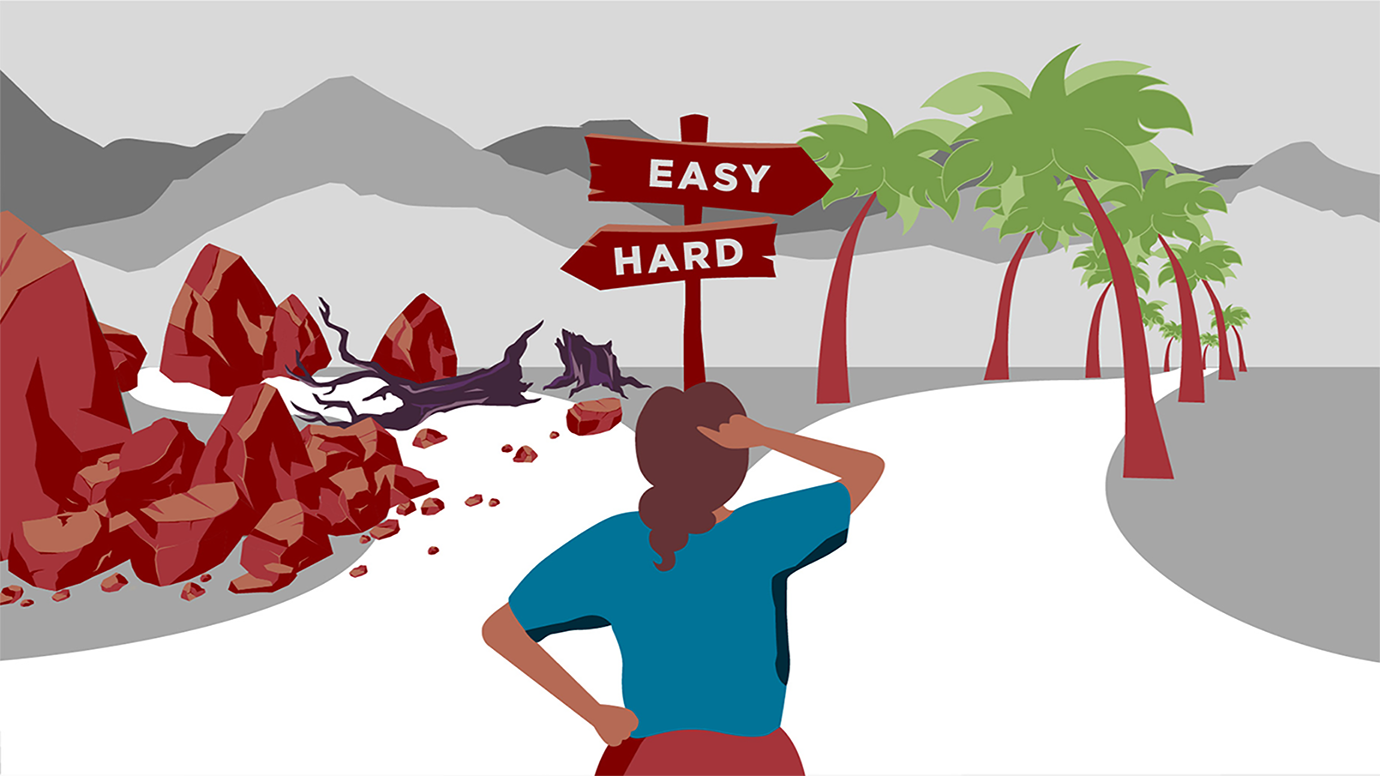
Why Is Behavioral Economics Important?
The Quiet Shift Behind Modern Decision-Making
A policymaker redesigns a tax form.
Nothing about the tax rate changes. Nothing about enforcement changes. Income brackets remain identical. The legal structure is untouched.
Yet compliance increases.
No speeches were given. No penalties were raised. No incentives were added.
Only the structure of the decision changed.
This is the kind of outcome that traditional economic intuition often struggles to explain. If people are rational, why should layout matter? Why should defaults matter? Why should wording matter?
Behavioral economics begins precisely at that discomfort.
It asks a simple but unsettling question: if human decisions are systematically shaped by psychological forces, what does that imply for policy, markets, and everyday life?
The answer turns out to be large enough to matter far beyond academia.
Behavioral economics is important because it changes how we understand human choice—and how we design the systems that depend on those choices.
It Replaces the Fiction of Perfect Rationality with Real Human Behavior
Traditional economics often relies on a useful abstraction: the rational agent.
This agent is consistent. Deliberative. Optimizing. He evaluates all available information and selects the option that maximizes utility.
It is a powerful model. It explains markets. It structures policy. It underpins financial theory.
But it is also incomplete.
Behavioral economics begins with observation rather than assumption. It studies how people actually behave when confronted with complexity, uncertainty, fatigue, emotion, and limited attention.
And what it finds is not chaos—but pattern.
People are predictable in their deviations from rationality.
They procrastinate in systematic ways.
They overreact to losses more than gains.
They are influenced by framing, defaults, and social cues.
This matters because policy based on an incorrect model of human behavior will often fail—not dramatically, but quietly, persistently, and at scale.
A model of humanity that is slightly wrong in theory becomes significantly wrong in practice.
It Explains Why Good Policies Sometimes Fail
Many policies assume that people respond primarily to incentives.
Increase cost, behavior decreases. Increase benefit, behavior increases.
But real-world behavior often resists this logic.
Consider retirement savings.
Even when tax advantages are substantial, many individuals fail to enroll in retirement plans.
Not because they dislike saving.
But because the process is complex, delayed, or mentally deferred.
Behavioral economics reveals that friction—small, almost invisible costs—can overwhelm large incentives.
This insight explains a wide range of policy failures:
-
Vaccination programs with low participation despite free access
-
Energy-saving initiatives with minimal uptake despite financial benefits
-
Financial aid systems underused due to complexity
-
Health interventions ignored because of present bias
The issue is not irrationality in a dramatic sense. It is bounded rationality interacting with complicated systems.
Behavioral economics shows that design matters as much as incentives.
Sometimes more.
It Introduces the Power of Choice Architecture
A striking implication of behavioral economics is that choices are never neutral.
How options are presented affects how they are selected.
This is known as choice architecture.
A cafeteria placing healthier foods at eye level changes consumption patterns without removing any options.
An online form with a pre-checked box increases enrollment in organ donation or insurance programs.
A website that highlights a “recommended plan” subtly steers user behavior.
None of these interventions force decisions.
They structure them.
Traditional economics treats such design features as irrelevant.
Behavioral economics treats them as central variables.
This distinction is important because nearly every system involving human choice has an architecture:
-
Government forms
-
Healthcare enrollment systems
-
Digital interfaces
-
Retail environments
-
Financial platforms
Once you see choice architecture, you cannot easily unsee it.
Every system becomes a behavioral environment.
It Explains Systematic Financial Mistakes
Financial markets are often assumed to reflect rational aggregation of information.
But individual behavior within those markets tells a different story.
Investors frequently:
-
Sell winners too early and hold losers too long
-
React strongly to short-term fluctuations
-
Follow trends rather than fundamentals
-
Overestimate their predictive abilities
Behavioral economics attributes these patterns to psychological mechanisms such as loss aversion, overconfidence, and recency bias.
The importance here is not merely descriptive.
It is predictive.
Behavioral finance helps explain bubbles, crashes, and persistent inefficiencies that classical models struggle to fully account for.
Markets are not irrational.
But the individuals within them are not perfectly rational either.
The aggregate behavior reflects both structure and psychology.
It Reveals That Small Changes Can Produce Large Effects
One of the most counterintuitive insights in behavioral economics is sensitivity to small interventions.
A change in wording.
A shift in default settings.
A reordering of options.
A slight adjustment in timing.
These seemingly minor changes can lead to disproportionate behavioral outcomes.
This is important because it challenges a core assumption in many traditional models: that only large incentives matter.
Behavioral evidence suggests otherwise.
Human attention is limited.
Cognitive effort is costly.
Emotion influences interpretation.
As a result, small cues can redirect large populations of decisions without altering underlying preferences.
This is not manipulation in the dramatic sense.
It is sensitivity to structure.
It Improves Policy Without Removing Freedom
One of the most influential applications of behavioral economics is the concept of the “nudge.”
A nudge is a small design change that influences behavior while preserving freedom of choice.
Automatic enrollment in retirement plans is one example.
Simplified application forms are another.
Clear labeling of nutritional information is another.
The key feature is voluntary participation. Nothing is forced. Options remain open.
Yet outcomes improve.
This makes behavioral economics particularly relevant for democratic systems, where coercive policies are often undesirable or impractical.
Instead of restricting behavior, systems can be designed to guide it.
This represents a subtle but important shift in governance: from controlling choices to shaping environments.
It Helps Explain Everyday Human Struggles
Behavioral economics is not only about policy or markets.
It also explains personal decisions that feel strangely difficult to control.
Why do people procrastinate despite knowing the cost?
Why do diets fail even with strong motivation?
Why do individuals overspend while planning to save?
Why do intentions and actions diverge so frequently?
The answer lies in the interaction between present bias, limited attention, and emotional weighting of outcomes.
The future self is abstract. The present moment is vivid.
The result is predictable inconsistency.
Understanding this does not eliminate the struggle.
But it reframes it.
The problem is not lack of willpower alone.
It is the structure of decision-making itself.
It Challenges the Idea That People Always Know What They Want
Traditional economics often assumes preferences are stable and well-defined.
Behavioral economics complicates this assumption.
Preferences can depend on context.
On framing.
On recent experiences.
On irrelevant comparisons.
On defaults.
This raises a deeper question: do people always know what they want, or do they construct preferences in the moment of choice?
Evidence suggests the latter is often true.
This matters because it changes how we interpret behavior.
A choice is not always a direct expression of a fixed internal preference.
It can be an outcome shaped by environment, cognition, and timing.
This insight has implications for marketing, law, ethics, and policy design.
It Connects Economics Back to Psychology
For much of the twentieth century, economics moved toward abstraction.
Mathematical models became dominant. Psychological nuance was often excluded for the sake of simplicity.
Behavioral economics reintroduces psychology into economic reasoning.
Not as an anecdotal supplement, but as a core explanatory layer.
This matters because human behavior is not purely computational.
It is emotional. Social. Contextual.
People do not merely respond to prices.
They respond to meaning.
To framing.
To fairness.
To trust.
Behavioral economics restores these elements to economic analysis.
A Personal Reflection on Invisible Influences
I once believed that careful reasoning was enough to ensure good decisions.
If I gathered enough information, compared alternatives objectively, and avoided obvious mistakes, the outcome should follow logically.
That belief was comfortable.
It was also incomplete.
In practice, I noticed how often my decisions were shaped by factors I did not initially acknowledge: default options, presentation order, emotional timing, and social context.
Sometimes the “best” choice was not selected because it was best.
It was selected because it was easiest to justify in the moment.
This realization did not reduce confidence in reasoning.
It changed its role.
Reasoning became something that operates within a system of influences—not outside it.
Behavioral economics gives language to that system.
Why It Matters Now More Than Before
Modern life increases the number and complexity of decisions individuals face.
Financial products are more complex.
Information is more abundant.
Choices are more frequent.
Attention is more fragmented.
In such an environment, reliance on intuition alone becomes riskier.
Behavioral economics provides tools to understand how decisions are actually made under these conditions.
It helps explain why overload leads to simplification.
Why defaults dominate.
Why framing shapes outcomes.
Why even experienced decision-makers deviate from optimal behavior.
As systems become more complex, understanding human psychology becomes less optional.
It becomes necessary.
Conclusion: The Importance Lies in the Gap
Behavioral economics is important not because it replaces traditional economics, but because it fills a gap.
The gap between idealized rationality and actual human behavior.
In that space lie most real-world decisions:
What people buy.
How they save.
How they vote.
How they respond to risk.
How they choose under uncertainty.
Traditional economics provides structure.
Behavioral economics provides texture.
Together, they offer a more complete account of economic life.
The deeper implication is not that humans are irrational.
It is that rationality itself operates within limits, contexts, and psychological constraints.
Once that is understood, economics stops being only a study of markets.
It becomes a study of minds operating within systems.
And that shift changes everything.
- Arts
- Business
- Computers
- Игры
- Health
- Главная
- Kids and Teens
- Деньги
- News
- Personal Development
- Recreation
- Regional
- Reference
- Science
- Shopping
- Society
- Sports
- Бизнес
- Деньги
- Дом
- Досуг
- Здоровье
- Игры
- Искусство
- Источники информации
- Компьютеры
- Личное развитие
- Наука
- Новости и СМИ
- Общество
- Покупки
- Спорт
- Страны и регионы
- World

 English
 French
 Spanish
 Portuguese
 Deutsch
 Turkish
 Dutch
Dutch
 Italiano
 Arabic
 Romaian
 Portuguese (Brazil)
 Greek
Greek