
How to increase customer engagement?
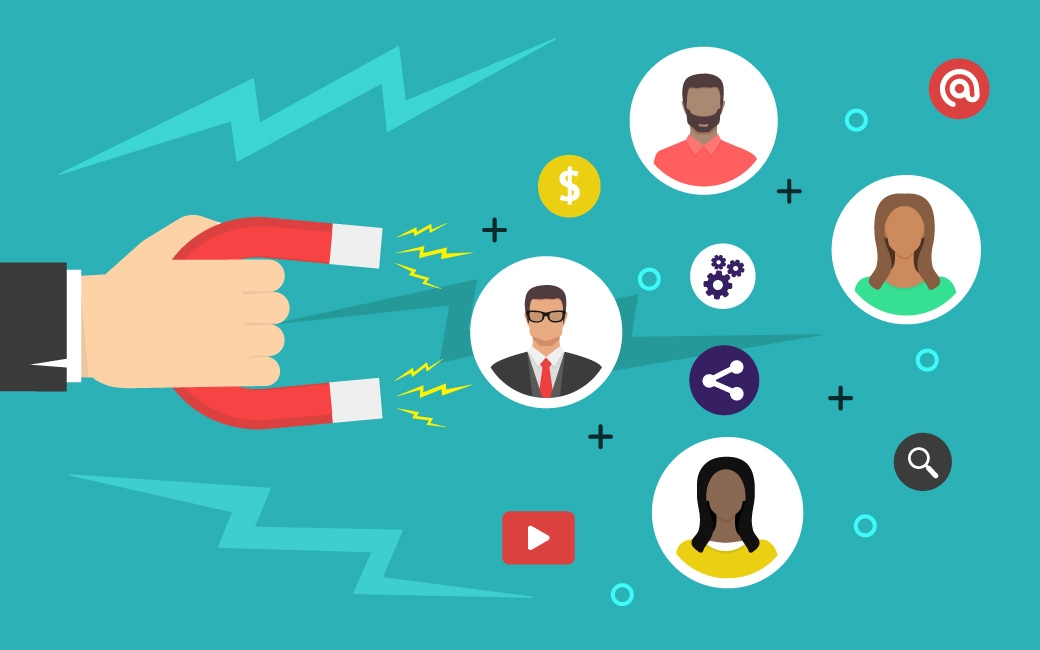
How to Increase Customer Engagement
The Illusion of Attention in a Crowded World
A company launches a perfectly designed product.
The interface is clean. The pricing is competitive. The value proposition is clear.
Users sign up.
And then… they leave.
Not in protest. Not in anger. Simply absence.
The analytics dashboard tells a familiar story: initial interest, followed by silence.
This is the modern paradox of customer engagement. Attention is abundant at the start and scarce afterward. Products are not only competing with alternatives, but with distraction itself.
Traditional marketing might interpret low engagement as a messaging problem or a product flaw.
Behavioral economics suggests something more precise: engagement is not a single decision. It is a sequence of micro-decisions shaped by psychology, timing, context, and friction.
To increase engagement, one must understand how attention behaves—not how it should behave.
Engagement Is Not a Moment. It Is a Habit Loop.
Customer engagement is often mistakenly treated as a binary outcome:
-
Engaged
-
Not engaged
But in reality, engagement is a pattern of repeated behavior.
A user opens an app.
Then returns.
Then repeats.
Each step is fragile.
Behavioral science reframes engagement as a habit loop composed of three elements:
-
Cue
-
Action
-
Reward
Without a cue, behavior never starts.
Without reward, behavior never repeats.
Without friction reduction, behavior decays.
Engagement is not persuasion alone. It is reinforcement over time.
Reduce Friction Before You Add Incentives
One of the most consistent findings in behavioral economics is that small frictions disproportionately reduce action.
A delayed login.
A confusing menu.
An extra form field.
A slow-loading page.
Each acts as a psychological tax.
Traditional models assume users will optimize and persist if value is high enough.
Behavioral reality is different: people often abandon tasks when cognitive effort exceeds perceived benefit—even if the benefit is objectively large.
This is bounded rationality in action.
To increase engagement, the first question is not:
“What will motivate users?”
But rather:
“What is making engagement harder than it needs to be?”
Reducing friction often outperforms adding incentives.
The Power of Default Behavior
Defaults are among the most powerful tools in behavioral design.
When users are given a pre-selected option, they are significantly more likely to stick with it.
Not because they have evaluated it deeply.
But because inaction feels like acceptance.
This applies directly to engagement:
-
Auto-subscribed newsletters
-
Pre-enabled notifications (carefully balanced)
-
Suggested content feeds
-
Pre-set preferences
Defaults do not force behavior. They shape inertia.
And inertia is one of the strongest forces in human decision-making.
If engagement requires repeated active choice, it decays.
If engagement is embedded in default pathways, it persists.
Timing Matters More Than Most Metrics Suggest
Traditional analytics often treat engagement as independent of timing.
Behavioral economics disagrees.
The same message, delivered at different times, produces different outcomes.
Why?
Because attention fluctuates.
Fatigue increases.
Emotional state changes.
Cognitive load varies throughout the day.
A user ignoring a notification at 9 AM may respond positively at 7 PM.
This is present-state sensitivity: decisions are influenced by the mental condition at the moment of choice.
Effective engagement strategies align with user timing, not just content quality.
Loss Aversion Can Be Used to Sustain Engagement
People are more motivated to avoid losing something than to gain something of equal value.
This asymmetry can be used to increase engagement ethically:
-
“You are about to lose your streak”
-
“Don’t miss your weekly progress update”
-
“Your benefits expire tomorrow”
The psychological mechanism is simple: loss feels more urgent than gain.
However, this must be used carefully. Overuse leads to fatigue and distrust.
The key insight is not manipulation—it is motivation structure.
Engagement increases when users feel continuity is at stake.
Social Proof: Engagement as a Shared Behavior
People do not decide in isolation.
They observe others.
If users believe a platform is widely used, they are more likely to engage with it themselves.
This is social proof.
It appears in:
-
“Most popular” labels
-
Activity feeds
-
User counts (“10,000 people joined this week”)
-
Trending indicators
The underlying mechanism is uncertainty reduction.
When people are unsure what to do, they infer from others.
Engagement increases when behavior appears normal, common, and shared.
The Role of Variable Rewards
Consistent rewards create habits.
But predictable rewards can become invisible over time.
Behavioral research shows that variable rewards—unpredictable positive outcomes—are particularly effective in sustaining engagement.
This does not mean randomness for its own sake. It means variability in reinforcement:
-
Unexpected insights
-
Occasional bonuses
-
Surprise content
-
Irregular but meaningful updates
The psychological principle is attention reinforcement through unpredictability.
The brain remains engaged when outcomes are not fully anticipated.
Cognitive Ease Determines Return Behavior
People return to what feels easy.
Not necessarily what is best.
Cognitive ease refers to how effortless something feels to process or use.
High ease increases:
-
Trust
-
Familiarity
-
Likelihood of repetition
Low ease increases:
-
Avoidance
-
Delay
-
Abandonment
Engagement strategies that prioritize clarity, simplicity, and predictability consistently outperform those that rely on complexity or novelty alone.
If users must think too hard, they often stop thinking entirely—and leave.
Emotional Hooks Matter More Than Feature Lists
Feature-rich products often fail to engage.
Emotionally resonant experiences succeed.
Behavioral economics explains why:
Decisions are not purely informational. They are affective.
Users engage when they feel:
-
Curiosity
-
Progress
-
Belonging
-
Competence
-
Anticipation
A long list of features does not create emotional momentum.
A single meaningful experience often does.
Engagement is not about information density. It is about emotional salience.
Habit Formation Requires Stability, Not Constant Change
Many platforms attempt to increase engagement by constantly redesigning interfaces or adding features.
But frequent change increases cognitive load.
Habits require predictability.
Users must know:
-
Where to go
-
What happens next
-
What to expect
When structure changes too often, habits fail to form.
Behavioral economics suggests a counterintuitive principle:
Stability increases engagement more reliably than novelty.
A Personal Observation About Digital Engagement
At one point, I analyzed my own usage of digital tools.
Some applications I used daily without effort.
Others I intended to use regularly but repeatedly forgot.
The difference was not quality.
It was structure.
The tools I used consistently:
-
Were easy to open
-
Required minimal decision-making
-
Provided immediate feedback
-
Reduced uncertainty
The tools I abandoned:
-
Required setup each time
-
Had unclear next steps
-
Delayed reward
-
Demanded attention before offering value
My behavior was not driven by preference alone.
It was shaped by friction and reinforcement.
That realization changes how engagement should be understood.
Not as persuasion.
But as design of behavior pathways.
Why Engagement Fails Even in Good Products
Many well-designed products fail to sustain engagement because they misunderstand human behavior.
They assume:
-
Users will return if value is high
-
Users will act on intention
-
Users will optimize decisions
But behavioral economics shows otherwise.
Intention is fragile.
Attention is limited.
Effort is costly.
Without reinforcement systems, even valuable products decay in usage.
Engagement is not earned once.
It is maintained continuously.
The Real Strategy: Aligning With Human Psychology
Increasing customer engagement is not about overwhelming users with features or incentives.
It is about aligning systems with how people actually think.
That means:
-
Reducing friction
-
Leveraging defaults
-
Respecting timing
-
Using social signals
-
Reinforcing habits
-
Minimizing cognitive load
-
Creating emotional relevance
Each lever reflects a simple truth:
Behavior is not purely rational. It is context-dependent.
And engagement is simply behavior repeated over time.
Conclusion: Engagement Is a Psychological System, Not a Marketing Outcome
Customer engagement is often treated as a metric.
Clicks.
Retention rates.
Daily active users.
But beneath those metrics is something more fundamental: human behavior under constraints.
Behavioral economics reframes engagement as the outcome of psychological design interacting with environment and attention.
Not persuasion alone.
Not product quality alone.
But the structure of choice itself.
Once this is understood, the question changes.
Not “How do we get users to engage?”
But “What makes engagement the path of least resistance?”
The answer to that question is where real engagement begins.
- Arts
- Business
- Computers
- Jogos
- Health
- Início
- Kids and Teens
- Money
- News
- Personal Development
- Recreation
- Regional
- Reference
- Science
- Shopping
- Society
- Sports
- Бизнес
- Деньги
- Дом
- Досуг
- Здоровье
- Игры
- Искусство
- Источники информации
- Компьютеры
- Личное развитие
- Наука
- Новости и СМИ
- Общество
- Покупки
- Спорт
- Страны и регионы
- World

 English
 Russian
 French
 Spanish
 Deutsch
 Turkish
 Dutch
Dutch
 Italiano
 Arabic
 Romaian
 Portuguese (Brazil)
 Greek
Greek