
How do interest rates affect markets?
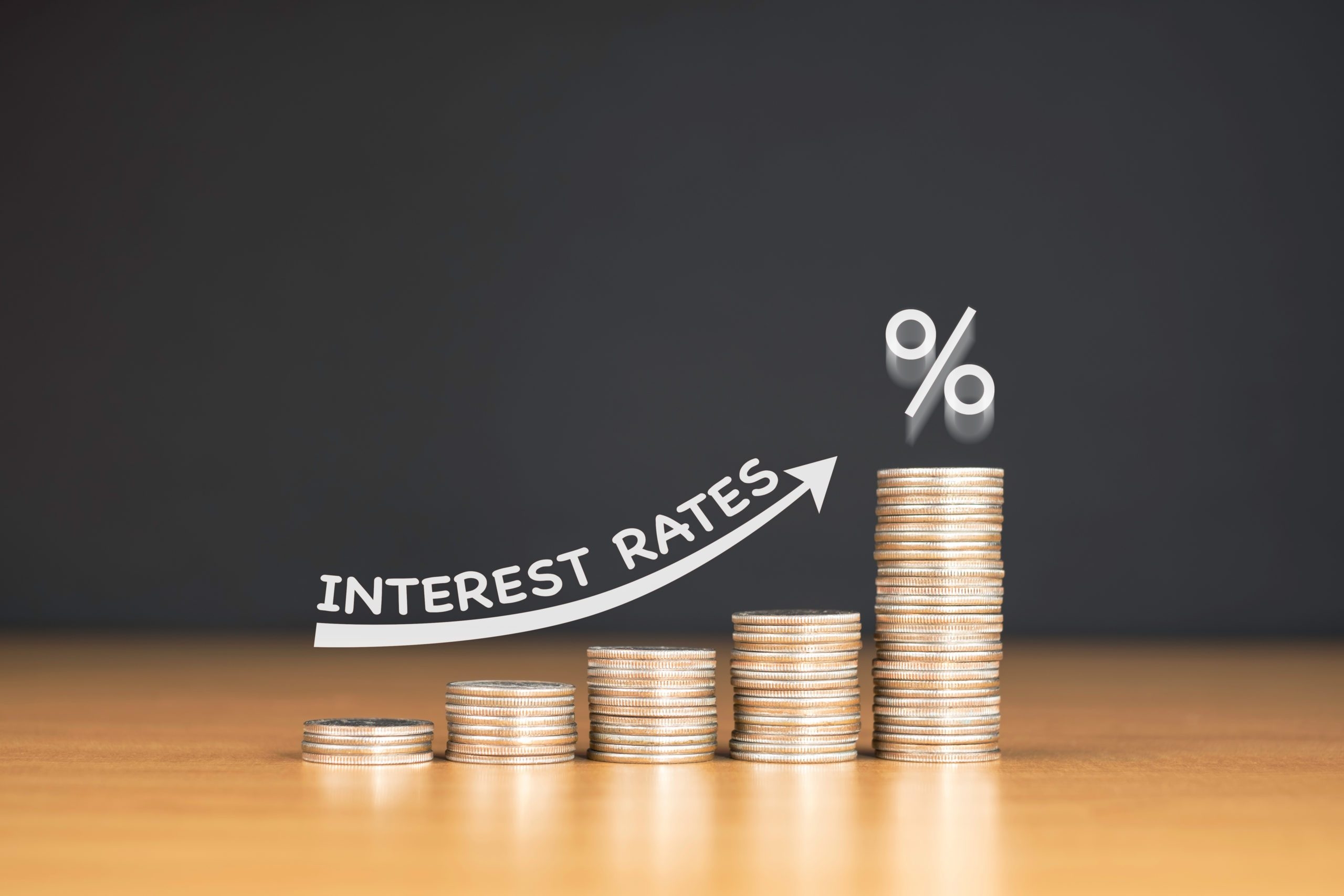
How Do Interest Rates Affect Markets?
There is a moment every investor experiences sooner or later.
A headline flashes across the screen. The Federal Reserve raises rates by a quarter point. Financial television erupts. Bond traders scramble. Stock analysts revise targets. Commentators begin speaking in percentages, basis points, and economic forecasts.
To an outsider, the reaction can seem absurd. Why should a tiny change in interest rates send shockwaves through trillion-dollar markets?
The answer is simple.
Interest rates are not just another economic statistic. They are the price of money itself.
And whenever the price of money changes, everything built upon money changes with it.
Stocks. Bonds. Real estate. Corporate investment. Consumer spending. Business valuations. Venture capital. Even investor psychology.
Over the years, I've learned that markets rarely move because of what is happening today. They move because of what investors believe tomorrow will look like. Interest rates sit at the center of that calculation.
If you want to understand markets, understand interest rates.
Everything else becomes easier.
The Foundation: Why Interest Rates Matter
Think about money as a product.
Just as oil has a price and copper has a price, money has a price. That price is the interest rate.
When rates are low, borrowing becomes cheaper. Consumers spend more. Businesses invest more aggressively. Investors search for higher returns.
When rates rise, borrowing becomes more expensive. Spending slows. Expansion plans get postponed. Investors become more selective.
The consequences ripple outward through every financial market.
What makes interest rates so powerful is that they influence both economic activity and investment behavior simultaneously.
Few economic variables possess that kind of reach.
The Market Transmission Mechanism
Many people imagine interest rates affecting markets through one direct channel.
Reality is messier.
Rates influence markets through several interconnected pathways.
Borrowing Costs Rise or Fall
Businesses rely on financing.
A manufacturer may borrow to build a factory. A retailer may finance inventory. A technology company may issue debt to fund expansion.
When rates increase, those projects become more expensive.
Some still make economic sense.
Others don't.
The result is slower investment and, frequently, slower earnings growth.
Consumer Spending Changes
Consumers feel interest rates almost immediately.
Mortgage payments become more expensive.
Auto loans become costlier.
Credit card balances become harder to carry.
When borrowing costs rise, households often reduce discretionary spending.
For companies dependent on consumer demand, that matters enormously.
Asset Valuations Adjust
This is where financial markets become especially sensitive.
Investors value assets based on future cash flows.
The higher the interest rate, the less valuable those future cash flows become in today's dollars.
That mathematical reality affects everything from blue-chip stocks to commercial real estate.
A company expected to generate profits ten years from now may appear dramatically less attractive when rates rise.
The business itself hasn't changed.
The valuation framework has.
How Different Markets React
Not every market responds the same way.
Some sectors thrive under higher rates.
Others struggle.
The differences are often dramatic.
| Market Segment | Rising Rates | Falling Rates |
|---|---|---|
| Government Bonds | Prices generally decline | Prices generally rise |
| Growth Stocks | Often face valuation pressure | Typically benefit |
| Value Stocks | Usually more resilient | Moderate benefit |
| Banking Sector | Often benefits initially from wider lending margins | May see margin compression |
| Real Estate | Demand can weaken as financing costs rise | Usually benefits from cheaper borrowing |
| Consumer Discretionary | Often pressured by reduced spending | Typically strengthened |
| Utilities | May lose appeal versus higher-yield bonds | Often become more attractive |
| Venture Capital | Funding tends to become more selective | Capital becomes more abundant |
Understanding these differences separates market observers from market participants.
The Bond Market: Ground Zero
If interest rates are the price of money, bonds are where the adjustment begins.
Bond prices and interest rates move in opposite directions.
This relationship is one of the most important concepts in finance.
Suppose an investor owns a bond paying 3%.
If newly issued bonds suddenly pay 5%, the old bond becomes less attractive.
Its market value declines.
Conversely, if rates fall and new bonds pay only 2%, the older 3% bond becomes more valuable.
Its price rises.
This dynamic explains why bond traders monitor central bank decisions with extraordinary attention.
For them, rates are not background noise.
They are the main event.
Stocks and the Discount Rate Problem
Investors often ask why stock markets can fall sharply even when corporate earnings remain healthy.
The answer frequently lies in discount rates.
Imagine two businesses.
The first generates substantial profits today.
The second promises explosive profits a decade from now.
When interest rates rise, the second company usually suffers more.
Why?
Because future earnings become worth less when discounted at higher rates.
This is one reason technology stocks often experience greater volatility during periods of rising rates.
Much of their perceived value rests on earnings expected years into the future.
Higher rates compress those valuations.
The math can be ruthless.
A Lesson I Learned Watching Markets
Years ago, during a period of aggressive monetary tightening, I remember speaking with a successful business owner who couldn't understand why his company's stock had declined.
Revenue was growing.
Margins were expanding.
Customers were loyal.
By every operational measure, the business was stronger than ever.
Yet investors were selling.
What he eventually realized—and what many executives learn the hard way—is that markets don't evaluate businesses in isolation.
They evaluate businesses relative to alternatives.
When Treasury yields rise, investors suddenly have another option.
They can earn attractive returns with less risk.
The competition for capital changes.
That lesson stuck with me.
A great business can become a less attractive investment if the environment surrounding it changes.
Markets are relative systems.
Interest rates redefine the comparison.
Why Central Banks Hold Enormous Influence
Central banks occupy a unique position.
They do not control markets directly.
Yet their decisions shape the environment in which markets operate.
When policymakers raise rates, they are typically attempting to cool inflation or prevent economic overheating.
When they lower rates, they are usually trying to stimulate growth or support employment.
Markets spend immense energy trying to anticipate these decisions.
Sometimes the anticipation matters more than the decision itself.
A rate hike that everyone expects may have little impact.
A surprise hike can trigger immediate repricing across asset classes.
Expectations drive behavior.
Behavior drives markets.
Real Estate and the Cost of Capital
Real estate provides one of the clearest examples of interest-rate sensitivity.
Most property purchases involve leverage.
When mortgage rates rise, affordability declines.
A home buyer who qualified for a certain property six months ago may no longer qualify.
Demand softens.
Transaction volume slows.
Price appreciation often moderates.
Commercial real estate faces similar pressures.
Office buildings, apartment complexes, warehouses, and retail centers all depend heavily on financing costs.
When money becomes expensive, property economics become less attractive.
When money becomes cheap, the opposite occurs.
The cycle can be powerful.
Investor Psychology: The Hidden Variable
Numbers tell part of the story.
Human behavior tells the rest.
Low-rate environments tend to encourage optimism.
Risk-taking increases.
Investors become willing to pay higher multiples for future growth.
Capital becomes plentiful.
Higher-rate environments often produce the opposite effect.
Investors become more cautious.
Profitability receives greater emphasis.
Speculation loses appeal.
The shift is psychological as much as mathematical.
That psychological transition can amplify market moves beyond what fundamentals alone would justify.
The Winners During Rising Rates
An important nuance often gets lost.
Higher rates do not hurt everyone.
Some sectors can benefit.
Banks are a classic example.
When lending rates rise faster than deposit costs, profit margins can improve.
Insurance companies may also benefit from earning higher returns on invested assets.
Businesses with strong balance sheets and substantial cash reserves can gain competitive advantages over heavily indebted rivals.
In markets, every change creates both winners and losers.
Interest rates are no exception.
What Investors Should Watch
The mistake many investors make is focusing exclusively on whether rates are rising or falling.
The more important question is why.
Are rates increasing because economic growth is accelerating?
That can be positive for corporate earnings.
Are rates rising because inflation is becoming entrenched?
That may create greater challenges.
Context matters.
Direction alone rarely tells the full story.
The smartest investors pay attention to inflation trends, employment data, economic growth, corporate profitability, and central bank communication simultaneously.
Interest rates are one piece of a larger puzzle.
An extraordinarily important piece.
But still one piece.
Conclusion: The Market's Invisible Gravity
Every market has a force that quietly influences everything else.
For financial markets, that force is interest rates.
They shape borrowing decisions, corporate strategy, consumer behavior, asset valuations, and investor sentiment. They alter the attractiveness of risk and redefine the value of future cash flows. They influence whether capital floods into growth opportunities or retreats toward safety.
The remarkable thing is that most people notice interest rates only when central banks make headlines.
Markets notice them every day.
That is why a seemingly small move—a quarter point here, a half point there—can send billions of dollars searching for a new home.
The lesson is neither complicated nor fashionable.
Money has a cost.
When that cost changes, the entire financial ecosystem adjusts.
Ignore interest rates, and market movements often appear random.
Understand interest rates, and the machinery underneath the headlines begins to reveal itself.
Not perfectly. Markets are too complex for that.
But clearly enough to recognize a fundamental truth: when the price of money moves, everything connected to money moves with it.
- Arts
- Business
- Computers
- Juegos
- Health
- Home
- Kids and Teens
- Money
- News
- Personal Development
- Recreation
- Regional
- Reference
- Science
- Shopping
- Society
- Sports
- Бизнес
- Деньги
- Дом
- Досуг
- Здоровье
- Игры
- Искусство
- Источники информации
- Компьютеры
- Личное развитие
- Наука
- Новости и СМИ
- Общество
- Покупки
- Спорт
- Страны и регионы
- World

 English
 Russian
 French
 Portuguese
 Deutsch
 Turkish
 Dutch
Dutch
 Italiano
 Arabic
 Romaian
 Portuguese (Brazil)
 Greek
Greek