
Why do currency rates change?
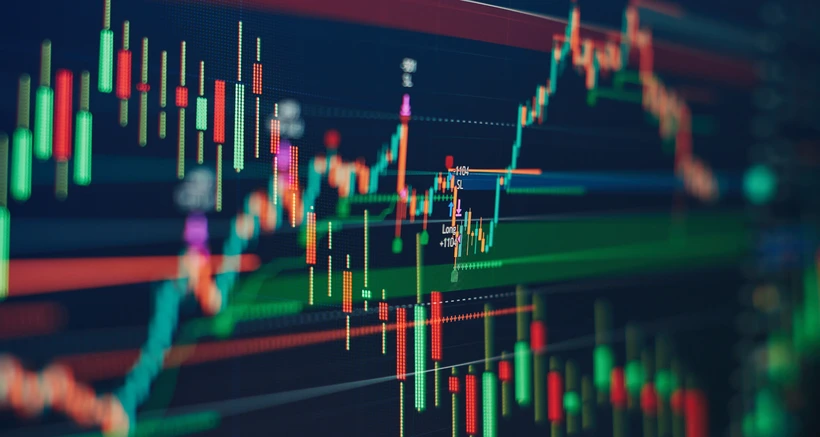
Why Do Currency Rates Change?
The Price Tag on a Nation
Walk into a grocery store and every item has a price. A gallon of milk. A loaf of bread. A steak. The market determines what those goods are worth at a given moment.
Now consider something far larger: an entire country's money.
That is what a currency exchange rate really is. It is the price of one nation's money expressed in terms of another nation's money. And like every other price in a market economy, it moves. Sometimes gradually. Sometimes violently.
I've spent decades around entrepreneurs, investors, bankers, and executives. One lesson keeps resurfacing: markets hate uncertainty and reward confidence. Currency markets may be the purest example of that principle. Every second of every day, millions of decisions are being made about where capital should flow. The cumulative effect of those decisions determines whether a currency strengthens, weakens, or remains relatively stable.
People often assume currency movements are mysterious. They are not. Complex? Absolutely. Influenced by dozens of variables? Without question. But at their core, exchange rates reflect a straightforward question:
How much confidence does the world have in a country's economic future?
That confidence rises and falls for many reasons.
Let's examine the biggest ones.
Understanding Exchange Rates
Before diving into the drivers, it helps to understand what an exchange rate represents.
Suppose one U.S. dollar buys 0.90 euros.
That means:
| Currency Pair | Exchange Rate | Meaning |
|---|---|---|
| USD/EUR | 0.90 | $1 buys €0.90 |
| EUR/USD | 1.11 | €1 buys $1.11 |
| USD/JPY | 145 | $1 buys 145 Japanese yen |
| GBP/USD | 1.28 | £1 buys $1.28 |
These rates are not fixed in most developed economies. They fluctuate constantly as buyers and sellers interact in the global foreign exchange market.
And this market is enormous.
Daily trading volume reaches trillions of dollars. It is larger than global stock markets. Larger than bond markets. Larger than most people can even conceptualize.
When that much money is moving around, exchange rates become highly sensitive indicators of economic reality.
Interest Rates: The Heavyweight Champion
If I had to identify the single most influential force affecting currency values, it would be interest rates.
Money seeks returns.
Always has. Always will.
Imagine two countries.
Country A offers government bonds yielding 2%.
Country B offers government bonds yielding 6%.
Investors looking for income will naturally gravitate toward Country B. But before they can purchase those bonds, they need Country B's currency.
Demand rises.
The currency strengthens.
It is a simple chain reaction:
Higher interest rates → More foreign investment → Greater currency demand → Stronger exchange rate.
This explains why announcements from central banks command so much attention.
When institutions such as the Federal Reserve, the European Central Bank, or the Bank of Japan adjust rates, currency traders immediately reassess future capital flows.
The market is constantly asking:
Where will investors earn the best risk-adjusted return?
The answer often shows up in exchange rates.
Inflation: The Silent Currency Killer
Inflation rarely arrives with dramatic headlines at first.
Instead, it operates like rust.
Slowly. Quietly. Persistently.
A currency's value ultimately depends on purchasing power. If prices inside a country rise rapidly, each unit of currency buys less.
That reality matters internationally.
Consider two economies:
| Factor | Country X | Country Y |
|---|---|---|
| Inflation Rate | 2% | 10% |
| Purchasing Power Stability | Strong | Weak |
| Investor Confidence | Higher | Lower |
| Currency Outlook | Positive | Negative |
Investors generally prefer currencies associated with stable purchasing power.
Why?
Because nobody wants to hold an asset that is steadily losing value.
History provides countless examples. Nations that allow inflation to spiral often experience significant currency depreciation. Markets eventually conclude that the currency is becoming less valuable, and they price it accordingly.
Economic Growth Changes Everything
Strong economies attract capital.
Weak economies repel it.
That principle sounds obvious, yet its implications are profound.
When a country demonstrates robust growth, investors see opportunity:
-
New businesses
-
Expanding consumer demand
-
Rising corporate profits
-
Growing tax revenues
Capital flows toward growth.
I remember speaking with a business owner years ago who was evaluating expansion opportunities across several countries. His decision wasn't driven by exchange rates. It was driven by growth prospects.
Yet his investment eventually affected exchange rates because thousands of other executives were making similar decisions.
That is a lesson worth remembering.
Currencies don't move simply because traders push buttons.
They move because underlying economic activity influences where real money wants to go.
Growth creates confidence.
Confidence attracts capital.
Capital strengthens currencies.
Political Stability Matters More Than Many Admit
Economists love equations.
Markets love predictability.
The second one is often more important.
Investors can tolerate modest inflation.
They can tolerate slower growth.
What they struggle with is uncertainty.
Political turmoil introduces uncertainty into every forecast.
Questions emerge:
-
Will tax policies change?
-
Will regulations shift dramatically?
-
Will contracts remain enforceable?
-
Will institutions remain independent?
The moment those questions become difficult to answer, investors start demanding higher compensation for risk—or they leave entirely.
Currency markets react quickly.
A politically stable nation often enjoys stronger currency support than an economically similar nation plagued by instability.
Confidence is not merely an economic variable.
It is a political one.
Trade Balances: The Supply-and-Demand Story
Every nation buys goods.
Every nation sells goods.
The difference between those two activities influences currency values.
When a country exports more than it imports, foreign buyers need that country's currency to pay for products.
Demand rises.
When imports exceed exports, residents must acquire foreign currencies to pay overseas suppliers.
Demand shifts outward.
The basic framework looks like this:
| Trade Position | Currency Impact |
|---|---|
| Trade Surplus | Often supportive |
| Balanced Trade | Generally neutral |
| Large Trade Deficit | Can pressure currency |
Notice the word "often."
Trade balances matter, but they do not operate in isolation. Interest rates, investment flows, and market expectations can overwhelm trade effects for long periods.
That is one reason currency forecasting remains notoriously difficult.
Multiple forces are always interacting simultaneously.
Market Psychology: The Force Nobody Can Ignore
Here's where things become fascinating.
Currencies do not move solely because of facts.
They move because of expectations.
Suppose inflation falls.
Normally, that sounds positive.
But if investors expected inflation to fall even more, a currency could decline despite seemingly good news.
Read that again.
The market can react negatively to positive developments.
Why?
Because markets price expectations, not just current conditions.
I've watched investors spend months analyzing spreadsheets only to discover that psychology overwhelmed their models.
Currency markets are especially vulnerable to this phenomenon because they operate continuously across the globe.
Millions of participants are constantly reassessing:
-
Future growth
-
Future inflation
-
Future policy decisions
-
Future risks
The result is a market that often moves before economic reality becomes visible.
Central Banks Can Move Markets Overnight
There are moments when years of gradual trends are overshadowed by a single announcement.
Central banks possess extraordinary influence because they control monetary policy.
Their tools include:
Interest Rate Adjustments
Raising rates can strengthen a currency.
Lowering rates can weaken it.
Quantitative Easing
When central banks inject substantial liquidity into financial systems, currency supply increases.
Greater supply can reduce value.
Market Guidance
Sometimes words alone move markets.
A carefully crafted statement from a central bank governor can trigger billions of dollars in currency transactions within minutes.
That is the power of expectations.
Geopolitical Events and Global Shocks
Not every currency movement begins inside an economics department.
Wars.
Sanctions.
Pandemics.
Energy crises.
Trade disputes.
All can reshape capital flows.
Investors often seek what they perceive as safety during turbulent periods.
Certain currencies gain from that behavior because markets view those countries as relatively stable or financially secure.
Others suffer because uncertainty raises concerns about future economic performance.
Global events remind us that currencies are not isolated financial instruments.
They are reflections of entire societies.
Economics, politics, diplomacy, and security all converge in exchange rates.
Why Forecasting Currency Rates Is So Difficult
People frequently ask whether exchange rates can be predicted.
The answer is both yes and no.
Long-term trends often reflect fundamental realities:
-
Productivity
-
Inflation
-
Interest rates
-
Economic growth
But short-term movements are another matter entirely.
A surprising inflation report.
An election result.
A central bank speech.
A geopolitical incident.
Any one of these can alter expectations instantly.
Forecasting currencies resembles forecasting human behavior on a massive scale.
Possible?
To a degree.
Precise?
Rarely.
That humility is important.
Markets have a way of reminding us that certainty is often an illusion.
The Real Lesson Behind Every Exchange Rate
Most people view currencies as technical financial instruments.
I see something broader.
A currency is a report card.
It reflects how the world evaluates a nation's economic management, political stability, productivity, financial credibility, and future prospects.
When exchange rates change, they are communicating information.
Sometimes that information concerns inflation.
Sometimes interest rates.
Sometimes growth.
Sometimes fear.
But the message is always about confidence.
And confidence is one of the most powerful forces in economics.
The provocative truth is that currencies rarely lie for long. Governments can issue statements. Politicians can make promises. Experts can publish forecasts. Yet eventually the foreign exchange market renders its verdict.
That verdict appears in a single number: the exchange rate.
Watch that number carefully and you are not merely observing money.
You are watching the world place a value on trust, competence, and economic expectation in real time.
Few markets tell a story that honestly.
- Arts
- Business
- Computers
- Παιχνίδια
- Health
- Κεντρική Σελίδα
- Kids and Teens
- Money
- News
- Personal Development
- Recreation
- Regional
- Reference
- Science
- Shopping
- Society
- Sports
- Бизнес
- Деньги
- Дом
- Досуг
- Здоровье
- Игры
- Искусство
- Источники информации
- Компьютеры
- Личное развитие
- Наука
- Новости и СМИ
- Общество
- Покупки
- Спорт
- Страны и регионы
- World

 English
 Russian
 French
 Spanish
 Portuguese
 Deutsch
 Turkish
 Dutch
Dutch
 Italiano
 Arabic
 Romaian
 Portuguese (Brazil)