
What is the foreign exchange market?
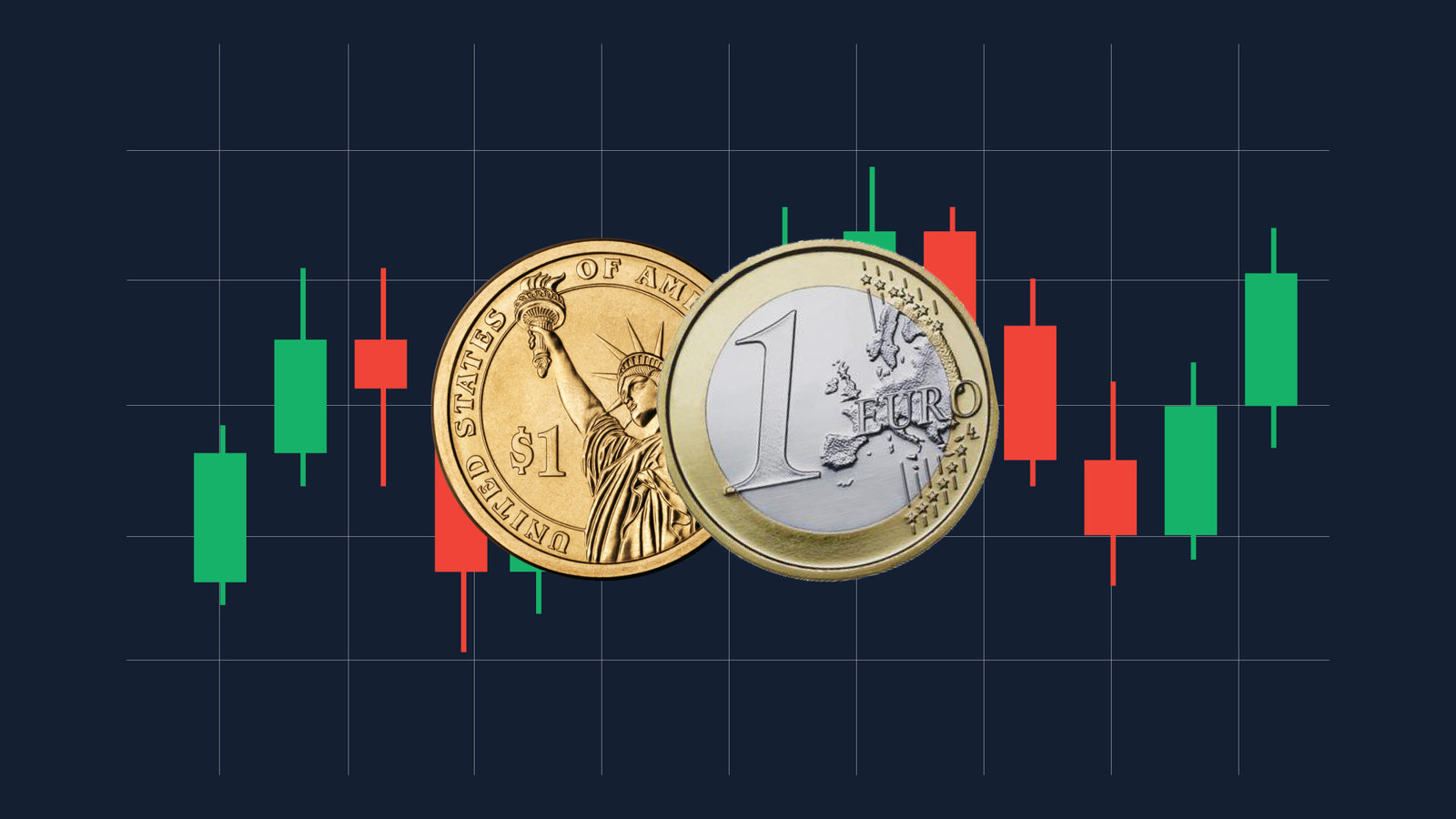
What Is the Foreign Exchange Market?
Walk into a supermarket in New York, London, Tokyo, or Dubai and you’ll see products imported from every corner of the globe. A German automobile. Colombian coffee. South Korean electronics. French cosmetics. Most people notice the labels. Few stop to consider the invisible mechanism that makes all of those transactions possible.
That mechanism is the foreign exchange market.
It is the largest financial marketplace on Earth. Bigger than stocks. Bigger than bonds. Bigger than commodities. Every day, trillions of dollars' worth of currencies change hands as governments, banks, corporations, investors, and travelers exchange one currency for another.
The foreign exchange market—commonly called the forex market or FX market—is not simply a venue for traders staring at computer screens. It is a global infrastructure that helps determine the price of money itself.
And when you think about it, that is a remarkable idea.
Money has a price.
The U.S. dollar has a price relative to the euro. The euro has a price relative to the Japanese yen. The yen has a price relative to the British pound. Those prices move continuously, every minute of every day, influenced by economic growth, interest rates, inflation, political events, and investor psychology.
Understanding the foreign exchange market is not merely an exercise in financial literacy. It is a window into how the global economy functions.
The Basic Definition
At its core, the foreign exchange market is a decentralized global marketplace where currencies are bought and sold.
Unlike the stock market, which operates through centralized exchanges such as the New York Stock Exchange or Nasdaq, forex trading occurs electronically through a worldwide network of banks, financial institutions, corporations, brokers, and investors.
There is no single forex building.
No opening bell.
No central trading floor.
The market operates twenty-four hours a day during the business week, moving from Asia to Europe to North America in a continuous cycle.
That structure makes forex uniquely dynamic. While stock markets close each day, currency markets rarely sleep.
Why Currencies Need a Market
Imagine an American company purchasing machinery from Germany.
The German supplier wants payment in euros. The American buyer holds dollars.
Somewhere in between, an exchange must occur.
Now multiply that transaction by millions.
Add international tourism. Cross-border investment. Government debt purchases. Commodity exports. Corporate acquisitions. Pension fund allocations.
The result is a constant global need to convert one currency into another.
The foreign exchange market exists because international commerce cannot function without it.
Every time currencies are exchanged, market participants establish a current exchange rate—the value of one currency relative to another.
For example:
-
1 U.S. dollar might equal 0.92 euros.
-
1 euro might equal 1.09 U.S. dollars.
-
1 British pound might equal 1.28 U.S. dollars.
Those numbers fluctuate continuously.
A Lesson I Learned About Currency Risk
Years ago, I attended a meeting involving executives whose businesses operated across multiple continents. The discussion was supposed to focus on sales growth.
Instead, nearly half the meeting revolved around currencies.
Revenue was rising.
Customer demand was healthy.
Operations were performing well.
Yet profits were under pressure because exchange rates had shifted.
The experience reinforced an important lesson: a company can execute brilliantly and still see financial results altered by currency movements.
That realization changed how I viewed global business. Success is not determined solely by products, management, or strategy. Sometimes the value of money itself becomes a major factor.
For multinational corporations, foreign exchange exposure is not a side issue. It is a core business consideration.
Who Participates in the Forex Market?
The foreign exchange market includes a surprisingly diverse collection of participants.
Central Banks
Central banks play a critical role in currency markets.
Institutions such as the Federal Reserve, the European Central Bank, and the Bank of Japan influence exchange rates through monetary policy decisions.
Interest rate changes can attract or repel capital flows, affecting demand for a nation's currency.
Commercial Banks
Large banks facilitate enormous volumes of currency transactions every day.
They act as intermediaries for clients while also trading currencies for their own operations.
Corporations
Multinational companies frequently exchange currencies to conduct international business.
A manufacturer importing raw materials, a technology company collecting overseas revenue, or a retailer sourcing products abroad may all require forex transactions.
Investors and Asset Managers
Institutional investors regularly move capital across borders.
When funds purchase foreign stocks or bonds, currency exchanges often accompany those investments.
Retail Traders
Individual traders represent a visible but relatively small segment of overall forex activity.
Advances in technology have made currency trading accessible to almost anyone with an internet connection and a brokerage account.
How Currency Pairs Work
Currencies trade in pairs.
This is one of the first concepts newcomers must understand.
You are never buying a currency in isolation. You are simultaneously buying one currency and selling another.
Consider the EUR/USD pair.
If EUR/USD rises, the euro is strengthening relative to the U.S. dollar.
If EUR/USD falls, the dollar is strengthening relative to the euro.
Some of the most actively traded currency pairs include:
-
EUR/USD (Euro / U.S. Dollar)
-
USD/JPY (U.S. Dollar / Japanese Yen)
-
GBP/USD (British Pound / U.S. Dollar)
-
USD/CHF (U.S. Dollar / Swiss Franc)
-
AUD/USD (Australian Dollar / U.S. Dollar)
These major pairs account for a substantial share of global trading volume.
What Moves Exchange Rates?
This is where the forex market becomes especially fascinating.
Currencies respond to a vast network of economic and political forces.
Interest Rates
Higher interest rates often attract international capital seeking better returns.
Increased demand for a country's assets can increase demand for its currency.
Inflation
Persistent inflation can erode purchasing power and weaken confidence in a currency over time.
Economic Growth
Strong economic performance frequently supports currency appreciation because investors expect stronger earnings, investment opportunities, and financial stability.
Political Stability
Investors generally prefer predictable environments.
Political uncertainty can increase volatility and reduce demand for a nation's currency.
Market Sentiment
Sometimes perception matters almost as much as reality.
Expectations regarding future policy decisions, economic reports, or geopolitical developments can move exchange rates before events even occur.
Forex Compared With Other Financial Markets
The differences become clearer when viewed side by side.
| Feature | Foreign Exchange Market | Stock Market | Bond Market |
|---|---|---|---|
| Primary Asset | Currencies | Company shares | Debt securities |
| Trading Hours | Nearly 24 hours, 5 days a week | Limited exchange hours | Varies by market |
| Main Drivers | Interest rates, economics, geopolitics | Corporate earnings, growth | Interest rates, credit quality |
| Market Structure | Decentralized | Centralized exchanges | Primarily decentralized |
| Global Reach | Extremely high | High | High |
| Daily Trading Volume | Largest globally | Smaller than forex | Large but below forex |
The scale difference is particularly striking.
Forex is not merely another financial market. It is the marketplace through which the world's monetary systems interact.
The Role of Technology
The modern forex market would be unrecognizable to participants from several decades ago.
Today's transactions occur through sophisticated electronic networks capable of processing enormous trading volumes within fractions of a second.
Algorithms analyze economic data.
Trading systems execute orders automatically.
Information travels globally almost instantaneously.
Technology has increased efficiency, liquidity, and accessibility. Yet it has also accelerated market reactions. News that once took days to influence prices can now affect exchange rates within seconds.
Why Forex Matters to Ordinary People
Some people hear the phrase "foreign exchange market" and assume it has little relevance to everyday life.
The opposite is true.
Currency movements influence:
-
Travel costs
-
Imported goods prices
-
Inflation levels
-
Investment returns
-
Corporate profits
-
Employment conditions
-
International trade competitiveness
When a currency strengthens or weakens significantly, consumers often feel the effects without realizing the source.
A vacation becomes more expensive.
Imported products cost more.
Export-oriented industries gain or lose competitiveness.
The impact extends far beyond trading desks.
Risks and Misconceptions
The popularity of forex trading has generated misconceptions.
One of the biggest is the belief that currency trading offers easy profits.
It does not.
The market is highly competitive. Participants include major global banks, sophisticated hedge funds, institutional investors, and professional traders with extensive resources.
Leverage, while attractive to some traders, can magnify losses just as rapidly as gains.
Successful participation requires discipline, risk management, and a realistic understanding of uncertainty.
There are no shortcuts.
Markets have a way of exposing overconfidence.
The Bigger Picture
The foreign exchange market is often described as a financial marketplace. That description is accurate, but incomplete.
It is also a real-time scoreboard of global confidence.
Every transaction reflects a judgment about economic strength, political stability, monetary policy, future growth, or risk.
Currencies rise because people believe.
Currencies fall because people doubt.
Behind every exchange rate is a collective assessment of value formed by millions of decisions occurring across continents.
Conclusion: The World's Most Important Market Is Also the Least Understood
Here is the paradox.
Most people can explain what a stock market does. Many can describe real estate. Some understand bonds.
Yet the foreign exchange market, despite being the largest and arguably most influential financial marketplace in existence, often remains in the background.
That is a mistake.
The forex market determines the relative value of national currencies. It helps facilitate international trade. It influences investment flows. It affects inflation, corporate profitability, and consumer purchasing power.
In a very real sense, it is the circulatory system of the global economy.
And perhaps that is the most provocative takeaway of all: nations may print money, central banks may guide policy, and politicians may shape economic narratives—but every day, in thousands of transactions across the world, the foreign exchange market delivers its own verdict on what that money is actually worth.
That verdict is never final.
It is continuously revised.
Minute by minute.
Trade by trade.
Confidence by confidence.
- Arts
- Business
- Computers
- Giochi
- Health
- Home
- Kids and Teens
- Money
- News
- Personal Development
- Recreation
- Regional
- Reference
- Science
- Shopping
- Society
- Sports
- Бизнес
- Деньги
- Дом
- Досуг
- Здоровье
- Игры
- Искусство
- Источники информации
- Компьютеры
- Личное развитие
- Наука
- Новости и СМИ
- Общество
- Покупки
- Спорт
- Страны и регионы
- World

 English
 Russian
 French
 Spanish
 Portuguese
 Deutsch
 Turkish
 Dutch
Dutch
 Arabic
 Romaian
 Portuguese (Brazil)
 Greek
Greek