
What is sustainable development?
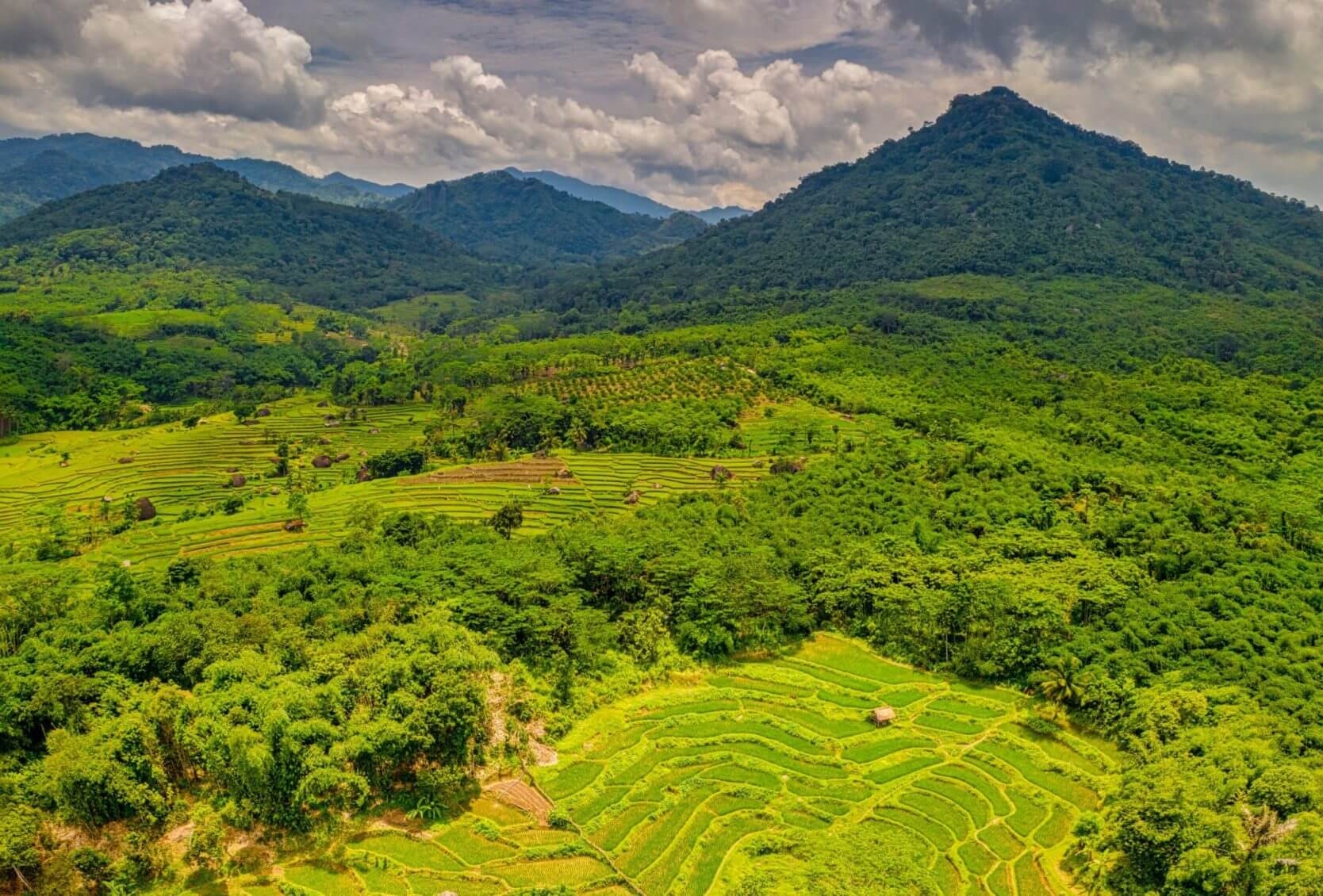
What Is Sustainable Development?
A forest does not speak of sustainability. A river does not convene a panel discussion regarding resilience. Coral reefs do not issue white papers on circular economies. Nature simply persists through relationship, reciprocity, and exquisite calibration. The oak feeds fungi; fungi feed the oak. Death nourishes life with an intimacy that economists still struggle to quantify.
Human beings, meanwhile, invented quarterly earnings reports.
That tension—between living systems and extractive systems—sits at the center of sustainable development. The phrase itself has become polished from overuse, worn smooth by conferences, political speeches, corporate brochures, and airport billboards depicting smiling children beneath wind turbines. Yet beneath the varnish is a question both ancient and urgent: How does a civilization endure without devouring the conditions necessary for its own existence?
The answer is not technical alone. It is biological. Cultural. Moral. Atmospheric. It concerns soil as much as software, fisheries as much as finance.
Sustainable development, at its core, means organizing human life so that future generations inherit a planet richer in possibility rather than poorer in substance. It asks whether economic activity can operate within ecological boundaries while still expanding human dignity. Not growth at any cost. Not austerity disguised as virtue. Something subtler and harder: continuity.
The concept entered mainstream global discourse in 1987 through the Brundtland Report, formally titled Our Common Future, published by the United Nations World Commission on Environment and Development. Its most quoted definition remains concise enough to fit on a coffee mug:
“Development that meets the needs of the present without compromising the ability of future generations to meet their own needs.”
Elegant sentence. Dangerous sentence, too. Because once one accepts it honestly, entire economic assumptions begin to wobble.
The Original Mistake: Treating Nature as Inventory
Industrial civilization inherited a peculiar hallucination: that the Earth is made of “resources.”
Trees became timber inventory. Wetlands became undeveloped real estate. Rivers became hydroelectric potential. Whales became oil. Human labor became “human capital,” which is perhaps the most chilling phrase ever uttered in a business school.
Language matters because language edits perception. Once living systems are reduced to inputs, extraction appears rational.
For nearly three centuries, industrial economies operated under a tacit assumption of infinity. Infinite forests. Infinite fisheries. Infinite atmosphere. Infinite groundwater. Infinite capacity for waste absorption. We built accounting systems that counted the sale of chainsaws as economic gain while ignoring the disappearance of old-growth forests as economic loss.
Gross Domestic Product can rise after an oil spill. That fact alone should give us pause.
Sustainable development emerged not from idealism but from collision with physical reality. Climate disruption intensified. Aquifers fell. Pollinator populations collapsed. Topsoil eroded at rates vastly exceeding regeneration. Economists called these “externalities,” as if destabilizing the biosphere were somehow peripheral to commerce.
Nature does not recognize externalities. Carbon dioxide molecules do not pause to ask whether their emissions were profitable.
Sustainability Is Not Environmentalism
This distinction matters enormously.
Environmentalism, at least in its popular form, often centers on conservation: protecting forests, endangered species, oceans, or landscapes from destruction. Sustainable development is broader and more unruly. It asks how entire societies can function over centuries.
That includes:
-
Energy systems
-
Agriculture
-
Housing
-
Transportation
-
Public health
-
Water access
-
Labor conditions
-
Urban planning
-
Education
-
Governance
A city cannot be called sustainable if its air is clean but its workers cannot afford housing. Nor can a nation claim sustainability while exporting pollution to poorer countries. Sustainability is indivisible. Ecological stability and social justice are intertwined strands of the same fabric.
The phrase “environment versus economy” has always been intellectually bankrupt. Economies are wholly owned subsidiaries of the environment. Remove fertile soil, stable climate patterns, freshwater cycles, and biodiversity, and the economy does not continue heroically onward. It evaporates.
The Three Pillars of Sustainable Development
Most frameworks describe sustainable development through three interconnected pillars: environmental protection, social equity, and economic viability.
| Pillar | Central Question | Example of Failure | Example of Success |
|---|---|---|---|
| Environmental Sustainability | Can ecosystems regenerate faster than they are depleted? | Overfishing collapsing marine populations | Regenerative agriculture rebuilding soil carbon |
| Social Sustainability | Are people treated with fairness, dignity, and access to opportunity? | Sweatshop labor supporting cheap consumer goods | Universal clean-water infrastructure |
| Economic Sustainability | Can prosperity endure without destabilizing systems? | Fossil-fuel dependency causing climate volatility | Circular manufacturing reducing waste and costs |
The table appears tidy. Reality is not.
A solar farm built through forced labor is not sustainable. An organic food movement accessible only to affluent consumers is incomplete. Electric vehicles powered by coal-heavy grids merely relocate emissions. Every solution carries consequences nested inside consequences.
This is why sustainable development demands systems thinking rather than branding campaigns.
A Lesson I Learned Standing in a Coffee Field
Years ago, I visited a coffee-growing region in Latin America where farmers had abandoned industrial monoculture practices in favor of agroforestry. The shift seemed economically irrational at first glance. Yields initially declined. Rows became messy. Shade trees interrupted mechanized efficiency.
Yet as I walked the hillsides, another arithmetic revealed itself.
Birdsong returned first. Then insects. Then moisture retention improved because root systems stabilized soil structure. Streams that had become seasonal began flowing longer into dry months. Farmers diversified crops—bananas, citrus, cacao—reducing dependence on volatile coffee prices. Debt levels dropped because synthetic fertilizer purchases diminished.
One farmer said something I have never forgotten: “The land stopped behaving like a factory and started behaving like a forest again.”
That sentence contains an entire philosophy of sustainable development.
Industrial systems often pursue maximum short-term output while degrading long-term resilience. Living systems behave differently. They prioritize adaptation, diversity, interdependence, and cyclical renewal.
The lesson was humbling. Sustainability is not primarily about doing less harm. It is about participating in conditions that allow life to flourish.
Why Climate Change Changed Everything
Before climate disruption became impossible to ignore, sustainability discussions frequently occupied the margins of public policy. Recycling bins. Compact fluorescent bulbs. Earnest conferences in carpeted hotel ballrooms.
Then the atmosphere intervened.
Wildfires intensified across the American West. Heat waves killed thousands in Europe and Asia. Floods displaced millions. Insurance markets began retreating from vulnerable regions. Supply chains fractured under climatic shocks.
Climate change transformed sustainable development from a moral aspiration into a civilizational necessity.
Yet climate is not the only crisis. It is the amplifier.
Biodiversity loss weakens ecosystems already stressed by warming temperatures. Water scarcity intensifies migration pressures. Economic inequality undermines collective political action. Sustainability challenges behave less like isolated problems and more like interacting weather systems.
The temptation is to seek a silver bullet technology. There isn’t one.
Solar panels matter. Wind turbines matter. Electrification matters enormously. But sustainable development cannot be reduced to swapping combustion engines for batteries while preserving a culture organized around endless consumption.
The deeper question is qualitative, not merely quantitative: What constitutes enough?
The Myth of Endless Growth
No discussion of sustainable development can avoid confronting the theology of perpetual economic growth.
Modern economies are structurally addicted to expansion. More extraction. More production. More consumption. More throughput. Politicians fear stagnation because employment systems, debt structures, and investment markets depend upon growth assumptions.
Yet infinite material growth on a finite planet presents an elementary contradiction.
This does not mean humanity must retreat into deprivation. It means distinguishing between forms of growth.
A society can grow in:
-
Knowledge
-
Health
-
Ecological restoration
-
Public transportation
-
Energy efficiency
-
Cultural richness
-
Longevity
-
Educational access
These expansions may reduce material consumption rather than increase it.
Meanwhile, other forms of “growth” resemble metabolic disease. Fast fashion mountains in landfills. Planned obsolescence in electronics. Food waste alongside hunger. Disposable plastics circulating through marine food chains.
Nature measures success differently. Mature ecosystems do not maximize throughput; they maximize stability.
Indigenous Knowledge and the Memory of Reciprocity
Long before sustainability became a policy framework, Indigenous cultures across the world practiced forms of reciprocal stewardship refined over millennia.
Many Native American traditions considered the impact of decisions on the seventh generation. Indigenous fire management techniques maintained healthier forests long before modern forestry existed. Polynesian societies developed intricate marine conservation systems. Traditional agricultural methods in parts of Africa and Asia preserved soil fertility through polyculture and rotational practices.
Industrial society often dismissed such knowledge as primitive because it lacked mechanized scale. Yet many so-called advanced systems now depend upon extraordinary levels of chemical intervention merely to maintain productivity.
There is irony in this. The future may require recovering forms of wisdom the past already understood.
Sustainable development is therefore not solely innovation. Sometimes it is remembrance.
Can Corporations Truly Be Sustainable?
A difficult question. An unavoidable one.
Corporations now publish sustainability reports thick enough to stun livestock. Net-zero pledges proliferate. ESG metrics circulate through investment firms. Some of this reflects genuine transformation. Some reflects sophisticated public relations.
The distinction usually appears in whether a company changes its underlying business model or merely decorates it with greener language.
A corporation extracting fossil fuels while purchasing carbon offsets may reduce reputational risk without reducing atmospheric instability. By contrast, companies redesigning supply chains around repairability, circular materials, renewable energy, and labor transparency are attempting something more structural.
Still, there remains tension between shareholder expectations for perpetual financial growth and ecological limits.
The atmosphere does not negotiate quarterly.
Sustainable Development Is Ultimately Local
Global frameworks matter, but sustainability becomes real only through physical places.
A neighborhood with walkable streets reduces emissions while improving public health. Local food systems shorten supply chains and strengthen regional economies. Wetland restoration buffers flooding. Public transit reshapes urban form. Efficient housing lowers energy burdens for low-income families.
The future will not arrive uniformly. Some cities will adapt intelligently; others will cling to brittle systems until crisis forces change.
What encourages me is that sustainable development often improves quality of life immediately rather than someday. Cleaner air reduces asthma. Urban trees lower temperatures. Efficient buildings cut utility bills. Restored soils increase drought resilience.
The benefits are tangible. The obstacle is rarely technological capability. More often it is political imagination.
The Provocative Truth Beneath Sustainability
Here is the uncomfortable possibility few leaders articulate plainly:
The crisis is not that humanity lacks resources. The crisis is that modern economies frequently reward the destruction of living systems faster than they reward their regeneration.
We subsidize depletion. We incentivize waste. We externalize suffering geographically and temporally, exporting consequences to poorer regions and future generations.
Sustainable development asks civilization to mature beyond that logic.
Not through guilt. Guilt is inert. Through recognition.
Every breath contains oxygen generated by organisms older than human language. Every meal depends upon microbial symphonies in soil. Every glass of water arrives through planetary cycles no corporation invented.
The economy is not separate from nature. It is an expression of nature. A subset. A brief experiment nested inside four billion years of biological intelligence.
Whether sustainable development succeeds will depend less on policy papers than on whether societies rediscover humility before living systems.
A forest knows how to sustain itself. A river understands continuity. Coral reefs mastered circular economies long before economists coined the phrase.
The real question is whether human civilization can remember that it, too, is part of the ecology it is trying to manage.
- Arts
- Business
- Computers
- Spiele
- Health
- Startseite
- Kids and Teens
- Geld
- News
- Personal Development
- Recreation
- Regional
- Reference
- Science
- Shopping
- Society
- Sports
- Бизнес
- Деньги
- Дом
- Досуг
- Здоровье
- Игры
- Искусство
- Источники информации
- Компьютеры
- Личное развитие
- Наука
- Новости и СМИ
- Общество
- Покупки
- Спорт
- Страны и регионы
- World

 English
 Russian
 French
 Spanish
 Portuguese
 Turkish
 Dutch
Dutch
 Italiano
 Arabic
 Romaian
 Portuguese (Brazil)
 Greek
Greek