
Why do discounts and sales work?
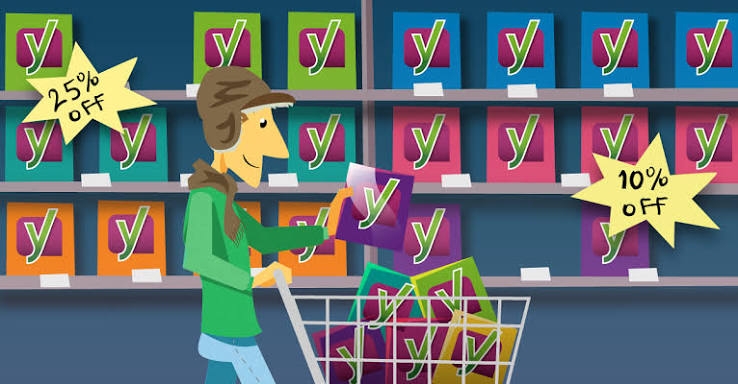
Why Do Discounts and Sales Work?
The Strange Power of a Crossed-Out Number
A person walks into a store and sees two price tags.
The first says:
$100
The second says:
$150 → $100
The final price is identical.
Yet the second offer feels significantly more attractive.
Nothing about the product changed.
Nothing about the amount paid changed.
Only the comparison changed.
And that small change reveals one of the central insights of behavioral economics: consumers do not evaluate value in absolute terms. They evaluate it relative to reference points.
Discounts and sales work because the human mind is comparative, not mathematical.
The Myth of Purely Rational Pricing
Traditional economic theory assumes consumers focus on final outcomes.
If a product costs $100, the decision should depend on whether the product is worth $100.
The path leading to that price should be irrelevant.
But real consumers rarely think this way.
They ask different questions:
-
How much am I saving?
-
What was the original price?
-
Is this a rare opportunity?
-
Am I getting a good deal?
The perceived value of a purchase is often shaped more by comparison than by the final number itself.
Anchoring: The Original Price Changes Everything
One of the most powerful explanations for discounts is anchoring.
The first price a consumer sees becomes a reference point.
For example:
-
Original price: $200
-
Sale price: $120
The $200 figure establishes an anchor.
The consumer now evaluates $120 relative to $200 rather than independently.
This creates a perception of gain.
Without the anchor, $120 is simply a price.
With the anchor, it becomes a discount.
The product appears more valuable because the reference point has changed.
Consumers Buy Savings, Not Just Products
An interesting feature of discounts is that consumers often derive satisfaction from the deal itself.
The purchase becomes two experiences:
-
Acquiring the product
-
Acquiring the discount
The second experience can be surprisingly influential.
People frequently describe purchases in terms of savings:
-
“I saved $50.”
-
“I got it on sale.”
-
“The discount was too good to ignore.”
The emotional reward comes not only from ownership but from perceived advantage.
Loss Aversion and the Fear of Missing Out
Behavioral economics shows that losses feel more powerful than gains.
This principle, known as loss aversion, helps explain why sales are effective.
A discount creates a psychological choice:
-
Buy now and receive the savings
-
Wait and lose the savings
Notice the framing.
The consumer is not simply evaluating a gain.
They are evaluating the possibility of a loss.
And losses motivate action more strongly than equivalent gains.
This is why limited-time sales are so common.
The approaching expiration transforms inaction into perceived loss.
Scarcity Compresses Decision Time
Sales are often paired with scarcity signals:
-
“Ends tonight”
-
“Only 3 left”
-
“Limited-time offer”
These messages do more than communicate information.
They alter perception of time.
When opportunities appear scarce, consumers feel pressure to decide quickly.
Under time pressure:
-
Deliberation decreases
-
Emotional responses increase
-
Heuristics become more influential
The decision becomes less about whether the product is needed and more about whether the opportunity will disappear.
Mental Accounting Changes Spending Behavior
People do not treat all money equally.
Behavioral economists refer to this as mental accounting.
For example:
A consumer may hesitate to spend $50 on a product at full price.
Yet happily purchase it when marked down from $80.
The amount spent is identical.
But psychologically, the transaction feels different.
The discount creates a separate mental category:
“I gained $30.”
That perceived gain becomes part of the decision.
The Pleasure of Winning
A successful discount often feels like a small victory.
This reaction has little to do with utility.
It is emotional.
The consumer experiences:
-
Smartness
-
Competence
-
Resourcefulness
-
Advantage
The purchase becomes evidence of successful judgment.
In this sense, sales appeal not only to economic motives but to identity.
People enjoy feeling that they made a good decision.
Why Percentage Discounts Feel Powerful
Retailers frequently emphasize percentages rather than dollar amounts:
-
50% off
-
30% off
-
Buy one, get one free
Percentages often feel larger psychologically because they highlight relative improvement.
A consumer may react more strongly to:
-
“50% off”
than to:
-
“Save $20”
even when the monetary outcome is identical.
The mind is highly sensitive to relative change.
A Personal Observation on Sales Psychology
At one point, I noticed a curious pattern in my own purchasing decisions.
A product that seemed unnecessary on Monday suddenly appeared reasonable on Tuesday after a discount appeared.
The product had not changed.
My need had not changed.
The only difference was the presence of a comparison point.
What felt like increased value was often increased perceived value.
The experience highlighted how strongly judgment depends on context rather than objective assessment alone.
Why Discounts Sometimes Increase Demand for Unneeded Products
A rational model would predict that discounts simply accelerate purchases consumers already intended to make.
But behavior suggests something more.
Discounts often create demand.
Consumers buy products they had no prior intention of purchasing.
Why?
Because discounts change the question.
Instead of asking:
“Do I need this?”
Consumers begin asking:
“Can I afford to miss this deal?”
The shift is subtle.
But it fundamentally changes the decision process.
The Role of Social Proof
Sales gain additional power when paired with signals that others are participating:
-
“Best seller”
-
“Trending now”
-
“Thousands purchased this week”
These cues reduce uncertainty.
If many others are buying, the decision feels safer.
The discount then appears validated by collective behavior.
Value becomes social as well as economic.
Why Sales Continue to Work Even When Consumers Understand Them
One of the most fascinating aspects of discount psychology is that awareness rarely eliminates its influence.
Consumers know retailers use discounts strategically.
They know anchors can be manipulated.
They know urgency messages are often marketing tools.
And yet sales continue to work.
The reason is that these mechanisms operate at a level deeper than conscious recognition.
Knowing about anchoring does not prevent anchoring.
Understanding loss aversion does not remove it.
The cognitive process remains active even when it becomes visible.
Conclusion: Discounts Sell More Than Lower Prices
Discounts and sales work because they reshape perception.
They create:
-
New reference points
-
Feelings of gain
-
Fear of missing out
-
Compressed decision timelines
-
Emotional rewards for purchasing
The success of a sale is rarely explained by arithmetic alone.
It emerges from how the human mind interprets value relative to context.
Behavioral economics reveals that consumers do not simply buy products.
They buy comparisons, opportunities, and stories about value.
And a crossed-out number can be surprisingly persuasive because it changes all three at once.
- Arts
- Business
- Computers
- Παιχνίδια
- Health
- Κεντρική Σελίδα
- Kids and Teens
- Money
- News
- Personal Development
- Recreation
- Regional
- Reference
- Science
- Shopping
- Society
- Sports
- Бизнес
- Деньги
- Дом
- Досуг
- Здоровье
- Игры
- Искусство
- Источники информации
- Компьютеры
- Личное развитие
- Наука
- Новости и СМИ
- Общество
- Покупки
- Спорт
- Страны и регионы
- World

 English
 Russian
 French
 Spanish
 Portuguese
 Deutsch
 Turkish
 Dutch
Dutch
 Italiano
 Arabic
 Romaian
 Portuguese (Brazil)