
What is availability bias?
What Is Availability Bias?
When Memory Becomes a Substitute for Probability
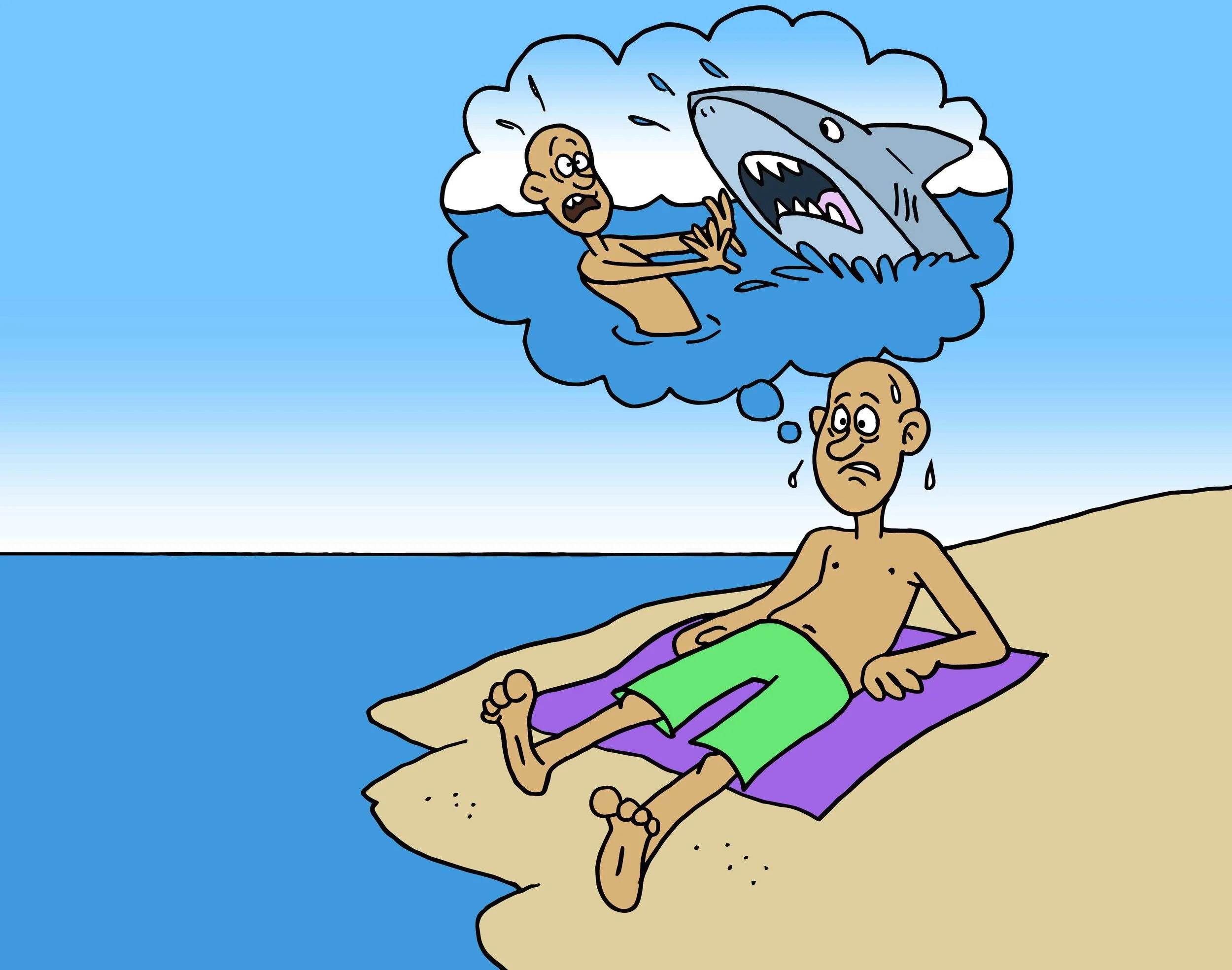
A person hears about a plane crash on the news.
It is detailed.
It is vivid.
It is repeated across multiple channels.
In the following weeks, flying begins to feel unusually dangerous.
Not because the actual risk has changed.
But because examples of danger have become easier to recall.
This is availability bias.
Availability bias is the tendency to judge the likelihood of an event based on how easily examples of it come to mind, rather than on objective statistical frequency.
It is one of the most intuitive and persistent distortions in human judgment.
The Mind Uses Ease of Recall as Evidence
When people estimate probability, they rarely consult statistics.
Instead, they ask a simpler question:
“How easily can I think of examples?”
If examples come quickly, the event feels common.
If examples are hard to retrieve, the event feels rare.
This substitution is efficient.
But it is not always accurate.
Ease of recall is not the same as actual frequency.
Yet the mind often treats it as if it were.
Why Some Events Feel More Common Than They Are
Certain experiences are more memorable than others.
Events that are:
-
Dramatic
-
Emotional
-
Unusual
-
Repeated in media
tend to be stored more strongly in memory.
As a result, they are more accessible when judgments are made later.
This creates a distortion:
What is memorable feels frequent.
What is forgettable feels rare.
Media Amplification and Perceived Risk
Modern media plays a significant role in shaping availability.
Events that are rare but dramatic often receive disproportionate attention.
Examples include:
-
Airplane crashes
-
Violent crimes
-
Natural disasters
-
Financial crises
Because these events are highly visible, they are easily recalled.
As a result, people may overestimate their likelihood.
Meanwhile, more common but less dramatic risks—such as traffic accidents or chronic illness—may be underestimated.
The mind responds to narrative intensity, not statistical base rates.
Availability Bias in Everyday Judgments
This bias does not require media exposure to operate.
It appears in ordinary decisions:
Health
A person who recently heard about a disease may believe it is more common than it actually is.
Personal Experience
If someone has recently encountered a problem repeatedly, they may assume it is widespread.
Workplace Decisions
Managers may overestimate the frequency of memorable failures while underweighting routine successes.
Social Perception
A few vivid examples of behavior can shape beliefs about entire groups.
The Substitution That Drives the Bias
At the core of availability bias is a substitution:
Instead of asking:
“How often does this happen?”
People often ask:
“How easily can I remember it happening?”
This substitution is automatic.
It reduces cognitive effort.
But it replaces statistical reasoning with memory accessibility.
And memory is not a perfect archive of reality.
It is selective, shaped by emotion, attention, and repetition.
A Personal Observation on Recall and Judgment
At one point, while reflecting on decisions about risk, I noticed a pattern in my own thinking.
After hearing recent stories about a specific type of event, my estimates of its frequency increased noticeably.
Not because I had seen new data.
But because examples had become more mentally available.
When those examples faded from memory, my estimates gradually shifted again.
The perception of probability was less stable than the underlying statistics.
It moved with memory.
Why Availability Bias Is So Persistent
Availability bias persists because it is built on a useful cognitive shortcut.
In many situations, ease of recall correlates with real-world frequency.
Common events are often easier to remember.
So using memory as a guide is often efficient.
The problem arises when memory is distorted by:
-
Media coverage
-
Emotional intensity
-
Recent exposure
-
Personal experience
In these cases, recall no longer reflects frequency.
But the mind continues to rely on it.
Emotional Intensity Strengthens the Effect
Emotion plays a central role in memory formation.
Events that evoke strong emotion are:
-
Encoded more deeply
-
Recalled more easily
-
Resisted more strongly over time
As a result, emotionally charged events disproportionately influence judgment.
Even if they are rare, they feel significant.
And significance is often mistaken for likelihood.
Availability Bias and Risk Perception
One of the most important consequences of availability bias is distorted risk perception.
People often overestimate:
-
Rare but dramatic risks
and underestimate:
-
Common but less visible risks
This mismatch affects decisions in areas such as:
-
Health behavior
-
Financial planning
-
Safety precautions
-
Policy preferences
The world feels riskier in some dimensions and safer in others than it actually is.
Why Knowledge Alone Is Not Enough
Even when people understand availability bias intellectually, it still influences judgment.
This occurs because the bias operates at the level of retrieval, not reasoning.
By the time deliberate thinking begins, the set of examples that come to mind has already been shaped.
Awareness may adjust interpretation.
But it does not fully control what is recalled.
Conclusion: When Memory Guides Judgment
Availability bias reveals a fundamental feature of human cognition:
People do not estimate probability from complete data.
They estimate it from what is most easily remembered.
This reliance on memory is efficient.
It allows quick judgments in complex environments.
But it also introduces systematic distortion.
Events that are vivid, recent, or emotionally charged feel more likely than they truly are.
In this way, memory does not simply store experience.
It actively shapes perception of reality itself.
- Arts
- Business
- Computers
- Spellen
- Health
- Home
- Kids and Teens
- Money
- News
- Personal Development
- Recreation
- Regional
- Reference
- Science
- Shopping
- Society
- Sports
- Бизнес
- Деньги
- Дом
- Досуг
- Здоровье
- Игры
- Искусство
- Источники информации
- Компьютеры
- Личное развитие
- Наука
- Новости и СМИ
- Общество
- Покупки
- Спорт
- Страны и регионы
- World

 English
 Russian
 French
 Spanish
 Portuguese
 Deutsch
 Turkish
 Italiano
 Arabic
 Romaian
 Portuguese (Brazil)
 Greek
Greek