
How do cognitive biases affect decision-making?
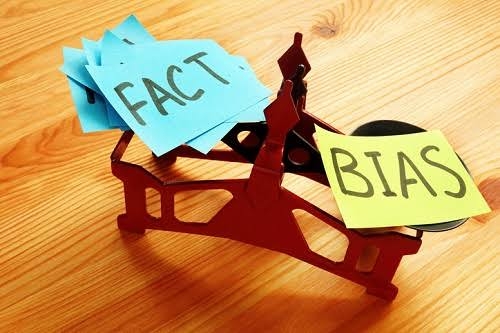
How Do Cognitive Biases Affect Decision-Making?
The Quiet Distortion Beneath Every Choice
A manager selects a candidate.
An investor commits capital.
A patient agrees to a treatment.
Each decision feels deliberate, reasoned, and grounded in evidence.
Yet beneath this surface of deliberation, a quieter process is often at work.
Cognitive biases shape what is noticed, how it is interpreted, and what ultimately feels convincing.
They do not replace decision-making.
They steer it.
Decision-Making Is Not a Neutral Process
The traditional image of decision-making assumes a structured sequence:
-
Gather information
-
Evaluate options
-
Choose the optimal outcome
In practice, this sequence is influenced at every stage.
Information is not gathered evenly.
Evaluation is not impartial.
And choices are often shaped before conscious reasoning begins.
Cognitive biases act as filters embedded within each step.
Step One: What Gets Noticed
Before any evaluation occurs, attention must select what matters.
This selection is not neutral.
It is guided by biases such as:
-
Availability bias: vivid or recent information feels more important
-
Salience effects: striking details attract attention disproportionately
As a result, some information becomes central while other relevant data remains in the background.
The decision space is already shaped before analysis begins.
Step Two: How Information Is Interpreted
Once information is noticed, it must be interpreted.
Here, cognitive biases influence meaning.
For example:
-
Confirmation bias leads people to interpret ambiguous evidence in line with existing beliefs
-
Framing effects change interpretation depending on presentation
The same data can produce different conclusions depending on prior expectations and wording.
Interpretation is not passive.
It is constructive.
Step Three: What Feels Convincing
Not all evidence carries equal psychological weight.
Some information feels more persuasive than others, even when logically equivalent.
This is where biases such as:
-
Anchoring bias (initial numbers shape judgments)
-
Authority bias (expert sources feel more credible)
influence the perceived strength of arguments.
Conviction often emerges from psychological salience rather than logical structure.
Step Four: How Choices Are Made Under Uncertainty
When outcomes are uncertain, the mind relies more heavily on shortcuts.
Cognitive biases become more influential in these conditions.
For example:
-
Loss aversion makes potential losses feel more significant than equivalent gains
-
Overconfidence bias can lead to underestimation of risk
Under uncertainty, people do not calculate probabilities precisely.
They rely on simplified mental models.
The Hidden Structure Behind “Reasoned” Decisions
From the inside, decisions often feel linear.
People believe they:
-
considered all options
-
weighed pros and cons
-
selected the best alternative
But cognitive biases influence each of these stages subtly.
By the time a decision feels “made,” much of the structure has already been determined.
Reasoning often follows intuition rather than preceding it.
A Personal Observation on Decision Confidence
At one point, while observing decision processes in unfamiliar domains, I noticed something consistent.
Individuals rarely questioned the earliest impressions they formed about a situation.
Those initial impressions often shaped what information was sought next.
As a result, later reasoning tended to reinforce early intuitions rather than challenge them.
What appeared to be careful deliberation was often structured by initial framing effects.
Why Biases Persist Even When We Know About Them
One of the most striking features of cognitive biases is their resistance to awareness.
Even when individuals understand a bias intellectually, it can still influence behavior.
This happens because:
-
Biases operate automatically
-
They influence perception before reasoning begins
-
Awareness often arrives too late in the process
Knowing about bias does not prevent the initial influence of attention, memory, or emotion.
The Compounding Effect of Multiple Biases
Cognitive biases rarely operate in isolation.
They interact.
For example:
-
A salient event (availability bias) can become an anchor (anchoring bias)
-
That anchor may then shape interpretation (confirmation bias)
-
Which in turn influences memory (selective recall)
The result is not a single distortion, but a layered process of reinforcement.
Each stage strengthens the next.
Why Decision-Making Feels More Rational Than It Is
There is a strong subjective feeling that decisions are rational and coherent.
This feeling arises because:
-
The mind constructs a narrative after the fact
-
Conflicting evidence is minimized or excluded
-
The final decision feels internally consistent
Coherence is mistaken for objectivity.
But coherence can be produced by biased processes as easily as by rational ones.
The Role of Cognitive Efficiency
Cognitive biases are not purely errors.
They are also efficiency mechanisms.
They allow the mind to:
-
Act quickly under pressure
-
Reduce cognitive load
-
Operate under uncertainty
Without them, decision-making would be slow and computationally overwhelming.
The trade-off is systematic distortion.
Conclusion: The Invisible Architecture of Choice
Cognitive biases affect decision-making by shaping every stage of the process.
They influence:
-
What is noticed
-
How it is interpreted
-
What feels convincing
-
How uncertainty is handled
The result is a decision process that feels rational from the inside but is subtly structured by cognitive shortcuts.
Understanding these biases does not eliminate them.
But it reveals an important truth:
Decisions are not purely the outcome of reasoning.
They are the product of reasoning operating within constraints that quietly shape its direction.
- Arts
- Business
- Computers
- الألعاب
- Health
- الرئيسية
- Kids and Teens
- مال
- News
- Personal Development
- Recreation
- Regional
- Reference
- Science
- Shopping
- Society
- Sports
- Бизнес
- Деньги
- Дом
- Досуг
- Здоровье
- Игры
- Искусство
- Источники информации
- Компьютеры
- Личное развитие
- Наука
- Новости и СМИ
- Общество
- Покупки
- Спорт
- Страны и регионы
- World

 English
 Russian
 French
 Spanish
 Portuguese
 Deutsch
 Turkish
 Dutch
Dutch
 Italiano
 Romaian
 Portuguese (Brazil)
 Greek
Greek