
Can cognitive biases be avoided completely?
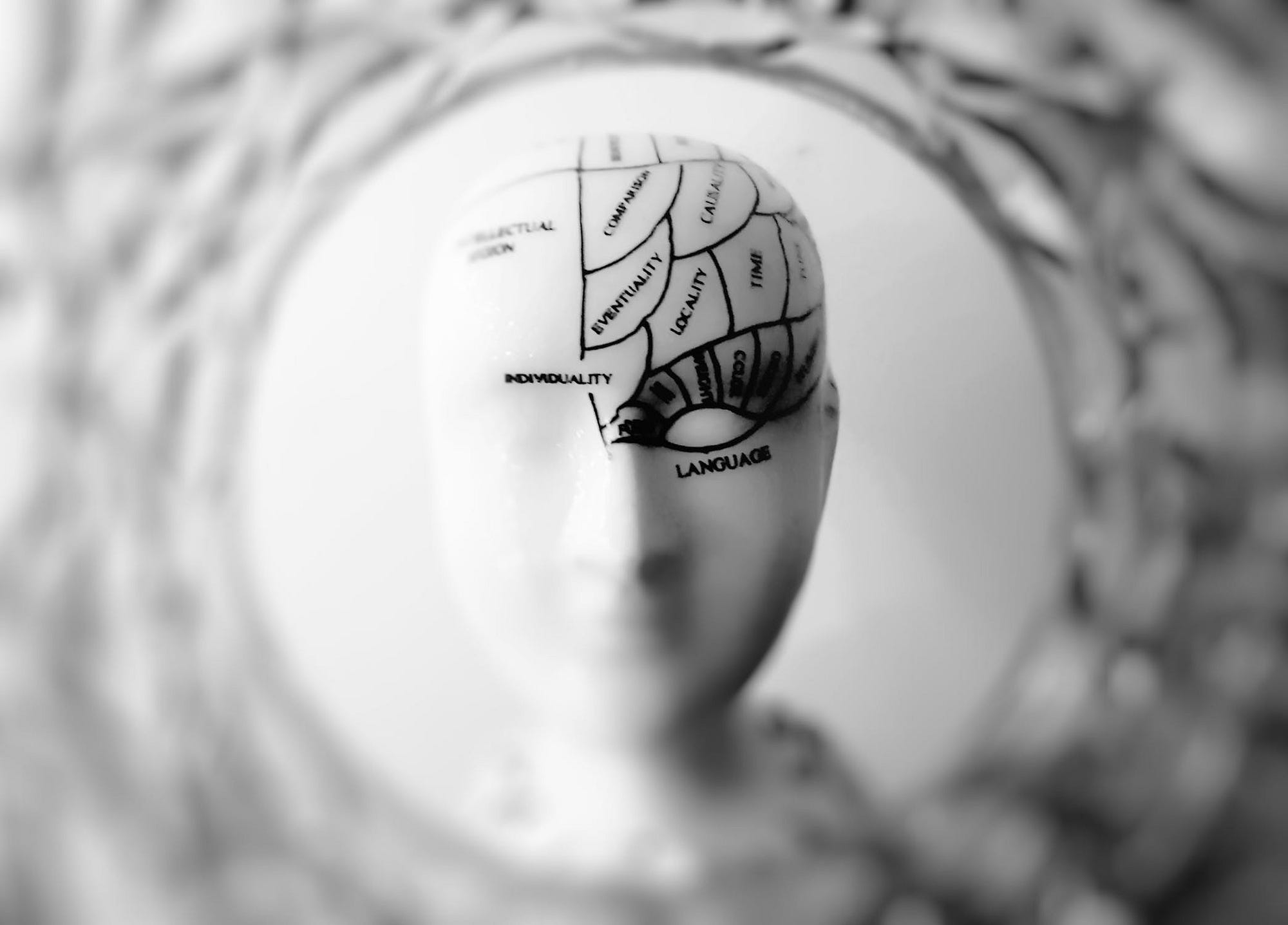
Can Cognitive Biases Be Avoided Completely?
The Desire for Unbiased Thinking
It is a common idea that better awareness should lead to better thinking.
If people understand cognitive biases, it seems reasonable to expect they could simply avoid them.
Make the process conscious.
Correct for the distortion.
Reach objective judgment.
In practice, the situation is more complicated.
Cognitive biases are not external errors that can be removed.
They are built into the mechanisms of perception, memory, and reasoning.
Biases Are Not Exceptions to Thinking
Cognitive biases are often described as mistakes in thinking.
But a more accurate description is that they are features of thinking under constraints.
Human cognition operates with:
-
Limited attention
-
Limited time
-
Limited information
-
Limited computational capacity
Under these conditions, the mind relies on shortcuts.
Those shortcuts produce systematic patterns of judgment.
These patterns are what we call cognitive biases.
They are not separate from thinking.
They are part of how thinking works.
Why Complete Elimination Is Not Realistic
To avoid cognitive biases completely, one would need to eliminate the conditions that produce them.
That would require:
-
Perfect information
-
Unlimited time for every decision
-
No emotional influence
-
No memory limitations
-
No reliance on heuristics
These conditions do not exist in real environments.
Even highly trained professionals operate under uncertainty and time pressure.
As long as constraints exist, shortcuts will be used.
And as long as shortcuts are used, biases will emerge.
Awareness Reduces, but Does Not Remove Bias
Understanding cognitive biases can improve judgment.
It allows individuals to:
-
Question first impressions
-
Consider alternative interpretations
-
Slow down decision-making in critical situations
However, awareness has limits.
Many biases operate:
-
Before conscious reasoning begins
-
Through automatic attention and perception
-
Within emotional responses
By the time reflection occurs, the initial framing has often already influenced judgment.
Awareness changes correction.
It does not fully prevent formation.
Biases Operate at Multiple Levels
Cognitive biases are not located in a single stage of thinking.
They appear in:
-
Perception (what is noticed)
-
Attention (what is prioritized)
-
Memory (what is recalled)
-
Interpretation (what meaning is assigned)
-
Decision-making (what action is taken)
Because they are distributed across the system, eliminating them entirely would require redesigning cognition itself.
This is not feasible in natural human thinking.
Some Biases Are Functionally Useful
Not all biases are purely harmful.
Many exist because they are efficient.
For example:
-
Using past experience instead of full analysis saves time
-
Relying on emotional signals can help with rapid decisions
-
Using heuristics allows action under uncertainty
These mechanisms often produce good enough outcomes in real-world environments.
Removing them entirely could make decision-making slower and less adaptive.
A Personal Observation on “Correcting” Bias
At one point, while reflecting on decision patterns across different contexts, a consistent observation emerged.
Even when individuals attempted to consciously correct for known biases, the corrections were often incomplete or inconsistent.
In some cases, overcorrection introduced new distortions.
The attempt to eliminate bias sometimes replaced one form of simplification with another.
This suggested that the goal is not removal, but calibration.
Better Thinking Is About Management, Not Elimination
Since cognitive biases cannot be fully removed, the practical goal shifts.
Instead of elimination, the focus becomes:
-
Reducing their impact in high-stakes decisions
-
Creating systems that counterbalance predictable distortions
-
Slowing down reasoning in critical moments
-
Using external feedback and structured processes
This approach acknowledges that bias is unavoidable, but its effects can be managed.
Tools That Help Reduce Bias Impact
Certain strategies can reduce the influence of cognitive biases:
-
Structured decision frameworks
-
Predefined criteria for evaluation
-
Seeking diverse perspectives
-
Statistical thinking in appropriate domains
-
Delaying decisions under emotional pressure
These tools do not remove bias.
They introduce structure that limits its influence.
Why Bias-Free Thinking Is Not the Goal
The idea of completely unbiased thinking assumes that neutrality is the ideal cognitive state.
But in practice, human cognition is not designed for neutrality.
It is designed for functioning under constraints.
A perfectly unbiased system would likely be too slow or too abstract to operate effectively in real environments.
The goal, therefore, is not elimination.
It is balance between speed, efficiency, and accuracy.
Conclusion: Bias Is Built Into Thought Itself
Cognitive biases cannot be completely avoided because they are not external flaws in reasoning.
They are inherent features of how the mind processes information under real-world constraints.
Awareness can reduce their impact.
Systems and habits can mitigate their effects.
But complete elimination would require removing the very conditions under which human cognition operates.
The practical challenge is not to think without bias.
It is to understand when bias is likely to matter—and to design decisions that remain stable even when it does.
- Arts
- Business
- Computers
- Παιχνίδια
- Health
- Κεντρική Σελίδα
- Kids and Teens
- Money
- News
- Personal Development
- Recreation
- Regional
- Reference
- Science
- Shopping
- Society
- Sports
- Бизнес
- Деньги
- Дом
- Досуг
- Здоровье
- Игры
- Искусство
- Источники информации
- Компьютеры
- Личное развитие
- Наука
- Новости и СМИ
- Общество
- Покупки
- Спорт
- Страны и регионы
- World

 English
 Russian
 French
 Spanish
 Portuguese
 Deutsch
 Turkish
 Dutch
Dutch
 Italiano
 Arabic
 Romaian
 Portuguese (Brazil)