
How do biases affect critical thinking?
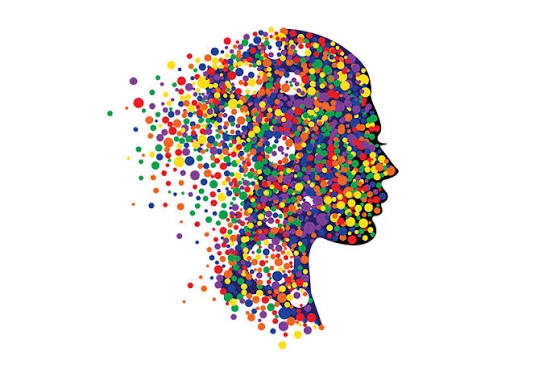
How Do Biases Affect Critical Thinking?
Critical Thinking and Its Ideal
Critical thinking is often described as the ability to evaluate information objectively, question assumptions, and reach well-reasoned conclusions.
In theory, it operates like this:
-
Identify a claim
-
Gather relevant evidence
-
Evaluate the evidence logically
-
Reach a justified conclusion
This model assumes that reasoning is guided primarily by logic and evidence.
In practice, however, cognitive biases influence each stage of this process.
They do not eliminate critical thinking.
They shape how it unfolds.
Biases Shape What Gets Questioned
Critical thinking begins with attention.
Before evaluating anything, the mind decides:
-
What is worth questioning
-
What seems credible
-
What deserves scrutiny
Cognitive biases influence these early filters.
For example:
-
Confirmation bias reduces questioning of familiar beliefs
-
Authority bias can reduce skepticism toward expert claims
-
Availability bias makes recently seen ideas feel more important
As a result, not all claims receive equal critical evaluation.
Some are examined deeply.
Others are accepted quickly.
Biases Influence Interpretation of Evidence
Even when evidence is reviewed, interpretation is not neutral.
The same information can lead to different conclusions depending on cognitive framing.
-
Ambiguous data is often interpreted in line with existing beliefs
-
Supporting evidence is weighted more heavily than contradictory evidence
-
Context can shift perceived meaning of the same fact
This means that critical thinking is not only about gathering evidence.
It is also about how that evidence is understood.
Biases quietly shape interpretation long before explicit reasoning begins.
Biases Affect Logical Consistency
Critical thinking requires consistency in applying standards of reasoning.
However, cognitive biases can introduce asymmetry:
-
Strong scrutiny applied to opposing views
-
Lenient evaluation of preferred views
This leads to uneven standards of evidence.
For example, one argument may be dissected in detail while another is accepted with minimal analysis.
The reasoning process remains active, but not balanced.
Emotional Biases Distort Evaluation
Emotions play a significant role in critical thinking.
They influence:
-
What feels convincing
-
What feels suspicious
-
What feels urgent
For example:
-
Fear can increase skepticism toward perceived threats
-
Excitement can reduce scrutiny of promising opportunities
-
Disgust or dislike can bias evaluation negatively
These emotional signals are fast and powerful.
They often shape judgment before analytical reasoning fully engages.
Memory Bias Alters the Evidence Base
Critical thinking depends on recalled information.
But memory is not a complete record.
It is reconstructive and selective.
This introduces distortions such as:
-
Greater recall of confirming evidence
-
Forgetting of contradictory examples
-
Simplified versions of complex arguments
As a result, the evidence base used in reasoning is already shaped by bias before analysis begins.
Anchoring Bias Limits Independent Evaluation
Initial information often acts as a reference point.
Once an anchor is established, subsequent reasoning tends to adjust from it rather than evaluate independently.
This can constrain critical thinking by:
-
Fixing an early impression
-
Narrowing the range of considered alternatives
-
Reducing exploration of extreme possibilities
Even when individuals attempt to remain objective, the starting point influences the outcome.
A Personal Observation on Reasoned Debate
At one point, while observing discussions across different viewpoints, a pattern became noticeable.
Participants often believed they were evaluating arguments objectively.
However, the standards applied to different arguments varied depending on initial agreement or disagreement.
Similar evidence was interpreted differently depending on prior position.
The reasoning process remained active, but it was not symmetrical.
Biases Create Illusions of Objectivity
One of the most subtle effects of cognitive bias is that it does not feel like bias.
Reasoning feels coherent from the inside.
This is because:
-
The mind constructs explanations after judgments are formed
-
Contradictory information is often minimized or reinterpreted
-
Internal consistency is mistaken for objectivity
As a result, biased reasoning often feels like careful analysis.
Critical thinking appears intact even when influenced by cognitive shortcuts.
Why Awareness Alone Is Not Enough
Understanding biases does not automatically remove them from critical thinking.
This is because many biases operate:
-
Before conscious reasoning begins
-
Through automatic attention and memory
-
Under emotional influence
By the time reflection occurs, initial interpretations may already be established.
Awareness helps correction.
It does not prevent initial influence.
How Biases Limit and Shape Critical Thinking
Cognitive biases do not eliminate critical thinking.
They shape its boundaries by influencing:
-
What is considered relevant
-
How evidence is interpreted
-
How arguments are evaluated
-
How conclusions are formed
Critical thinking remains possible, but it operates within a system of psychological constraints.
It is not purely logical.
It is cognitive reasoning influenced by perception, memory, and emotion.
Conclusion: Thinking Within Constraints
Biases affect critical thinking by shaping the process long before formal reasoning begins.
They influence attention, interpretation, memory, and emotional evaluation.
As a result, critical thinking is not a purely objective mechanism.
It is a structured form of reasoning operating within human cognitive limits.
Understanding this does not weaken critical thinking.
It makes its constraints visible, allowing more careful and deliberate reasoning within them.
- Arts
- Business
- Computers
- الألعاب
- Health
- الرئيسية
- Kids and Teens
- مال
- News
- Personal Development
- Recreation
- Regional
- Reference
- Science
- Shopping
- Society
- Sports
- Бизнес
- Деньги
- Дом
- Досуг
- Здоровье
- Игры
- Искусство
- Источники информации
- Компьютеры
- Личное развитие
- Наука
- Новости и СМИ
- Общество
- Покупки
- Спорт
- Страны и регионы
- World

 English
 Russian
 French
 Spanish
 Portuguese
 Deutsch
 Turkish
 Dutch
Dutch
 Italiano
 Romaian
 Portuguese (Brazil)
 Greek
Greek