
Why do markets crash?
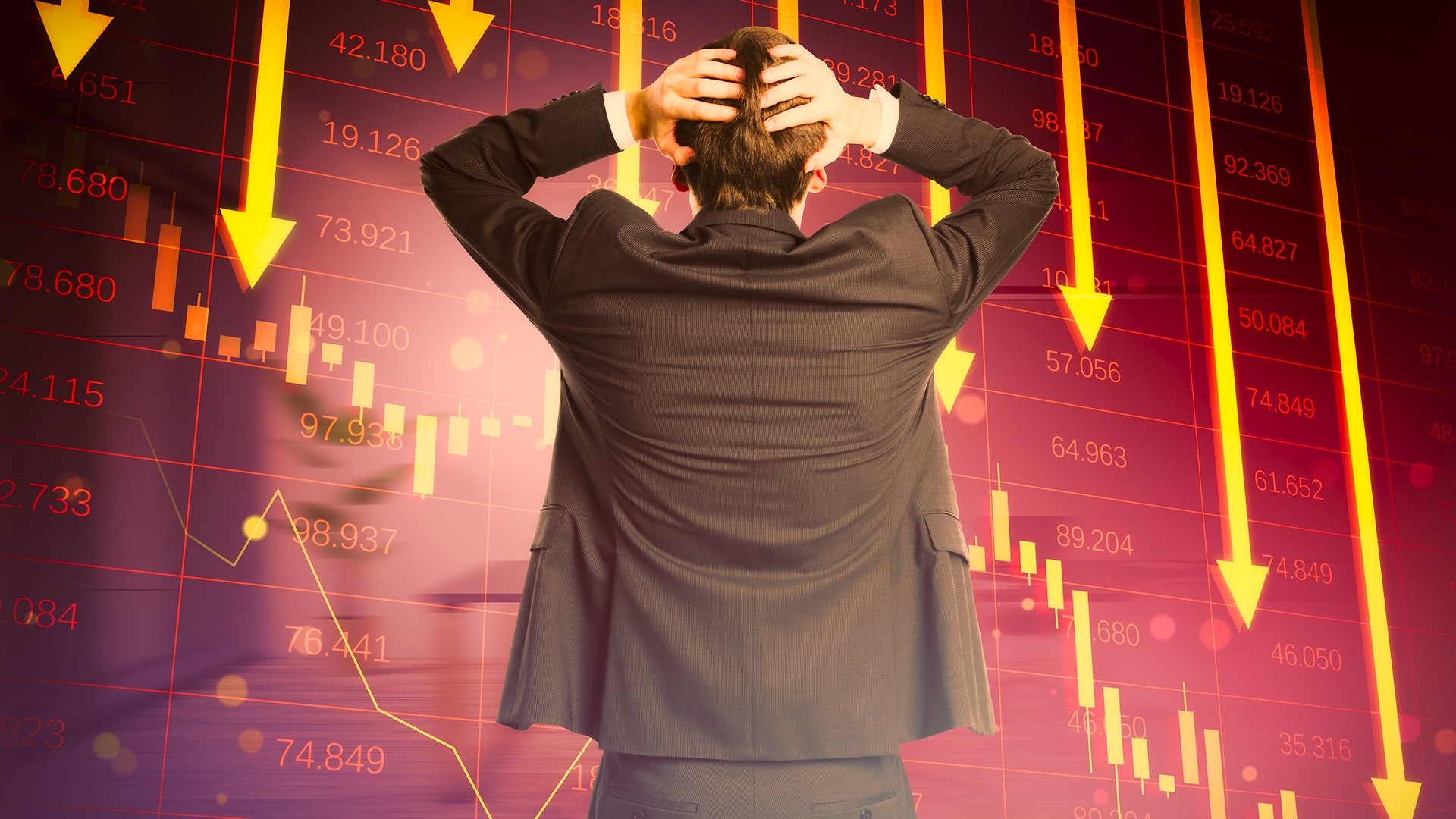
Why Do Markets Crash?
The Moment Everyone Forgets They're Human
I've spent enough time around businesspeople, investors, executives, and entrepreneurs to recognize a recurring pattern. It shows up during booms. It shows up during busts. It shows up whether stocks are soaring or collapsing.
People convince themselves that this time is different.
That's usually when trouble begins.
Markets don't crash because numbers suddenly decide to misbehave. Markets crash because human beings do what human beings have always done. They get excited. They get greedy. They get scared. They start believing prices can only move in one direction. Then reality arrives, often without warning, and the crowd runs toward the exits simultaneously.
The remarkable thing about market crashes is that they always feel shocking in the moment and obvious in hindsight.
Look back at history. The causes appear different. The details change. The technology changes. The headlines change.
The underlying story rarely does.
A crash is usually the collision between expectations and reality.
And reality always wins.
What Exactly Is a Market Crash?
Before discussing why crashes happen, it's worth defining what one is.
A market crash is a rapid and significant decline in asset prices across a broad section of the market. Stocks are the most visible example, but crashes can occur in bonds, real estate, commodities, cryptocurrencies, or virtually any asset class.
The speed matters.
Markets drift downward all the time. That's normal. Corrections happen regularly. A crash feels different because selling accelerates dramatically. Fear becomes contagious. Liquidity disappears. Rational analysis often gives way to emotional decision-making.
One day investors are asking, "How much higher can this go?"
The next day they're asking, "How much worse can this get?"
That shift in psychology is where crashes live.
The Real Engine Behind Most Crashes: Excess
Nobody likes hearing this.
People prefer dramatic explanations. Secret conspiracies. Sophisticated financial theories. Mysterious market forces.
Yet most crashes begin with something remarkably simple.
Too much of something.
Too much optimism.
Too much borrowing.
Too much speculation.
Too much confidence.
The seeds of a crash are often planted during periods of success.
When markets perform well for years, investors start assuming favorable conditions are permanent. Risks appear smaller. Valuations appear justified. Debt appears manageable.
Eventually, common sense gets replaced by narratives.
And narratives are dangerous when they detach from fundamentals.
The Crash Cycle Repeats More Often Than We Admit
History provides a revealing pattern.
Stage 1: Innovation or Opportunity Appears
A new technology emerges.
A new industry develops.
Interest rates fall.
Economic growth accelerates.
Something legitimate creates excitement.
Importantly, the story usually starts with real value.
Stage 2: Capital Rushes In
Investors recognize opportunity.
Money pours into the market.
Prices rise.
The rising prices attract even more investors.
Success becomes self-reinforcing.
Stage 3: Speculation Replaces Analysis
This is where things become dangerous.
People stop asking whether an asset is worth its price.
They ask whether someone else will pay more tomorrow.
That's a fundamentally different question.
Stage 4: Reality Interrupts
Growth slows.
Profits disappoint.
Interest rates rise.
Economic conditions weaken.
A catalyst appears.
Suddenly investors reassess assumptions.
Stage 5: Panic Selling Begins
The same crowd that rushed into the market rushes out.
Selling creates more selling.
Fear feeds fear.
Prices collapse faster than they rose.
A Look at Major Market Crashes
The specifics differ, but the themes are remarkably consistent.
| Crash | Period | Primary Trigger | Key Lesson |
|---|---|---|---|
| Wall Street Crash | 1929 | Excessive speculation and leverage | Debt amplifies losses |
| Black Monday | 1987 | Program trading and panic selling | Markets can fall faster than expected |
| Dot-Com Crash | 2000–2002 | Technology bubble | Great ideas can still be overpriced |
| Global Financial Crisis | 2008 | Housing and credit collapse | Risk often hides inside leverage |
| COVID-19 Selloff | 2020 | Global economic shutdown | External shocks can overwhelm forecasts |
| Inflation and Rate Shock | 2022 | Rising interest rates | Cheap money cannot last forever |
The details vary.
The human behavior doesn't.
Why Fear Spreads Faster Than Optimism
One lesson I learned years ago is that confidence builds slowly and disappears quickly.
Businesses understand this.
Consumers understand this.
Markets understand this too.
Imagine a crowded theater.
If someone calmly enters and says the show will be excellent, people don't react dramatically.
If someone shouts "Fire!"
Everybody reacts.
Financial markets operate similarly.
Negative information often travels faster than positive information because investors are trying to protect capital. The possibility of loss triggers stronger emotional responses than the possibility of gain.
That's not a weakness.
It's human nature.
Unfortunately, when millions of investors act on that instinct simultaneously, markets can become unstable.
The Dangerous Role of Leverage
If I had to identify one factor that repeatedly turns ordinary declines into severe crashes, it would be leverage.
Leverage means borrowing money to invest.
Used carefully, leverage can increase returns.
Used recklessly, it becomes gasoline poured onto a small fire.
Here's why.
Suppose an investor uses borrowed funds to buy assets.
If prices rise, profits increase.
If prices fall, losses increase.
Once losses reach a certain point, lenders demand additional collateral or force positions to be liquidated.
That creates involuntary selling.
More selling pushes prices lower.
Lower prices trigger additional liquidations.
The cycle becomes self-perpetuating.
Many of history's worst financial disasters involved leverage somewhere beneath the surface.
Sometimes lots of it.
Interest Rates Matter More Than People Think
Investors often underestimate the importance of interest rates during bull markets.
Money influences everything.
When borrowing costs are low, businesses expand more aggressively. Consumers spend more freely. Investors search for higher returns. Asset prices tend to rise.
But when rates increase, the math changes.
Future profits become less valuable.
Loans become more expensive.
Risk becomes harder to justify.
Assets that looked attractive under one set of assumptions suddenly appear overpriced under another.
The transition can be painful.
Markets don't simply react to today's interest rates.
They react to changing expectations.
That's a critical distinction.
My Own Lesson From Watching Markets
Years ago, I remember speaking with investors who had become convinced that a particular market trend would continue indefinitely.
The certainty was astonishing.
Not confidence.
Certainty.
Whenever I hear certainty in investing, alarm bells start ringing.
Markets have a way of humbling certainty.
The lesson I took away wasn't that optimism is dangerous. Optimism built America. Optimism builds companies. Optimism creates jobs.
The lesson was that optimism must remain connected to reality.
The moment investors stop questioning assumptions, risk begins accumulating quietly in the background.
You rarely see it immediately.
Then one day everybody sees it at once.
That's often the day a crash begins.
Technology Has Changed. Human Nature Hasn't.
Modern markets move faster than ever.
Algorithms trade in fractions of a second.
Information travels globally in real time.
Social media accelerates narratives almost instantly.
Yet despite all this technological progress, market behavior remains surprisingly familiar.
The tools evolve.
The emotions remain.
Greed still pushes prices higher than fundamentals justify.
Fear still pushes prices lower than fundamentals justify.
Hope still attracts investors near peaks.
Panic still drives selling near bottoms.
Technology changes the speed of crashes.
It doesn't eliminate their causes.
Are Market Crashes Actually Necessary?
This question makes many investors uncomfortable.
But it's worth asking.
Can markets function indefinitely without periodic corrections?
Probably not.
Excess eventually requires adjustment.
Bad investments eventually need to be exposed.
Unrealistic expectations eventually need to be reset.
Crashes are painful.
They destroy wealth.
They damage confidence.
They can create significant economic hardship.
Yet they also perform a harsh but necessary function.
They force markets to confront reality.
After the dust settles, stronger companies survive. Unsustainable business models disappear. Capital gets reallocated toward more productive opportunities.
The process is unpleasant.
The process is also part of how capitalism renews itself.
The Biggest Mistake Investors Make During Crashes
Most people believe market crashes destroy fortunes.
In many cases, investor behavior destroys fortunes.
There is a difference.
During crashes, emotions become overwhelming.
Headlines become terrifying.
Predictions become apocalyptic.
People who were enthusiastic buyers at high prices suddenly become desperate sellers at low prices.
That sequence creates permanent damage.
History shows that markets have recovered from wars, recessions, financial crises, pandemics, inflation shocks, and countless unforeseen events.
The investors who survive are often not the smartest.
They're frequently the most disciplined.
They understand that panic is not an investment strategy.
Conclusion: Crashes Are About People
When people ask why markets crash, they often expect a technical answer.
Interest rates.
Credit conditions.
Valuations.
Economic growth.
All of those matter.
But beneath every chart, every balance sheet, every trading screen, and every financial model sits a human being making decisions.
That's where the story begins.
Markets crash because optimism becomes excess.
Because leverage magnifies mistakes.
Because fear spreads faster than confidence.
Because crowds move together.
Because investors forget that prices and value are not always the same thing.
Most importantly, markets crash because human nature hasn't changed in thousands of years.
The technology on Wall Street may look unrecognizable compared to a century ago. The speed is different. The scale is different. The complexity is different.
Human behavior isn't.
And until that changes—which is to say, never—market crashes will remain an unavoidable feature of investing, a recurring reminder that the greatest force moving financial markets is not economics, mathematics, or technology.
It's us.
- Arts
- Business
- Computers
- Oyunlar
- Health
- Home
- Kids and Teens
- Money
- News
- Personal Development
- Recreation
- Regional
- Reference
- Science
- Shopping
- Society
- Sports
- Бизнес
- Деньги
- Дом
- Досуг
- Здоровье
- Игры
- Искусство
- Источники информации
- Компьютеры
- Личное развитие
- Наука
- Новости и СМИ
- Общество
- Покупки
- Спорт
- Страны и регионы
- World

 English
 Russian
 French
 Spanish
 Portuguese
 Deutsch
 Dutch
Dutch
 Italiano
 Arabic
 Romaian
 Portuguese (Brazil)
 Greek
Greek