
What are tariffs?
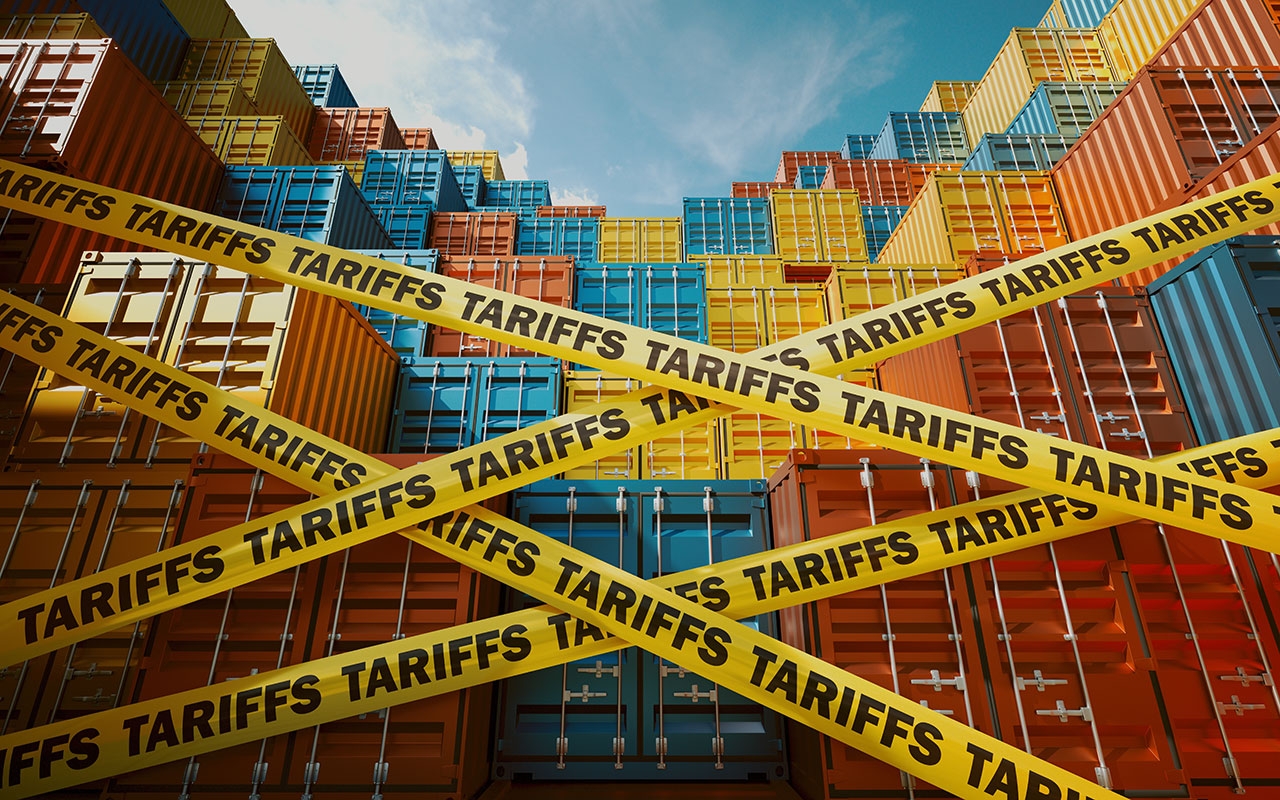
What Are Tariffs? The Tax That Quietly Shapes the Global Economy
There’s a funny thing about tariffs.
Most people never think about them until prices start moving in the wrong direction. A washing machine suddenly costs more. A pickup truck jumps a few thousand dollars. Headlines start screaming about trade disputes, politicians start pounding podiums, and suddenly a policy tool that sat quietly in the background for decades becomes the center of a national argument.
But tariffs are not new. They are one of the oldest economic instruments in history. Long before income taxes existed, governments collected revenue by taxing goods crossing borders. Kingdoms did it. Empires did it. Modern nations still do it.
The debate has never really been about whether tariffs work.
The debate is about who benefits, who pays, and whether the gains justify the costs.
That distinction matters.
Because once you strip away the political slogans, tariffs reveal something much more complicated than a simple tax on foreign products. They become a window into how countries compete, how industries survive, and how economic power is exercised in the real world.
Understanding Tariffs in Plain English
At its core, a tariff is a tax imposed on imported goods.
Imagine a company imports steel from another country. If the government places a 25% tariff on that steel, the importer must pay an additional tax when the product enters the country.
The steel itself does not change.
The quality remains the same.
The only difference is that the imported product becomes more expensive.
Governments use tariffs to make foreign goods less competitive compared with domestically produced alternatives.
Simple concept.
Complicated consequences.
Suppose a foreign manufacturer sells a refrigerator for $1,000. A 20% tariff raises the import cost by $200. The importer may absorb part of that expense, but more often, some or all of the increase gets passed on to wholesalers, retailers, and ultimately consumers.
That is where the controversy begins.
Why Governments Impose Tariffs
People often assume tariffs exist solely to protect domestic industries.
That is one reason.
It is not the only one.
Protecting Domestic Producers
The most common justification is shielding local manufacturers from foreign competition.
If overseas producers can make products more cheaply, domestic firms may struggle to compete.
Tariffs raise the cost of imported goods, giving local companies breathing room.
Supporters argue this protects jobs, factories, and strategic industries.
Critics argue it can reduce competitive pressure and encourage inefficiency.
Both arguments contain some truth.
Raising Government Revenue
Historically, tariffs were a major source of public revenue.
In the early years of the United States, tariff collections funded much of the federal government.
Today, income taxes and corporate taxes generate far more revenue, but tariffs still contribute billions of dollars annually.
National Security Considerations
Some products carry strategic importance.
Steel.
Semiconductors.
Defense-related materials.
Energy infrastructure.
Governments sometimes use tariffs to preserve domestic production capacity in sectors viewed as critical to national security.
Economic efficiency is not always the primary objective.
Trade Negotiation Leverage
Tariffs can function as bargaining chips.
Countries frequently impose or threaten tariffs to pressure trading partners into changing policies, opening markets, or altering trade agreements.
In these situations, tariffs become less about economics and more about negotiation strategy.
The Different Types of Tariffs
Not all tariffs are structured the same way.
Ad Valorem Tariffs
These are percentage-based taxes.
A 10% tariff on a $500 imported item equals $50.
As prices rise, tariff collections rise as well.
This is the most common approach used today.
Specific Tariffs
These involve a fixed charge per unit.
For example:
-
$2 per imported kilogram of cheese
-
$500 per imported vehicle
The tax remains constant regardless of the product's value.
Tariff-Rate Quotas
This hybrid system allows a certain quantity of imports at a lower tariff rate.
Once imports exceed that quota, a higher tariff applies.
Governments often use this structure in agricultural markets.
What Happens When Tariffs Are Introduced?
This is where economics becomes fascinating.
The immediate effect appears straightforward.
Imports become more expensive.
Domestic alternatives become relatively more attractive.
Yet the secondary effects often matter more than the initial ones.
A steel tariff may help steel producers.
But manufacturers that buy steel—automakers, appliance makers, construction firms—now face higher input costs.
Consumers may pay more.
Business margins may shrink.
Investment decisions may change.
Supply chains may shift.
The economy is rarely affected in a single direction.
Think of tariffs as dropping a stone into a pond.
Everyone notices the splash.
The ripples create the bigger story.
The Winners and Losers
One reason tariff debates become so heated is that benefits and costs are distributed unevenly.
Winners
-
Domestic producers facing foreign competition
-
Workers employed in protected industries
-
Governments collecting tariff revenue
-
Certain strategic sectors receiving temporary protection
Losers
-
Consumers paying higher prices
-
Businesses relying on imported inputs
-
Exporters facing retaliation
-
Industries dependent on global supply chains
Notice something important.
The winners are often concentrated and visible.
The losers are frequently spread across millions of consumers.
That reality influences politics more than many economists care to admit.
A Comparison of Tariff Effects
| Stakeholder | Potential Benefit | Potential Cost |
|---|---|---|
| Domestic Manufacturers | Reduced foreign competition | Less pressure to innovate |
| Workers in Protected Industries | Job preservation | Long-term competitiveness concerns |
| Consumers | Few direct benefits | Higher prices |
| Government | Increased revenue | Potential trade disputes |
| Importers | Limited benefits | Higher costs |
| Exporters | Occasionally gain leverage through negotiations | Retaliatory tariffs abroad |
| Economy Overall | Protection of strategic sectors | Reduced efficiency and slower trade growth |
The table highlights why tariff policy remains controversial. The same measure can produce both positive and negative outcomes depending on where one sits in the economy.
The Lesson I Learned Watching Business Leaders Debate Tariffs
Years ago, I attended a discussion among executives from manufacturing, retail, and logistics companies.
What struck me was not the disagreement.
It was that everyone was right—from their own perspective.
A manufacturer making products domestically welcomed tariff protection. It improved margins and strengthened hiring plans.
Across the room, a retailer importing components saw the same tariff as a direct hit to profitability.
Neither side was confused.
Neither side was dishonest.
They were simply looking at different parts of the economic machine.
That experience reinforced a lesson I have carried ever since: tariff debates are rarely battles between good economics and bad economics. More often, they are conflicts between competing economic interests.
Understanding that makes the discussion far more productive.
Tariffs and Trade Wars
When one country imposes tariffs, other countries sometimes respond with tariffs of their own.
This escalation is commonly called a trade war.
The process can unfold quickly.
Country A taxes imported goods.
Country B retaliates.
Country A responds again.
Soon entire industries become entangled.
Agriculture, manufacturing, technology, transportation—few sectors remain untouched.
Trade wars often create uncertainty.
Businesses delay investments.
Supply chains become harder to manage.
Markets react to changing expectations.
The ultimate outcome depends on how long the dispute lasts and whether negotiations produce a resolution.
Do Tariffs Actually Work?
That depends entirely on the objective.
If the goal is reducing imports, tariffs often succeed.
If the goal is protecting specific industries, they can be effective in the short term.
If the goal is generating government revenue, they accomplish that as well.
But if the goal is improving overall economic efficiency, the answer becomes more complicated.
Economists generally argue that free trade allows countries to specialize according to their strengths, increasing productivity and lowering costs.
Tariffs interrupt that process.
Supporters counter that economic theory does not always account for strategic realities, national security concerns, or unfair trade practices.
The result is a debate that has persisted for centuries and shows no sign of ending.
Why Tariffs Matter More Than Ever
Modern supply chains stretch across continents.
A single automobile may contain components sourced from a dozen countries.
A smartphone may involve design in one nation, assembly in another, and materials from several more.
In such an interconnected world, tariffs rarely affect only one industry.
They ripple through networks of suppliers, distributors, retailers, and consumers.
That interconnectedness explains why markets pay such close attention whenever governments announce new tariff policies.
Investors understand that tariffs are not merely taxes.
They are signals.
Signals about trade relationships.
Signals about political priorities.
Signals about the future direction of economic policy.
The Real Question Behind Every Tariff
The public conversation often asks whether tariffs are good or bad.
That is the wrong question.
The better question is: what problem is the tariff trying to solve?
A tariff designed to protect a critical defense industry should be judged differently from a tariff designed to raise revenue.
A temporary tariff intended to counter unfair trade practices deserves a different analysis than a permanent barrier erected to shield inefficient producers.
Context matters.
Objectives matter.
Outcomes matter.
Blanket judgments rarely survive serious scrutiny.
Conclusion: The Price Tag Nobody Sees
Tariffs are deceptively simple.
A government taxes imported goods. End of story.
Except it never ends there.
Prices shift. Supply chains adjust. Businesses adapt. Consumers respond. Foreign governments retaliate. Investors reassess risk. Entire industries reorganize themselves around a policy decision that, on paper, looked remarkably straightforward.
That is why tariffs remain one of the most powerful—and misunderstood—tools in economic policy.
They are neither economic villains nor economic saviors.
They are instruments.
And like any instrument, their value depends on how they are used, why they are used, and what trade-offs society is willing to accept.
The next time a politician promises that tariffs will revive industry or an economist warns that tariffs will damage growth, remember this: both may be seeing part of the truth.
The real story lies in understanding the costs that are visible, the costs that are hidden, and the interests that stand behind each side of the argument.
That is where the economics begins.
- Arts
- Business
- Computers
- Spiele
- Health
- Startseite
- Kids and Teens
- Geld
- News
- Personal Development
- Recreation
- Regional
- Reference
- Science
- Shopping
- Society
- Sports
- Бизнес
- Деньги
- Дом
- Досуг
- Здоровье
- Игры
- Искусство
- Источники информации
- Компьютеры
- Личное развитие
- Наука
- Новости и СМИ
- Общество
- Покупки
- Спорт
- Страны и регионы
- World

 English
 Russian
 French
 Spanish
 Portuguese
 Turkish
 Dutch
Dutch
 Italiano
 Arabic
 Romaian
 Portuguese (Brazil)
 Greek
Greek