
How do bond yields work?
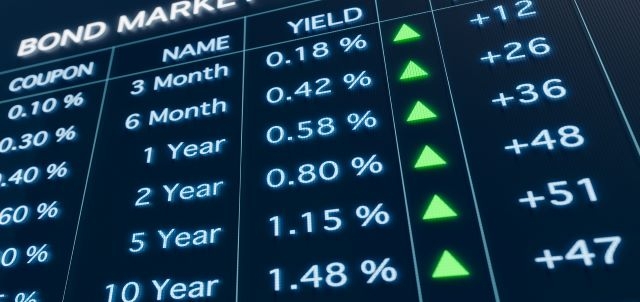
How Do Bond Yields Work?
The Number Everyone Watches—And Almost Nobody Explains Properly
Walk onto a trading floor, sit in a boardroom, or listen to a conversation among institutional investors, and you'll hear a phrase repeated with almost religious frequency:
"The 10-year yield is up."
Not the stock market.
Not earnings.
Not revenues.
The yield.
For something that drives mortgage rates, corporate borrowing costs, stock valuations, government budgets, and ultimately the financial well-being of millions of people, bond yields remain one of the least understood concepts in finance.
And that's a problem.
Because if you don't understand bond yields, you're trying to interpret the economy while ignoring the instrument panel.
I learned this lesson years ago during a period when everyone around me was obsessed with stocks. Every conversation revolved around growth companies, quarterly earnings, and the next big winner. Yet some of the smartest investors I knew weren't staring at stock tickers. They were watching Treasury yields.
At first, it seemed backward. Why spend so much time analyzing government bonds when the action was happening elsewhere?
Then I understood something that changed how I viewed markets forever: stocks tell you what investors hope will happen. Bonds often tell you what investors believe will happen.
That distinction matters.
A lot.
What Exactly Is a Bond Yield?
Let's start with the basics.
A bond is simply a loan.
You lend money to a government, municipality, or corporation. In exchange, they promise to pay you interest and return your principal at a specified date.
The yield is the return an investor receives from owning that bond.
Simple enough.
But here's where many people get confused.
The yield is not the same thing as the coupon rate.
Suppose the U.S. government issues a $1,000 bond paying 5% annual interest.
That bond generates $50 per year.
If you buy it for exactly $1,000, your yield is 5%.
No mystery there.
The complication begins when bond prices start moving.
And they move constantly.
The Fundamental Relationship: Prices and Yields Move in Opposite Directions
This is the single most important concept in bond investing.
When bond prices rise, yields fall.
When bond prices fall, yields rise.
Always.
No exceptions.
Let's see why.
Imagine that same bond paying $50 annually.
Now suppose investors become eager to own it and bid its price up to $1,200.
The interest payment remains $50.
Nothing changed there.
But a new investor paying $1,200 receives only $50 annually.
Their return is now:
$50 ÷ $1,200 = 4.17%
The yield has fallen.
Conversely, if investors lose interest and the bond price drops to $800:
$50 ÷ $800 = 6.25%
The yield rises.
The bond didn't change.
The interest payment didn't change.
The market price changed.
That's it.
Yet that simple relationship influences trillions of dollars worldwide.
Why Bond Prices Move in the First Place
Markets don't wake up one morning and randomly decide to reprice bonds.
Prices move because expectations change.
Investors continuously ask a series of questions:
-
Will inflation rise?
-
Will inflation fall?
-
Will economic growth accelerate?
-
Is a recession approaching?
-
What will the Federal Reserve do next?
-
How risky is this borrower?
The answers determine what investors are willing to pay.
If inflation appears likely to increase, existing bonds become less attractive because their future payments lose purchasing power.
Investors demand higher yields.
Prices fall.
Yields rise.
If inflation appears under control and economic growth slows, existing bonds become more valuable.
Prices rise.
Yields fall.
The process sounds technical.
In reality, it's simply collective judgment expressed through prices.
The Different Types of Bond Yields
Not all yields measure the same thing.
That distinction matters.
Current Yield
Current yield focuses on annual income relative to the bond's current market price.
Formula:
Current Yield = Annual Interest Payment ÷ Current Market Price
Useful?
Yes.
Complete?
Not even close.
It ignores what happens when the bond matures.
Yield to Maturity (YTM)
Professionals generally focus on yield to maturity.
YTM estimates the total return an investor receives if:
-
The bond is held until maturity.
-
All interest payments are made as promised.
-
Coupon payments are reinvested.
This measure incorporates both income and any gain or loss resulting from purchasing the bond above or below face value.
When investors quote yields, they're often referring to YTM.
Yield Spread
A spread measures the difference between two yields.
For example:
-
Corporate Bond Yield: 6%
-
Treasury Yield: 4%
Spread = 2 percentage points
That spread reflects perceived risk.
The riskier the borrower, the larger the spread investors demand.
Comparing Key Bond Yield Metrics
| Yield Type | What It Measures | Primary Use | Limitation |
|---|---|---|---|
| Coupon Rate | Fixed interest rate set at issuance | Determines annual interest payment | Never changes with market price |
| Current Yield | Annual income relative to current price | Income evaluation | Ignores maturity value |
| Yield to Maturity | Expected total return if held to maturity | Comprehensive bond analysis | Based on assumptions |
| Yield Spread | Risk premium over another bond | Risk assessment | Doesn't predict defaults |
| Real Yield | Return after inflation | Purchasing power analysis | Inflation estimates can change |
Why Treasury Yields Matter to Everyone
Many people assume Treasury yields concern only professional investors.
Nothing could be further from reality.
Treasury yields influence virtually every corner of the economy.
Mortgage rates?
Linked closely to Treasury yields.
Corporate borrowing?
Influenced by Treasury yields.
Auto loans?
Same story.
Business investment decisions?
Again, Treasury yields play a role.
Think of Treasury yields as the foundation of the financial system.
Everything else is built on top.
When the foundation moves, the structure above it adjusts.
That's why market participants monitor the yield on the 10-year Treasury so closely.
It's not because the bond itself is exciting.
It's because the signal embedded in that yield affects everything else.
The Yield Curve: The Market's Crystal Ball
Now we arrive at one of the most fascinating concepts in finance.
The yield curve.
A yield curve plots Treasury yields across different maturities.
Under normal conditions:
-
Short-term bonds yield less.
-
Long-term bonds yield more.
That makes intuitive sense.
Investors generally demand higher compensation for locking money away longer.
A normal curve might look like this:
| Maturity | Yield |
|---|---|
| 3-Month | 3.8% |
| 2-Year | 4.1% |
| 10-Year | 4.7% |
| 30-Year | 5.0% |
But occasionally something unusual happens.
Short-term yields rise above long-term yields.
The curve inverts.
Historically, inverted yield curves have often preceded recessions.
Not because the curve causes recessions.
Rather, because the curve reflects investor expectations regarding future growth and interest rates.
When sophisticated investors collectively expect weaker economic conditions ahead, the signal frequently appears in the bond market before it appears elsewhere.
That's one reason seasoned market participants pay attention.
The bond market often notices trouble before everyone else does.
Inflation: The Silent Enemy of Bond Investors
If I had to identify one variable that exerts the greatest long-term influence on yields, inflation would sit near the top of the list.
Inflation erodes purchasing power.
A bond promising fixed payments becomes less attractive when those payments buy less over time.
Consider two scenarios.
Scenario One
-
Bond Yield: 5%
-
Inflation: 2%
Real return: roughly 3%
Scenario Two
-
Bond Yield: 5%
-
Inflation: 6%
Real return: roughly -1%
Same bond.
Same yield.
Completely different economic outcome.
That's why investors obsess over inflation data.
They're not merely evaluating prices.
They're evaluating future purchasing power.
Why Rising Yields Can Hurt Stocks
Here's where many investors encounter confusion.
Strong economic news can sometimes cause stocks to fall.
Why?
Because stronger growth may lead to higher yields.
Higher yields increase borrowing costs.
They also reduce the present value of future corporate earnings.
Growth companies, particularly those expected to generate profits far into the future, can become especially sensitive to yield increases.
The relationship isn't mechanical.
Markets are more complex than that.
But over long periods, bond yields and stock valuations maintain a meaningful connection.
Ignoring one while analyzing the other is like trying to understand baseball while watching only half the field.
The Lesson Most Investors Learn Too Late
One lesson stands out from decades of observing markets.
People tend to focus on outcomes.
Professionals focus on signals.
The average investor sees a stock decline and asks what happened.
The experienced investor often asks what bond yields were saying beforehand.
Bond markets aren't perfect.
Far from it.
They make mistakes.
They misjudge inflation.
They misjudge growth.
They misjudge policy.
But collectively, they process an astonishing amount of information.
And when yields move sharply, they're often communicating something important about the future.
Ignoring that message rarely proves wise.
The Real Meaning of a Bond Yield
At its core, a bond yield is not merely a percentage.
It's a price tag attached to time, risk, inflation, and uncertainty.
It represents the compensation investors demand to part with their money today in exchange for promises tomorrow.
That may sound abstract.
It isn't.
Every mortgage payment, every corporate expansion plan, every government financing decision, and every portfolio allocation ultimately intersects with that calculation.
The next time you hear someone say, "The 10-year yield jumped," don't treat it as background noise.
Treat it as information.
Because beneath that seemingly ordinary number lies a remarkably powerful story—about confidence, fear, inflation, growth, and the collective judgment of millions of investors.
And in markets, judgment is what moves money.
Everything else is commentary.
- Arts
- Business
- Computers
- Spiele
- Health
- Startseite
- Kids and Teens
- Geld
- News
- Personal Development
- Recreation
- Regional
- Reference
- Science
- Shopping
- Society
- Sports
- Бизнес
- Деньги
- Дом
- Досуг
- Здоровье
- Игры
- Искусство
- Источники информации
- Компьютеры
- Личное развитие
- Наука
- Новости и СМИ
- Общество
- Покупки
- Спорт
- Страны и регионы
- World

 English
 Russian
 French
 Spanish
 Portuguese
 Turkish
 Dutch
Dutch
 Italiano
 Arabic
 Romaian
 Portuguese (Brazil)
 Greek
Greek