
What is inflation’s impact on markets?
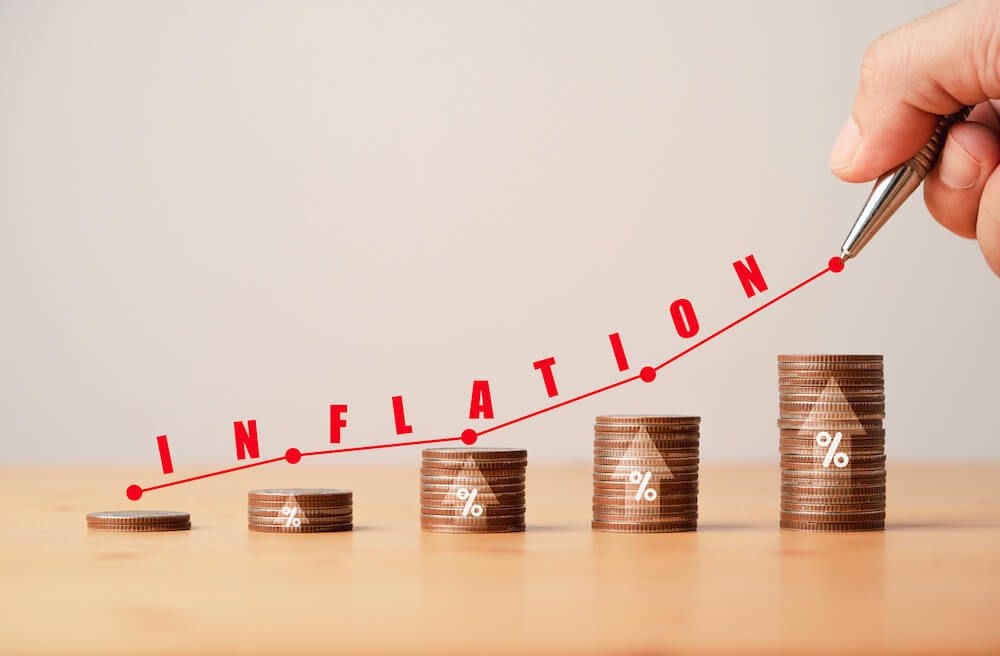
What Is Inflation’s Impact on Markets?
The Most Expensive Four-Letter Word on Wall Street
There are moments in business when a single variable overwhelms every spreadsheet, every boardroom discussion, and every investor presentation. Inflation is one of those moments.
I've spent decades around entrepreneurs, executives, bankers, and investors. I've watched people obsess over market share, product innovation, tax policy, labor costs, and technological disruption. All important. Yet when inflation begins moving aggressively, it changes the conversation entirely. It reaches into every corner of the economy and starts rearranging the furniture.
Here's the mistake many people make: they think inflation is simply about higher prices.
It's not.
Inflation is about the value of money itself. It is a force that quietly alters incentives, changes behavior, distorts investment decisions, and influences everything from stock valuations to bond yields. A gallon of milk costing more is merely the visible symptom. The deeper issue is that every dollar buys less than it did before.
And markets? Markets are essentially giant discounting machines. They spend every second trying to determine what tomorrow is worth today. When inflation enters the picture, that calculation becomes considerably more complicated.
Inflation: The Market's Uninvited Guest
At its core, inflation measures the rate at which prices increase across an economy over time.
A modest amount of inflation is generally healthy. It often signals economic growth, rising wages, and steady consumer demand. Problems emerge when inflation accelerates faster than businesses, consumers, or policymakers can comfortably manage.
Markets dislike uncertainty more than they dislike bad news.
That's an important distinction.
Investors can adapt to almost any environment if they understand the rules. High inflation introduces uncertainty about interest rates, corporate earnings, consumer spending, and economic growth simultaneously. Suddenly, multiple assumptions that underpin asset pricing are called into question.
That's when volatility tends to show up.
Why Stocks React So Strongly
Stock prices represent expectations about future profits.
Simple enough.
When inflation rises, companies face higher costs for labor, raw materials, transportation, energy, and financing. Some businesses can pass those costs on to customers. Others cannot.
The difference is enormous.
A luxury goods company may raise prices with little resistance. A discount retailer serving price-sensitive consumers may discover that raising prices leads directly to lower sales.
As a result, investors begin asking difficult questions:
-
Can margins hold?
-
Will consumers keep spending?
-
How much pricing power does management really have?
-
What happens if borrowing costs rise?
These questions affect valuation.
A company expected to generate robust earnings growth suddenly appears less predictable. The stock market responds accordingly.
The Winners and Losers
Not all sectors react the same way.
Energy companies, commodity producers, and certain industrial firms often benefit during inflationary periods because the products they sell become more valuable.
Meanwhile, businesses that rely heavily on future growth projections can suffer. Technology companies frequently fall into this category because much of their perceived value comes from earnings expected years down the road.
When interest rates rise alongside inflation, those future earnings become less valuable in present-value terms.
The math changes.
The market notices.
The Bond Market Feels It First
If inflation is troublesome for stocks, it can be brutal for bonds.
A bond provides fixed payments over time. Inflation reduces the purchasing power of those payments.
Imagine owning a bond yielding 3%.
Sounds reasonable.
Now imagine inflation climbs to 6%.
You're effectively losing purchasing power every year despite receiving interest payments.
Investors understand this immediately.
As inflation expectations rise, bond investors demand higher yields. Because bond prices move inversely to yields, existing bond prices decline.
This relationship explains why inflation often creates significant stress in fixed-income markets.
Many investors discover that bonds are not always the safe harbor they expected.
The Federal Reserve Enters the Scene
No discussion of inflation is complete without addressing the Federal Reserve.
When inflation rises beyond acceptable levels, the Fed's primary weapon is higher interest rates.
Higher rates make borrowing more expensive.
Mortgages become costlier.
Corporate debt becomes costlier.
Credit card balances become costlier.
Economic activity typically slows as a result.
This process can be uncomfortable because the Fed is essentially trying to cool demand without causing a recession.
That balancing act is extraordinarily difficult.
Too little action allows inflation to become entrenched.
Too much action risks economic contraction.
Markets monitor every speech, press conference, and policy statement because even subtle shifts in Fed language can trigger significant price movements across asset classes.
A Market Comparison: Low Inflation vs. High Inflation
| Market Factor | Low Inflation Environment | High Inflation Environment |
|---|---|---|
| Interest Rates | Generally lower | Generally higher |
| Stock Valuations | Often expand | Frequently compress |
| Bond Performance | More stable | Greater downside pressure |
| Consumer Spending | More predictable | Often constrained |
| Corporate Margins | Easier to maintain | Under pressure from costs |
| Growth Stocks | Typically favored | Often challenged |
| Commodity Prices | Relatively stable | Frequently increase |
| Market Volatility | Lower on average | Usually elevated |
| Business Planning | More straightforward | More uncertain |
| Investor Sentiment | More optimistic | More cautious |
The table tells an important story.
Inflation doesn't merely affect one market segment. It influences nearly every major asset class simultaneously.
That interconnectedness is what makes it such a powerful force.
The Psychology Nobody Talks About
Economists focus on numbers.
Investors should pay attention to behavior.
Inflation changes behavior in ways that are difficult to quantify.
Consumers begin making purchases sooner because they expect prices to rise.
Businesses accelerate inventory purchases.
Employees demand higher wages.
Lenders adjust risk calculations.
Investors seek assets they believe can preserve purchasing power.
These responses can become self-reinforcing.
In extreme cases, inflation expectations become embedded in decision-making across the economy.
Once that happens, bringing inflation back under control becomes substantially harder.
The psychological component is often underestimated.
It shouldn't be.
A Lesson I Learned the Hard Way
Years ago, I sat through a discussion involving a successful business owner who believed inflation was merely a temporary inconvenience.
His company was growing.
Revenue was climbing.
Demand appeared strong.
He wasn't worried.
What he failed to appreciate was the cumulative effect of rising costs. Labor expenses increased. Suppliers raised prices. Transportation costs moved higher. Financing costs followed.
Each increase looked manageable in isolation.
Together, they compressed margins dramatically.
The lesson stayed with me.
Business leaders often focus on top-line growth while overlooking the silent erosion occurring underneath. Inflation rarely announces its full impact all at once. It arrives in pieces.
A little here.
A little there.
Then suddenly an executive team discovers that revenue growth and profit growth are moving in opposite directions.
Markets are remarkably good at identifying that divergence before management does.
That's one reason investors pay such close attention to inflation data.
Which Assets Historically Hold Up Better?
There is no perfect inflation shield.
Anyone claiming otherwise is selling something.
However, certain asset categories have historically demonstrated greater resilience.
Real Assets
Real estate, infrastructure, and certain commodities often maintain value because they represent tangible assets whose replacement costs rise during inflationary periods.
Companies With Pricing Power
Businesses capable of increasing prices without significantly reducing demand tend to perform better.
Strong brands matter.
Essential products matter.
Customer loyalty matters.
Dividend-Paying Businesses
Established companies generating consistent cash flow can provide some protection, particularly when dividends grow over time.
Inflation-Protected Securities
Certain government-issued securities are specifically designed to adjust for inflation, helping preserve purchasing power.
None of these options eliminate risk.
They simply address different dimensions of inflation exposure.
Why Inflation Is Ultimately a Valuation Story
At its heart, inflation affects markets because it alters how investors value future cash flows.
That's the essence of the issue.
Every stock, bond, property, or business ultimately derives value from the cash it can generate in the future.
Inflation changes the discount rate.
It changes financing costs.
It changes consumer behavior.
It changes profit expectations.
Consequently, it changes valuation.
Everything else is detail.
Important detail, certainly. But detail nonetheless.
The market is constantly recalculating those future cash flows through the lens of current economic conditions.
Inflation forces the calculator to work overtime.
The Question Investors Should Really Ask
Most people ask whether inflation is good or bad for markets.
That's the wrong question.
The better question is this:
How predictable is inflation?
Markets can adapt to many conditions. They struggle most when conditions change rapidly and unpredictably.
Stable inflation—even at moderately elevated levels—is often easier for investors and businesses to navigate than inflation that swings dramatically from one direction to another.
Predictability creates confidence.
Confidence encourages investment.
Investment supports growth.
The chain reaction matters.
Conclusion: Inflation Is Never Just About Prices
Inflation is frequently described as an economic statistic.
That's far too narrow.
It is a force that influences confidence, capital allocation, business strategy, consumer behavior, interest rates, and asset prices all at once.
When inflation rises, markets are not simply reacting to higher prices. They are reassessing the future.
Every valuation model.
Every earnings forecast.
Every investment thesis.
Everything gets reviewed.
That's why inflation commands so much attention from investors, executives, and policymakers alike.
The provocative reality is this: inflation doesn't destroy markets. Markets eventually adapt.
What inflation destroys is certainty.
And on Wall Street, certainty has always carried a premium.
- Arts
- Business
- Computers
- Jogos
- Health
- Início
- Kids and Teens
- Money
- News
- Personal Development
- Recreation
- Regional
- Reference
- Science
- Shopping
- Society
- Sports
- Бизнес
- Деньги
- Дом
- Досуг
- Здоровье
- Игры
- Искусство
- Источники информации
- Компьютеры
- Личное развитие
- Наука
- Новости и СМИ
- Общество
- Покупки
- Спорт
- Страны и регионы
- World

 English
 Russian
 French
 Spanish
 Deutsch
 Turkish
 Dutch
Dutch
 Italiano
 Arabic
 Romaian
 Portuguese (Brazil)
 Greek
Greek