
What Is the Difference Between Open-Source and Proprietary Software?
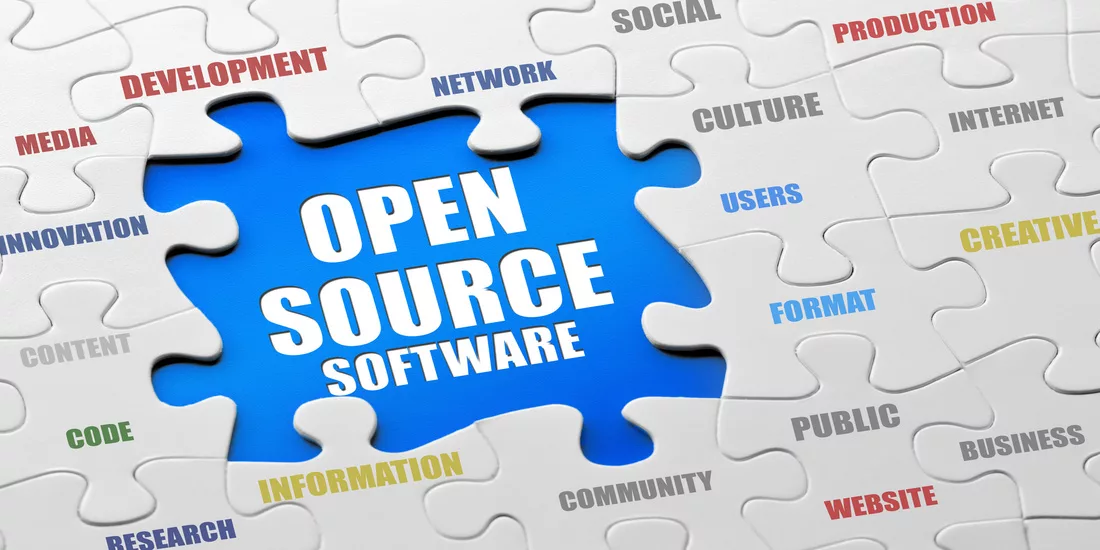
The debate often begins with technology.
It rarely stays there.
Ask a software developer about open-source versus proprietary software and the conversation may quickly drift toward philosophy.
Ask a chief financial officer and it becomes a discussion about cost, risk, and control.
Ask an entrepreneur and the subject transforms into a question of scalability and competitive advantage.
The software itself matters.
Of course it does.
But the real distinction between open-source and proprietary software extends beyond code.
It reflects fundamentally different ideas about ownership, access, collaboration, and value creation.
That is why the conversation remains relevant decades after the first major software licenses emerged.
The choice between open and closed systems influences how organizations innovate, how developers collaborate, how products evolve, and ultimately how technology shapes entire industries.
For many businesses, the question is no longer whether they use open-source or proprietary software.
Most use both.
The more important question is understanding the strengths, limitations, and strategic implications of each approach.
Because beneath every application, platform, and operating system sits a licensing model quietly determining what is possible.
And what is not.
Understanding the Core Difference
At its simplest level, the distinction revolves around access.
Open-source software makes its source code available for inspection, modification, and redistribution under specified licensing terms.
Proprietary software does not.
Its source code remains private and controlled by the software creator.
That sounds straightforward.
In practice, the implications are enormous.
Open-Source Software
Open-source software allows users to view the underlying code.
Depending on the license, users may also:
- Modify functionality
- Create derivative versions
- Share improvements
- Redistribute software
The software remains protected by copyright.
What changes is the level of access granted.
Proprietary Software
Proprietary software restricts access to source code.
Users receive permission to use the software.
They do not receive permission to examine or alter its internal workings.
The vendor retains substantial control over:
- Development
- Distribution
- Modifications
- Support
This distinction forms the foundation of everything that follows.
The Philosophical Divide
Technology discussions often focus on technical specifications.
Yet open-source and proprietary software emerged from fundamentally different philosophies.
The Open-Source Perspective
Open-source development emphasizes transparency and collaboration.
Advocates frequently argue that software improves when more people can inspect and contribute to it.
The model encourages collective problem-solving.
Innovation becomes distributed.
Knowledge becomes shared.
The Proprietary Perspective
Proprietary software prioritizes centralized control.
The creator determines how the product evolves.
Advocates argue this enables greater consistency, accountability, and commercial sustainability.
Innovation remains coordinated rather than decentralized.
Neither philosophy is inherently superior.
Each reflects different priorities.
Comparing Open-Source and Proprietary Software
| Factor | Open-Source Software | Proprietary Software |
|---|---|---|
| Source Code Access | Available | Restricted |
| Modification Rights | Generally allowed | Generally prohibited |
| Licensing Costs | Often free or low-cost | Usually paid |
| Vendor Dependency | Lower | Higher |
| Customization | Extensive | Limited |
| Support Model | Community or commercial | Vendor-provided |
| Development Model | Collaborative | Centralized |
| Transparency | High | Limited |
| Security Visibility | Publicly inspectable | Internally controlled |
| Innovation Style | Distributed | Managed and directed |
The table simplifies a complex reality.
Many modern products blend elements of both approaches.
Still, these distinctions remain useful starting points.
Why Open-Source Software Became So Influential
Open-source software occupies a remarkable position in modern technology.
Many people interact with it daily without realizing it.
Large portions of the internet depend upon open-source infrastructure.
Cloud environments rely heavily on open technologies.
Software development itself frequently occurs using open-source tools.
Why?
Several reasons explain its growth.
Flexibility
Organizations can adapt software to their specific requirements.
They are not confined to a vendor's roadmap.
Community Innovation
Thousands of contributors can improve a project simultaneously.
Innovation often accelerates through collective participation.
Cost Efficiency
Licensing costs may be significantly lower.
This creates attractive economics for startups and large enterprises alike.
Reduced Vendor Lock-In
Organizations retain greater control over their technology environments.
Dependence on a single provider decreases.
For many businesses, that flexibility is enormously valuable.
Why Proprietary Software Continues to Thrive
Despite the growth of open-source alternatives, proprietary software remains dominant across many categories.
That persistence is not accidental.
Proprietary software delivers distinct advantages.
Simplified Support
Users know who is responsible.
A vendor provides support, maintenance, updates, and accountability.
Consistent User Experience
Centralized development often produces highly polished experiences.
Decision-making becomes more coordinated.
Commercial Investment
Revenue generated through licensing funds continued product development.
Many proprietary platforms invest heavily in research and innovation.
Predictability
Organizations often value stability.
Proprietary software vendors frequently offer formal service agreements and long-term roadmaps.
Predictability has value.
Particularly in complex business environments.
The Security Debate
Few topics generate more disagreement than software security.
Supporters of both models often make compelling arguments.
The Open-Source Security Argument
Open-source advocates frequently emphasize transparency.
Anyone can inspect the code.
Potential vulnerabilities become visible.
Problems can be identified and corrected by a global community.
The principle is simple.
More eyes can discover more issues.
The Proprietary Security Argument
Proprietary advocates emphasize controlled development environments.
Code remains private.
Attackers cannot easily inspect internal mechanisms.
Dedicated security teams oversee development.
Both approaches have merit.
Both approaches have weaknesses.
Security ultimately depends less on licensing philosophy and more on implementation quality.
Poorly maintained software remains risky regardless of its licensing model.
Innovation Happens Differently
One of the most fascinating differences involves innovation itself.
Open-source innovation often resembles a marketplace of ideas.
Multiple contributors experiment simultaneously.
Competing approaches emerge naturally.
The strongest solutions gain traction.
Proprietary innovation follows a different path.
Priorities are coordinated internally.
Development resources focus on strategic objectives.
Product direction remains centralized.
The results can be remarkably different.
Open systems often evolve rapidly.
Closed systems often evolve intentionally.
Neither characteristic guarantees success.
Cost Is More Complicated Than It Appears
Organizations frequently assume open-source software is automatically cheaper.
Reality is more nuanced.
Open-Source Costs
Licensing may be free.
Implementation is not.
Organizations may incur expenses related to:
- Customization
- Integration
- Support
- Security
- Internal expertise
Proprietary Costs
Licensing fees can be substantial.
Yet support, maintenance, and updates are often included.
Total cost depends on context.
The least expensive software license does not always produce the lowest overall operating cost.
A Lesson I Learned During a Platform Evaluation
Several years ago, I worked with an organization evaluating two competing technology platforms.
One was a sophisticated proprietary solution.
The other was an open-source alternative.
Initial discussions focused almost entirely on licensing costs.
The open-source platform appeared dramatically less expensive.
Decision-makers were enthusiastic.
Then implementation planning began.
Customization requirements emerged.
Internal expertise gaps became apparent.
Support considerations surfaced.
The economics shifted.
Not because the open-source platform was flawed.
It wasn't.
It simply required a different type of investment.
What I learned from that experience was surprisingly simple.
Organizations often compare software products.
They should compare operating models.
The software itself is only part of the equation.
The surrounding ecosystem matters just as much.
Sometimes more.
Vendor Lock-In and Strategic Control
Vendor lock-in remains one of the most important business considerations.
Proprietary software can create dependency.
Organizations may become closely tied to a vendor's:
- Pricing structure
- Product roadmap
- Technology ecosystem
Changing providers can become difficult.
Open-source software generally offers greater flexibility.
Organizations maintain more control over their infrastructure and development direction.
That flexibility, however, often requires additional internal capability.
Freedom carries responsibility.
As it usually does.
Why Most Organizations Use Both
The discussion is often framed as a choice.
Open-source or proprietary.
Reality is far less dramatic.
Most organizations use both simultaneously.
A business may rely on:
- Open-source databases
- Proprietary productivity software
- Open-source development tools
- Proprietary analytics platforms
Technology ecosystems have become increasingly hybrid.
Organizations select solutions based on specific requirements rather than ideological preferences.
Pragmatism frequently wins.
The Future of Software Development
The boundaries between open-source and proprietary software continue evolving.
Many proprietary vendors contribute to open-source projects.
Many open-source companies operate successful commercial businesses.
The distinction remains important.
Yet the relationship has become increasingly interconnected.
Artificial intelligence, cloud computing, and platform ecosystems are accelerating this trend.
Collaboration and commercialization now coexist in ways that would have seemed unusual decades ago.
The future may involve fewer rigid categories and more blended models.
Open cores.
Commercial support.
Community-driven innovation paired with enterprise-grade services.
The software industry rarely stands still.
Neither do its licensing models.
Choosing Between Open-Source and Proprietary Software
The best choice depends on context.
Organizations should consider:
Open-Source May Be Ideal When:
- Customization is essential
- Vendor independence matters
- Internal technical expertise exists
- Flexibility is a priority
Proprietary Software May Be Ideal When:
- Simplicity is important
- Formal support is required
- Internal resources are limited
- Predictability is critical
The question is rarely which model is universally better.
The question is which model aligns with specific business objectives.
Conclusion: This Debate Is Really About Control
At first glance, the difference between open-source and proprietary software appears technical.
Source code access.
Licensing rights.
Development models.
Those distinctions matter.
Yet they point toward something larger.
Control.
Who controls the software?
Who controls its future?
Who determines how it evolves?
Who benefits from its success?
Open-source software distributes control.
Proprietary software concentrates it.
Each approach offers advantages.
Each introduces tradeoffs.
Transparency versus coordination.
Flexibility versus predictability.
Community innovation versus centralized execution.
The most successful organizations understand these tradeoffs rather than chasing absolutes.
They recognize that software decisions are rarely just technology decisions.
They are business decisions.
Governance decisions.
Strategic decisions.
And perhaps that explains why this debate continues.
Because the discussion was never really about code.
It was always about how people choose to create, share, manage, and monetize knowledge.
Software merely happens to be the medium.
- Arts
- Business
- Computers
- Spellen
- Health
- Home
- Kids and Teens
- Money
- News
- Personal Development
- Recreation
- Regional
- Reference
- Science
- Shopping
- Society
- Sports
- Бизнес
- Деньги
- Дом
- Досуг
- Здоровье
- Игры
- Искусство
- Источники информации
- Компьютеры
- Личное развитие
- Наука
- Новости и СМИ
- Общество
- Покупки
- Спорт
- Страны и регионы
- World

 English
 Russian
 French
 Spanish
 Portuguese
 Deutsch
 Turkish
 Italiano
 Arabic
 Romaian
 Portuguese (Brazil)
 Greek
Greek