
What is the psychology behind cognitive biases?
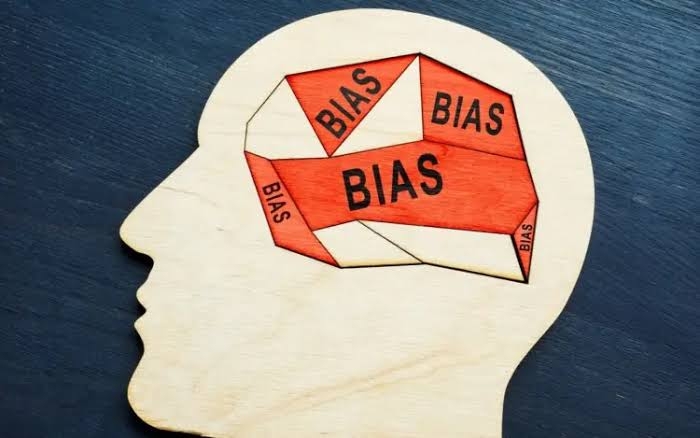
What Is the Psychology Behind Cognitive Biases?
Human beings like to believe they are rational. We imagine ourselves as careful judges of reality, weighing evidence with detached precision before arriving at a conclusion. It is a flattering image. It is also, in many circumstances, a fiction.
Consider a simple question. Which causes more deaths annually: shark attacks or falling household furniture?
Most people hesitate. Sharks occupy a prominent place in memory. Images surface immediately. News stories linger. The answer feels uncertain. Yet household furniture causes far more fatalities. The mistake is not a failure of intelligence. It is a feature of how the mind operates.
The psychology behind cognitive biases begins with a paradox. The human brain is astonishingly sophisticated, yet it routinely produces predictable errors. These errors are not random. They emerge from mechanisms that evolved to help us navigate a world of overwhelming complexity.
To understand cognitive biases, we must first abandon the comforting assumption that mistakes arise mainly from ignorance. More often, biases arise because the brain is doing exactly what it was designed to do: simplify reality.
The shortcuts that make thinking efficient are the same shortcuts that distort judgment.
That is where the story begins.
The Brain’s Fundamental Problem
Every second, the human brain receives an immense quantity of information. Visual signals, sounds, memories, emotions, expectations, and social cues compete for attention.
Processing every piece of information with deliberate analysis would be impossible.
The brain therefore faces a challenge that economists would recognize immediately: scarcity.
Time is scarce.
Attention is scarce.
Mental energy is scarce.
The solution is elegant. Instead of calculating everything from first principles, the brain relies on mental shortcuts known as heuristics.
Heuristics allow rapid judgments. They reduce cognitive effort. They often work remarkably well.
If you hear footsteps behind you late at night, hesitation may be costly. Fast interpretation has value.
If a friend appears upset, you rarely perform a formal emotional analysis before responding.
Efficiency matters.
Yet efficiency comes with trade-offs.
The same mechanisms that save mental resources can also create systematic distortions in perception, memory, and reasoning. These distortions are cognitive biases.
In essence, cognitive biases are the side effects of an efficient mind.
Why Cognitive Biases Exist
A common misconception is that biases represent defects in thinking.
The reality is more nuanced.
Evolution did not optimize the human brain for statistical accuracy. It optimized the brain for survival and reproduction.
These goals overlap, but they are not identical.
Imagine two prehistoric individuals hearing movement in nearby bushes.
The first assumes it is the wind.
The second assumes it is a predator.
If the noise is harmless, the second individual experiences unnecessary anxiety.
If the noise conceals danger, the first individual may not survive.
Over thousands of generations, minds that erred on the side of caution often enjoyed an advantage.
Many biases reflect this evolutionary logic.
The brain frequently prioritizes speed over precision.
It favors coherent stories over uncertainty.
It seeks patterns, even when patterns do not exist.
From a biological perspective, these tendencies often make sense.
From a statistical perspective, they can be disastrous.
System 1 and System 2: The Two Modes of Thinking
One of the most useful frameworks for understanding cognitive biases involves two interacting modes of thought.
System 1 operates automatically and quickly.
It generates impressions, intuitions, emotions, and immediate judgments.
System 2 operates more slowly.
It engages in deliberate reasoning, calculation, and conscious analysis.
System 1 is effortless.
System 2 is demanding.
Most of the time, System 1 runs the show.
This arrangement is practical. Imagine having to consciously calculate every facial expression, every sentence, or every movement involved in daily life.
You would accomplish very little.
Yet System 1 has limitations.
It jumps to conclusions.
It fills gaps in information.
It creates narratives from incomplete evidence.
System 2 can correct these errors, but it is often lazy.
The result is a predictable pattern. Initial intuitions frequently shape final judgments, even when contradictory evidence exists.
Many cognitive biases emerge from this interaction.
The mind accepts a quick answer because evaluating it thoroughly requires effort.
The Architecture of Bias
Cognitive biases are not isolated glitches.
They emerge from deeper psychological processes.
Several mechanisms repeatedly appear across different forms of bias.
Pattern Recognition
Humans are extraordinary pattern detectors.
This ability has obvious advantages.
Recognizing relationships between events allows learning and prediction.
However, the brain often detects patterns that are not actually present.
Investors see trends in random stock movements.
Gamblers perceive meaningful streaks in chance events.
People infer causation from coincidence.
The mind would rather find a false pattern than miss a real one.
Emotional Processing
Emotions influence cognition far more than most people realize.
Fear, excitement, anger, and hope shape judgments before conscious reasoning begins.
A frightening event becomes easier to recall.
An emotionally charged story feels more convincing than dry statistics.
Information associated with strong feelings receives preferential treatment.
The result is a distorted perception of probability and risk.
Cognitive Ease
Ideas that are easy to process often feel more truthful.
Familiar statements appear more credible.
Repeated claims gain persuasive power.
Simple explanations seem preferable to complex ones.
The brain frequently confuses ease of processing with accuracy.
This confusion contributes to numerous biases.
Narrative Construction
Humans are storytelling creatures.
Randomness is uncomfortable.
Uncertainty is unsettling.
The mind therefore constructs narratives that create a sense of order.
These narratives help us understand the world, but they can also mislead us.
A coherent story often feels more satisfying than an accurate one.
The Most Influential Cognitive Biases
While psychologists have identified dozens of biases, several play particularly important roles in everyday decision-making.
Confirmation Bias
Confirmation bias refers to the tendency to seek information that supports existing beliefs while discounting contradictory evidence.
This bias operates quietly.
People rarely think, "I will ignore evidence."
Instead, supportive information feels persuasive while opposing information appears flawed.
The process feels objective from the inside.
That is precisely why it is so powerful.
Confirmation bias influences politics, investing, relationships, and scientific inquiry.
It narrows intellectual vision without announcing its presence.
Availability Bias
The brain estimates likelihood based on how easily examples come to mind.
Events that receive extensive media coverage appear more common than they actually are.
Rare but dramatic dangers often receive disproportionate attention.
Common risks may be underestimated because they lack emotional vividness.
Availability bias explains why public fears frequently diverge from statistical reality.
Anchoring Bias
Initial information exerts a surprisingly strong influence on subsequent judgments.
Suppose someone asks whether a product should cost more or less than $1,000.
Even if the number is arbitrary, it influences later estimates.
The initial figure becomes an anchor.
Adjustments occur, but they rarely go far enough.
Anchoring affects negotiations, pricing decisions, salary discussions, and financial forecasts.
Hindsight Bias
After outcomes become known, people often perceive them as predictable.
Events that once appeared uncertain suddenly seem inevitable.
The mind rewrites history.
This tendency creates an illusion of understanding.
It also impairs learning.
When people believe they "knew it all along," they become less likely to examine mistakes objectively.
Overconfidence Bias
Perhaps no bias is more consequential.
Individuals routinely overestimate the accuracy of their knowledge, predictions, and abilities.
Experts are not immune.
In some domains, expertise can even amplify confidence faster than accuracy.
The gap between certainty and correctness has shaped financial bubbles, military conflicts, corporate failures, and personal decisions throughout history.
A Comparison of Major Cognitive Biases
| Bias | Psychological Mechanism | Typical Effect | Real-World Example |
|---|---|---|---|
| Confirmation Bias | Selective information processing | Reinforces existing beliefs | Reading only news sources that agree with your views |
| Availability Bias | Memory accessibility | Distorted risk assessment | Overestimating airplane crash risk |
| Anchoring Bias | Reliance on initial information | Skewed estimates | Negotiating based on the first price offered |
| Hindsight Bias | Outcome-based memory reconstruction | Illusion of predictability | Claiming an election result was obvious afterward |
| Overconfidence Bias | Excessive trust in personal judgment | Poor forecasting | Investors believing they can consistently beat the market |
| Framing Effect | Sensitivity to presentation | Different choices from identical facts | Reacting differently to "90% survival" versus "10% mortality" |
| Loss Aversion | Strong emotional response to losses | Risk-averse behavior | Refusing to sell a losing investment |
| Halo Effect | Global impressions influence specific judgments | Misleading evaluations | Assuming attractive people are more competent |
The Role of Memory in Cognitive Biases
Memory is often imagined as a recording device.
It is not.
Memory is reconstructive.
Each recollection involves interpretation.
Each retrieval can subtly reshape the remembered event.
This characteristic contributes significantly to cognitive bias.
People remember successes more vividly than failures.
They reinterpret past decisions to fit present beliefs.
They emphasize details that support existing narratives.
The result is a dynamic system that prioritizes coherence over perfect accuracy.
I learned this lesson during a research project years ago. After reviewing notes from a series of decisions, I was surprised by the discrepancy between what participants remembered and what had actually occurred. Their confidence was unwavering. Yet the written records told a different story.
The experience reinforced an uncomfortable realization.
Confidence and accuracy often travel separately.
The human mind is exceptionally skilled at generating certainty from incomplete recollection.
Social Forces and Cognitive Bias
Biases do not operate solely within individuals.
They flourish in social environments.
Groups create pressures that amplify cognitive distortions.
Consensus becomes evidence.
Popularity becomes credibility.
Agreement becomes validation.
When many people share the same belief, questioning it requires psychological effort.
The desire for social acceptance can subtly influence reasoning.
Groupthink emerges when maintaining harmony becomes more important than evaluating alternatives.
Organizations frequently suffer from this dynamic.
Warnings go unchallenged.
Assumptions remain untested.
Confidence grows even as uncertainty increases.
The collective mind becomes vulnerable to the same shortcuts that affect individual minds.
Sometimes more vulnerable.
Why Smart People Are Not Immune
An intriguing feature of cognitive bias is its resistance to intelligence.
Higher intelligence does not eliminate bias.
In some situations, it merely changes its expression.
Intelligent individuals often become exceptionally skilled at defending conclusions they already favor.
They construct sophisticated arguments.
They marshal impressive evidence.
They explain away contradictions.
The reasoning appears rigorous.
Yet the destination was chosen before the journey began.
Knowledge alone is insufficient.
Awareness alone is insufficient.
The psychological roots of bias run deeper than information.
They are embedded within the architecture of thought itself.
Can Cognitive Biases Be Eliminated?
The honest answer is no.
Cognitive biases are not software bugs awaiting correction.
They are consequences of how human cognition functions.
Eliminating them entirely would require redesigning the very mechanisms that make rapid thinking possible.
However, biases can be reduced.
Several strategies consistently improve judgment.
Slow Down Important Decisions
Biases thrive under speed.
Deliberation creates opportunities for correction.
When stakes are high, slowing the decision process often improves outcomes.
Seek Disconfirming Evidence
Instead of asking, "Why am I right?"
Ask, "What evidence would prove me wrong?"
This simple shift can expose hidden assumptions.
Use Statistical Thinking
Individual stories are compelling.
Base rates are often more informative.
Combining both perspectives generally produces better judgments.
Encourage Constructive Dissent
Organizations benefit when disagreement is rewarded rather than punished.
Alternative viewpoints reveal blind spots.
Keep Decision Records
Recording expectations before outcomes occur creates accountability.
It also reduces hindsight bias.
Reality becomes harder to rewrite when evidence exists.
The Strange Relationship Between Bias and Human Success
At first glance, cognitive biases appear entirely negative.
Yet the picture is more complicated.
Some biases contribute to resilience.
Optimism can encourage persistence.
Confidence can facilitate action.
Hope can sustain effort despite uncertainty.
A perfectly rational individual might hesitate where action is necessary.
Human achievement often depends upon beliefs that exceed available evidence.
This observation does not justify bias.
Rather, it reveals a tension at the heart of human psychology.
The traits that occasionally mislead us are often the same traits that enable ambition, creativity, and perseverance.
The objective is not to become a machine.
The objective is to recognize when intuition requires supervision.
Conclusion: The Mind’s Beautiful Imperfection
The psychology behind cognitive biases reveals something profound about human nature.
We do not experience reality directly.
We experience a version of reality constructed by a brain attempting to manage complexity with limited resources.
The shortcuts are indispensable.
Without them, daily life would become paralyzing.
Yet those same shortcuts shape judgments in ways we rarely notice.
That is the unsettling insight.
The greatest obstacle to clear thinking is not ignorance. It is the feeling of knowing.
Cognitive biases persist because they are woven into the machinery of perception, memory, emotion, and reasoning. They are not occasional intruders. They are permanent residents.
The challenge, therefore, is not to eliminate bias. It is to cultivate humility toward our own certainty.
The moment we become absolutely convinced that our judgment is objective, unbiased, and immune to error is often the moment we are most vulnerable to deception.
Not deception by others.
Deception by ourselves.
- Arts
- Business
- Computers
- Jocuri
- Health
- Home
- Kids and Teens
- Money
- News
- Personal Development
- Recreation
- Regional
- Reference
- Science
- Shopping
- Society
- Sports
- Бизнес
- Деньги
- Дом
- Досуг
- Здоровье
- Игры
- Искусство
- Источники информации
- Компьютеры
- Личное развитие
- Наука
- Новости и СМИ
- Общество
- Покупки
- Спорт
- Страны и регионы
- World

 English
 Russian
 French
 Spanish
 Portuguese
 Deutsch
 Turkish
 Dutch
Dutch
 Italiano
 Arabic
 Portuguese (Brazil)
 Greek
Greek