
How can I avoid cognitive biases?
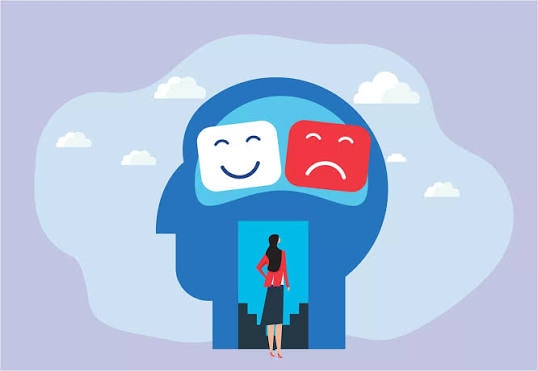
How Can I Avoid Cognitive Biases?
A physician reviews a patient's symptoms and reaches a diagnosis within seconds.
An investor feels certain a stock is destined to rise.
A hiring manager instantly likes a candidate during the first minute of an interview.
A voter reads a headline and immediately knows who is right.
Different people.
Different situations.
Different stakes.
Yet the same psychological process may be unfolding beneath the surface.
A judgment appears.
Confidence follows.
Reasoning arrives later.
Most people assume cognitive biases happen to others. We notice the investor blinded by optimism, the executive trapped by overconfidence, the politician influenced by ideology. We rarely place ourselves in the same category.
That assumption is itself a bias.
The challenge of avoiding cognitive biases begins with an uncomfortable realization: awareness does not create immunity.
You can understand confirmation bias and still seek information that supports your beliefs.
You can recognize overconfidence and still overestimate your knowledge.
You can study decision-making for decades and remain vulnerable to the very errors you teach others to avoid.
This is not a flaw in intelligence.
It is a feature of human cognition.
The question, therefore, is not whether you can eliminate cognitive biases.
You cannot.
The more useful question is this:
How can you reduce their influence?
The answer lies not in becoming perfectly rational but in designing better habits, better environments, and better decision processes.
The goal is not perfection.
The goal is fewer predictable mistakes.
Why Cognitive Biases Are So Difficult to Avoid
Before discussing solutions, it is important to understand the problem.
Most cognitive biases operate automatically.
They arise before conscious awareness.
By the time you notice a judgment, part of the mental work has already occurred.
This creates a peculiar challenge.
Biases do not announce themselves.
Confirmation bias does not whisper, "I am filtering information."
Anchoring bias does not declare, "This number is influencing your judgment."
Overconfidence rarely feels like overconfidence.
It feels like certainty.
That distinction matters.
People often imagine bias as a conscious error.
In reality, bias frequently emerges from processes that feel entirely reasonable.
The mind creates a coherent story.
The story feels true.
The feeling becomes evidence.
The cycle continues.
The First Rule: Accept That You Are Biased
This may be the most important step.
Most individuals believe they are less biased than average.
Psychologists call this the bias blind spot.
The phenomenon appears consistently across studies.
People recognize biases in strangers.
They identify biases in politicians.
They detect biases in colleagues.
Their own judgment seems comparatively objective.
This perception creates vulnerability.
You cannot correct a problem you refuse to acknowledge.
Avoiding cognitive biases begins with intellectual humility.
The assumption should not be:
"I am unbiased."
The assumption should be:
"My mind is vulnerable in predictable ways."
That shift changes everything.
Slow Down Important Decisions
Many biases flourish under conditions of speed.
Fast judgments rely heavily on intuition.
Intuition is useful.
It is also imperfect.
When decisions carry significant consequences, slowing down creates opportunities for reflection.
This principle sounds obvious.
Its implications are profound.
Consider major life decisions.
Career changes.
Financial investments.
Business acquisitions.
Medical treatments.
Relationships.
These choices often generate strong emotional reactions.
The stronger the emotion, the greater the temptation to decide quickly.
Yet emotional certainty is not evidence.
It is information.
Nothing more.
Creating deliberate pauses often improves judgment.
Time becomes a cognitive tool.
Separate Decisions From Emotions
Emotion is not the enemy of rationality.
Without emotion, decision-making becomes remarkably difficult.
Yet emotional states can distort perception.
Fear exaggerates risk.
Excitement amplifies opportunity.
Anger narrows perspective.
Optimism minimizes uncertainty.
The solution is not emotional suppression.
It is emotional awareness.
Ask a simple question:
"Would I reach the same conclusion if I felt differently?"
The answer is often revealing.
Psychological distance creates clarity.
Seek Evidence That Challenges Your Beliefs
Confirmation bias remains one of the most powerful obstacles to objective thinking.
The human mind naturally seeks coherence.
Information supporting existing beliefs feels persuasive.
Contradictory evidence feels problematic.
As a result, people often become investigators searching for confirmation rather than truth.
A useful practice involves reversing the question.
Instead of asking:
"Why am I right?"
Ask:
"What evidence would convince me that I am wrong?"
The difference appears subtle.
The consequences are enormous.
One question protects beliefs.
The other tests them.
Use Base Rates Whenever Possible
Human beings love stories.
Statistics feel abstract.
Stories feel real.
Unfortunately, stories can be misleading.
Suppose someone describes an individual as analytical, quiet, and detail-oriented.
Many people immediately assume the person works in a technical profession.
The description feels convincing.
Yet probability depends not only on characteristics but also on prevalence.
If teachers dramatically outnumber engineers in the population, the statistical odds matter.
Psychologists call this neglecting base rates.
Avoiding the bias requires discipline.
Always ask:
"What do the broader statistics suggest?"
The answer may contradict intuition.
That is precisely why it matters.
Create Decision Checklists
Checklists are remarkably effective.
Not because people lack intelligence.
Because people forget.
Even experts overlook important information.
Pilots use checklists.
Surgeons use checklists.
Investors increasingly use checklists.
The logic is simple.
Human memory is unreliable.
Structured processes compensate for cognitive limitations.
A checklist transforms good intentions into repeatable behavior.
It reduces the influence of mood, stress, and distraction.
Most importantly, it creates consistency.
Consistency often improves judgment more than brilliance.
Comparison Table: Common Cognitive Biases and Practical Countermeasures
| Cognitive Bias | How It Distorts Thinking | Typical Consequence | Practical Countermeasure |
|---|---|---|---|
| Confirmation Bias | Seeking supportive evidence | Narrow perspective | Actively search for disconfirming information |
| Anchoring Bias | Overreliance on initial information | Skewed estimates | Generate independent estimates first |
| Availability Bias | Judging probability by memory accessibility | Misjudged risks | Consult objective statistics |
| Overconfidence Bias | Excessive certainty | Poor forecasts | Assign probability ranges instead of absolutes |
| Halo Effect | One trait influences overall judgment | Inaccurate evaluations | Assess characteristics separately |
| Hindsight Bias | Rewriting past uncertainty | Reduced learning | Record predictions beforehand |
| Loss Aversion | Overweighting potential losses | Excessive caution | Evaluate gains and losses symmetrically |
| Framing Effect | Different reactions to identical information | Inconsistent decisions | Reframe choices multiple ways |
Record Your Predictions
One of the most effective methods for reducing hindsight bias involves prediction journals.
Write down expectations before outcomes occur.
Be specific.
Assign probabilities.
State assumptions clearly.
Later, compare predictions with reality.
The process produces surprising results.
People often discover that events they considered "obvious" were anything but obvious beforehand.
Memory becomes less reliable when it competes with written evidence.
Learning becomes easier.
Humility becomes unavoidable.
Invite Intelligent Disagreement
Most individuals surround themselves with people who share similar views.
The arrangement feels comfortable.
It is also dangerous.
Agreement creates an illusion of correctness.
Disagreement reveals blind spots.
One of the most valuable questions in any decision process is:
"What am I missing?"
The ideal person to answer that question is someone who genuinely disagrees.
Constructive dissent improves judgment because it introduces information your mind may naturally ignore.
The goal is not conflict.
The goal is perspective.
Think in Probabilities, Not Certainties
The world rarely offers certainty.
Human psychology often behaves as though it does.
People describe outcomes as inevitable.
Predictions become declarations.
Possibilities become convictions.
Reality is usually more ambiguous.
Experts who make accurate forecasts tend to think probabilistically.
Instead of saying:
"This will happen."
They say:
"There is a 70% chance this will happen."
The distinction matters.
Probability thinking accommodates uncertainty.
Certainty denies it.
Biases thrive when uncertainty disappears from the conversation.
Learn to Recognize Emotional Certainty
One of the most deceptive experiences in decision-making is the feeling of certainty.
Certainty feels objective.
It feels trustworthy.
It often feels final.
Yet certainty frequently originates from emotion rather than evidence.
Strong narratives create certainty.
Group consensus creates certainty.
Repeated exposure creates certainty.
None necessarily increase accuracy.
A useful mental habit involves separating confidence from evidence.
Ask yourself:
"What specifically supports this conclusion?"
If the answer relies primarily on feelings, caution may be warranted.
Conduct Premortem Analysis
A premortem is a surprisingly powerful exercise.
Imagine a future where your decision has failed.
Now explain why.
This approach differs from traditional planning.
Instead of focusing on success, it focuses on failure.
The shift changes perspective.
Risks become easier to identify.
Weaknesses become more visible.
Potential problems emerge before they become real problems.
The technique works because it bypasses optimism bias.
The Importance of Diverse Information Sources
Information environments shape cognition.
If every source reinforces the same narrative, confirmation bias strengthens.
Exposure narrows.
Confidence grows.
Accuracy may not.
Consuming diverse perspectives creates cognitive friction.
Friction is valuable.
It forces evaluation.
Challenges assumptions.
Reveals alternative interpretations.
The objective is not balance for its own sake.
The objective is exposure to evidence you might otherwise avoid.
A Personal Lesson About Being Wrong
Years ago, I became convinced that a particular prediction would prove correct.
The evidence seemed overwhelming.
The argument felt airtight.
I spent considerable time gathering supporting information.
Everything appeared to align with my conclusion.
Then someone asked a question I had not considered.
"What evidence would make you change your mind?"
The question stopped me.
Not because I lacked an answer.
Because I realized I had never genuinely searched for one.
My investigation had been one-sided.
I was evaluating evidence as an advocate rather than an analyst.
The prediction ultimately proved incorrect.
The experience left a lasting impression.
Bias often enters judgment not through what we know.
It enters through what we fail to question.
Build Systems Instead of Relying on Willpower
Many people approach biases as personal weaknesses.
They attempt to think harder.
Concentrate more.
Pay closer attention.
These efforts help.
They are rarely sufficient.
Psychologists increasingly recognize that systems outperform intentions.
Good decision environments reduce opportunities for bias.
Structured hiring processes outperform informal interviews.
Data-driven forecasting often exceeds intuitive prediction.
Checklists outperform memory.
Written criteria outperform spontaneous judgment.
The lesson is straightforward.
Do not rely exclusively on self-control.
Design better processes.
Why Complete Objectivity Is Impossible
An important caution deserves emphasis.
Avoiding cognitive biases does not mean achieving perfect objectivity.
No human being observes reality from a neutral position.
Every judgment reflects experiences, assumptions, emotions, and limitations.
The objective is not perfection.
The objective is improvement.
A reduction in bias can produce enormous benefits.
Better decisions.
More accurate forecasts.
Improved relationships.
Greater intellectual humility.
Progress matters even when perfection remains unattainable.
The Paradox of Expertise
Many people assume expertise eliminates bias.
The evidence suggests a more complicated reality.
Experts often outperform novices.
They possess deeper knowledge.
More experience.
Better pattern recognition.
Yet expertise introduces risks.
Confidence increases.
Assumptions solidify.
Alternative explanations receive less attention.
The best experts remain aware of uncertainty.
They recognize the limits of knowledge.
Their strength lies not in certainty but in calibration.
They know when confidence is justified.
They know when it is not.
The Future of Debiasing
Researchers continue exploring methods for improving judgment.
Some interventions show promise.
Others produce modest effects.
A recurring lesson has emerged.
Bias reduction works best when integrated into systems rather than treated as a one-time educational exercise.
Awareness helps.
Structure helps more.
The future of debiasing may depend less on changing minds and more on designing environments that support better thinking.
Conclusion: The Goal Is Not Perfect Thinking
People often approach cognitive biases with the wrong objective.
They imagine a future version of themselves immune to error.
A perfectly rational thinker.
A flawless decision-maker.
Such a person does not exist.
The mind evolved for efficiency, not perfection.
Its shortcuts enable survival, learning, creativity, and adaptation.
Those same shortcuts occasionally distort reality.
This tension cannot be eliminated.
It can only be managed.
The most effective defense against cognitive bias is not intelligence.
It is humility.
The willingness to question certainty.
The willingness to revise beliefs.
The willingness to acknowledge that intuition, however compelling, may be incomplete.
Good judgment is not the absence of mistakes.
It is the ability to recognize them before they become permanent.
The individuals who think most clearly are rarely those who trust themselves completely.
They are those who understand why complete trust is dangerous.
And that may be the deepest lesson cognitive bias research offers: wisdom begins not with certainty, but with doubt directed inward.
- Arts
- Business
- Computers
- Giochi
- Health
- Home
- Kids and Teens
- Money
- News
- Personal Development
- Recreation
- Regional
- Reference
- Science
- Shopping
- Society
- Sports
- Бизнес
- Деньги
- Дом
- Досуг
- Здоровье
- Игры
- Искусство
- Источники информации
- Компьютеры
- Личное развитие
- Наука
- Новости и СМИ
- Общество
- Покупки
- Спорт
- Страны и регионы
- World

 English
 Russian
 French
 Spanish
 Portuguese
 Deutsch
 Turkish
 Dutch
Dutch
 Arabic
 Romaian
 Portuguese (Brazil)
 Greek
Greek