
How to think more rationally?
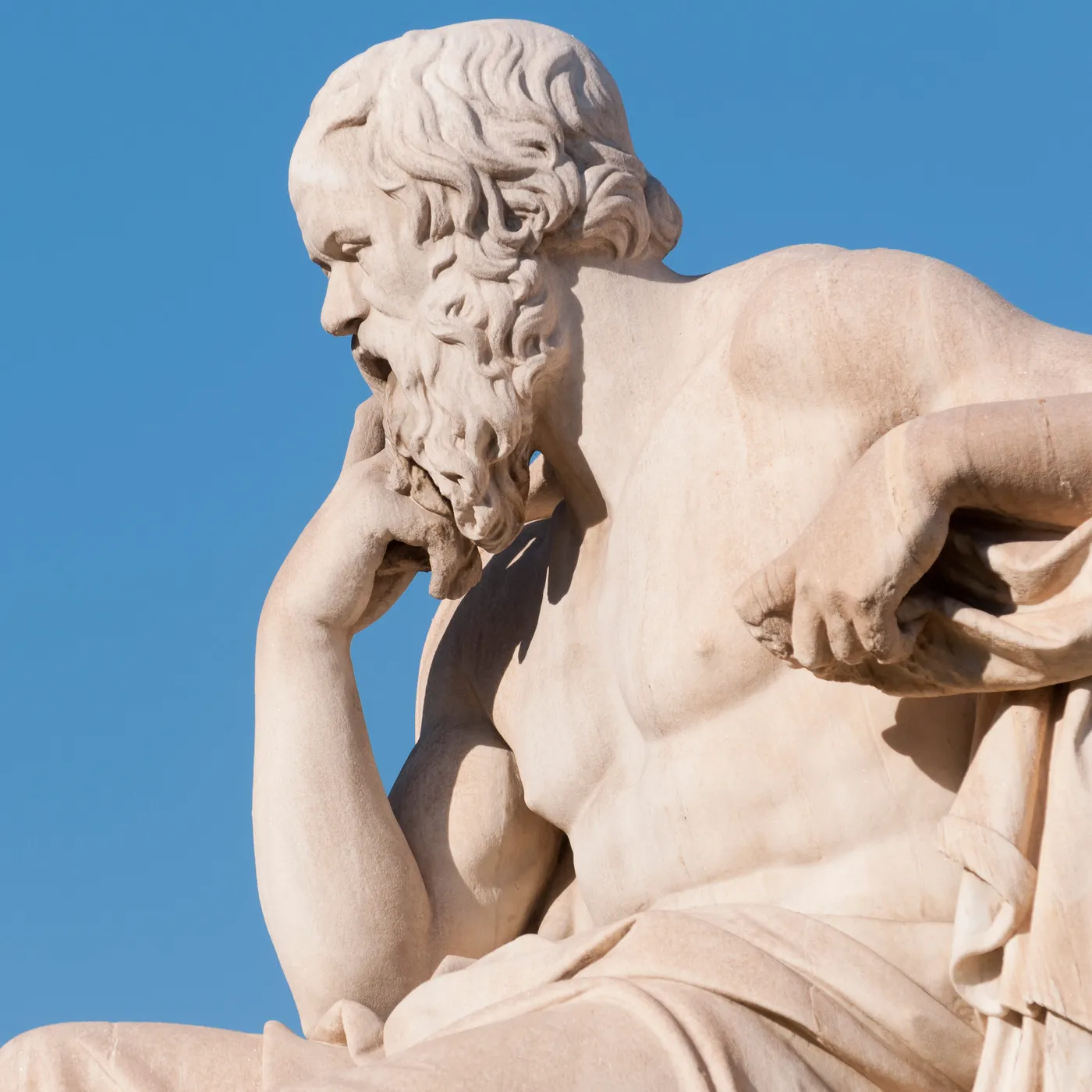
How to Think More Rationally?
A woman buys a stock because she has a good feeling about the company.
A manager hires a candidate because the interview "just clicked."
A voter dismisses an argument after reading only the headline.
An entrepreneur ignores warning signs because success feels inevitable.
All four decisions may seem unrelated.
One concerns investing.
Another concerns hiring.
A third involves politics.
The fourth involves business.
Yet beneath the surface, the same psychological forces may be operating.
Human beings like to believe they think rationally. We imagine ourselves carefully evaluating evidence, weighing alternatives, and arriving at conclusions through logic. The reality is more complicated.
Much of our thinking happens automatically.
Impressions arrive before analysis.
Intuition often precedes reasoning.
Confidence frequently emerges before evidence has been fully examined.
The result is a peculiar paradox.
The human mind is capable of extraordinary intelligence, yet it is also vulnerable to predictable mistakes.
Learning to think more rationally is not about becoming cold, emotionless, or mechanical.
It is about understanding how the mind works.
It is about recognizing the difference between feeling right and being right.
Most importantly, it is about creating conditions in which better judgment becomes more likely.
Rationality is not a personality trait.
It is a practice.
The Myth of the Rational Human
For centuries, philosophers and economists often portrayed people as rational decision-makers.
The assumption seemed reasonable.
Individuals pursue goals.
Evaluate options.
Choose what serves their interests.
Simple.
Elegant.
And incomplete.
Psychological research tells a different story.
Human judgment is influenced by emotions, memories, mental shortcuts, social pressures, and cognitive biases.
People often reach conclusions rapidly and then search for reasons afterward.
This observation can feel unsettling.
Yet it also provides an opportunity.
Once we understand the sources of irrationality, we can begin reducing their influence.
The first step toward rational thinking is abandoning the illusion that rationality comes naturally.
It does not.
Rationality Is Not Intelligence
One of the most important distinctions in psychology is the difference between intelligence and rationality.
Intelligence concerns cognitive ability.
Reasoning speed.
Memory capacity.
Problem-solving skill.
Rationality concerns judgment.
Decision quality.
Belief formation.
The ability to align conclusions with evidence.
A highly intelligent individual can make remarkably irrational decisions.
History provides countless examples.
Successful investors fall victim to overconfidence.
Brilliant scientists cling to flawed assumptions.
Talented executives ignore warning signs.
Knowledge helps.
It does not guarantee sound judgment.
Rational thinking requires habits that extend beyond raw intellectual ability.
The Two Systems of Thought
Understanding rationality begins with understanding how the mind operates.
Psychologists often describe cognition as involving two interacting systems.
One is fast.
The other is slow.
System 1: Automatic Thinking
System 1 generates impressions, intuitions, and emotional reactions.
It works continuously.
Without effort.
Without conscious intention.
When you recognize a face, understand a sentence, or detect anger in someone's voice, System 1 is working.
Its efficiency is extraordinary.
Its accuracy is variable.
System 2: Deliberate Thinking
System 2 performs analysis.
Calculations.
Logical evaluation.
Critical reflection.
Unlike System 1, it requires effort.
Attention.
Energy.
Most importantly, it requires willingness.
The challenge is that System 2 is expensive.
The brain naturally conserves mental resources.
As a result, people often accept intuitive judgments without sufficient examination.
Rationality frequently begins when System 2 decides to intervene.
Why Rational Thinking Feels Unnatural
Many cognitive biases persist because they serve useful functions.
Mental shortcuts increase efficiency.
Quick judgments save time.
Pattern recognition facilitates learning.
The problem arises when these mechanisms operate in situations requiring careful analysis.
Rational thinking often feels uncomfortable because it demands something humans naturally resist:
Cognitive effort.
Questioning assumptions requires work.
Evaluating evidence requires work.
Considering alternative explanations requires work.
The easier path is acceptance.
The rational path is examination.
These paths are not always the same.
Learn to Distrust Immediate Certainty
One of the strongest predictors of irrational thinking is premature certainty.
The moment a conclusion feels obvious, critical evaluation often stops.
The mind shifts from exploration to defense.
Evidence supporting the conclusion receives attention.
Contradictory evidence receives scrutiny.
The process feels objective.
It rarely is.
A useful mental habit involves treating certainty as a signal.
Not a conclusion.
When confidence appears instantly, ask:
"Why am I so sure?"
The answer may reveal assumptions hiding beneath awareness.
Think in Probabilities Instead of Absolutes
The world is uncertain.
Human language frequently ignores this reality.
People speak in declarations.
Predictions become certainties.
Possibilities become facts.
Rational thinkers approach uncertainty differently.
They think probabilistically.
Instead of saying:
"This investment will succeed."
They ask:
"What is the probability of success?"
Instead of saying:
"This person is trustworthy."
They ask:
"What evidence supports that judgment?"
Probability thinking creates intellectual flexibility.
It accommodates ambiguity.
It reduces overconfidence.
Most importantly, it aligns thought more closely with reality.
Separate Evidence From Narrative
Human beings are natural storytellers.
Narratives provide meaning.
Structure.
Coherence.
The difficulty is that coherent stories can emerge from weak evidence.
A compelling explanation is not necessarily a correct explanation.
Consider financial markets.
After a major price movement, commentators quickly produce narratives explaining what happened.
The explanations sound convincing.
The problem is that similar narratives often emerge regardless of outcome.
The story follows the event.
Not the other way around.
Rational thinking requires distinguishing evidence from interpretation.
The distinction is subtle.
Its importance is enormous.
Comparison Table: Irrational Thinking vs. Rational Thinking
| Situation | Irrational Response | Rational Response |
|---|---|---|
| Receiving New Information | Accept information supporting existing beliefs | Evaluate supportive and contradictory evidence |
| Making Predictions | Express certainty | Assign probabilities |
| Facing Uncertainty | Seek immediate answers | Tolerate ambiguity |
| Evaluating Decisions | Judge based on outcomes alone | Examine decision quality and process |
| Encountering Disagreement | Defend existing views | Explore alternative perspectives |
| Assessing Risks | Rely on intuition | Consult data and base rates |
| Responding to Failure | Protect ego | Extract lessons |
| Forming Opinions | Follow emotional reactions | Separate feelings from evidence |
Use Base Rates More Often
One of the simplest methods for improving rationality involves considering base rates.
Base rates represent broader statistical realities.
People frequently ignore them.
Suppose someone describes an individual as quiet, analytical, and detail-oriented.
Many immediately imagine an engineer.
The description feels representative.
Yet if there are dramatically more teachers than engineers in the population, the probability calculation changes.
Intuition often focuses on vivid details.
Rational thinking incorporates statistical context.
The broader picture matters.
Seek Disconfirming Evidence
Confirmation bias remains one of the greatest obstacles to rational thought.
The mind naturally searches for validation.
Contradictory information often feels uncomfortable.
As a result, people become skilled at defending conclusions.
Less skilled at testing them.
A useful exercise involves asking:
"What evidence would prove me wrong?"
The question transforms thinking.
Instead of building a case for a belief, you begin examining its weaknesses.
Science advances through this principle.
Personal judgment improves through it as well.
Keep a Decision Journal
One of the most effective tools for improving rationality is surprisingly simple.
Write things down.
Before making a significant decision, record:
-
Your expectations
-
Your assumptions
-
Your reasoning
-
Your confidence level
Return later.
Compare predictions with outcomes.
The exercise reveals patterns.
Many people discover their confidence consistently exceeds their accuracy.
Others identify recurring blind spots.
A decision journal converts vague memories into objective records.
Learning becomes easier.
Self-deception becomes harder.
Beware of Emotional Reasoning
Emotion provides valuable information.
It should not serve as the sole basis for judgment.
Fear often exaggerates risk.
Excitement inflates opportunity.
Anger narrows attention.
Enthusiasm minimizes uncertainty.
Rational thinking does not require emotional suppression.
It requires emotional awareness.
Ask:
"Would I reach the same conclusion if my emotional state were different?"
The answer can be revealing.
Learn From Forecasting
Forecasting offers a unique training ground for rationality.
Every prediction creates an opportunity for feedback.
The process teaches humility.
Experts who consistently make accurate forecasts share several characteristics.
They update beliefs frequently.
Avoid absolute certainty.
Seek diverse information.
Treat opinions as provisional.
Most importantly, they remain willing to change their minds.
Flexibility is not weakness.
It is evidence of intellectual strength.
The Importance of Diverse Perspectives
Human beings naturally gravitate toward agreement.
Shared beliefs create comfort.
Comfort creates confidence.
Confidence creates vulnerability.
Exposure to different viewpoints provides protection.
Not because opposing views are always correct.
Because they reveal information you might otherwise overlook.
The objective is not endless skepticism.
The objective is broader awareness.
Rationality benefits from friction.
Ideas become stronger when tested.
My Lesson About Being Certain
Several years ago, I became convinced that I understood a complex issue better than I actually did.
The evidence seemed compelling.
My conclusion felt obvious.
Whenever I encountered supporting information, my confidence increased.
When contradictory information appeared, I found reasons to dismiss it.
The pattern remained invisible until I reviewed my own reasoning process.
A troubling realization emerged.
I had spent far more time evaluating evidence that confirmed my view than evidence that challenged it.
My investigation had been selective.
Not intentionally.
Automatically.
The experience reinforced a lesson that remains useful.
The greatest threats to rationality rarely announce themselves.
They often arrive disguised as certainty.
Develop Intellectual Humility
Humility is frequently misunderstood.
It is not lack of confidence.
It is accurate confidence.
It means recognizing the limits of knowledge.
Acknowledging uncertainty.
Accepting the possibility of error.
The most rational thinkers are not those who never make mistakes.
They are those who recognize mistakes sooner.
Humility accelerates learning because it reduces resistance to new information.
Build Better Decision Systems
Rationality improves when processes improve.
Checklists reduce oversight.
Structured evaluations reduce bias.
Prediction journals improve calibration.
Statistical models often outperform intuition.
The lesson is important.
Do not rely exclusively on mental discipline.
Design environments that support better thinking.
Good systems compensate for human weaknesses.
Learn the Difference Between Outcome and Process
People often judge decisions based on outcomes.
This tendency can be misleading.
A poor decision can produce a favorable outcome.
A good decision can produce an unfavorable outcome.
Luck influences results.
Rational thinking focuses on process.
Was the evidence sound?
Were assumptions reasonable?
Were alternatives considered?
Evaluating process produces more reliable learning than evaluating outcomes alone.
Embrace Uncertainty
Perhaps the most difficult aspect of rational thinking is accepting uncertainty.
Human beings prefer closure.
Definitive answers.
Clear narratives.
Reality often resists these preferences.
Complex problems rarely produce absolute certainty.
Rationality requires comfort with incomplete information.
The willingness to say:
"I do not know."
This statement appears simple.
Psychologically, it is remarkably difficult.
Yet it often represents the beginning of genuine understanding.
The Limits of Rationality
An important caution deserves attention.
Rationality is not omniscience.
No decision-maker possesses complete information.
No forecast is perfect.
No belief system is immune to revision.
The objective is not flawless reasoning.
The objective is better reasoning.
Incremental improvement matters.
Small reductions in bias can produce substantial gains over time.
Conclusion: Rationality Begins With Self-Doubt
Many people imagine rational thinkers as individuals who possess superior knowledge.
The evidence suggests something different.
The defining characteristic of rational thinking is not certainty.
It is skepticism directed inward.
Rational thinkers question their assumptions.
Examine their confidence.
Challenge their conclusions.
They recognize that the mind is both powerful and fallible.
This awareness creates an unusual advantage.
Not because it eliminates mistakes.
Because it reduces attachment to them.
The pursuit of rationality is not a journey toward perfect objectivity.
It is a continuous effort to see reality more clearly than instinct alone would allow.
The irony is striking.
The path toward better judgment often begins by trusting yourself less.
Not in the sense of paralysis.
Not in the sense of insecurity.
But in the sense of recognizing that intuition deserves examination.
The mind generates stories effortlessly.
Rationality begins when we pause long enough to ask whether those stories are true.
And that pause—brief, deliberate, and uncomfortable—may be one of the most valuable habits a person can cultivate.
- Arts
- Business
- Computers
- Oyunlar
- Health
- Home
- Kids and Teens
- Money
- News
- Personal Development
- Recreation
- Regional
- Reference
- Science
- Shopping
- Society
- Sports
- Бизнес
- Деньги
- Дом
- Досуг
- Здоровье
- Игры
- Искусство
- Источники информации
- Компьютеры
- Личное развитие
- Наука
- Новости и СМИ
- Общество
- Покупки
- Спорт
- Страны и регионы
- World

 English
 Russian
 French
 Spanish
 Portuguese
 Deutsch
 Dutch
Dutch
 Italiano
 Arabic
 Romaian
 Portuguese (Brazil)
 Greek
Greek