
How does advertising exploit biases?
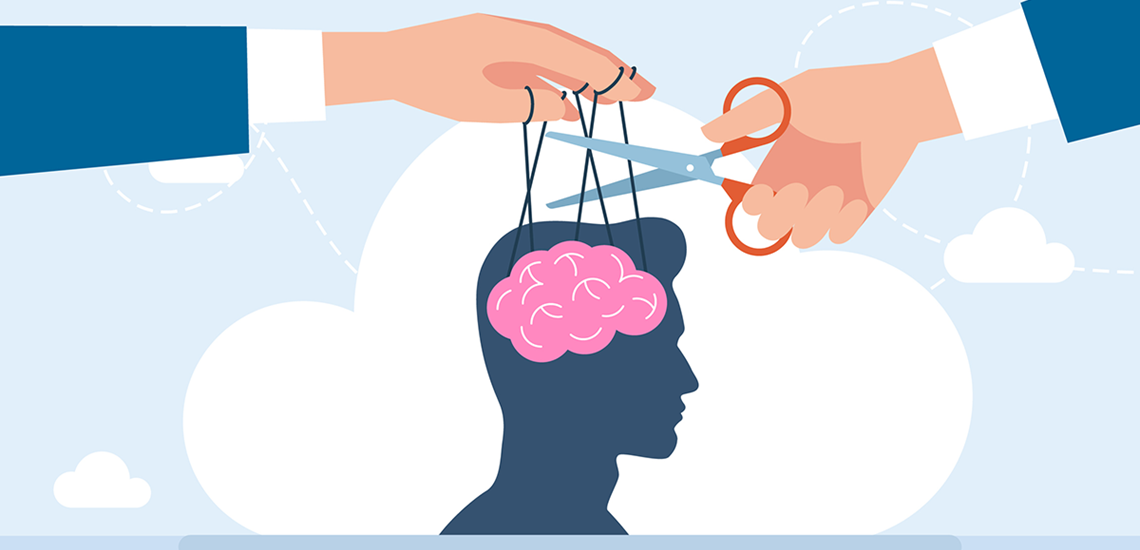
How Does Advertising Exploit Biases?
A man watches a short video ad on his phone.
It is fifteen seconds long.
He sees a smiling family.
A warm kitchen.
A product that appears to solve a small, familiar problem.
He scrolls past.
Then, ten minutes later, he remembers the product again.
Not the details.
Not the claims.
Just the feeling.
Comfortable.
Familiar.
Safe.
He does not remember deciding to care.
Yet something has shifted.
This is the quiet achievement of modern advertising.
Not persuasion in the traditional sense.
Something more subtle.
The shaping of attention, memory, and preference long before a conscious decision is made.
The human mind is not a neutral recording device.
It is selective.
Constructive.
Predictably influenced by shortcuts that help it function under uncertainty.
These shortcuts—cognitive biases—are not flaws in the system.
They are the system.
Advertising works because it understands this system better than most of the people who operate within it.
The central insight is simple, though unsettling:
People do not respond to information alone.
They respond to how information is framed, repeated, emotionally charged, and socially validated.
Advertising does not merely present choices.
It organizes perception.
Why Advertising and Cognitive Biases Are Deeply Connected
At first glance, advertising appears straightforward.
A company presents a product.
A consumer evaluates it.
A decision follows.
This model assumes deliberation.
Comparison.
Rational analysis.
But psychological research suggests something different.
Most judgments are formed quickly.
Often before conscious reasoning begins.
Emotions arise first.
Interpretations follow.
Justifications arrive last.
Advertising does not fight this structure.
It aligns with it.
The most effective campaigns do not argue.
They trigger.
They anchor.
They frame.
They repeat.
They exploit predictable features of human cognition.
Not because consumers are irrational.
But because they are predictably guided by mental shortcuts that usually work well enough to survive evolutionary selection.
The Role of Attention: The First Filter
Before any bias can operate, attention must be captured.
This is the most competitive stage of advertising.
Thousands of messages compete for limited cognitive bandwidth.
Only a few succeed.
Attention is not evenly distributed.
It is drawn toward novelty.
Emotion.
Movement.
Faces.
Threat.
Reward.
This is not cultural.
It is biological.
Advertisers design content that aligns with these attentional biases.
Bright colors.
Rapid transitions.
Emotional storytelling.
Unexpected imagery.
The goal is not comprehension.
It is interruption.
Once attention is secured, everything that follows becomes more influential.
Because attention is the gateway to memory.
And memory shapes future decisions more than immediate understanding does.
Anchoring: The Invisible Price Reference
Imagine seeing a luxury watch priced at $3,000.
Moments later, another watch appears at $1,200.
The second watch feels inexpensive.
Not objectively.
Relatively.
This is anchoring.
The first number encountered becomes a reference point.
Advertising frequently uses anchors to shape perception.
High original prices crossed out.
Premium packages shown first.
“Compare at” pricing.
Tiered subscription models that start with expensive options.
The purpose is not simply to sell the highest tier.
It is to shift the psychological meaning of every subsequent option.
Once an anchor is established, judgment is no longer absolute.
It becomes comparative.
The Availability Bias: When Memory Becomes Persuasion
People tend to judge probability based on what comes easily to mind.
This is availability bias.
Advertising exploits this through repetition.
A brand that appears frequently becomes cognitively accessible.
Accessibility feels like familiarity.
Familiarity feels like truth.
Consider how often certain slogans, jingles, or brand visuals are repeated.
The repetition is not accidental.
It is structural.
Even when consumers are not actively paying attention, exposure accumulates.
Later, during a decision moment, the familiar option surfaces first.
Not because it is better.
Because it is easier to recall.
And the mind, under uncertainty, often treats ease of recall as evidence of importance.
Social Proof: The Behavior of Others as Information
Humans are social learners.
We assume that if many people choose something, it must have value.
This assumption is often correct.
But not always.
Advertising leverages this through explicit signals:
-
“Best-selling”
-
“Most popular”
-
“Trusted by millions”
-
User testimonials
-
Ratings and reviews
These signals reduce uncertainty.
They transform ambiguity into apparent consensus.
The psychological mechanism is simple:
If others have chosen it, the risk feels lower.
Even if the underlying quality has not been independently verified.
Social proof does not just inform.
It reassures.
And reassurance often substitutes for analysis.
Scarcity and the Psychology of Urgency
Scarcity changes evaluation.
When something is limited, it becomes more desirable.
Not because its intrinsic value has changed.
But because its potential loss becomes salient.
Advertising uses scarcity in multiple forms:
-
Limited-time offers
-
Countdown timers
-
“Only 3 left in stock”
-
Exclusive releases
-
Membership caps
Scarcity introduces time pressure.
Time pressure reduces deliberation.
And reduced deliberation increases reliance on intuition.
Scarcity does not merely increase demand.
It compresses thinking.
Loss Aversion: Why “Don’t Miss Out” Works Better Than “Gain”
One of the most robust findings in behavioral science is that losses hurt more than equivalent gains please.
Losing $50 feels worse than gaining $50 feels good.
Advertising translates this into messaging strategies.
Instead of emphasizing what consumers gain, it emphasizes what they might lose:
-
“Don’t miss out”
-
“Last chance”
-
“Avoid regret”
-
“Prevent costly mistakes”
These frames activate loss aversion.
The decision is no longer about improvement.
It becomes about avoiding loss.
And avoidance often drives stronger motivation than pursuit.
Framing Effects: Same Facts, Different Decisions
A product described as “90% effective” feels more appealing than one described as “10% failure rate,” even though both statements are identical.
This is the framing effect.
Advertising constantly reframes identical information.
Consider:
-
“95% fat-free” vs “contains 5% fat”
-
“Fast relief” vs “temporary discomfort reduction”
-
“Investment opportunity” vs “speculative asset”
The meaning shifts without altering content.
The mind responds not to data alone, but to interpretation.
Framing determines interpretation before analysis begins.
The Halo Effect: When One Good Feature Becomes Everything
A single positive impression can influence broader judgment.
This is the halo effect.
Advertising often builds entire brand identities around it.
A product associated with elegance may be assumed to be high quality in all respects.
A company known for innovation may be trusted in unrelated domains.
A celebrity endorsement transfers perceived qualities from person to product.
The cognitive shortcut is efficient:
If one thing is good, other things are likely good.
But efficiency is not accuracy.
Comparison Table: Cognitive Biases and Advertising Techniques
| Cognitive Bias | Psychological Mechanism | Advertising Technique | Consumer Effect |
|---|---|---|---|
| Anchoring | Initial reference shapes judgment | High/low pricing displays | Skewed price perception |
| Availability | Ease of recall influences importance | Repetition and exposure | Brand familiarity bias |
| Social Proof | Others’ behavior signals value | Reviews and popularity cues | Reduced perceived risk |
| Scarcity | Limited availability increases desirability | Countdown timers, limited editions | Urgency-driven decisions |
| Loss Aversion | Losses feel stronger than gains | “Don’t miss out” framing | Fear-based motivation |
| Framing Effect | Presentation alters interpretation | Positive/negative wording | Shifted evaluation |
| Halo Effect | One trait influences overall judgment | Brand positioning, endorsements | Overgeneralized trust |
| Mere Exposure | Familiarity increases liking | Repeated ads | Preference formation |
Mere Exposure: The Quiet Power of Familiarity
People tend to prefer things they have seen before.
Even without conscious awareness.
Even without positive reinforcement.
This is mere exposure effect.
Advertising relies heavily on repetition not because each impression is persuasive in isolation, but because repeated exposure gradually builds familiarity.
Familiarity reduces cognitive effort.
And reduced effort often feels like comfort.
Comfort is then misattributed as preference.
Emotional Conditioning: The Shortcut to Memory
Emotion plays a central role in memory formation.
Events accompanied by emotional intensity are more likely to be remembered.
Advertising frequently embeds products within emotional narratives:
-
Family gatherings
-
Personal achievements
-
Humor
-
Nostalgia
-
Fear reduction
The product becomes secondary.
The emotion becomes primary.
Later recall retrieves the emotional state first.
The product follows.
This sequencing matters.
Because decisions are often made by memory, not analysis.
My Lesson About Advertising Influence
I once believed I was largely immune to advertising.
Not entirely.
But sufficiently skeptical.
I assumed that awareness of psychological tactics provided protection.
Then I noticed something small.
A product I had seen repeatedly in ads began to feel familiar.
Not compelling.
Not necessary.
Just familiar.
When I later encountered it in a store, I did not evaluate it carefully.
I simply recognized it.
That recognition felt like preference.
Only afterward did I realize that no real comparison had taken place.
The decision had been shaped earlier, through exposure I had not consciously registered.
The lesson was uncomfortable but clear.
Awareness reduces vulnerability.
It does not eliminate influence.
Why Digital Advertising Intensifies Bias Exploitation
Modern advertising environments differ from traditional ones in scale and precision.
Messages are personalized.
Targeted.
Repeated strategically.
Behavior is tracked.
Responses are optimized.
This increases the efficiency of bias activation.
Anchors adjust dynamically.
Social proof updates in real time.
Scarcity cues are algorithmically generated.
Yet the underlying psychological mechanisms remain unchanged.
What has changed is the precision of delivery.
The biases are the same.
The targeting is sharper.
Can Consumers Resist?
Complete resistance is unrealistic.
These cognitive mechanisms are not external influences.
They are part of how perception operates.
However, partial resistance is possible.
It begins with recognition.
Pause when urgency appears.
Question anchors.
Separate familiarity from value.
Distinguish emotion from evidence.
Ask a simple question:
“Would I choose this if I had encountered it for the first time today?”
The question does not eliminate bias.
But it interrupts automatic acceptance.
And interruption is often enough to restore choice.
The Ethical Ambiguity of Persuasion
Advertising is not inherently manipulative.
It informs.
It guides.
It connects needs with solutions.
But it also operates within psychological systems that are not fully transparent to those experiencing them.
The ethical boundary is not always clear.
Using social proof can help consumers avoid poor choices.
Using scarcity can help allocate limited resources.
But the same tools can also create unnecessary urgency or distorted perceptions.
The distinction often depends on intent and transparency.
Not mechanism.
Conclusion: Advertising Does Not Override Rationality—It Bypasses It
The most important misconception about advertising is that it persuades through argument.
It rarely does.
Instead, it operates at a different level.
Before reasoning begins.
Before comparison occurs.
Before deliberate judgment forms.
Advertising shapes what feels familiar, urgent, credible, and safe.
It does not force decisions.
It shapes the environment in which decisions feel natural.
This distinction matters.
Because it reframes the problem.
The challenge is not to eliminate bias.
That is not possible.
The challenge is to recognize when perception has been shaped before conscious thought has had a chance to intervene.
Perhaps the most unsettling insight is this:
Most people do not feel influenced when they are influenced.
They feel like they are deciding.
And that feeling, more than any advertisement itself, is what makes the system so effective.
The mind believes it is observing the world directly.
When in fact, it is often observing a carefully constructed version of it.
And in that gap between perception and awareness, modern advertising does its most important work.
- Arts
- Business
- Computers
- Jogos
- Health
- Início
- Kids and Teens
- Money
- News
- Personal Development
- Recreation
- Regional
- Reference
- Science
- Shopping
- Society
- Sports
- Бизнес
- Деньги
- Дом
- Досуг
- Здоровье
- Игры
- Искусство
- Источники информации
- Компьютеры
- Личное развитие
- Наука
- Новости и СМИ
- Общество
- Покупки
- Спорт
- Страны и регионы
- World

 English
 Russian
 French
 Spanish
 Portuguese
 Deutsch
 Turkish
 Dutch
Dutch
 Italiano
 Arabic
 Romaian
 Greek
Greek