
How do I generate new ideas?
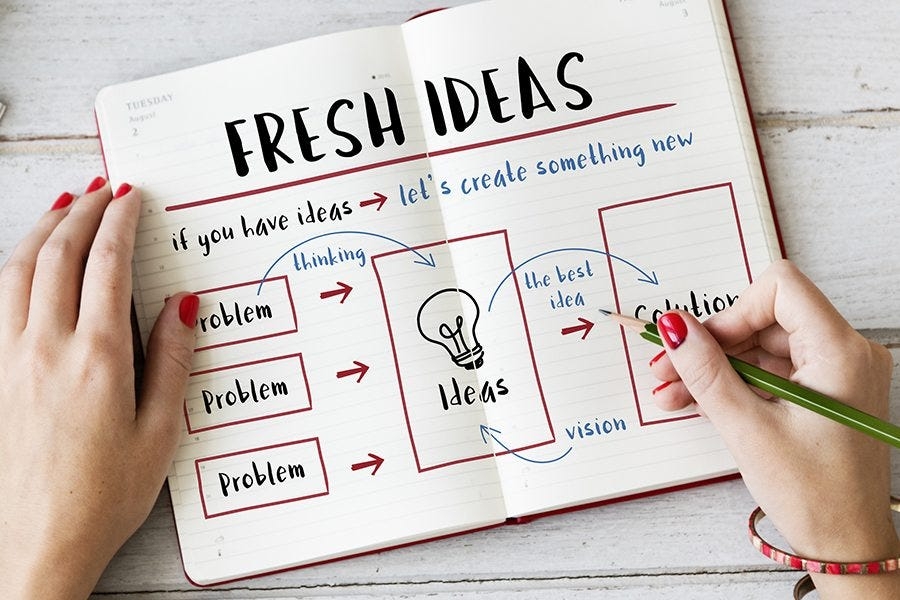
How Do I Generate New Ideas?
The Assumption Hidden in the Question
There is something subtle hidden inside the question.
How do I generate new ideas?
It assumes ideas are missing.
That they need to be produced.
As if the mind is empty, waiting to be filled.
But in practice, that is rarely true.
Ideas are not absent.
They are often already present—just not visible in their final form.
What is missing is not creation.
It is access.
The ability to notice what is already forming beneath familiar thought.
Ideas Are Not Manufactured. They Are Revealed.
Most people treat idea generation like production:
-
think harder
-
push more
-
brainstorm longer
-
force originality
But ideas do not behave like output from a machine.
They behave more like patterns emerging from noise.
They appear when:
-
attention shifts
-
assumptions loosen
-
comparisons slow down
-
judgment pauses
New ideas are not inserted into thinking.
They surface when thinking stops repeating itself.
A Table: Forced Thinking vs Emergent Thinking
| Dimension | Forced Thinking | Emergent Thinking |
|---|---|---|
| Effort style | High pressure | Low resistance |
| Idea source | Deliberate construction | Perceptual discovery |
| Mental tone | Strain | Curiosity |
| Output quality | Predictable | Unexpected |
| Time experience | Accelerated urgency | Extended presence |
| Judgment timing | Immediate | Delayed |
| Result | Variation of known ideas | Shift in structure |
The difference is not intensity.
It is openness.
The First Shift: Stop Searching for Ideas
Searching implies something is missing.
But in most cases, ideas are not absent.
They are unnoticed.
Searching narrows attention toward a target.
Noticing expands attention across what is already present.
New ideas often begin when searching stops long enough for perception to widen again.
This is not passive.
It is receptive.
And receptivity is where emergence begins.
Why Most Ideas Feel Familiar
When thinking feels repetitive, it is not because imagination is limited.
It is because attention is constrained by habit.
The mind prefers:
-
known patterns
-
familiar structures
-
safe interpretations
So when a prompt appears, it quickly retrieves what has worked before.
That retrieval feels like thinking.
But it is often memory in disguise.
Generating new ideas requires interrupting that retrieval loop.
A Personal Observation About Idea Saturation
There was a time when I would try to generate ideas in bursts.
Set a timer.
Force output.
Write everything down quickly.
At first, it felt productive.
But after a while, something became clear.
The ideas were variations of the same internal pattern.
Different surface forms.
Same underlying structure.
When I stopped forcing output and instead spent more time sitting with a single idea, something shifted.
New directions began appearing slowly.
Not because I was trying harder.
But because I was noticing differently.
The Role of Constraints in Idea Generation
It seems counterintuitive, but constraints often increase originality.
Without constraints:
-
attention spreads too thin
-
possibilities become overwhelming
-
decisions become arbitrary
With constraints:
-
attention sharpens
-
structure emerges
-
exploration becomes directional
Constraints might include:
-
limited words
-
specific format
-
narrow topic
-
fixed time
These do not reduce thinking.
They focus it.
And focused attention is where distinction appears.
A Table: Open-Ended Thinking vs Structured Exploration
| Aspect | Open-Ended Thinking | Structured Exploration |
|---|---|---|
| Clarity | Low | Medium to high |
| Direction | Undefined | Focused |
| Idea variation | High but diffuse | High but coherent |
| Cognitive load | High | Moderate |
| Output usefulness | Inconsistent | More refined |
| Discovery potential | Random | Guided emergence |
Both are useful.
But structured exploration often produces more usable novelty.
Why New Ideas Often Come After You Stop Trying
There is a pattern many people notice but rarely examine:
Ideas appear when not actively searching.
During:
-
walking
-
showering
-
resting
-
doing unrelated tasks
This is not coincidence.
It reflects a shift in attention mode.
When pressure to produce is removed, the mind stops filtering too aggressively.
And weaker signals—often the seeds of new ideas—become noticeable.
The Difference Between Input and Combination
Most idea generation focuses on input:
-
reading more
-
learning more
-
consuming more
But input alone does not create originality.
Combination does.
New ideas emerge when existing elements are:
-
recombined
-
reframed
-
reinterpreted
-
relocated
Creativity is less about acquiring new material.
More about changing relationships between existing material.
Why Judgment Kills Early Ideas
Judgment is necessary.
But timing matters.
When judgment appears too early:
-
fragile ideas collapse
-
unusual connections are dismissed
-
exploration narrows
Early ideas are often incomplete.
Not wrong.
Incomplete.
Treating them as final too quickly reduces variation.
Idea generation improves when judgment is delayed long enough for structure to stabilize.
The Importance of Holding Contradictions
New ideas often emerge from tension.
Not resolution.
Two opposing thoughts held at the same time can generate:
-
new framing
-
new synthesis
-
new perspective
Most thinking tries to resolve contradiction immediately.
But contradiction can be productive when left open long enough.
It creates pressure that leads to reorganization.
A Table: Linear Thinking vs Associative Thinking
| Dimension | Linear Thinking | Associative Thinking |
|---|---|---|
| Structure | Sequential | Networked |
| Speed | Fast, direct | Variable, layered |
| Output type | Predictable | Unexpected |
| Flexibility | Low | High |
| Idea formation | Logical progression | Pattern collision |
| Creativity level | Moderate | High potential |
New ideas often appear in associative space.
Not linear progression.
Why Walking Away Helps Thinking
Distance changes perception.
When you step away from a problem:
-
emotional pressure decreases
-
cognitive patterns relax
-
unconscious processing continues
This creates space for recombination.
Returning later often reveals:
-
connections not previously visible
-
simpler structures
-
overlooked relationships
Distance is not avoidance.
It is reconfiguration time.
The Role of Repetition in Idea Formation
Repetition is often misunderstood as stagnation.
But repetition builds familiarity.
And familiarity reveals variation.
Returning to the same idea repeatedly allows:
-
subtle differences to appear
-
structure to refine itself
-
overlooked aspects to surface
New ideas often arise not from new inputs.
But from repeated exposure to the same input with shifting attention.
Why Simplicity Produces Better Ideas
Complex thinking can overwhelm perception.
Too many variables reduce clarity.
Simplicity does the opposite:
-
isolates core relationships
-
removes distraction
-
clarifies structure
Many strong ideas are not complex.
They are clear.
And clarity often feels like simplicity after confusion resolves.
A Table: Idea Noise vs Idea Signal
| Factor | Idea Noise | Idea Signal |
|---|---|---|
| Clarity | Low | High |
| Emotional charge | High urgency | Calm recognition |
| Repeatability | Low | High potential |
| Structure | Fragmented | Coherent |
| Usefulness | Unclear | Emerging |
| Stability | Weak | Strong |
Idea generation is often about filtering noise, not adding content.
Why You Already Have More Ideas Than You Notice
Most people assume they need more ideas.
But in practice, ideas often exist in partial form:
-
half thoughts
-
unfinished associations
-
vague impressions
-
incomplete connections
These are not useless.
They are undeveloped.
Idea generation is often about developing what is already present, not searching for something new entirely.
The Shift From Output to Perception
The key transformation in generating ideas is this:
Stop focusing on producing ideas.
Start focusing on noticing what is already forming.
This shift changes everything:
-
attention becomes wider
-
judgment becomes slower
-
connections become more visible
-
pressure decreases
Ideas begin to feel less like inventions.
More like recognitions.
Conclusion: Ideas Appear When You Stop Forcing Them Into Form
How do I generate new ideas?
Not by forcing output.
Not by accelerating thinking.
Not by demanding originality.
But by changing the conditions in which thinking occurs.
By:
-
reducing urgency
-
delaying judgment
-
returning repeatedly to the same material
-
noticing instead of searching
-
allowing contradiction to exist
-
using constraints to focus attention
-
stepping away to reset perception
New ideas do not arrive because they are created under pressure.
They arrive because attention becomes clear enough to see what was already there.
And when that clarity appears, ideas stop feeling like production.
They feel like discovery.
Not something made.
But something finally noticed.
- Arts
- Business
- Computers
- Παιχνίδια
- Health
- Κεντρική Σελίδα
- Kids and Teens
- Money
- News
- Personal Development
- Recreation
- Regional
- Reference
- Science
- Shopping
- Society
- Sports
- Бизнес
- Деньги
- Дом
- Досуг
- Здоровье
- Игры
- Искусство
- Источники информации
- Компьютеры
- Личное развитие
- Наука
- Новости и СМИ
- Общество
- Покупки
- Спорт
- Страны и регионы
- World

 English
 Russian
 French
 Spanish
 Portuguese
 Deutsch
 Turkish
 Dutch
Dutch
 Italiano
 Arabic
 Romaian
 Portuguese (Brazil)