
What are the best brainstorming techniques?
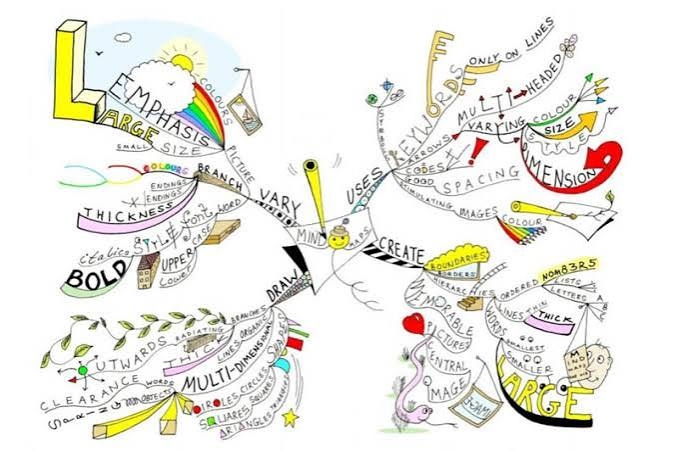
What Are the Best Brainstorming Techniques?
The Assumption Beneath the Exercise
Brainstorming sounds like a method for producing ideas.
A scheduled event.
A structured burst of thinking.
A time slot where creativity is expected to show up on command.
But something about that framing is slightly misleading.
Because it assumes ideas are absent until summoned.
In practice, ideas are rarely absent.
They are already present in partial form:
-
fragments
-
associations
-
impressions
-
half-formed directions
The real challenge is not generating ideas.
It is noticing them before they are filtered out.
Brainstorming, at its best, is not production.
It is exposure.
Brainstorming Is Not About Volume. It Is About Access.
There is a common belief that more ideas equal better brainstorming.
Quantity as proxy for creativity.
But volume alone often produces repetition.
The same idea, slightly reshaped.
Different surface.
Same structure.
Effective brainstorming techniques do something else entirely.
They alter:
-
attention
-
judgment timing
-
associative pathways
-
internal filtering
They change how the mind behaves, not how much it produces.
A Table: Traditional Brainstorming vs Effective Brainstorming
| Dimension | Traditional Brainstorming | Effective Brainstorming |
|---|---|---|
| Goal | Maximize ideas | Reveal unseen ideas |
| Output focus | Quantity | Diversity and depth |
| Judgment timing | Mixed throughout | Delayed |
| Attention style | Reactive | Observational |
| Idea quality | Variable repetition | Emergent variation |
| Emotional tone | Pressure | Curiosity |
| Outcome | Saturation | Discovery |
The difference is subtle.
But fundamental.
Technique 1: The Judgment Delay Method
Most brainstorming fails early.
Not because of lack of ideas.
But because of early evaluation.
An idea appears.
Immediately it is judged:
-
useful
-
irrelevant
-
too simple
-
not original
That judgment collapses the idea before it has space to evolve.
The technique is simple:
Separate generation from evaluation completely.
Not loosely.
Strictly.
For a defined period, nothing is allowed to be rejected.
Not because everything is good.
But because premature judgment reduces variation.
And variation is where originality begins.
Technique 2: The Constraint Container
Open-ended brainstorming often creates diffusion.
Too many directions.
No center.
Constraints solve this by focusing attention.
Examples:
-
only 10 words per idea
-
only metaphors, no literal answers
-
only physical objects as ideas
-
only questions, no solutions
-
only things you can draw
Constraints do not reduce creativity.
They compress the field of attention.
And compressed attention reveals structure.
Technique 3: The “Same Idea, 10 Variations” Drill
Take one idea.
Not ten ideas.
One.
Then generate ten variations of it.
Not repetitions.
Transformations.
Example:
Idea: “A notebook”
-
a memory externalized
-
a decision archive
-
a thought container
-
a timeline of attention
-
a record of uncertainty
-
a mirror of cognition
-
a filter of experience
-
a map of repetition
-
a vessel for unfinished thinking
-
a frozen conversation with self
The first few are easy.
Then resistance appears.
That resistance is where creativity begins to stretch.
Technique 4: The Random Input Collision
Introduce something unrelated:
-
a word
-
an object
-
a concept
-
a sound
Then force a connection between it and the topic.
Not logically.
Associatively.
Example:
Topic: “urban transportation”
Random input: “paperclip”
Now explore:
-
connection through holding things together
-
small invisible infrastructure
-
efficiency in compact form
-
movement of simple systems
This technique works because the mind defaults to familiar associations.
Random input disrupts that default path.
A Personal Observation About Forced Structure
There was a time when I believed structure made ideas better.
So I would plan brainstorming sessions carefully.
Outline categories.
Define goals.
Organize output in advance.
At first, it felt efficient.
But something happened.
The ideas became predictable.
They followed the structure too closely.
When I later removed most of the structure and kept only constraints, something changed.
Ideas became less controlled.
But more surprising.
Not chaotic.
Just less filtered.
Technique 5: Silent Brainstorming
No talking.
No discussion.
No feedback.
Just writing.
Individually.
Silence removes influence.
It removes:
-
comparison
-
performance
-
interruption
In group settings, this technique often reveals ideas that would never surface in verbal brainstorming.
Because speaking too early collapses ambiguity.
Writing preserves it longer.
Technique 6: The “What Is Missing?” Method
Instead of asking:
What can we add?
Ask:
What is missing?
In:
-
a system
-
a design
-
a process
-
an experience
This shifts attention from creation to absence.
Absence is often more revealing than presence.
Because what is missing defines structure indirectly.
Technique 7: Time-Limited Idea Bursts
Set a short time constraint:
-
3 minutes
-
5 minutes
Then generate without stopping.
Not for quality.
For flow.
The goal is to bypass internal editing.
This works not because pressure improves creativity.
But because urgency temporarily disables overthinking.
A Table: Structured vs Freeform Brainstorming
| Aspect | Structured Brainstorming | Freeform Brainstorming |
|---|---|---|
| Direction | Clear | Fluid |
| Idea diversity | Moderate | High |
| Depth | Controlled | Variable |
| Risk of repetition | Low | Higher without guidance |
| Creative spikes | Predictable | Unpredictable |
| Cognitive load | Medium | High initially |
Both are useful.
But serve different phases of thinking.
Technique 8: Perspective Rotation
Take a problem.
Then rotate viewpoints:
-
user
-
object
-
system
-
environment
-
outsider
-
beginner
-
expert
Each perspective reveals different constraints.
And different constraints produce different ideas.
This technique works because most thinking is locked into a single viewpoint.
Rotation breaks that lock.
Technique 9: Physical State Change
Thinking is not purely cognitive.
It is embodied.
Changing physical state changes mental structure:
-
walking instead of sitting
-
standing instead of typing
-
drawing instead of writing
-
speaking instead of thinking silently
These shifts alter rhythm.
And rhythm influences association patterns.
Many ideas appear only when the body is not in default mode.
Technique 10: Idea Compression
Take a long list of ideas.
Then compress them into:
-
one sentence
-
one word
-
one symbol
Compression forces abstraction.
And abstraction often reveals hidden structure across ideas.
What seemed separate becomes unified.
What seemed complex becomes simple.
Why Most Brainstorming Fails
Brainstorming often fails not because people lack ideas.
But because:
-
judgment arrives too early
-
attention is too narrow
-
repetition is mistaken for variation
-
structure is too rigid or too loose
-
silence is undervalued
-
constraints are absent
The issue is not generation.
It is conditions.
A Table: High-Noise vs High-Signal Brainstorming
| Factor | High-Noise Session | High-Signal Session |
|---|---|---|
| Idea clarity | Low | High |
| Variation | Confused | Distinct |
| Focus | Scattered | Directed |
| Judgment timing | Constant | Deferred |
| Output usefulness | Mixed | Higher consistency |
| Cognitive fatigue | High | Moderate |
Signal emerges when noise is reduced—not when volume increases.
Why Breaks Improve Brainstorming Quality
Leaving a problem is not abandonment.
It is processing time.
During breaks:
-
associations reorganize
-
unconscious linking occurs
-
pressure dissolves
Returning often reveals:
-
simpler structures
-
missing connections
-
clearer directions
Distance is part of the thinking process.
Not separate from it.
Conclusion: The Best Brainstorming Technique Is a Shift in Attention
What are the best brainstorming techniques?
Not a single method.
Not a fixed formula.
Not a sequence of steps.
But a set of conditions that change how attention behaves.
The most effective techniques all do variations of the same thing:
They reduce premature closure.
They expand perception.
They delay judgment.
They introduce constraint, silence, or perspective shifts.
They allow ideas to appear without being immediately shaped into final form.
Because brainstorming is not about producing more thoughts.
It is about seeing thoughts before they become fixed.
And in that brief space—before labeling, before filtering, before certainty—ideas begin to form that would not appear otherwise.
Not because they were forced into existence.
But because they were finally allowed to emerge.
- Arts
- Business
- Computers
- Игры
- Health
- Главная
- Kids and Teens
- Деньги
- News
- Personal Development
- Recreation
- Regional
- Reference
- Science
- Shopping
- Society
- Sports
- Бизнес
- Деньги
- Дом
- Досуг
- Здоровье
- Игры
- Искусство
- Источники информации
- Компьютеры
- Личное развитие
- Наука
- Новости и СМИ
- Общество
- Покупки
- Спорт
- Страны и регионы
- World

 English
 French
 Spanish
 Portuguese
 Deutsch
 Turkish
 Dutch
Dutch
 Italiano
 Arabic
 Romaian
 Portuguese (Brazil)
 Greek
Greek