
How do creative people think?
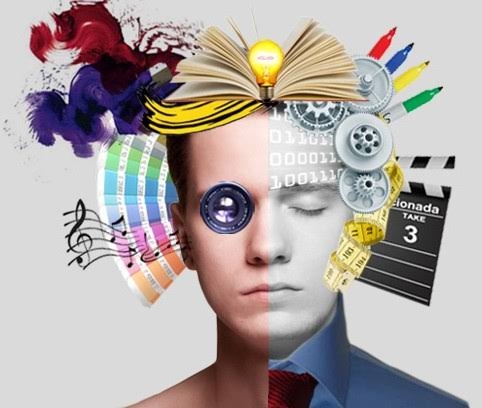
How Do Creative People Think?
The Question That Misplaces the Answer
When people ask how creative people think, there is often an assumption hidden inside the question.
That creativity is a distinct kind of thinking.
Something separate.
Something rare.
Something only a few possess.
But when you observe closely, that separation begins to dissolve.
Creative people do not think in a fundamentally different substance.
They think in a different relationship to thought.
Less rigid.
Less filtered.
More receptive to what emerges before it is named.
The difference is not what they think.
It is how long they allow thinking to remain open.
Creative Thinking Is Not Faster. It Is Less Compressed.
There is a misconception that creative thinking is rapid association.
Fast minds.
Quick connections.
Sudden insight.
But speed alone does not produce originality.
It often produces familiarity at higher velocity.
What distinguishes creative thinkers is not acceleration.
It is reduced compression of perception.
They allow more space between:
-
perception and judgment
-
idea and definition
-
signal and interpretation
That space is where divergence forms.
A Table: Conventional Thinking vs Creative Thinking
| Dimension | Conventional Thinking | Creative Thinking |
|---|---|---|
| Idea formation | Linear progression | Non-linear emergence |
| Judgment timing | Immediate | Delayed |
| Attention | Narrow and goal-oriented | Wide and exploratory |
| Use of memory | Direct recall | Recombination |
| Comfort with ambiguity | Low | High |
| Response to uncertainty | Closure-seeking | Exploration |
| Output style | Predictable | Unexpected but coherent |
Creative thinking is not different content.
It is different timing.
Creative Thinkers Delay Closure
One of the most consistent patterns in creative thinking is resistance to early closure.
Most minds want to resolve ambiguity quickly:
-
define the idea
-
categorize it
-
evaluate it
-
move on
Creative thinkers do something slightly different.
They extend the undefined state.
They stay with:
-
incomplete thoughts
-
partial patterns
-
unresolved contradictions
Not because they avoid clarity.
But because they know clarity that arrives too early often excludes deeper structure.
A Personal Observation About Early Certainty
There was a period when I noticed a pattern in my own thinking.
Ideas would appear quickly.
And I would often decide what they were immediately.
Useful or not.
Strong or weak.
Relevant or irrelevant.
That decision felt efficient.
But over time, something became visible.
The early labeling was not clarifying ideas.
It was limiting them.
When I began postponing that labeling—even slightly—something changed.
Ideas started to evolve past their initial form.
Some disappeared.
But others expanded into directions I would not have reached if I had defined them too early.
Creative Thinking Is Pattern Sensitivity
Creative people are not simply generating more ideas.
They are noticing patterns others overlook:
-
repetition disguised as novelty
-
gaps between expected outcomes
-
small inconsistencies in familiar systems
-
structural tensions in simple things
This sensitivity is subtle.
It is not about intelligence in the traditional sense.
It is about noticing deviation before it becomes obvious.
The Role of Attention, Not Intelligence
Creative thinking is often misattributed to intelligence.
But intelligence alone does not guarantee originality.
Because creativity is not primarily about computation.
It is about attention structure.
Creative thinkers tend to:
-
notice more layers in the same input
-
hold multiple interpretations simultaneously
-
revisit the same idea without exhausting it
-
observe without immediately categorizing
The difference is perceptual, not purely cognitive.
A Table: Reactive Thinking vs Creative Thinking
| Aspect | Reactive Thinking | Creative Thinking |
|---|---|---|
| Trigger | External prompt | Internal observation |
| Response speed | Immediate | Variable, often delayed |
| Focus | Problem solving | Problem reframing |
| Emotional tone | Urgency | Curiosity |
| Structure | Fixed pathways | Adaptive pathways |
| Outcome | Resolution | Exploration |
| Idea evolution | Linear | Iterative and branching |
Creative thinking often looks slower from the outside.
But internally, it is more layered.
Creative People Revisit Ideas Repeatedly
A common misconception is that creative thinkers move quickly from idea to idea.
But in practice, they often return to the same idea multiple times.
Each return changes what is seen.
Not because the idea changes.
But because attention does.
Revisiting allows:
-
deeper structure to emerge
-
hidden assumptions to surface
-
new relationships to form
Repetition becomes refinement.
Not redundancy.
Creative Thinking Thrives in Constraint
Contrary to intuition, unlimited freedom often reduces originality.
Without constraint:
-
attention disperses
-
decisions multiply
-
direction weakens
Creative thinkers often introduce limits:
-
narrow materials
-
fixed formats
-
specific perspectives
-
restricted timeframes
Constraints do not restrict thinking.
They concentrate it.
And concentration sharpens perception.
A Table: Open Thinking vs Constrained Thinking
| Dimension | Open Thinking | Constrained Thinking |
|---|---|---|
| Idea range | Wide but diffuse | Narrow but focused |
| Depth | Shallow distribution | Deep exploration |
| Clarity | Variable | Higher consistency |
| Creativity output | Inconsistent | More structured originality |
| Cognitive load | High | Manageable |
| Direction | Unstable | Directed emergence |
Creative thinkers often move between both modes intentionally.
Creative Thinking Often Looks Like Doing Nothing
From the outside, creative thinkers can appear inactive.
Sitting.
Walking.
Staring.
Pausing.
But internally, something else is happening:
-
connections forming beneath awareness
-
patterns reorganizing without pressure
-
associations recombining slowly
Creative thinking is not always visible.
It is often pre-verbal.
Pre-structured.
Pre-defined.
The Importance of Not Forcing Meaning
Creative thinkers resist premature meaning-making.
They allow ambiguity to persist.
Because meaning too early reduces possibility space.
Instead of:
“This is what this is”
They ask:
“What else could this be?”
That shift keeps perception open longer.
And openness increases variation.
A Personal Observation About Over-Explaining Ideas
There was a time when I felt compelled to explain ideas as soon as they formed.
To define them.
To structure them.
To make them coherent immediately.
But I noticed something over time.
The moment an idea was fully explained too early, it stopped evolving.
It became fixed.
When I allowed ideas to remain partially undefined, they continued to develop on their own terms.
Some became more complex.
Others simplified naturally.
But all of them changed in ways I would not have predicted at the beginning.
Creative Thinking Is Relational, Not Isolated
Creative thinkers rarely treat ideas as isolated objects.
They see relationships between:
-
unrelated domains
-
distant concepts
-
structural similarities across different contexts
Creativity often emerges at intersections.
Not within categories.
But between them.
A Table: Isolated Thinking vs Relational Thinking
| Aspect | Isolated Thinking | Relational Thinking |
|---|---|---|
| Focus | Single idea | Network of ideas |
| Insight generation | Limited | High potential |
| Flexibility | Low | High |
| Pattern recognition | Narrow | Expansive |
| Innovation level | Moderate | Elevated |
| Cognitive style | Linear | Associative |
Creative thinkers naturally shift toward relational awareness.
Why Creative Thinking Feels Uncertain
Creative thinking rarely feels stable in the beginning.
Because it operates before structure solidifies.
This produces:
-
ambiguity
-
tension
-
incomplete clarity
But that uncertainty is not a problem.
It is a stage of formation.
Creative thinkers tolerate that stage longer than most.
The Core Shift: From Answering to Observing
The fundamental difference in creative thinking is not how answers are produced.
It is how questions are held.
Creative thinkers:
-
observe before responding
-
delay interpretation
-
extend perception before conclusion
They do not rush toward answers.
They stay longer with what is unclear.
And in that space, new structures form.
Conclusion: Creative Thinking Is a Way of Staying With What Has Not Yet Settled
How do creative people think?
Not through faster answers.
Not through greater certainty.
Not through more information.
But through a different relationship to thought itself.
They:
-
delay closure
-
notice subtle differences
-
revisit ideas repeatedly
-
work within constraints
-
tolerate ambiguity longer
-
focus on relationships, not isolated elements
-
allow perception to remain open before defining it
Creative thinking is not a rare cognitive talent.
It is a practiced way of staying present with unfinished perception.
And in that unfinished space—before naming, before judgment, before certainty—thinking becomes something else entirely.
Not production.
Not execution.
But discovery.
- Arts
- Business
- Computers
- Games
- Health
- Home
- Kids and Teens
- Money
- News
- Personal Development
- Recreation
- Regional
- Reference
- Science
- Shopping
- Society
- Sports
- Бизнес
- Деньги
- Дом
- Досуг
- Здоровье
- Игры
- Искусство
- Источники информации
- Компьютеры
- Личное развитие
- Наука
- Новости и СМИ
- Общество
- Покупки
- Спорт
- Страны и регионы
- World

 Russian
 French
 Spanish
 Portuguese
 Deutsch
 Turkish
 Dutch
Dutch
 Italiano
 Arabic
 Romaian
 Portuguese (Brazil)
 Greek
Greek