
What causes creative burnout?
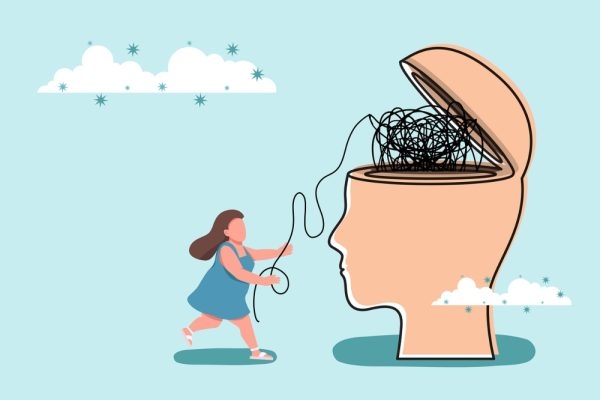
What Causes Creative Burnout?
The Misunderstood Collapse
Creative burnout is often described as exhaustion.
A tired mind.
A depleted imagination.
A sense that something essential has been used up.
But that description misses something important.
Burnout is rarely the disappearance of creativity.
It is more often the collapse of the conditions that allow creativity to appear.
The system is still there.
But access becomes distorted.
Signals weaken.
Attention tightens.
Everything begins to feel heavier than it should.
Not because creativity is gone.
But because the environment that supports it has shifted.
Burnout Is Not a Single Event. It Is Accumulation.
Creative burnout does not usually arrive suddenly.
It builds quietly.
Through repetition.
Through pressure.
Through subtle misalignment between effort and internal capacity.
At first, nothing feels wrong.
You keep working.
You keep producing.
You keep meeting expectations.
But something changes underneath the surface.
Work begins to feel less responsive.
Ideas take longer to form.
The internal distance between intention and output expands.
And eventually, what once felt fluid becomes resistant.
A Table: Flow State vs Creative Burnout
| Dimension | Flow State | Creative Burnout |
|---|---|---|
| Energy level | Sustainable engagement | Persistent depletion |
| Attention | Open and flexible | Narrow and fatigued |
| Idea formation | Spontaneous | Delayed or absent |
| Emotional tone | Curiosity | Resistance or numbness |
| Output quality | Evolving | Repetitive or stalled |
| Recovery ability | Fast reset | Slow restoration |
| Internal pressure | Low | Constant |
Burnout is not simply low energy.
It is distorted energy.
The First Cause: Constant Output Without Recovery
One of the most common paths to burnout is uninterrupted production.
Creating without pause.
Thinking without silence.
Working without decompression.
The mind is not designed for continuous generation.
It needs oscillation:
-
output
-
rest
-
integration
-
reset
Without that cycle, thinking becomes strained.
Not because capacity disappears.
But because recovery is missing.
A Personal Observation About Overextension
There was a time when I believed consistency meant constant output.
Every day needed progress.
Every session needed results.
At first, it felt disciplined.
But over time, something shifted.
Ideas that once arrived easily began to feel forced.
Not absent.
Just less accessible.
Eventually, I noticed a pattern.
The work improved when I reduced it.
Not in ambition.
But in density.
When I allowed space between sessions, something returned.
Not immediately.
But reliably.
The Second Cause: Excessive Self-Monitoring
Creative work depends on a delicate balance between action and observation.
But when observation becomes surveillance, something breaks.
Instead of thinking, you begin watching yourself think.
Instead of creating, you evaluate in real time.
This introduces friction.
Every idea passes through internal checkpoints before it fully forms.
-
Is this good?
-
Is this original?
-
Is this useful?
-
Is this acceptable?
These questions are not wrong.
But their timing matters.
When they arrive too early, they interrupt formation.
The Third Cause: Repetition Without Variation
Creativity thrives on variation.
Not randomness.
But subtle difference.
When work becomes too consistent in:
-
input
-
structure
-
environment
-
expectations
the mind begins to recycle known patterns.
Not because imagination is gone.
But because nothing new is entering the system.
Eventually, outputs begin to mirror inputs too closely.
And repetition begins to feel like stagnation.
A Table: Healthy Practice vs Burnout Conditions
| Factor | Healthy Creative Practice | Burnout Conditions |
|---|---|---|
| Work rhythm | Cyclical | Continuous |
| Input diversity | High | Narrow |
| Self-evaluation | Post-process | Real-time |
| Emotional state | Curious engagement | Pressure or numbness |
| Recovery time | Regular | Minimal |
| Task variation | Present | Absent |
| Cognitive load | Managed | Overloaded |
Burnout is often not about doing too much.
It is about doing too much of the same thing, too continuously.
The Fourth Cause: Loss of Distance
Distance is essential for perspective.
When you are too close to your work for too long, everything starts to flatten.
You lose contrast.
You lose proportion.
You lose the ability to see what is emerging versus what is repeating.
Distance can come from:
-
time away
-
different environments
-
unrelated activities
-
silence
Without distance, perception compresses.
And compressed perception feels like limitation.
The Fifth Cause: Over-Identification With Output
Burnout deepens when creative output becomes identity.
When work is no longer something you do—but something you are.
At that point:
-
every idea feels personal
-
every critique feels existential
-
every outcome carries emotional weight
This creates constant tension.
Because nothing is neutral anymore.
Everything becomes self-evaluation disguised as production.
The Sixth Cause: Constant Comparison Loops
Comparison introduces distortion into perception.
You are no longer working from internal direction.
You are adjusting relative position.
This shifts focus:
-
from process → to ranking
-
from exploration → to measurement
-
from curiosity → to adequacy
Comparison is not inherently harmful.
But persistent comparison removes internal stability.
And without stability, creative systems fluctuate unpredictably.
A Personal Observation About Comparison Fatigue
There was a phase where I would begin creative sessions by checking what others were doing.
It felt informative.
Sometimes even motivating.
But slowly, something changed.
My internal sense of direction weakened.
Ideas that once felt interesting now felt insufficient.
Not because they were worse.
But because they were constantly measured against external reference points.
When I removed that habit, something subtle returned.
Not confidence.
Clarity.
The Seventh Cause: No Clear Ending Points
Creative systems need closure cycles.
Without endings, work accumulates without integration.
Open loops remain open.
Attention stays partially allocated across unfinished threads.
Over time, this creates cognitive saturation.
Not because there is too much work.
But because nothing has been resolved.
The Eighth Cause: Emotional Exhaustion Disguised as Creative Failure
Sometimes what feels like creative burnout is actually emotional depletion.
Stress.
Anxiety.
Unprocessed tension.
When emotional systems are overloaded, creative systems slow down.
Not as punishment.
But as protection.
The mind reduces output to conserve stability.
A Table: Surface Symptoms vs Underlying Causes
| Symptom | Possible Cause |
|---|---|
| No new ideas | Input repetition |
| Lack of motivation | Emotional fatigue |
| Procrastination | Overwhelming self-pressure |
| Low quality output | Excessive self-monitoring |
| Disinterest in work | Loss of variation |
| Mental fog | Cognitive overload |
| Irritability during creation | Lack of recovery |
What appears as creative failure is often systemic overload.
What Burnout Actually Signals
Burnout is not the end of creativity.
It is a signal.
Something in the system is out of balance:
-
too much output
-
too little recovery
-
too much evaluation
-
too little variation
-
too much identity attachment
-
too little distance
It is not asking for more effort.
It is asking for recalibration.
Recovery Is Not Productivity in Reverse
Recovery is often misunderstood as rest for the sake of returning to work.
But real recovery is structural.
It changes how perception operates.
Not just energy levels.
It restores:
-
attentional range
-
emotional neutrality
-
cognitive flexibility
-
perceptual sensitivity
These are the conditions under which creativity reappears.
A Personal Observation About Returning From Burnout
There was a period where creative output slowed significantly.
At first, I resisted it.
Then I tried to push through it.
Neither approach worked.
Eventually, I stopped framing it as a problem to solve.
I reduced pressure.
Changed environments.
Introduced unrelated activities.
And stopped expecting immediate results.
Over time, something shifted.
Ideas did not return dramatically.
They returned quietly.
First as interest.
Then as curiosity.
Then as momentum.
Conclusion: Creative Burnout Is Not the Loss of Creativity. It Is the Loss of Conditions That Support It
What causes creative burnout?
Not a single factor.
But a convergence:
-
continuous output without recovery
-
excessive self-monitoring
-
repetition without variation
-
loss of distance
-
identity over-identification
-
comparison loops
-
unresolved cognitive load
-
emotional depletion
None of these remove creativity itself.
They restrict access to it.
And when those restrictions are loosened—through rest, variation, distance, and reduced pressure—something returns.
Not forcefully.
Not immediately.
But gradually.
Because creativity was never absent.
It was simply no longer able to move freely through the system.
And when the system relaxes, even slightly, it begins to move again.
Not as effort.
But as flow.
- Arts
- Business
- Computers
- Oyunlar
- Health
- Home
- Kids and Teens
- Money
- News
- Personal Development
- Recreation
- Regional
- Reference
- Science
- Shopping
- Society
- Sports
- Бизнес
- Деньги
- Дом
- Досуг
- Здоровье
- Игры
- Искусство
- Источники информации
- Компьютеры
- Личное развитие
- Наука
- Новости и СМИ
- Общество
- Покупки
- Спорт
- Страны и регионы
- World

 English
 Russian
 French
 Spanish
 Portuguese
 Deutsch
 Dutch
Dutch
 Italiano
 Arabic
 Romaian
 Portuguese (Brazil)
 Greek
Greek