
What is design thinking?
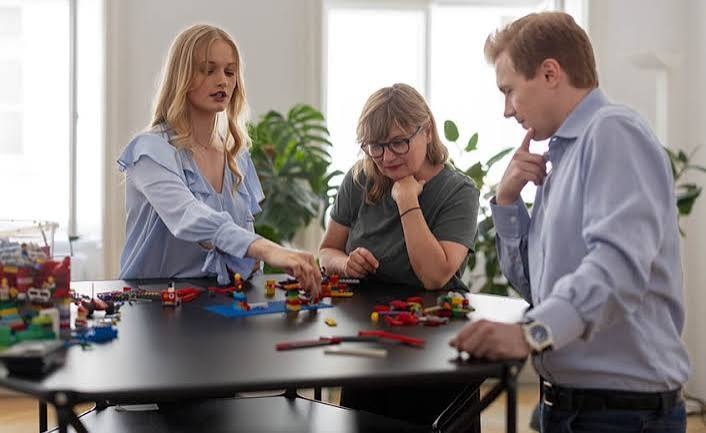
What Is Design Thinking?
The Best Solutions Often Begin With a Question Nobody Asked
A team spends eighteen months building a product.
The engineers are talented.
The strategy is sound.
The technology works exactly as intended.
The launch arrives.
The market shrugs.
Not because the product is broken.
Because it solves the wrong problem.
This happens more often than most organizations would like to admit.
We assume intelligence guarantees insight.
We assume expertise guarantees relevance.
We assume enough planning guarantees success.
Yet some of the most expensive failures in business, technology, healthcare, and education share a common origin: people become fascinated with solutions before understanding human needs.
Design thinking emerged as a response to that tendency.
Not as a methodology.
Not primarily as a framework.
Certainly not as a collection of sticky notes attached to conference room walls.
At its core, design thinking is a philosophy of attention.
It asks us to look more carefully.
To observe before we conclude.
To understand before we optimize.
To remain curious long enough for reality to reveal something unexpected.
The phrase itself sounds technical.
The practice is profoundly human.
And perhaps that explains why it continues to shape products, services, organizations, and experiences across the world.
Because despite all our advancements, one truth remains unchanged:
People do not experience businesses.
They experience moments.
Design thinking begins there.
Design Thinking Is Less About Design Than Most People Think
The word "design" creates confusion.
Many hear it and imagine aesthetics.
Typography.
Color palettes.
Architecture.
Visual identity.
Those things matter.
But design thinking operates at a deeper level.
It concerns intentional creation.
The deliberate shaping of experiences.
The thoughtful arrangement of systems around human needs.
A hospital waiting room is designed.
A mobile application is designed.
A customer service process is designed.
A school curriculum is designed.
Even a conversation can be designed.
Every human experience contains invisible architecture.
Design thinking seeks to understand that architecture and improve it.
Not through assumption.
Through observation.
This distinction changes everything.
Traditional problem-solving often starts with expertise.
Design thinking starts with empathy.
The Origin of Design Thinking
The roots of design thinking stretch across decades of work in industrial design, psychology, engineering, and human-centered innovation.
Its modern popularity grew through institutions such as IDEO and Stanford d.school.
Yet reducing design thinking to a corporate methodology misses the point.
The underlying principles existed long before the term became fashionable.
Inventors used them.
Artists used them.
Architects used them.
Great entrepreneurs used them.
Anyone who deeply observed people before creating solutions was practicing some version of design thinking.
The label arrived later.
The behavior came first.
That is often how important ideas evolve.
Why Human-Centered Thinking Matters
Organizations frequently become trapped inside their own perspective.
The longer people work within a system, the more invisible that system becomes.
Assumptions harden.
Processes solidify.
Blind spots expand.
Design thinking interrupts this cycle.
Instead of asking:
"How can we improve our product?"
It asks:
"How are people actually experiencing this problem?"
The difference appears subtle.
It isn't.
One question begins with the organization.
The other begins with the human being.
And where you begin often determines where you end.
Companies sometimes spend millions refining features customers barely notice while overlooking frustrations customers encounter every day.
Design thinking redirects attention toward lived experience.
Toward behavior.
Toward emotion.
Toward context.
Because people rarely interact with products in the clean, predictable ways imagined inside conference rooms.
Reality is messier.
Design thinking embraces that mess.
The Five Core Stages of Design Thinking
Most descriptions of design thinking organize the process into five interconnected stages.
The sequence matters less than the mindset.
Still, these stages provide useful structure.
1. Empathize
Everything begins here.
Observation.
Listening.
Understanding.
The goal is not agreement.
The goal is insight.
Researchers observe behaviors.
Conduct interviews.
Study environments.
Look for frustrations, workarounds, motivations, and unmet needs.
The emphasis remains on understanding people rather than validating assumptions.
Many organizations rush past this stage.
The best practitioners linger.
Because the quality of insight often determines the quality of every decision that follows.
2. Define
Observation generates information.
Definition creates clarity.
At this stage, teams synthesize what they have learned.
Patterns emerge.
Themes become visible.
The challenge shifts from gathering information to identifying the real problem.
Sometimes the initial problem statement proves incorrect.
This discovery can feel uncomfortable.
It is also valuable.
Finding the right problem is often more important than finding the right answer.
3. Ideate
Now imagination enters the room.
Teams generate possibilities.
Not one possibility.
Many.
The objective is expansion before evaluation.
Quantity before judgment.
Unexpected ideas are welcomed.
Assumptions are challenged.
Connections appear between concepts that previously seemed unrelated.
This phase can feel chaotic.
That is partly the point.
Creativity often requires temporary disorder.
4. Prototype
Ideas become tangible.
Not perfect.
Tangible.
A sketch.
A model.
A mockup.
A simulation.
Something people can interact with.
Many organizations spend excessive time discussing concepts.
Design thinking favors learning through creation.
The prototype becomes a question made visible.
5. Test
The solution meets reality.
Users interact with prototypes.
Feedback emerges.
Assumptions are challenged.
Unexpected behaviors appear.
Weaknesses become visible.
This is not failure.
This is information.
Testing exists to reveal truth before large investments are made.
The process then repeats.
Refines.
Evolves.
Design thinking is cyclical rather than linear.
Learning continues.
The Mindset Behind the Method
People often focus on the stages.
The stages matter.
The mindset matters more.
Design thinking operates through several foundational beliefs.
Curiosity Over Certainty
The process rewards questions.
Not immediate conclusions.
The assumption is simple:
What we think we know may be incomplete.
Curiosity creates space for discovery.
Certainty often closes it.
Action Over Debate
Ideas reveal themselves through interaction.
Not speculation.
Design thinkers prefer making something imperfect over endlessly discussing perfection.
Creation becomes a form of research.
Empathy Over Assumption
Many decisions are based on what organizations believe users want.
Design thinking seeks direct evidence.
Observation replaces guesswork.
Reality replaces projection.
Learning Over Validation
The objective is not proving an idea correct.
The objective is understanding what is true.
This distinction transforms decision-making.
Design Thinking Versus Traditional Problem-Solving
The contrast becomes easier to understand when viewed side by side.
| Dimension | Design Thinking | Traditional Problem-Solving |
|---|---|---|
| Starting Point | Human needs | Business objectives |
| Primary Question | Why does this problem exist? | How do we fix this problem? |
| Research Style | Observation and empathy | Analysis and assumptions |
| Idea Generation | Divergent exploration | Convergent evaluation |
| Failure | Source of learning | Outcome to avoid |
| Prototyping | Early and frequent | Often delayed |
| User Involvement | Continuous | Periodic |
| Innovation Potential | High | Moderate |
| Risk Management | Small experiments | Large commitments |
| Focus | Experience | Efficiency |
Neither approach is inherently superior.
Different situations require different tools.
However, when organizations face uncertainty, complexity, or evolving customer expectations, design thinking often provides advantages traditional approaches struggle to match.
A Lesson I Learned While Solving the Wrong Problem
Several years ago, I worked with a team attempting to improve a customer onboarding process.
The assumption seemed obvious.
We believed customers were abandoning the process because it contained too many steps.
Everyone agreed.
Meetings focused on reducing friction.
Simplifying forms.
Eliminating screens.
The solution appeared straightforward.
Then we spoke directly with customers.
What we discovered surprised us.
The number of steps wasn't the issue.
The uncertainty was.
People didn't understand what would happen next.
They weren't overwhelmed by complexity.
They were uncomfortable with ambiguity.
The lesson stayed with me.
We had spent weeks optimizing the wrong variable because we had confused our interpretation with reality.
Once we understood the actual problem, the solution became dramatically simpler.
A few explanations.
Clear expectations.
Better communication.
Completion rates improved.
That experience reinforced something design thinking teaches repeatedly:
The first problem you identify is rarely the real problem.
Observation often reveals a deeper truth.
Why Design Thinking Works
Design thinking works because people are unpredictable.
Human beings are wonderfully inconsistent.
We say one thing.
We do another.
We adapt.
Improvise.
Contradict ourselves.
Traditional analytical models often struggle with this complexity.
Design thinking embraces it.
Rather than attempting to simplify human behavior into neat categories, it studies behavior directly.
The process recognizes that people are not spreadsheets.
They are stories.
Contexts.
Emotions.
Motivations.
Contradictions.
Understanding these dimensions creates better solutions.
Not because organizations become smarter.
Because they become more attentive.
Common Misunderstandings About Design Thinking
Popularity creates distortion.
Design thinking is no exception.
Myth 1: It Is About Creativity Alone
Creativity matters.
But creativity without understanding becomes decoration.
Design thinking balances imagination with observation.
Innovation with evidence.
Myth 2: It Is Only for Designers
Some of the most effective practitioners are engineers, executives, educators, healthcare professionals, and entrepreneurs.
The methodology belongs to anyone solving human-centered problems.
Myth 3: It Guarantees Innovation
No process guarantees breakthroughs.
Design thinking improves the odds.
It does not eliminate uncertainty.
Originality remains unpredictable.
Myth 4: It Is Unstructured
The process encourages exploration.
Exploration is not randomness.
The methodology contains discipline.
Research.
Iteration.
Testing.
Analysis.
The creativity is guided.
Not accidental.
Design Thinking Beyond Business
Many discussions limit design thinking to corporate environments.
This perspective is too narrow.
The approach influences education.
Healthcare.
Public policy.
Community development.
Nonprofit organizations.
Urban planning.
Anywhere human needs intersect with complex systems, design thinking can contribute value.
Teachers use it to improve learning experiences.
Doctors use it to improve patient care.
Cities use it to improve public services.
The common thread remains constant.
Start with people.
Understand experience.
Build accordingly.
The principle scales remarkably well.
The Future of Design Thinking
As technology becomes increasingly powerful, design thinking may become even more important.
Not less.
Technology expands what is possible.
Design thinking helps determine what is meaningful.
Artificial intelligence can generate solutions.
Humans still determine which problems deserve solving.
Automation can optimize systems.
Humans still experience those systems.
The future will not belong exclusively to organizations with the most advanced technology.
It will belong to organizations capable of understanding people deeply enough to use technology wisely.
Design thinking serves as a bridge between possibility and relevance.
Between invention and experience.
Between capability and meaning.
The Provocative Truth About Design Thinking
Most organizations believe they are solving problems.
Many are actually protecting assumptions.
That distinction explains why design thinking remains valuable.
The methodology is not fundamentally about innovation.
It is about humility.
It asks us to admit that we may not fully understand the people we serve.
It asks us to replace confidence with curiosity.
To exchange prediction for observation.
To treat understanding as an ongoing practice rather than a completed task.
This can feel uncomfortable.
Especially for experts.
Especially for successful organizations.
Especially for people accustomed to having answers.
Yet the most transformative insights often arrive immediately after certainty dissolves.
The moment we stop defending assumptions, we begin noticing reality.
And reality is endlessly surprising.
Design thinking is not a formula for creativity.
It is not a shortcut to innovation.
It is not a corporate trend wrapped in attractive language.
It is a disciplined way of paying attention.
A method for seeing what others overlook.
A reminder that every product, service, experience, and system eventually encounters the same question:
How does this feel to the human being on the other side?
The organizations that continue asking that question will keep discovering new possibilities.
The ones that stop asking eventually begin designing for themselves.
And that is usually where irrelevance begins.
- Arts
- Business
- Computers
- Juegos
- Health
- Home
- Kids and Teens
- Money
- News
- Personal Development
- Recreation
- Regional
- Reference
- Science
- Shopping
- Society
- Sports
- Бизнес
- Деньги
- Дом
- Досуг
- Здоровье
- Игры
- Искусство
- Источники информации
- Компьютеры
- Личное развитие
- Наука
- Новости и СМИ
- Общество
- Покупки
- Спорт
- Страны и регионы
- World

 English
 Russian
 French
 Portuguese
 Deutsch
 Turkish
 Dutch
Dutch
 Italiano
 Arabic
 Romaian
 Portuguese (Brazil)
 Greek
Greek