
What part of the brain is responsible for creativity?
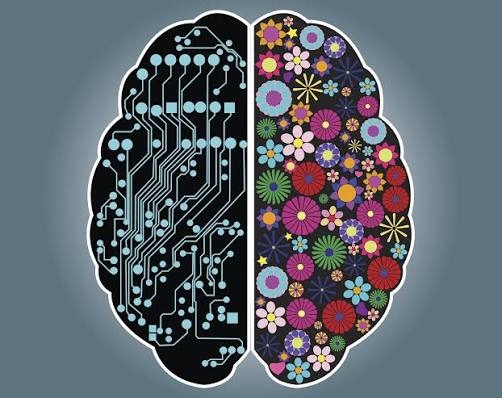
What Part of the Brain Is Responsible for Creativity?
The Most Creative Part of the Brain May Not Exist
Imagine a scientist opening the human brain and pointing to a precise location.
"There," they say.
"That's where creativity lives."
It would be a satisfying answer.
Simple.
Clean.
Easy to understand.
It would also be wrong.
For decades, people have searched for creativity's address. A specific region. A hidden switch. A neurological headquarters where ideas are manufactured and imagination resides.
The search makes sense.
Human beings prefer clear explanations.
We like knowing where things belong.
Memory has regions.
Language has regions.
Vision has regions.
Surely creativity must have one too.
Yet the brain continues to resist this simplicity.
Modern neuroscience has revealed something far more interesting.
Creativity does not belong to a single part of the brain.
It emerges from collaboration.
From conversation.
From networks communicating across regions that evolved for entirely different purposes.
Creativity resembles an orchestra more than a soloist.
A symphony rather than a note.
A process rather than a location.
The question, then, is not:
"What part of the brain is responsible for creativity?"
The better question is:
"How does the brain create something new?"
The answer takes us into one of neuroscience's most fascinating mysteries.
Because creativity remains one of the most remarkable things the human brain can do.
Why the "Right-Brain Creative Person" Myth Refuses to Die
Many people grew up hearing a familiar idea.
Artists are right-brained.
Scientists are left-brained.
Creative people rely on one hemisphere.
Analytical people rely on the other.
The concept is appealing.
Unfortunately, reality is more complex.
The brain's hemispheres do perform specialized functions.
Language processing often favors the left hemisphere.
Certain spatial abilities frequently involve the right hemisphere.
Yet creativity does not belong exclusively to either side.
Brain imaging studies consistently show activity occurring across both hemispheres during creative tasks.
Writing a novel.
Composing music.
Designing a product.
Solving a scientific problem.
Each activity recruits multiple brain systems simultaneously.
Creativity requires analysis.
Analysis requires creativity.
The separation many people imagine rarely exists in practice.
The brain prefers collaboration.
Not isolation.
This realization transformed how neuroscientists think about imagination.
The focus shifted from locations to networks.
And networks tell a much richer story.
Creativity Is a Team Sport Inside the Brain
One of the most important discoveries in modern neuroscience is that creativity depends on interactions between several large-scale brain networks.
Rather than asking which brain region creates ideas, researchers increasingly ask which networks cooperate during creative thinking.
Three networks appear particularly important.
The relationship between them may explain how original ideas emerge.
Not from a single source.
But from a dynamic conversation.
The Default Mode Network: Where Ideas Wander
The first major player is known as the Default Mode Network, often abbreviated as DMN.
This network becomes active during periods of reflection.
Daydreaming.
Mind wandering.
Memory retrieval.
Imagination.
When your attention drifts during a walk.
When you imagine future possibilities.
When random associations appear unexpectedly.
The Default Mode Network often becomes engaged.
For years, scientists assumed mind wandering represented inactivity.
A mental idle state.
Research revealed the opposite.
The brain remains remarkably active during these periods.
The Default Mode Network appears deeply involved in generating possibilities.
Connecting memories.
Exploring hypothetical scenarios.
This makes intuitive sense.
Many creative insights arrive when people stop actively searching for them.
The shower.
The walk.
The quiet moment before sleep.
The insight seems spontaneous.
Yet beneath the surface, the brain is busy making connections.
The Default Mode Network helps facilitate this process.
The Executive Control Network: Creativity's Editor
Generating ideas is only part of creativity.
Evaluation matters too.
Not every idea deserves pursuit.
Some require refinement.
Others require rejection.
This responsibility belongs largely to another network known as the Executive Control Network.
Associated heavily with the prefrontal cortex, this network supports:
Attention.
Planning.
Decision-making.
Reasoning.
Self-control.
If the Default Mode Network acts like an improvisational musician, the Executive Control Network acts like a producer.
One generates possibilities.
The other evaluates them.
Creative thinking requires both.
Without idea generation, originality disappears.
Without evaluation, coherence disappears.
The interaction between these systems creates balance.
Freedom and structure.
Exploration and judgment.
Imagination and discipline.
The strongest creative work often emerges from this partnership.
The Salience Network: Creativity's Traffic Controller
A third network plays an equally important role.
The Salience Network.
Its job involves identifying what deserves attention.
The brain constantly processes enormous amounts of information.
Most of it remains irrelevant.
The Salience Network helps determine what matters.
What should be ignored.
What should be explored.
During creative thinking, this network may help coordinate communication between the Default Mode Network and the Executive Control Network.
It acts somewhat like a conductor.
Directing attention.
Shifting resources.
Helping the brain transition between idea generation and evaluation.
Without this coordination, creative thinking becomes inefficient.
The Salience Network helps maintain flow.
The Prefrontal Cortex and Creative Thinking
If one brain region receives frequent attention in creativity research, it is the prefrontal cortex.
Located near the front of the brain, this area supports complex cognitive functions.
Planning.
Abstract thinking.
Goal-directed behavior.
Decision-making.
The prefrontal cortex contributes significantly to creative problem-solving.
It allows people to manipulate concepts mentally.
Explore alternatives.
Consider consequences.
Maintain focus.
Yet an interesting paradox exists.
Some creative breakthroughs appear when parts of the prefrontal cortex temporarily reduce their control.
Moments of improvisation.
Spontaneous insight.
Creative flow.
These experiences may involve reduced self-monitoring.
Less internal censorship.
Less conscious interference.
Creativity therefore requires a delicate balance.
Enough control to shape ideas.
Enough freedom to generate them.
Too much structure restricts originality.
Too little structure limits usefulness.
The brain constantly negotiates this balance.
Memory: The Hidden Foundation of Creativity
Many people imagine creativity as the opposite of memory.
The relationship is actually much closer.
Creativity depends heavily on memory.
Original ideas rarely emerge from nowhere.
They emerge from combinations of existing information.
Experiences.
Concepts.
Observations.
Knowledge.
The brain stores these elements across multiple memory systems.
Creative thinking often involves retrieving seemingly unrelated pieces of information and combining them in novel ways.
A musician connects jazz rhythms with classical structures.
A scientist connects biology with engineering.
A writer connects history with fiction.
The process feels innovative.
Because it is.
Yet it depends on memory.
Without stored experiences, creativity would possess little material to work with.
The imagination rearranges what memory provides.
Dopamine and the Chemistry of Creativity
Creativity involves biology as well as cognition.
One neurotransmitter frequently associated with creative thinking is dopamine.
Dopamine influences motivation.
Learning.
Reward.
Curiosity.
Exploration.
Researchers have observed interesting relationships between dopamine activity and creative performance.
Individuals displaying higher levels of exploratory behavior often demonstrate stronger creative tendencies.
The connection is logical.
Creativity requires seeking possibilities.
Curiosity requires seeking possibilities.
Both involve exploration.
Dopamine supports exploration.
This does not mean creativity can be reduced to chemistry.
The brain is more complex than that.
Yet neurochemistry influences the conditions under which creativity flourishes.
Motivation matters.
Interest matters.
Curiosity matters.
Biology helps support these experiences.
Brain Regions Commonly Associated With Creativity
The following table summarizes several important brain areas involved in creative processes.
| Brain Region/Network | Primary Function | Role in Creativity |
|---|---|---|
| Default Mode Network | Mind wandering, imagination | Generates ideas and associations |
| Executive Control Network | Planning and evaluation | Refines and evaluates ideas |
| Salience Network | Attention management | Coordinates creative processes |
| Prefrontal Cortex | Decision-making and reasoning | Supports complex problem-solving |
| Hippocampus | Memory formation | Supplies material for new ideas |
| Temporal Lobes | Language and meaning processing | Helps connect concepts |
| Parietal Lobes | Integration of information | Supports perspective shifting |
| Anterior Cingulate Cortex | Conflict monitoring | Encourages cognitive flexibility |
| Basal Ganglia | Learning and habit formation | Supports creative exploration |
| Dopaminergic Systems | Motivation and reward | Encourages curiosity and experimentation |
The pattern is revealing.
No single structure dominates.
Creativity emerges through interaction.
Not isolation.
A Lesson I Learned About Creative Insight
Several years ago, I became fascinated with the idea of productivity.
I believed creative work depended primarily on concentration.
The solution seemed obvious.
Work harder.
Focus longer.
Push further.
Sometimes it worked.
Often it didn't.
What surprised me was where many meaningful ideas appeared.
Not during intense effort.
But afterward.
While walking.
Driving.
Doing something unrelated.
At first, this felt frustrating.
I wanted creativity to obey schedules.
Instead, it seemed to prefer unpredictability.
Later, neuroscience helped explain the experience.
The brain continues processing information even when conscious attention shifts elsewhere.
Connections form beneath awareness.
Ideas mature quietly.
The lesson was simple.
Creative work requires effort.
It also requires space.
The brain needs opportunities to wander.
Not endlessly.
But enough.
Enough for hidden connections to emerge.
Enough for possibility to surface.
Why Sleep Matters More Than People Realize
Sleep remains one of creativity's most underrated allies.
During sleep, the brain reorganizes information.
Strengthens memories.
Identifies patterns.
Integrates experiences.
Researchers have repeatedly observed improvements in creative problem-solving following adequate sleep.
Many people have experienced this directly.
A difficult problem appears unsolvable at night.
The answer seems obvious the next morning.
The brain continued working.
Just differently.
Sleep supports the very networks involved in memory integration and insight generation.
Creativity is not solely a waking activity.
Part of the process occurs while consciousness rests.
The brain never truly stops creating connections.
Can Creativity Be Strengthened?
If creativity emerges from networks rather than a single brain region, can it be improved?
Evidence suggests yes.
Several activities appear particularly beneficial.
Reading widely.
Learning new skills.
Engaging with unfamiliar perspectives.
Practicing creative disciplines.
Reflecting.
Walking.
Maintaining curiosity.
These activities strengthen the brain's capacity for flexible thinking.
They increase available knowledge.
Expand associations.
Encourage exploration.
The goal is not changing one specific brain region.
The goal is enriching the network.
Creative capacity grows through use.
The brain adapts.
Connections strengthen.
Possibilities expand.
The Future of Creativity Research
Neuroscience continues uncovering new details about creative thinking.
Brain imaging technologies become increasingly sophisticated.
Researchers can observe patterns once invisible.
Yet creativity remains remarkably difficult to fully explain.
This difficulty is not failure.
It is part of the phenomenon itself.
Creativity involves imagination.
Emotion.
Memory.
Attention.
Motivation.
Experience.
Culture.
Identity.
No single measurement captures all of these dimensions.
The mystery persists.
And perhaps that is appropriate.
Because creativity itself often begins where certainty ends.
The Provocative Truth About Creativity and the Brain
People often ask which part of the brain creates ideas.
The question contains a hidden assumption.
That creativity is a thing.
An object.
A location.
A mechanism.
Neuroscience suggests something different.
Creativity may be less like a place and more like a conversation.
A dynamic interaction among systems evolved for memory, attention, planning, emotion, and imagination.
No solitary region possesses ownership.
The entire brain participates.
This realization changes how we think about creativity.
The source of innovation is not a hidden compartment waiting to be activated.
It is a relationship.
A collaboration occurring across billions of neurons.
Memories meeting possibilities.
Curiosity meeting knowledge.
Imagination meeting judgment.
The search for creativity's location may ultimately miss the deeper truth.
Creativity is not what one part of the brain does.
It is what the brain does when multiple systems work together in unexpected ways.
And perhaps there is something beautifully fitting about that.
After all, creativity itself is the art of connection.
Why should the brain create it any differently?
- Arts
- Business
- Computers
- Games
- Health
- Home
- Kids and Teens
- Money
- News
- Personal Development
- Recreation
- Regional
- Reference
- Science
- Shopping
- Society
- Sports
- Бизнес
- Деньги
- Дом
- Досуг
- Здоровье
- Игры
- Искусство
- Источники информации
- Компьютеры
- Личное развитие
- Наука
- Новости и СМИ
- Общество
- Покупки
- Спорт
- Страны и регионы
- World

 Russian
 French
 Spanish
 Portuguese
 Deutsch
 Turkish
 Dutch
Dutch
 Italiano
 Arabic
 Romaian
 Portuguese (Brazil)
 Greek
Greek