
How does imagination work?
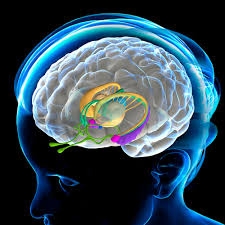
How Does Imagination Work?
The Mind Has a Strange Habit of Visiting Places That Do Not Exist
Close your eyes.
Imagine a red door standing alone in the middle of a desert.
Now imagine opening it.
Behind it is a library floating above the ocean.
The books have no titles.
The waves move upward instead of down.
For a brief moment, something extraordinary happens.
You experience a place that does not exist.
No architect designed it.
No photographer captured it.
No traveler visited it.
Yet your mind constructed it instantly.
Not partially.
Not symbolically.
Instantly.
This ability is so familiar that we rarely stop to appreciate how astonishing it is.
Human beings can create experiences without direct sensory input.
We can rehearse conversations that have never occurred.
Imagine futures that have not happened.
Invent worlds that have never existed.
Modify memories.
Simulate possibilities.
Design technologies.
Write novels.
Compose symphonies.
Build civilizations.
Every innovation begins the same way.
First, it exists nowhere except imagination.
Then something changes.
A thought becomes a blueprint.
A blueprint becomes action.
Action becomes reality.
The question is fascinating.
How does imagination work?
What mechanism allows the human mind to transcend the present moment and generate experiences beyond immediate reality?
The answer reveals something profound about human consciousness.
Because imagination is not merely a creative luxury.
It is one of the brain's most fundamental abilities.
Imagination Is Not Escaping Reality
Many people think imagination means leaving reality behind.
The brain disagrees.
Imagination depends heavily on reality.
Every imagined experience is built from existing ingredients.
Memories.
Sensations.
Concepts.
Emotions.
Knowledge.
Experiences.
The mind rarely creates something from absolute nothingness.
Instead, it recombines existing elements into new arrangements.
Consider the floating library from earlier.
Libraries exist.
Oceans exist.
Doors exist.
The imagination combined familiar components into an unfamiliar configuration.
This pattern appears repeatedly.
A dragon combines features of reptiles, birds, predators, and mythology.
Science fiction combines known technologies with hypothetical advances.
Future plans combine present knowledge with anticipated possibilities.
Imagination is less about creating from emptiness.
It is more about rearranging what already exists.
The process feels magical.
The mechanism is surprisingly practical.
The Brain Does Not Have an Imagination Center
People often search for creativity's address.
The same mistake occurs with imagination.
There is no single imagination region hidden inside the brain.
No dedicated imagination compartment.
Modern neuroscience reveals something more interesting.
Imagination emerges through collaboration.
Multiple brain systems working together.
Memories.
Attention.
Emotion.
Prediction.
Language.
Visual processing.
Each contributes something essential.
The brain behaves like an orchestra.
Different sections perform different functions.
The experience emerges from coordination.
Not isolation.
This explains why imagination feels so rich.
It recruits so much of the brain simultaneously.
Memory: The Raw Material of Imagination
One of the most surprising discoveries in neuroscience is how closely imagination depends on memory.
At first glance, the two seem unrelated.
Memory concerns the past.
Imagination concerns possibilities.
Yet both rely on remarkably similar brain systems.
The reason is straightforward.
The brain cannot imagine without ingredients.
Memory supplies those ingredients.
Every experience leaves traces.
Images.
Conversations.
Emotions.
Observations.
Concepts.
The imagination retrieves these fragments and rearranges them.
A writer imagines a fictional city.
The buildings come from remembered architecture.
The atmosphere comes from remembered experiences.
The emotions come from remembered feelings.
The result feels original.
Because it is.
Yet its components originate from memory.
Imagination transforms memory into possibility.
The Default Mode Network: The Brain's Internal Studio
One of the most important systems involved in imagination is known as the Default Mode Network.
Researchers discovered this network while studying what happens when people appear to be doing nothing.
The findings were unexpected.
The brain remained remarkably active.
Particularly during activities such as:
Daydreaming.
Reflection.
Future planning.
Memory recall.
Mental simulation.
These experiences all involve imagination.
The Default Mode Network helps create internal experiences when external demands decrease.
It allows the mind to wander.
To connect ideas.
To explore possibilities.
To simulate events.
Many creative insights emerge during periods when this network becomes active.
Walking.
Resting.
Looking out a window.
Sitting quietly.
The brain continues working.
Not on the external world.
On the internal one.
Why the Brain Constantly Simulates the Future
Imagination is not merely about fantasy.
Its evolutionary purpose appears deeply practical.
The brain uses imagination to predict outcomes.
To rehearse possibilities.
To prepare for uncertainty.
Imagine preparing for an important conversation.
Before it occurs, you mentally simulate different scenarios.
Possible responses.
Potential challenges.
Desired outcomes.
You are using imagination.
Not for entertainment.
For preparation.
This ability provides enormous advantages.
Humans can evaluate possibilities without physically experiencing them.
We can learn from imagined consequences.
Avoid imagined dangers.
Pursue imagined opportunities.
Imagination functions as a simulation engine.
A way of testing reality before reality arrives.
Mental Imagery: Seeing Without Seeing
Many aspects of imagination involve mental imagery.
The ability to generate sensory experiences internally.
Visual images.
Sounds.
Movements.
Textures.
Even tastes.
Close your eyes and imagine a lemon.
Many people can see its shape.
Its color.
Its texture.
Some can almost taste it.
No lemon is present.
Yet the experience feels partially real.
Brain imaging studies reveal why.
Many sensory regions become active during imagination.
Some of the same neural systems involved in perception participate in mental imagery.
The brain partially recreates sensory experiences internally.
This does not mean imagination and reality are identical.
Reality remains richer.
More detailed.
More consistent.
Yet the overlap explains why imagined experiences can feel vivid.
The brain treats them seriously.
The Role of Emotion in Imagination
Imagination rarely operates independently of emotion.
The two remain deeply connected.
Consider how future scenarios affect feelings.
An imagined success generates excitement.
An imagined failure generates anxiety.
An imagined reunion generates warmth.
An imagined loss generates sadness.
The events are hypothetical.
The emotions are real.
This relationship exists because imagination activates emotional systems.
The brain responds not only to actual experiences but also to simulated ones.
Emotion gives imagination significance.
Without emotion, imagined scenarios would feel irrelevant.
Emotion determines which possibilities capture attention.
Which stories matter.
Which futures motivate action.
The imagination creates possibilities.
Emotion determines their importance.
Why Children Seem More Imaginative
Children often appear naturally imaginative.
They transform cardboard boxes into spaceships.
Blankets into castles.
Ordinary objects into extraordinary adventures.
Adults frequently assume imagination declines with age.
The reality is more nuanced.
Children engage imagination differently because fewer assumptions constrain them.
Their knowledge remains limited.
Their possibilities remain expansive.
Adults possess more information.
More structure.
More experience.
These advantages sometimes create limitations.
The mind begins favoring probability over possibility.
Efficiency over exploration.
Yet imagination does not disappear.
It changes form.
A child imagines dragons.
An entrepreneur imagines companies.
An engineer imagines inventions.
A scientist imagines theories.
The mechanism remains remarkably similar.
Only the content evolves.
Daydreaming: The Creativity People Misunderstand
Daydreaming often receives criticism.
It appears unproductive.
Distracted.
Aimless.
Neuroscience suggests a different interpretation.
Daydreaming frequently supports imagination.
Memory integration.
Future planning.
Creative insight.
When attention relaxes, unexpected connections emerge.
Ideas interact more freely.
Associations become less restricted.
Many breakthroughs originate during these periods.
Not because daydreaming guarantees creativity.
Because it creates opportunities for novel combinations.
The mind explores.
Tests.
Experiments.
Quietly.
Internally.
Sometimes the most productive moments appear unproductive from the outside.
Imagination and Creativity: Close Relatives, Not Twins
People often use imagination and creativity interchangeably.
The distinction matters.
Imagination generates possibilities.
Creativity transforms possibilities into something valuable.
A person may imagine countless ideas.
Creativity involves selecting, refining, and expressing those ideas.
Imagination is expansive.
Creativity is expansive and selective.
One generates.
The other generates and develops.
Both depend upon each other.
Without imagination, creativity lacks raw material.
Without creativity, imagination remains unrealized.
The relationship resembles seed and garden.
One contains potential.
The other cultivates it.
Key Brain Systems Involved in Imagination
The following table highlights several important systems contributing to imaginative thought.
| Brain Region/Network | Primary Function | Role in Imagination |
|---|---|---|
| Default Mode Network | Internal thought | Generates mental simulations |
| Hippocampus | Memory processing | Supplies experiences and details |
| Prefrontal Cortex | Planning and reasoning | Organizes imagined possibilities |
| Visual Cortex | Visual processing | Creates mental imagery |
| Temporal Lobes | Meaning and language | Supports narrative construction |
| Amygdala | Emotional processing | Adds emotional significance |
| Parietal Lobes | Integration of information | Combines concepts and perspectives |
| Salience Network | Attention regulation | Directs focus toward important ideas |
| Dopaminergic Systems | Motivation and curiosity | Encourages exploration of possibilities |
| Executive Control Network | Evaluation and refinement | Shapes and improves imagined ideas |
The pattern is revealing.
Imagination emerges from cooperation.
Not specialization.
The whole brain participates.
A Lesson I Learned About Imagination
For years, I treated imagination as something that appeared spontaneously.
A fortunate accident.
An unpredictable visitor.
If ideas arrived, great.
If they didn't, frustration followed.
Eventually I noticed a pattern.
Many meaningful ideas appeared after exposure.
After reading widely.
After conversations.
After traveling.
After encountering unfamiliar perspectives.
The insight was simple.
Imagination requires material.
The mind cannot connect what it has never encountered.
Creative breakthroughs often appeared mysterious only because I had forgotten where the ingredients originated.
Books.
Experiences.
Questions.
Observations.
The imagination had been collecting them all along.
The lesson changed my perspective.
Imagination is not merely inspiration.
It is synthesis.
A process of connection occurring beneath awareness.
The richer the input, the richer the possibilities.
Why Imagination Matters for Survival
The evolutionary importance of imagination cannot be overstated.
Long before novels and films existed, imagination served practical purposes.
Planning hunts.
Predicting threats.
Evaluating risks.
Preparing for uncertain situations.
Humans gained a remarkable advantage.
The ability to learn from hypothetical experiences.
Instead of relying exclusively on trial and error, we could mentally simulate outcomes.
This reduced danger.
Increased adaptability.
Improved decision-making.
Modern imagination continues serving similar functions.
We imagine careers before pursuing them.
Relationships before forming them.
Projects before building them.
The ability remains deeply practical.
Fantasy represents only one expression of imagination.
Prediction may be its most important one.
Can Imagination Be Strengthened?
Evidence strongly suggests yes.
Imagination behaves much like other cognitive abilities.
Use influences development.
Several activities consistently support imaginative thinking:
Reading fiction.
Writing.
Drawing.
Exploring unfamiliar subjects.
Traveling.
Engaging in creative hobbies.
Reflective journaling.
Open-ended problem solving.
Each activity expands available material.
Introduces novelty.
Encourages mental flexibility.
The goal is not forcing imagination.
The goal is feeding it.
Imagination thrives when exposed to diverse experiences and perspectives.
The Future of Imagination Research
Scientists continue exploring imagination from multiple perspectives.
Neuroscience.
Psychology.
Cognitive science.
Artificial intelligence.
The field remains fascinating because imagination touches nearly every aspect of human experience.
Creativity.
Innovation.
Empathy.
Memory.
Decision-making.
Identity.
Consciousness itself.
Each discovery reveals new complexity.
Yet one truth remains consistent.
Imagination is not an optional feature of the mind.
It is central to how humans understand reality.
And transcend it.
The Provocative Truth About Imagination
Most people think imagination concerns things that are not real.
This assumption misses something profound.
Imagination may be one of the primary reasons reality changes at all.
Every invention existed first as imagination.
Every scientific theory.
Every piece of architecture.
Every company.
Every social movement.
Every work of art.
Reality often begins as possibility.
Possibility begins as imagination.
The brain's ability to construct experiences beyond the present moment allows human beings to move beyond current conditions.
To envision alternatives.
To pursue improvements.
To create futures different from the past.
This makes imagination far more than entertainment.
Far more than daydreaming.
Far more than fantasy.
Imagination is the mechanism through which the mind rehearses tomorrow before tomorrow arrives.
It allows us to experience what does not yet exist.
Then decide whether it should.
Perhaps the most remarkable aspect of imagination is not that it creates fictional worlds.
It is that fictional worlds sometimes become real ones.
The bridge between possibility and reality begins inside the mind.
And imagination is the architect.
- Arts
- Business
- Computers
- Giochi
- Health
- Home
- Kids and Teens
- Money
- News
- Personal Development
- Recreation
- Regional
- Reference
- Science
- Shopping
- Society
- Sports
- Бизнес
- Деньги
- Дом
- Досуг
- Здоровье
- Игры
- Искусство
- Источники информации
- Компьютеры
- Личное развитие
- Наука
- Новости и СМИ
- Общество
- Покупки
- Спорт
- Страны и регионы
- World

 English
 Russian
 French
 Spanish
 Portuguese
 Deutsch
 Turkish
 Dutch
Dutch
 Arabic
 Romaian
 Portuguese (Brazil)
 Greek
Greek