
How do geopolitical events affect markets?
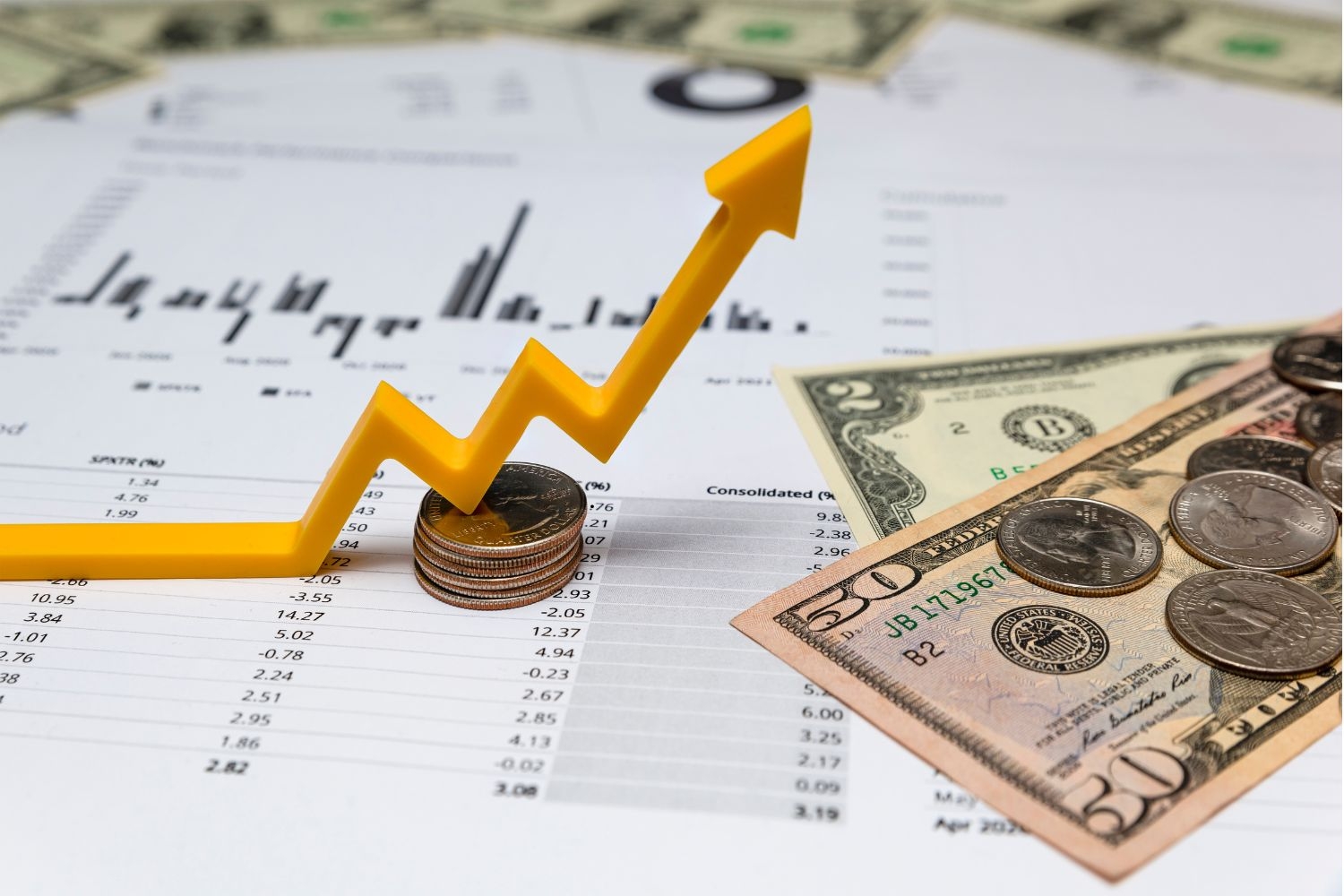
How Do Geopolitical Events Affect Markets?
The Market Doesn't Fear Bad News. It Fears Uncertainty.
Walk onto any trading floor after a major geopolitical shock and you'll witness something fascinating. Prices move first. Explanations come later.
That's because markets are not prediction machines. They're discounting machines. Every stock price, bond yield, commodity contract, and currency quote represents millions of judgments about the future. When a geopolitical event suddenly changes that future—even slightly—the repricing can be swift, brutal, and often surprising.
Many people assume markets collapse because of wars, elections, sanctions, or diplomatic conflicts. That's not entirely true. Markets can handle bad news. What they struggle with is uncertainty. Investors can model slower growth. They can estimate higher oil prices. They can even calculate the impact of trade restrictions.
What they cannot easily calculate is the unknown.
And geopolitical events specialize in creating unknowns.
The relationship between geopolitics and markets has existed as long as organized commerce itself. Empires rose and fell. Shipping routes opened and closed. Governments changed. Alliances shifted. Capital followed confidence.
Today the mechanisms are faster, but the principle remains unchanged.
Politics shapes incentives.
Incentives shape economic behavior.
Economic behavior shapes markets.
Simple. Yet endlessly complicated.
Why Geopolitical Events Matter More Than Most Investors Realize
Investors often focus intensely on earnings reports, interest rates, and economic indicators. Those variables matter enormously. But geopolitical developments frequently alter all three at once.
Consider what happens when a major conflict emerges in a strategically important region.
Energy prices may rise.
Supply chains may become disrupted.
Consumer confidence may weaken.
Governments may increase military spending.
Central banks may adjust policy expectations.
Corporate profit forecasts may suddenly become obsolete.
One event. Multiple transmission channels.
The market isn't reacting to headlines. It's reacting to consequences.
That's an important distinction.
A missile launch by itself isn't a market event.
The potential economic outcomes triggered by that launch are.
The Four Main Channels Through Which Geopolitics Impacts Markets
1. Energy and Commodity Shocks
Energy remains the bloodstream of the global economy.
Whenever geopolitical instability threatens oil-producing regions or critical transportation routes, markets immediately begin recalculating future costs.
A disruption in energy supply affects far more than gasoline prices.
Manufacturing costs increase.
Transportation expenses rise.
Consumer purchasing power declines.
Corporate margins compress.
Inflation expectations climb.
Suddenly, investors aren't evaluating yesterday's earnings outlook. They're evaluating tomorrow's cost structure.
History provides repeated examples.
The oil shocks of the 1970s transformed inflation dynamics across developed economies. More recently, conflicts involving major energy exporters have generated sharp volatility in oil and natural gas markets.
The lesson is straightforward.
When energy becomes uncertain, nearly every industry feels the impact.
2. Trade and Supply Chain Disruptions
Globalization created remarkable efficiencies.
It also created dependencies.
A product assembled in America may contain components manufactured in Asia, raw materials sourced in Africa, and software developed in Europe.
That interconnectedness boosts productivity during stable periods.
It creates vulnerability during unstable ones.
Trade disputes, sanctions, export restrictions, and military conflicts can disrupt entire supply chains.
Suddenly companies face difficult choices.
Find alternative suppliers.
Absorb higher costs.
Delay production.
Pass expenses to customers.
None of those options are ideal.
Markets recognize this immediately.
That's why geopolitical tensions frequently affect industrial companies, technology firms, manufacturers, and transportation businesses long before actual shortages emerge.
Investors price the possibility, not merely the reality.
3. Currency and Capital Flows
Money seeks stability.
When geopolitical uncertainty rises, capital often migrates toward perceived safe havens.
This movement influences currencies, sovereign bonds, and international investment flows.
A nation viewed as politically stable may experience increased capital inflows.
A country perceived as vulnerable may face capital flight.
These shifts can occur rapidly.
Currency fluctuations then create secondary effects.
Export competitiveness changes.
Import costs move.
Corporate earnings translated from foreign operations fluctuate.
Debt-servicing burdens shift.
What begins as a political event can evolve into a financial event within days.
Sometimes within hours.
4. Confidence and Investor Psychology
This may be the most important channel of all.
Markets are ultimately collections of human beings making decisions under uncertainty.
Confidence matters.
Trust matters.
Expectations matter.
When geopolitical tensions escalate, investors become more cautious. Businesses delay expansion plans. Consumers postpone major purchases.
The result isn't always immediate economic damage.
Sometimes the damage comes from hesitation itself.
Confidence is difficult to measure but impossible to ignore.
The most successful investors understand this.
Numbers tell part of the story.
Human behavior tells the rest.
A Historical Perspective: Markets and Geopolitical Shocks
The market's reaction to geopolitical events varies dramatically depending on context.
Some events create short-term volatility followed by rapid recoveries.
Others reshape economic systems for decades.
The distinction often depends on whether the event changes underlying economic fundamentals.
| Geopolitical Event | Initial Market Reaction | Long-Term Impact |
|---|---|---|
| Oil Embargoes (1970s) | Severe market volatility | Structural inflation and energy policy shifts |
| End of the Cold War | Positive sentiment | Expanded globalization and trade |
| September 11 Attacks | Sharp short-term decline | Increased security spending and policy changes |
| Global Trade Disputes | Sector-specific volatility | Supply chain diversification |
| Major Regional Conflicts | Commodity price spikes | Varies based on duration and economic reach |
| Economic Sanctions | Market uncertainty | Realignment of trade relationships |
One observation stands out.
Markets frequently recover faster than public sentiment.
That's because investors eventually move from asking, "What happened?" to asking, "What happens next?"
The second question matters far more.
The Sectors That Feel Geopolitical Pressure First
Not all industries respond equally to geopolitical developments.
Some sectors operate closer to the fault lines.
Energy
Energy companies often experience immediate impacts from geopolitical instability.
Supply concerns can boost prices.
Political intervention can create new risks.
Regulatory changes can alter investment incentives.
The sector sits at the intersection of economics and national security.
That's a powerful combination.
Defense
Periods of geopolitical tension frequently increase defense spending expectations.
Markets often anticipate future government contracts and procurement programs.
Yet investors should remember that expectations and realities are not always identical.
Anticipated spending is not guaranteed spending.
Technology
Technology has become increasingly geopolitical.
Semiconductors, artificial intelligence, cybersecurity, and telecommunications now occupy strategic positions in national policy discussions.
Trade restrictions, export controls, and regulatory changes can materially affect technology companies.
In some cases, politics has become nearly as important as innovation.
Financial Services
Banks and financial institutions are particularly sensitive to sanctions, currency fluctuations, sovereign debt concerns, and cross-border capital movements.
When geopolitical uncertainty rises, financial firms often find themselves managing risks that extend far beyond traditional lending.
A Lesson I Learned Watching Markets During Periods of Crisis
Years ago, during a period of intense global uncertainty, I remember speaking with several experienced investors whose collective market experience stretched back decades.
The headlines were relentless.
Predictions were catastrophic.
Financial television treated every development as if civilization itself were hanging in the balance.
Yet one investor made a comment I never forgot.
He said, "The market isn't asking whether this is scary. It's asking what it's worth."
At first, that sounded cold.
Almost detached.
But it contained an important truth.
Markets are valuation mechanisms.
They attempt—sometimes imperfectly—to convert uncertainty into price.
That process can look irrational in the short run.
Sometimes it is irrational.
But over time, markets tend to separate emotion from economics.
The lesson wasn't to ignore geopolitical risk.
The lesson was to analyze it rigorously rather than react emotionally.
Investors who confuse headlines with fundamentals often make expensive decisions.
Investors who examine second-order effects usually perform better.
Why Modern Markets May Be More Sensitive Than Ever
Technology has accelerated everything.
Information travels instantly.
Capital moves globally.
Algorithms react within milliseconds.
A geopolitical event that once took days to influence markets can now affect prices before most people finish reading the headline.
This speed creates both advantages and dangers.
Information becomes available quickly.
Overreaction becomes possible even faster.
The result is a market environment characterized by greater short-term volatility and, paradoxically, often greater long-term resilience.
Investors receive more information than any previous generation.
Whether they process that information effectively is another matter entirely.
What Smart Investors Focus On During Geopolitical Turbulence
Experienced investors generally ask a different set of questions than casual observers.
They don't focus exclusively on the event itself.
They focus on transmission mechanisms.
How will economic growth change?
Will inflation accelerate?
How might central banks respond?
Which industries face the greatest exposure?
What assumptions embedded in current valuations may now be incorrect?
Those questions are less dramatic than headlines.
They're also more useful.
Successful investing rarely comes from predicting every geopolitical event.
It comes from understanding how markets process those events.
There is a significant difference.
One is forecasting.
The other is analysis.
Analysis tends to age better.
The Real Risk Isn't the Event. It's the Repricing.
Geopolitical events will never disappear.
There will always be elections, conflicts, trade disputes, diplomatic confrontations, and policy surprises.
The market's challenge isn't avoiding those events.
It's determining what they're worth.
That's where risk emerges.
Not from uncertainty alone.
But from the gap between expectations and reality.
When expectations are wrong, prices adjust.
Sometimes violently.
That's why geopolitical events matter so much. They force markets to reassess assumptions that previously seemed stable. Growth forecasts. Inflation expectations. Supply chains. Energy availability. Consumer confidence. Government priorities.
Everything gets repriced.
And repricing is the essence of market behavior.
The next geopolitical shock will arrive eventually. History guarantees that much. The specific trigger is unknowable. The economic consequences will be debated endlessly. Experts will disagree. Commentators will speculate.
Yet the market's response will follow a familiar pattern.
It will ask one question.
What does this change about the future?
Everything else is commentary.
- Arts
- Business
- Computers
- Giochi
- Health
- Home
- Kids and Teens
- Money
- News
- Personal Development
- Recreation
- Regional
- Reference
- Science
- Shopping
- Society
- Sports
- Бизнес
- Деньги
- Дом
- Досуг
- Здоровье
- Игры
- Искусство
- Источники информации
- Компьютеры
- Личное развитие
- Наука
- Новости и СМИ
- Общество
- Покупки
- Спорт
- Страны и регионы
- World

 English
 Russian
 French
 Spanish
 Portuguese
 Deutsch
 Turkish
 Dutch
Dutch
 Arabic
 Romaian
 Portuguese (Brazil)
 Greek
Greek