
Creative thinking vs analytical thinking
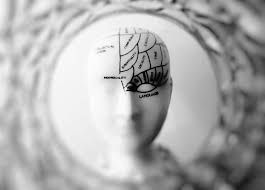
Creative Thinking vs Analytical Thinking: The Two Invisible Forces Behind Every Great Decision
There is a moment before every breakthrough when nothing makes sense.
A scientist stares at a wall covered in equations. An entrepreneur sketches a product nobody asked for. A songwriter hears a melody that arrives without explanation. A chess player notices a move that logic alone would never have suggested.
What happens in that moment?
Most people assume intelligence is a single engine. A unified force moving us toward answers.
It isn't.
Two very different systems are at work.
One explores.
The other evaluates.
One asks what could be.
The other asks what is.
We often call them creative thinking and analytical thinking.
The conversation around these modes tends to become tribal. Some people celebrate creativity as the source of innovation. Others elevate analysis as the foundation of rationality. Yet every meaningful achievement emerges from a dialogue between both.
A vision without analysis collapses under its own weight.
Analysis without vision becomes a beautifully organized cage.
The real question isn't which one is better.
The real question is understanding when each should lead.
Why the Debate Exists
Human beings love categories.
We divide ourselves into artists and engineers. Dreamers and planners. Visionaries and operators.
The separation feels neat.
Reality is not.
The architect who designs a skyscraper relies on imagination before calculations begin.
The mathematician searching for a proof often follows intuition before formal verification.
The filmmaker experiments wildly before editing ruthlessly.
History repeatedly shows that excellence lives at the intersection.
Still, understanding the distinction matters because each mode processes information differently.
Creative thinking expands possibilities.
Analytical thinking narrows them.
One opens doors.
The other determines which door is worth walking through.
What Is Creative Thinking?
Creative thinking is the ability to generate original ideas, connections, perspectives, and solutions.
Its defining characteristic isn't artistic talent.
It's the willingness to move beyond obvious patterns.
Creative thinkers often ask unusual questions:
-
What if the opposite were true?
-
What assumptions am I making?
-
What hasn't anyone considered yet?
-
What happens if these unrelated ideas collide?
The process rarely moves in a straight line.
Ideas arrive unexpectedly.
Connections emerge between distant concepts.
A solution appears while walking, showering, driving, or staring out a window.
Creativity thrives in uncertainty because uncertainty creates space for discovery.
The mind becomes a laboratory.
Possibilities multiply.
Some ideas fail immediately.
Others reveal entirely new worlds.
The Hidden Mechanism of Creativity
Neuroscientists often associate creative insight with the brain's ability to connect information stored across different regions.
Instead of following a predictable route, creative thought jumps.
It wanders.
It explores side roads.
This is why some of the most innovative ideas seem irrational at first.
They emerge before sufficient evidence exists to justify them.
A creative thinker is often willing to trust intuition temporarily.
Not forever.
Just long enough to see where it leads.
What Is Analytical Thinking?
Analytical thinking is the process of breaking complex information into smaller components to understand relationships, patterns, causes, and consequences.
Where creativity expands, analysis organizes.
Where creativity generates, analysis verifies.
Analytical thinkers ask different questions:
-
What evidence supports this claim?
-
What variables are involved?
-
What patterns exist?
-
What conclusions logically follow?
The analytical mind seeks structure.
It values precision.
It reduces ambiguity.
Rather than exploring endless possibilities, it attempts to identify the most probable explanation.
This mode becomes especially valuable when consequences matter.
Engineering.
Medicine.
Finance.
Law.
Operations.
Fields where errors are expensive depend heavily on analytical thinking.
The Hidden Mechanism of Analysis
Analysis creates order from complexity.
Information is gathered.
Variables are identified.
Relationships are examined.
Conclusions are tested.
This process reduces uncertainty.
It transforms assumptions into evidence-based decisions.
Without analytical thinking, organizations become vulnerable to wishful thinking.
Without analytical thinking, confidence can easily outrun reality.
Creative Thinking vs Analytical Thinking: Side-by-Side Comparison
| Dimension | Creative Thinking | Analytical Thinking |
|---|---|---|
| Primary Goal | Generate possibilities | Evaluate possibilities |
| Focus | Exploration | Verification |
| Direction | Divergent | Convergent |
| Core Question | "What could exist?" | "What is true?" |
| Risk Tolerance | High | Moderate to Low |
| Decision Style | Intuitive | Evidence-based |
| Relationship with Rules | Challenges them | Applies them |
| Strength | Innovation | Accuracy |
| Weakness | Can become unrealistic | Can become restrictive |
| Best Environment | Ambiguity and experimentation | Structure and measurement |
| Typical Output | New ideas | Reliable conclusions |
| Time Horizon | Future-oriented | Present-oriented |
The table creates a useful distinction.
Yet the most successful people move between columns constantly.
A Lesson I Learned About Thinking
Years ago, I worked on a project that felt impossible.
The team had collected enormous amounts of information. Reports. Metrics. Surveys. Forecasts.
Everything was organized.
Everything was measured.
Everything made sense.
And nothing moved.
Weeks passed.
Then someone asked a question so unusual that the room fell silent.
"What if the problem we're solving isn't the real problem?"
It sounded reckless.
Almost irresponsible.
There was no spreadsheet supporting it.
No data proving it.
Just a hunch.
Yet that single question redirected the entire project.
The eventual solution emerged from exploring an assumption nobody had challenged.
Only afterward did analysis validate the discovery.
That experience taught me something important.
Analysis helped us understand the map.
Creativity helped us realize we were looking at the wrong territory.
Since then, I've noticed the same pattern repeatedly.
Major progress often begins with creative disruption and ends with analytical refinement.
Rarely the other way around.
The Strengths of Creative Thinking
1. It Produces Innovation
Every invention begins as an idea that doesn't yet fit existing frameworks.
Electric cars.
Streaming platforms.
Reusable rockets.
The concepts appeared before evidence could fully justify them.
Creativity makes innovation possible because it allows people to imagine alternatives.
2. It Helps Navigate Uncertainty
When rules don't exist, creativity becomes essential.
Emerging industries, unexpected crises, and technological shifts often require solutions nobody has previously documented.
Creative thinking thrives in these environments.
3. It Encourages Adaptability
Creative thinkers are less attached to existing systems.
They adapt more easily because they see multiple paths forward.
When one route closes, another appears.
4. It Reveals Hidden Connections
Many breakthroughs emerge from combining ideas across disciplines.
Biology inspires engineering.
Psychology influences marketing.
Music influences mathematics.
Creativity builds bridges between seemingly unrelated domains.
The Strengths of Analytical Thinking
1. It Improves Decision Quality
Strong analysis reduces emotional bias.
It forces assumptions into the open.
The result is more reliable decision-making.
2. It Identifies Weaknesses
Creative ideas often contain flaws.
Analytical thinking exposes those flaws before they become expensive mistakes.
3. It Creates Efficiency
Organizations depend on systems.
Systems depend on analysis.
The ability to identify bottlenecks, inefficiencies, and risks creates measurable improvements.
4. It Builds Credibility
Ideas gain power when supported by evidence.
Analysis transforms intuition into persuasion.
A brilliant concept becomes far more compelling when accompanied by data.
When Creative Thinking Becomes Dangerous
Creativity receives admiration.
Sometimes too much admiration.
An endless stream of ideas can become a form of avoidance.
A person keeps generating possibilities because possibilities are more exciting than execution.
The danger isn't imagination.
The danger is refusing evaluation.
Without analytical discipline, creativity can drift toward fantasy.
Ideas accumulate.
Results disappear.
Organizations sometimes celebrate brainstorming while neglecting implementation.
The outcome is predictable.
Energy without direction.
Motion without progress.
When Analytical Thinking Becomes Dangerous
Analysis carries its own trap.
A person can become addicted to certainty.
More research.
More data.
More reports.
More validation.
The decision keeps moving further away.
This phenomenon is often called analysis paralysis.
The search for perfect information delays action indefinitely.
Meanwhile, opportunities disappear.
Some problems cannot be solved through additional analysis.
They require experimentation.
At a certain point, the next answer comes from doing.
Not studying.
The Most Successful People Use Both
Consider how great creators work.
They don't choose one mode permanently.
They alternate.
A novelist imagines a story, then edits ruthlessly.
An entrepreneur dreams about a future product, then examines financial realities.
A scientist proposes a bold hypothesis, then tests it methodically.
The process resembles breathing.
Expansion.
Contraction.
Expansion.
Contraction.
Creative thinking generates options.
Analytical thinking selects options.
Creative thinking asks new questions.
Analytical thinking seeks reliable answers.
Together they create momentum.
Separately they create imbalance.
How Organizations Benefit From Both
Many companies unknowingly favor one mode.
Some worship creativity.
Ideas flood conference rooms.
Execution suffers.
Others worship analysis.
Reports multiply.
Innovation slows.
The healthiest organizations create a rhythm between exploration and evaluation.
During Exploration
Teams should:
-
Encourage unusual ideas
-
Delay criticism
-
Expand possibilities
-
Challenge assumptions
-
Invite diverse perspectives
During Evaluation
Teams should:
-
Test assumptions
-
Analyze feasibility
-
Measure risk
-
Assess costs
-
Prioritize opportunities
Confusing these phases creates friction.
Criticism too early kills creativity.
Creativity too late weakens execution.
Timing matters.
Developing Creative Thinking
Creativity isn't reserved for a gifted few.
It can be strengthened.
Seek Diverse Inputs
Novel ideas often emerge from unexpected sources.
Read outside your industry.
Study unrelated disciplines.
Expose yourself to unfamiliar perspectives.
Ask Better Questions
Questions shape thought.
Instead of asking how something works, ask how it might fail.
Instead of asking what's possible, ask what's impossible and why.
Embrace Temporary Uncertainty
Creative breakthroughs often arrive before complete understanding.
Learn to tolerate ambiguity.
Create Before Judging
Generate ideas first.
Evaluate later.
Combining the two simultaneously weakens both.
Developing Analytical Thinking
Analytical skill can also be cultivated.
Break Problems Into Components
Complexity becomes manageable when divided into smaller parts.
Seek Evidence
Challenge assumptions.
Look for data rather than relying solely on intuition.
Identify Patterns
Patterns reveal relationships hidden inside large amounts of information.
Practice Structured Reflection
After decisions, examine outcomes.
What worked?
What failed?
Why?
Analysis improves when feedback loops exist.
The Future Belongs to Thinkers Who Can Switch Modes
Artificial intelligence is changing many forms of work.
Information has become abundant.
Computation has become inexpensive.
The ability to process data remains valuable.
But another skill is becoming increasingly important.
The ability to move fluidly between imagination and evaluation.
Machines excel at calculation.
Humans still possess a remarkable ability to generate unexpected connections.
The future may reward people who can combine both strengths.
Not purely creative.
Not purely analytical.
Integrated.
Flexible.
Adaptive.
Capable of dreaming and testing.
Conclusion: The False Choice
The debate between creative thinking and analytical thinking assumes a competition.
There isn't one.
A painter needs structure.
An engineer needs imagination.
A founder needs vision.
A strategist needs evidence.
The strongest minds don't live exclusively in either world.
They travel between them.
Creativity illuminates possibilities hidden beyond the horizon.
Analysis determines whether those possibilities can survive contact with reality.
One invents the future.
The other builds it.
When we overvalue either side, we lose something essential.
Too much creativity and we become detached from evidence.
Too much analysis and we become trapped by existing assumptions.
The challenge is not choosing between them.
The challenge is knowing which voice should speak first.
The future rarely belongs to the loudest thinker.
It belongs to the thinker who can imagine something new, then prove it deserves to exist.
Creative thinking opens the door.
Analytical thinking decides whether to walk through it.
Together, they become one of the most powerful forces available to the human mind.
- Arts
- Business
- Computers
- Jocuri
- Health
- Home
- Kids and Teens
- Money
- News
- Personal Development
- Recreation
- Regional
- Reference
- Science
- Shopping
- Society
- Sports
- Бизнес
- Деньги
- Дом
- Досуг
- Здоровье
- Игры
- Искусство
- Источники информации
- Компьютеры
- Личное развитие
- Наука
- Новости и СМИ
- Общество
- Покупки
- Спорт
- Страны и регионы
- World

 English
 Russian
 French
 Spanish
 Portuguese
 Deutsch
 Turkish
 Dutch
Dutch
 Italiano
 Arabic
 Portuguese (Brazil)
 Greek
Greek