
Which is more important: creativity or intelligence?
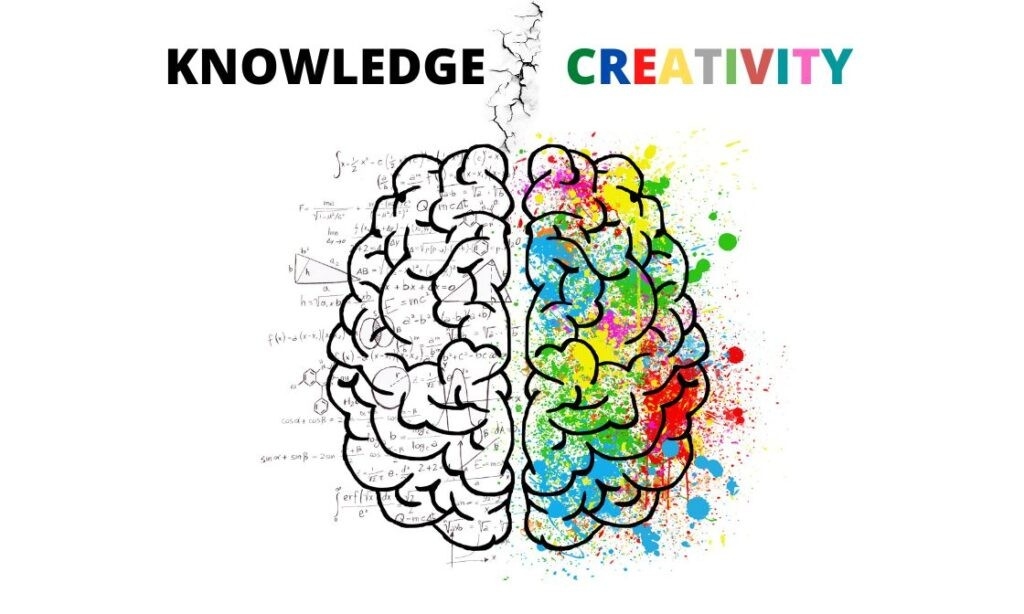
Which Is More Important: Creativity or Intelligence?
A child picks up a stick and turns it into a sword.
Then a wand.
Then a microphone.
Then a spaceship.
Nothing about the stick changes.
Everything about the meaning changes.
Years later, that same child may sit in a classroom being measured by tests, scores, rankings, and evaluations. Intelligence becomes visible. Quantifiable. Comparable.
Creativity becomes harder to see.
And so a question emerges.
Which matters more?
Creativity or intelligence?
The debate has existed for generations because both qualities seem responsible for extraordinary achievements. We admire the scientist who decodes the mysteries of nature. We admire the artist who invents new forms of expression. We celebrate entrepreneurs who build empires and researchers who expand human knowledge.
Yet beneath every accomplishment lies an uncomfortable reality.
The smartest person in the room isn't always the most successful.
The most creative person isn't always the most effective.
History is crowded with examples that challenge our assumptions.
Some people possess remarkable intelligence but struggle to create anything original.
Others possess average intellectual ability yet reshape industries through imagination alone.
The answer is neither simple nor satisfying.
Which is precisely why it's worth exploring.
The Problem With the Question
Most debates begin with a hidden assumption.
This one assumes creativity and intelligence are competing forces.
They aren't.
They're different tools designed for different purposes.
Intelligence helps us understand reality.
Creativity helps us imagine alternatives to reality.
One analyzes.
The other invents.
One seeks truth.
The other seeks possibility.
The tension between them creates progress.
When people argue about which matters more, they often confuse measurement with importance.
Intelligence is easier to measure.
Creativity is easier to underestimate.
That distinction matters.
A great deal.
Defining Intelligence
Intelligence is generally understood as the ability to learn, reason, solve problems, recognize patterns, and adapt to new situations.
It allows people to:
-
Process information efficiently
-
Understand complex systems
-
Make logical decisions
-
Learn from experience
-
Identify relationships between ideas
Traditional IQ tests attempt to measure certain aspects of intelligence, particularly reasoning, memory, processing speed, and problem-solving ability.
These skills matter.
They matter in science.
They matter in engineering.
They matter in medicine.
They matter in almost every field requiring complex judgment.
Intelligence acts as a compass.
It helps us navigate reality accurately.
Without it, confusion multiplies.
Mistakes become harder to avoid.
Understanding becomes difficult.
Intelligence as Compression
One way to think about intelligence is as compression.
An intelligent person can absorb large amounts of information and identify underlying patterns quickly.
Where others see chaos, they see structure.
Where others see isolated facts, they see relationships.
This ability creates efficiency.
The mind becomes a machine for reducing complexity.
That is an extraordinary advantage.
But it isn't the whole story.
Defining Creativity
Creativity is the ability to generate novel and valuable ideas, solutions, or perspectives.
Its power lies not in understanding existing patterns.
Its power lies in creating new ones.
Creative thinkers ask unusual questions:
-
What if this assumption is wrong?
-
What hasn't been tried?
-
What happens if unrelated ideas collide?
-
What exists beyond the obvious answer?
Creativity introduces uncertainty.
It welcomes experimentation.
It often appears irrational until the results become undeniable.
This is why creative people frequently seem strange before they seem brilliant.
The future rarely arrives looking reasonable.
Creativity as Expansion
If intelligence compresses information, creativity expands possibility.
It pushes beyond known boundaries.
It stretches perception.
It transforms limitations into raw material.
The creative mind doesn't merely observe reality.
It rearranges it.
Sometimes successfully.
Sometimes disastrously.
But always differently.
Creativity vs Intelligence: A Detailed Comparison
| Factor | Creativity | Intelligence |
|---|---|---|
| Core Function | Generate new ideas | Understand existing information |
| Primary Focus | Possibility | Accuracy |
| Thinking Style | Divergent | Convergent |
| Goal | Innovation | Understanding |
| Risk Tolerance | High | Moderate |
| Relationship to Rules | Challenges them | Applies them |
| Measurement Difficulty | Difficult | Relatively easy |
| Strength | Originality | Logic |
| Weakness | Can become impractical | Can become rigid |
| Value in Uncertainty | Extremely high | High |
| Value in Structured Problems | Moderate | Extremely high |
| Typical Output | New concepts | Better decisions |
| Historical Impact | Drives breakthroughs | Enables execution |
The comparison reveals something interesting.
Neither quality fully replaces the other.
Each compensates for weaknesses in the other.
Why Society Often Overvalues Intelligence
Intelligence produces visible signals.
Grades.
Credentials.
Test scores.
Academic achievements.
These markers create the illusion that intelligence is the ultimate predictor of success.
The attraction is understandable.
Numbers feel objective.
They create order.
Creativity resists neat measurement.
There is no universally accepted creativity score.
No standardized imagination exam.
No numerical ranking for originality.
As a result, intelligence often receives more attention because it produces cleaner data.
But measurable does not always mean most important.
Many of the qualities that shape human civilization are difficult to quantify.
Trust.
Leadership.
Vision.
Curiosity.
Creativity belongs in that category.
The Historical Case for Intelligence
There are moments in history when intelligence appears unbeatable.
The development of advanced mathematics.
Breakthroughs in physics.
Medical discoveries.
Complex engineering achievements.
These accomplishments required extraordinary intellectual capability.
Consider the challenges involved in:
-
Mapping the human genome
-
Designing spacecraft
-
Developing vaccines
-
Understanding quantum mechanics
Such achievements demand rigorous analytical thinking.
Without intelligence, many of humanity's greatest discoveries would remain impossible.
Intelligence provides the tools necessary to understand reality at a deep level.
That understanding creates power.
The Historical Case for Creativity
Then history shifts.
A different pattern emerges.
The people who change the world often begin by questioning assumptions others accept.
The innovators.
The artists.
The inventors.
The visionaries.
Many breakthroughs originate not from superior analysis but from unconventional perception.
Someone sees what others overlook.
Someone imagines what doesn't yet exist.
Someone refuses to accept the current framework.
Creativity creates the possibility of transformation.
Without creativity, society improves incrementally.
With creativity, entirely new directions become possible.
The airplane.
The smartphone.
The internet.
Modern cinema.
New forms of music.
Every major leap began as an idea that sounded improbable.
A Lesson I Learned About Talent
Several years ago, I worked alongside two individuals on a challenging project.
One possessed extraordinary intellectual ability.
He could analyze information faster than anyone in the room.
Patterns appeared instantly.
Problems unraveled under scrutiny.
The other person wasn't nearly as analytical.
But she consistently introduced ideas nobody else considered.
At first, her suggestions often seemed strange.
Occasionally even impractical.
Yet over time something became obvious.
The smartest solutions emerged when both perspectives combined.
The analytical thinker refined possibilities.
The creative thinker generated them.
One created clarity.
The other created opportunity.
That experience permanently changed how I viewed the debate.
I stopped asking which quality mattered more.
I started asking what happens when they work together.
The answer was remarkable.
Where Intelligence Falls Short
Intelligence has limitations.
A highly intelligent person can become trapped by existing assumptions.
The more knowledge someone accumulates, the easier it becomes to defend current models.
Expertise creates confidence.
Confidence can create blindness.
When reality changes unexpectedly, intelligence alone may struggle.
The mind continues optimizing within an outdated framework.
Creativity often becomes necessary because creativity questions the framework itself.
This distinction is critical.
Solving the wrong problem perfectly is still failure.
Where Creativity Falls Short
Creativity also has weaknesses.
Ideas are abundant.
Execution is rare.
A person can generate fascinating concepts endlessly without producing meaningful results.
Creativity without discipline becomes chaos.
Creativity without evaluation becomes fantasy.
This is why many creative breakthroughs require analytical refinement before becoming practical.
An invention must work.
A business model must survive.
A theory must withstand scrutiny.
Ideas alone are not enough.
Reality eventually demands evidence.
What Research Suggests
Psychological research increasingly suggests that creativity and intelligence overlap without being identical.
Studies often show a moderate relationship between intelligence and creativity.
Higher intelligence can support creative thinking because greater knowledge creates more material for connections.
Yet beyond a certain threshold, additional intelligence does not necessarily produce greater creativity.
In other words:
Being intelligent can help creativity.
Being extremely intelligent does not guarantee creativity.
This finding challenges a common assumption.
Knowledge creates potential.
Imagination determines how that potential is used.
The Workplace Perspective
Modern organizations need both capabilities.
Consider a technology company.
Creative teams imagine future products.
Analytical teams evaluate feasibility.
Engineers build systems.
Strategists assess risks.
Researchers gather evidence.
Designers imagine possibilities.
Remove creativity and innovation slows.
Remove intelligence and execution collapses.
The strongest organizations intentionally balance both.
Too much creativity creates instability.
Too much intelligence creates stagnation.
The healthiest environments encourage exploration while maintaining rigor.
The Entrepreneur's Advantage
Entrepreneurship offers one of the clearest examples of this balance.
Successful founders often display unusual levels of creativity.
They identify opportunities invisible to others.
They challenge assumptions.
They imagine alternative futures.
Yet imagination alone cannot build a company.
Financial analysis matters.
Operations matter.
Decision-making matters.
The entrepreneurial journey repeatedly demonstrates the partnership between creativity and intelligence.
Vision opens the door.
Intelligence builds the structure.
Which Matters More for Personal Success?
The answer depends on the environment.
In highly structured systems, intelligence often provides a greater advantage.
Fields requiring precision and technical mastery reward analytical capability.
In uncertain environments, creativity frequently becomes more valuable.
When rules change, imagination gains importance.
When new opportunities emerge, originality becomes a competitive advantage.
Modern careers increasingly involve uncertainty.
Industries evolve rapidly.
Technologies transform expectations.
Markets shift.
Under these conditions, creativity often becomes a differentiator.
Many people possess knowledge.
Fewer generate unique perspectives.
The Future of Human Value
As technology becomes more capable, routine analytical tasks are increasingly automated.
Calculations.
Predictions.
Data processing.
Pattern recognition.
Machines continue improving in these areas.
Human creativity remains difficult to replicate.
The ability to combine unrelated ideas.
The ability to perceive meaning.
The ability to imagine something entirely new.
These capabilities continue to distinguish human contribution.
This doesn't diminish intelligence.
It changes where intelligence creates value.
Knowledge remains essential.
Originality becomes increasingly scarce.
Scarcity creates significance.
The Hidden Truth: Creativity Requires Intelligence
The debate often treats creativity and intelligence as opposites.
They are not.
Many forms of creativity depend upon intelligence.
A composer must understand music.
A scientist must understand principles.
An architect must understand structure.
Creativity often emerges after deep knowledge has been acquired.
The breakthrough appears spontaneous.
The foundation rarely is.
The most powerful creativity usually stands on a platform of understanding.
Knowledge fuels imagination.
Imagination transforms knowledge.
The Hidden Truth: Intelligence Needs Creativity
The reverse is equally true.
Intelligence without creativity can become mechanical.
A brilliant mind operating exclusively within existing boundaries may produce optimization rather than innovation.
Creativity expands the territory intelligence can explore.
Without creativity, intelligence risks becoming trapped in repetition.
The future belongs neither to thinkers who only analyze nor to dreamers who only imagine.
It belongs to those who can do both.
Conclusion: The Better Question
Which is more important?
Creativity or intelligence?
The question sounds profound.
Yet it may be fundamentally flawed.
It's like asking whether wings are more important than direction.
Or whether vision matters more than movement.
Each becomes incomplete without the other.
Intelligence helps us understand what exists.
Creativity helps us discover what could exist.
One reveals reality.
The other reshapes it.
If forced to choose, many people instinctively select intelligence because intelligence feels reliable.
But history often rewards those who see beyond reliability.
The individuals remembered most vividly are rarely those who simply understood the world.
They are the ones who transformed it.
Still, transformation without understanding is fragile.
And understanding without transformation is limited.
The real answer is uncomfortable because it refuses simplicity.
Creativity and intelligence are not rivals.
They are partners engaged in a lifelong conversation.
One asks a dangerous question.
The other evaluates the answer.
One imagines a future.
The other determines whether that future can survive.
The greatest achievements emerge when neither voice dominates.
When imagination becomes disciplined.
When intelligence becomes adventurous.
When possibility and understanding move together.
That is where breakthroughs live.
Not in choosing between creativity and intelligence.
But in learning how to unite them.
- Arts
- Business
- Computers
- Oyunlar
- Health
- Home
- Kids and Teens
- Money
- News
- Personal Development
- Recreation
- Regional
- Reference
- Science
- Shopping
- Society
- Sports
- Бизнес
- Деньги
- Дом
- Досуг
- Здоровье
- Игры
- Искусство
- Источники информации
- Компьютеры
- Личное развитие
- Наука
- Новости и СМИ
- Общество
- Покупки
- Спорт
- Страны и регионы
- World

 English
 Russian
 French
 Spanish
 Portuguese
 Deutsch
 Dutch
Dutch
 Italiano
 Arabic
 Romaian
 Portuguese (Brazil)
 Greek
Greek