
Why do I feel stuck?
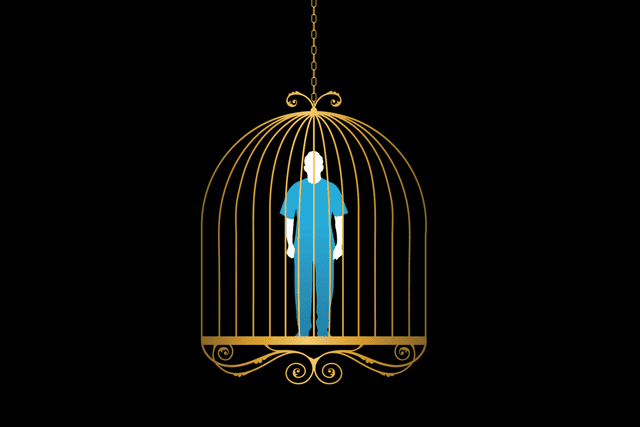
Why Do I Feel Stuck?
Sometimes nothing is visibly wrong.
You wake up.
You go through the motions.
You answer messages.
Complete tasks.
Attend meetings.
Pay bills.
Maintain routines.
From the outside, everything appears functional.
Yet beneath the surface, something feels immovable.
Like a car spinning its wheels in mud.
Movement exists.
Progress doesn't.
You are busy.
Exhausted, even.
But somehow still standing in the same place.
This experience has a peculiar quality.
It is difficult to explain to other people because it doesn't always look dramatic. There may be no crisis. No catastrophe. No obvious failure.
Just a persistent feeling that life has become heavy.
That possibility has narrowed.
That momentum has disappeared.
Many people describe this sensation with a single word.
Stuck.
The word sounds simple.
The reality is not.
Because feeling stuck is rarely the problem itself.
It is usually a symptom.
A signal.
A message from some deeper layer of experience attempting to get your attention.
The challenge is learning how to interpret it.
The Hidden Nature of Feeling Stuck
Most people assume feeling stuck means they need a solution.
Often they need a diagnosis.
The urge is understandable.
When discomfort appears, we immediately search for action.
A strategy.
A plan.
A breakthrough.
Yet action without understanding frequently creates more frustration.
If you misidentify the cause, even the best solution becomes ineffective.
This is why feeling stuck can persist for months or years.
People attempt to solve the wrong problem.
The surface experience remains unchanged.
The underlying cause remains untouched.
The question is not merely:
"How do I get unstuck?"
The question is:
"What is this feeling trying to tell me?"
Stuck Does Not Always Mean Stationary
One of the most surprising truths about personal growth is that progress often feels invisible while it is happening.
Seeds develop underground before anything emerges above the surface.
Muscles repair before they become stronger.
Ideas incubate before they become breakthroughs.
The same principle frequently applies to life transitions.
Sometimes what feels like stagnation is actually preparation.
The mind is reorganizing.
Priorities are shifting.
Identity is evolving.
A new chapter is forming before it becomes visible.
This distinction matters because impatience often causes people to abandon processes that are quietly working.
Not every period of stillness is failure.
Some forms of stillness are construction.
Why People Feel Stuck: A Comparison
| Underlying Cause | What It Feels Like | What Is Actually Happening |
|---|---|---|
| Fear of failure | Lack of motivation | Avoidance of risk |
| Perfectionism | Procrastination | Fear of imperfection |
| Burnout | Laziness | Energy depletion |
| Lack of purpose | Boredom | Misalignment of values |
| Overthinking | Confusion | Excessive analysis |
| Too many options | Paralysis | Decision overload |
| Unresolved emotions | Disconnection | Internal conflict |
| Comfort zone attachment | Frustration | Resistance to change |
| Comparison | Inadequacy | Distorted perspective |
| Growth transition | Uncertainty | Identity evolution |
Many people treat all forms of feeling stuck as identical.
They are not.
Different causes require different responses.
Fear Often Disguises Itself as Confusion
A fascinating thing happens when fear enters the room.
It changes its name.
Few people wake up and say:
"I am avoiding this because I'm afraid."
Instead, fear adopts more respectable disguises.
Confusion.
Research.
Preparation.
Waiting.
Timing.
The mind becomes remarkably skilled at rationalizing avoidance.
The opportunity isn't quite right.
The conditions aren't ideal.
More information is needed.
Soon.
Later.
Eventually.
Yet beneath the explanations, fear remains.
Fear of failure.
Fear of judgment.
Fear of disappointment.
Fear of success.
Fear often creates the sensation of being trapped because it prevents movement while preserving the illusion of logic.
The Burden of Too Many Choices
Human beings are often overwhelmed not by scarcity but by abundance.
More career paths.
More information.
More opportunities.
More possibilities.
More decisions.
At first, this appears beneficial.
Yet endless options create a unique psychological challenge.
Every choice eliminates alternatives.
Every commitment closes doors.
As possibilities expand, commitment becomes harder.
The result is paralysis.
Not because people lack ambition.
Because they fear selecting incorrectly.
Ironically, movement usually creates more clarity than contemplation.
The road reveals itself through walking.
Perfectionism: The Elegant Prison
Perfectionism is frequently mistaken for excellence.
The two are not the same.
Excellence seeks improvement.
Perfectionism seeks immunity from criticism.
One creates progress.
The other prevents it.
Perfectionists often feel stuck because they refuse to move until certainty arrives.
Until conditions improve.
Until confidence increases.
Until flaws disappear.
The problem is that certainty rarely arrives first.
Action usually comes before confidence.
Progress emerges through imperfection.
Not around it.
This realization can feel unsettling.
It can also be liberating.
Burnout Doesn't Always Look Like Exhaustion
Many people assume burnout means complete collapse.
Sometimes it does.
More often it appears subtly.
Curiosity disappears.
Enthusiasm fades.
Small tasks feel heavy.
Creative thinking becomes difficult.
Motivation declines.
Everything begins requiring more effort than it should.
The individual may continue functioning externally.
Internally, however, resources have been depleted.
This distinction matters because burnout is frequently mistaken for laziness.
The solutions differ dramatically.
Laziness requires activation.
Burnout often requires recovery.
Misidentifying one as the other prolongs suffering.
The Trap of Living Someone Else's Life
A person can become highly successful according to standards they never personally chose.
This happens more often than many realize.
Expectations accumulate.
Family expectations.
Social expectations.
Professional expectations.
Cultural expectations.
Eventually, a person may discover they have been climbing a ladder leaning against the wrong wall.
The result is profound disconnection.
Outward progress.
Inward emptiness.
Achievement without fulfillment.
This type of stuckness cannot be solved through greater effort.
It requires reassessment.
The question shifts from:
"How do I move faster?"
To:
"Am I moving in the right direction?"
A Lesson I Learned About Feeling Stuck
Several years ago, I experienced a period where everything felt strangely difficult.
Projects that once excited me felt mechanical.
Goals that once seemed meaningful felt distant.
I assumed the solution was productivity.
More discipline.
More structure.
More effort.
So I worked harder.
Nothing improved.
In some ways, things became worse.
Eventually, I stepped back long enough to ask a different question.
Not how.
Why.
Why did everything feel heavy?
Why had motivation disappeared?
The answer surprised me.
The issue wasn't effort.
The issue was alignment.
I had become so focused on maintaining momentum that I stopped paying attention to direction.
The work wasn't wrong.
But parts of it no longer reflected what mattered most.
That realization changed everything.
Not instantly.
But steadily.
The lesson remains with me.
Sometimes feeling stuck isn't a signal to push harder.
It's a signal to listen more carefully.
The Role of Identity
Many periods of stagnation occur during identity transitions.
The old version of yourself no longer fits.
The new version has not fully emerged.
This creates tension.
The familiar feels limiting.
The future feels uncertain.
You exist between chapters.
Human beings often interpret this space as failure.
It is not.
It is transformation.
The challenge is that transformation rarely provides immediate instructions.
It asks for patience.
Observation.
Trust.
Qualities that can feel uncomfortable in achievement-oriented cultures.
Why Comparison Makes Everything Worse
Comparison creates distorted measurements.
You compare your beginning to someone else's middle.
Your uncertainty to someone else's confidence.
Your private struggles to someone else's public highlights.
The result is predictable.
You feel behind.
Even when you aren't.
Comparison narrows attention.
It shifts focus away from personal growth and toward external validation.
This rarely produces momentum.
More often it produces discouragement.
The path forward requires returning attention to your own process.
Your own values.
Your own timeline.
The Difference Between Motion and Progress
Many people confuse activity with advancement.
They are not identical.
A person can remain incredibly busy while avoiding meaningful change.
Meetings.
Emails.
Tasks.
Responsibilities.
Motion everywhere.
Progress nowhere.
Feeling stuck sometimes emerges because deep down we recognize the difference.
We know when movement is genuine.
We know when it is performative.
The challenge is having the courage to acknowledge it.
How to Become Unstuck
There is no universal formula.
Different causes require different responses.
Still, several principles consistently help.
Identify the Real Obstacle
Ask yourself:
-
What am I avoiding?
-
What am I afraid of?
-
What feels unresolved?
The answer may reveal more than any productivity system.
Reduce Complexity
Overwhelm thrives in complexity.
Simplify.
Choose fewer priorities.
Fewer commitments.
Fewer distractions.
Clarity often emerges through reduction.
Take Smaller Actions
Large goals create intimidation.
Small actions create momentum.
Momentum creates confidence.
Confidence creates further action.
The sequence matters.
Reconnect With Curiosity
Curiosity frequently succeeds where discipline struggles.
Ask better questions.
Explore unfamiliar interests.
Experiment.
Play.
Curiosity reintroduces energy into stagnant systems.
Reevaluate Direction
Sometimes the obstacle isn't movement.
It's direction.
Be willing to question assumptions about what success should look like.
Why Feeling Stuck Can Be Valuable
Nobody enjoys feeling stuck.
Yet the experience contains information.
It reveals tension.
Misalignment.
Fear.
Exhaustion.
Unresolved questions.
Ignored desires.
Periods of discomfort often precede periods of growth because discomfort attracts attention.
It forces examination.
Without these signals, many people would continue indefinitely along paths that no longer serve them.
Feeling stuck interrupts autopilot.
It creates an opportunity for awareness.
Awareness creates possibility.
The Future Version of You Is Not Waiting
Many people imagine that one day they will finally become the person they wish to be.
Confident.
Focused.
Creative.
Disciplined.
Ready.
Yet waiting for readiness often becomes another form of stuckness.
The future self is not something you discover.
It is something you build.
Gradually.
Repeatedly.
Through action.
Through experimentation.
Through experience.
The person you become emerges from movement, not preparation alone.
Conclusion: Maybe You Are Not Stuck
Perhaps the most provocative possibility is this:
Maybe you are not stuck at all.
Maybe what you call stuckness is actually friction.
A sign that something no longer fits.
A signal that growth is asking for change.
A reminder that the old map is becoming outdated.
We tend to assume progress should feel smooth.
Yet many meaningful transitions feel confusing while they are happening.
The caterpillar does not become a butterfly through optimization.
It becomes a butterfly through transformation.
Transformation is messy.
Uncertain.
Disorienting.
The same is true for human beings.
Sometimes feeling stuck means fear is present.
Sometimes it means exhaustion.
Sometimes it means you have outgrown a previous version of yourself.
The challenge is not eliminating the feeling immediately.
The challenge is understanding it.
Listening to it.
Learning from it.
Because beneath the frustration often lies valuable information.
A clue.
A direction.
An invitation.
The next chapter of your life may not require more force.
It may require more honesty.
More curiosity.
More willingness to question assumptions.
The truth is that many people spend years trying to escape the feeling of being stuck.
Few stop long enough to ask why it appeared.
Yet that question is often where movement begins.
Not because the answer solves everything.
Because the answer changes what you see.
And sometimes a new perspective is all that is required for a path to appear where none seemed to exist.
- Arts
- Business
- Computers
- Παιχνίδια
- Health
- Κεντρική Σελίδα
- Kids and Teens
- Money
- News
- Personal Development
- Recreation
- Regional
- Reference
- Science
- Shopping
- Society
- Sports
- Бизнес
- Деньги
- Дом
- Досуг
- Здоровье
- Игры
- Искусство
- Источники информации
- Компьютеры
- Личное развитие
- Наука
- Новости и СМИ
- Общество
- Покупки
- Спорт
- Страны и регионы
- World

 English
 Russian
 French
 Spanish
 Portuguese
 Deutsch
 Turkish
 Dutch
Dutch
 Italiano
 Arabic
 Romaian
 Portuguese (Brazil)