
Should I Hold Inventory or Use Dropshipping?
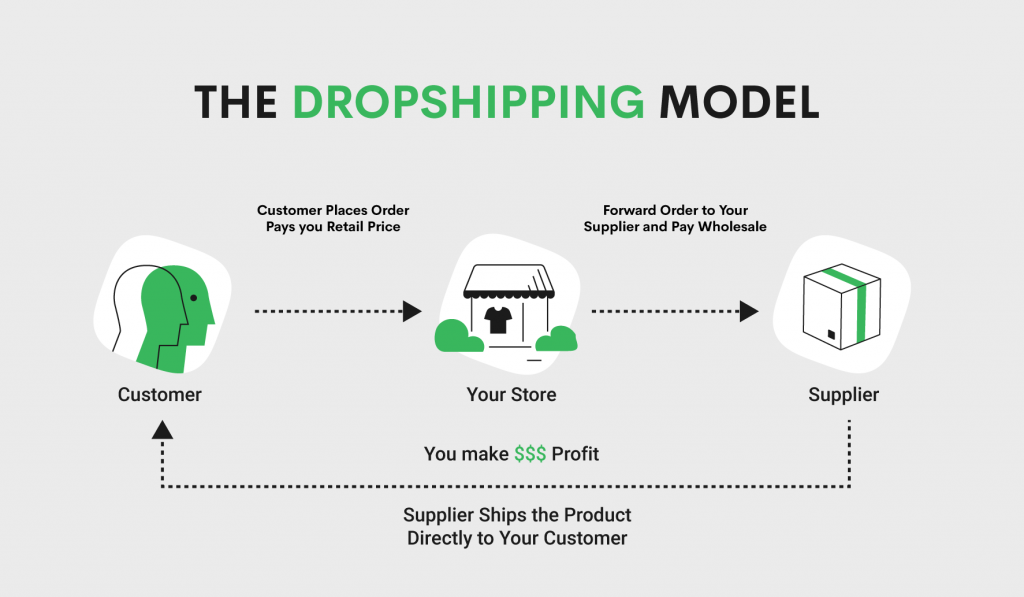
Few decisions create more confusion for new ecommerce entrepreneurs than this one.
The product has been chosen.
The store is taking shape.
The excitement is real.
Then reality arrives carrying a deceptively simple question:
Should I hold inventory or use dropshipping?
At first glance, the answer appears obvious.
Dropshipping seems safer.
No warehouse.
No bulk inventory purchases.
No stacks of unsold products gathering dust in a garage.
The appeal is undeniable.
Yet many successful ecommerce businesses eventually move away from pure dropshipping.
Why?
Because convenience and control rarely travel together.
The more deeply one examines the economics of ecommerce, the clearer the dilemma becomes.
This is not merely an operational decision.
It is a strategic one.
It influences customer experience.
Profit margins.
Growth potential.
Cash flow.
Brand perception.
And perhaps most importantly, the amount of control a business owner ultimately possesses.
Understanding the tradeoffs requires looking beyond simplistic promises and examining how each model performs under real-world conditions.
Because neither approach is universally superior.
Each solves a different problem.
The Appeal of Dropshipping Is Easy to Understand
The popularity of dropshipping did not emerge by accident.
The model addresses one of the largest barriers facing new entrepreneurs.
Risk.
Traditional retail often requires purchasing inventory before making a single sale.
Dropshipping reverses that sequence.
The sale happens first.
Inventory is sourced afterward.
For many entrepreneurs, that difference feels liberating.
Lower Startup Costs
Dropshipping reduces upfront investment requirements.
Business owners avoid:
- Large inventory purchases
- Warehouse expenses
- Inventory storage costs
This creates accessibility.
Entrepreneurs can test products without committing significant capital.
Faster Market Testing
Market uncertainty creates risk.
Dropshipping allows businesses to experiment.
Products can be added.
Products can be removed.
Demand can be evaluated quickly.
The flexibility is attractive.
Particularly during the early stages of a business.
Yet Flexibility Often Comes at a Price
Every advantage creates a corresponding limitation.
Dropshipping is no exception.
The absence of inventory ownership removes responsibility.
It also removes control.
Shipping Becomes Someone Else's Responsibility
Customers judge businesses based on outcomes.
Not operational arrangements.
When shipping delays occur, customers rarely blame suppliers.
They blame the brand they purchased from.
This creates an uncomfortable reality.
A business becomes accountable for processes it does not directly manage.
Product Quality Can Become Difficult to Control
Inventory ownership provides visibility.
Dropshipping often reduces it.
Business owners may never physically inspect products.
That can create inconsistencies.
And inconsistencies create customer service challenges.
Holding Inventory Changes the Economics
Inventory ownership introduces complexity.
It also creates advantages.
Many successful ecommerce businesses eventually discover that operational control has value.
Sometimes significant value.
Better Margins
Suppliers frequently charge higher per-unit costs for dropshipping services.
That is understandable.
They absorb fulfillment responsibilities.
Inventory ownership often reduces product costs.
Lower costs improve margins.
Improved margins create options.
Faster Shipping
Consumers increasingly expect speed.
Inventory ownership enables:
- Faster fulfillment
- Better shipping consistency
- Greater operational predictability
Customer expectations continue rising.
Speed matters.
Cash Flow Creates the Real Difference
Most discussions focus on logistics.
The deeper issue is often financial.
Cash flow behaves differently under each model.
Dropshipping Preserves Capital
This remains one of its strongest advantages.
Money stays available.
Inventory purchases remain unnecessary.
Businesses can operate with relatively modest financial commitments.
For entrepreneurs with limited capital, this matters enormously.
Inventory Requires Commitment
Inventory ownership demands confidence.
Products must be purchased before demand is fully realized.
That introduces risk.
Unsold inventory consumes capital.
Capital trapped in warehouses cannot be invested elsewhere.
Customer Experience Often Favors Inventory Ownership
Consumers rarely care how products reach them.
They care about outcomes.
Businesses should think similarly.
Consistency Builds Trust
Inventory ownership enables greater consistency across:
- Packaging
- Shipping speed
- Product quality
- Customer communication
Consistency strengthens customer confidence.
Confidence encourages repeat purchases.
Branding Opportunities Increase
Packaging matters.
Presentation matters.
Unboxing experiences matter.
Inventory ownership allows businesses to shape these moments more intentionally.
Dropshipping frequently limits customization.
Inventory Ownership Creates Operational Complexity
Control sounds attractive.
Control also creates work.
A great deal of work.
Inventory Management
Businesses must monitor:
- Stock levels
- Reordering schedules
- Demand forecasting
Mistakes become expensive.
Excess inventory creates waste.
Insufficient inventory creates missed sales.
Warehousing Considerations
Storage introduces additional responsibilities.
Businesses must consider:
- Space
- Security
- Organization
- Fulfillment processes
Operational complexity increases alongside control.
Comparing Inventory Ownership and Dropshipping
| Factor | Dropshipping | Holding Inventory |
|---|---|---|
| Startup Cost | Low | Higher |
| Inventory Risk | Minimal | Significant |
| Shipping Control | Limited | Strong |
| Product Quality Control | Limited | Strong |
| Profit Margins | Lower | Higher |
| Scalability | Flexible | Operationally intensive |
| Branding Opportunities | Limited | Extensive |
| Customer Experience Control | Moderate | High |
| Cash Flow Flexibility | Strong | Moderate |
| Operational Complexity | Lower | Higher |
Neither model wins every category.
The decision depends on business objectives.
Product Type Influences the Best Choice
Not all products behave similarly.
The ideal fulfillment model often depends on the category itself.
Commoditized Products
Generic products frequently align well with dropshipping.
Examples include:
- Simple accessories
- Commodity household goods
- Trend-based products
Differentiation may matter less.
Speed of testing matters more.
Brand-Oriented Products
Products relying on brand perception often benefit from inventory ownership.
Examples include:
- Premium goods
- Specialty products
- Repeat-purchase categories
Brand experience becomes increasingly important.
Scale Changes the Equation
Many entrepreneurs begin with one model and transition later.
This evolution occurs for understandable reasons.
Business needs change.
Early-Stage Businesses
At the beginning, uncertainty dominates.
Dropshipping reduces exposure.
Testing becomes easier.
Risk remains manageable.
Growth-Stage Businesses
As demand becomes predictable, priorities shift.
Control becomes valuable.
Margins become important.
Customer retention becomes critical.
Inventory ownership often becomes more attractive.
A Lesson I Learned Watching Two Ecommerce Businesses Grow
Several years ago, I observed two ecommerce businesses launch within months of one another.
Both sold similar products.
Both entered comparable markets.
One embraced pure dropshipping.
The other purchased inventory from the beginning.
Initially, the dropshipping business appeared superior.
Lower costs.
Less risk.
Faster experimentation.
The advantages seemed obvious.
Then growth arrived.
Shipping delays emerged.
Inventory inconsistencies appeared.
Customer complaints increased.
Meanwhile, the inventory-based business faced different challenges.
Cash flow pressure.
Storage constraints.
Forecasting mistakes.
Yet customer experiences remained remarkably consistent.
Three years later, the inventory-based business had developed stronger margins, stronger retention, and stronger brand recognition.
The lesson surprised me.
The question was never which model was easier.
The question was which model aligned with long-term objectives.
Ease and scalability are not always the same thing.
Hybrid Models Are Becoming Increasingly Common
The conversation is often framed as a binary choice.
Reality tends to be more nuanced.
Many successful businesses combine both approaches.
Test With Dropshipping
Dropshipping excels as a research tool.
Businesses can identify demand before making substantial commitments.
Testing becomes inexpensive.
Learning becomes faster.
Transition Winning Products to Inventory
Once demand becomes predictable, inventory ownership often improves economics.
This approach combines flexibility with control.
Many experienced operators prefer this progression.
Risk Looks Different Depending on Perspective
Entrepreneurs frequently discuss risk as though it exists in only one form.
It does not.
Inventory Risk
Holding inventory creates:
- Capital risk
- Forecasting risk
- Obsolescence risk
These risks are visible.
Dropshipping Risk
Dropshipping creates:
- Supplier dependency
- Margin pressure
- Customer experience risk
These risks are less visible.
That does not make them smaller.
Only different.
The Future of Ecommerce Fulfillment
Consumer expectations continue evolving.
Delivery speed matters more.
Consistency matters more.
Brand experiences matter more.
Technology continues reducing operational friction.
Third-party logistics providers continue expanding capabilities.
As these changes unfold, distinctions between fulfillment models may become less rigid.
Yet one principle remains remarkably stable.
Businesses that control more of the customer experience often possess stronger long-term advantages.
Control creates optionality.
Optionality creates resilience.
Conclusion: The Right Choice Depends on the Business You Want to Build
Many entrepreneurs approach this decision seeking a universal answer.
There isn't one.
Dropshipping excels at reducing barriers.
Inventory ownership excels at increasing control.
Dropshipping prioritizes flexibility.
Inventory ownership prioritizes predictability.
Dropshipping minimizes upfront commitment.
Inventory ownership maximizes long-term influence over customer experience.
The better question is not whether one model is superior.
The better question is what kind of business you intend to create.
If your objective is rapid experimentation with limited capital, dropshipping offers compelling advantages.
If your objective is building a differentiated brand with greater control and stronger margins, inventory ownership becomes increasingly attractive.
Because ultimately, fulfillment models are not merely logistical decisions.
They are reflections of strategy.
And strategy is rarely about choosing what is easiest.
It is about choosing what aligns most closely with the future you intend to build.
- Arts
- Business
- Computers
- Jocuri
- Health
- Home
- Kids and Teens
- Money
- News
- Personal Development
- Recreation
- Regional
- Reference
- Science
- Shopping
- Society
- Sports
- Бизнес
- Деньги
- Дом
- Досуг
- Здоровье
- Игры
- Искусство
- Источники информации
- Компьютеры
- Личное развитие
- Наука
- Новости и СМИ
- Общество
- Покупки
- Спорт
- Страны и регионы
- World

 English
 Russian
 French
 Spanish
 Portuguese
 Deutsch
 Turkish
 Dutch
Dutch
 Italiano
 Arabic
 Portuguese (Brazil)
 Greek
Greek