
How Do I Manage Inventory?
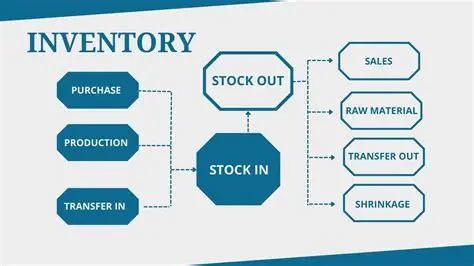
Inventory has a curious habit of exposing every weakness in a business.
Sales can hide operational inefficiencies.
Marketing can disguise forecasting mistakes.
Even strong revenue can create the illusion that everything is working.
Inventory is less forgiving.
Too much inventory ties up capital.
Too little inventory disappoints customers.
Inventory that arrives late creates delays.
Inventory that sits too long quietly erodes profitability.
It is one of the few business functions capable of influencing cash flow, customer satisfaction, operational efficiency, and growth simultaneously.
Yet inventory management is often misunderstood.
Many entrepreneurs view it as an administrative responsibility.
A warehouse task.
A logistical necessity.
In reality, inventory management is a strategic discipline.
Done poorly, it drains resources.
Done well, it creates competitive advantage.
The strongest businesses rarely have perfect inventory systems.
What they possess is visibility.
Visibility creates control.
Control creates better decisions.
And better decisions tend to compound.
Inventory Management Is Really About Balance
The objective sounds simple.
Maintain enough inventory to satisfy demand.
Avoid holding excessive inventory.
In practice, this becomes remarkably complex.
Customer demand fluctuates.
Supplier performance varies.
Markets evolve.
Unexpected events occur.
Inventory management becomes an exercise in balancing competing priorities.
Too Much Inventory Creates Hidden Costs
Excess inventory often feels safer.
Products are available.
Customers remain satisfied.
Yet inventory carries costs.
Examples include:
- Storage expenses
- Insurance costs
- Obsolescence risk
- Capital constraints
Inventory sitting on shelves represents money that cannot be used elsewhere.
Too Little Inventory Creates Different Problems
Insufficient inventory creates:
- Stockouts
- Lost sales
- Customer frustration
- Damaged reputation
Businesses often discover that recovering a lost customer costs more than retaining one.
Balance matters.
Visibility Is the Foundation of Effective Inventory Management
Businesses cannot manage inventory they cannot see.
This sounds obvious.
Surprisingly often, it is overlooked.
Know Exactly What You Have
Every inventory system should provide visibility into:
- Current stock levels
- Product locations
- Incoming inventory
- Outgoing inventory
Guesswork rarely scales successfully.
Accuracy creates confidence.
Real-Time Information Improves Decisions
Inventory data becomes more valuable when it remains current.
Delayed information often produces delayed reactions.
Delayed reactions create avoidable problems.
Visibility enables speed.
Inventory Classification Improves Efficiency
Not every product deserves equal attention.
Treating all inventory identically creates inefficiencies.
The ABC Approach
Many businesses classify inventory into categories.
Category A
High-value products.
Strong revenue contributors.
Require close monitoring.
Category B
Moderate-value products.
Important but less critical.
Require regular oversight.
Category C
Lower-value products.
Typically represent smaller financial impact.
Require less intensive management.
Prioritization improves resource allocation.
Forecasting Demand Is Both Art and Science
Demand forecasting sits at the heart of inventory management.
Businesses must make decisions about future demand using incomplete information.
That challenge never fully disappears.
Analyze Historical Data
Past performance often provides useful signals.
Businesses should examine:
- Seasonal trends
- Sales velocity
- Promotional impacts
Historical patterns reveal valuable insights.
Recognize Market Changes
Historical data has limitations.
Markets evolve.
Consumer behavior shifts.
Competitors introduce new products.
Forecasting requires adaptation.
Not blind reliance on history.
Inventory Turnover Reveals Operational Health
One of the most useful inventory metrics remains inventory turnover.
The concept is straightforward.
How quickly does inventory move?
High Turnover
Often indicates:
- Strong demand
- Efficient inventory management
- Reduced carrying costs
Although excessively high turnover can create stockout risk.
Low Turnover
May indicate:
- Weak demand
- Overordering
- Obsolete inventory
Slow-moving inventory deserves attention.
Inventory should generate value.
Not merely occupy space.
Reorder Points Prevent Costly Shortages
Inventory replenishment often determines operational stability.
Businesses need clear guidelines.
Establish Reorder Thresholds
A reorder point represents the inventory level triggering replenishment.
It should account for:
- Sales velocity
- Supplier lead times
- Demand variability
Effective reorder points reduce uncertainty.
Include Safety Stock
Forecasts are imperfect.
Reality introduces surprises.
Safety stock provides protection against unexpected disruptions.
Insurance rarely feels necessary until it becomes essential.
Inventory works similarly.
Supplier Relationships Influence Inventory Performance
Inventory management extends beyond warehouses.
Supplier performance matters.
A great deal.
Reliable Suppliers Reduce Complexity
Dependable suppliers improve:
- Planning accuracy
- Replenishment reliability
- Operational predictability
Reliability creates flexibility.
Diversification Reduces Risk
Excessive dependence on a single supplier introduces vulnerability.
Multiple sourcing options often improve resilience.
Inventory problems frequently originate outside the warehouse.
Technology Has Changed Inventory Management
Inventory management once relied heavily on manual processes.
Technology has transformed expectations.
Inventory Management Software
Modern systems provide visibility into:
- Stock levels
- Demand trends
- Purchase orders
- Forecasting data
Automation reduces administrative burden.
Integrated Systems Improve Coordination
Inventory affects:
- Sales
- Purchasing
- Finance
- Fulfillment
Integrated systems improve organizational alignment.
Information becomes more useful when it flows freely.
Comparing Core Inventory Management Practices
| Practice | Primary Objective | Business Benefit |
|---|---|---|
| Demand Forecasting | Predict future sales | Better purchasing decisions |
| Safety Stock | Reduce shortages | Improved service levels |
| Inventory Classification | Prioritize resources | Greater efficiency |
| Reorder Points | Trigger replenishment | Reduced stockout risk |
| Inventory Audits | Improve accuracy | Better visibility |
| Supplier Management | Improve reliability | Operational stability |
| Inventory Software | Enhance control | Faster decision-making |
| Turnover Analysis | Improve efficiency | Better cash flow |
The strongest inventory systems combine multiple practices.
Success rarely depends on a single technique.
Inventory Audits Remain Essential
Technology improves visibility.
Verification remains necessary.
Cycle Counting
Rather than auditing everything simultaneously, many businesses count portions of inventory regularly.
Benefits include:
- Improved accuracy
- Faster issue detection
- Reduced operational disruption
Small corrections prevent larger problems.
Full Inventory Reviews
Periodic comprehensive audits remain valuable.
Trusting systems is important.
Verifying systems is equally important.
Cash Flow and Inventory Are Closely Connected
Inventory management and financial management often overlap.
More than many businesses realize.
Inventory Consumes Capital
Every product on a shelf represents invested money.
Capital trapped in inventory cannot fund:
- Marketing
- Hiring
- Product development
Inventory decisions influence strategic flexibility.
Efficient Inventory Improves Liquidity
Faster inventory movement improves cash flow.
Improved cash flow creates opportunities.
Liquidity often determines growth capacity.
A Lesson I Learned During an Inventory Crisis
Several years ago, I worked with a business experiencing rapid growth.
Sales increased consistently.
Management celebrated.
The future appeared promising.
Then inventory problems emerged.
Forecasts underestimated demand.
Key products sold out unexpectedly.
Customers encountered delays.
Revenue opportunities disappeared.
Ironically, growth had become the source of operational strain.
The issue was not demand.
The issue was visibility.
The company lacked accurate forecasting processes and replenishment controls.
After implementing clearer inventory tracking and reorder procedures, stability returned.
That experience reinforced an important lesson.
Inventory problems rarely announce themselves dramatically.
They often grow quietly until consequences become impossible to ignore.
Dead Inventory Requires Decisive Action
Every inventory system eventually accumulates products that stop moving.
The temptation is to wait.
Hope demand returns.
Hope circumstances improve.
Hope inventory sells itself.
Hope is rarely an effective inventory strategy.
Identify Slow-Moving Products Early
Businesses should monitor:
- Aging inventory
- Declining turnover rates
- Demand shifts
Early intervention improves outcomes.
Recover Value Where Possible
Options may include:
- Discounts
- Bundles
- Liquidation
- Promotional campaigns
Some recovery is often better than indefinite storage.
Inventory Management Changes as Businesses Scale
Small businesses manage inventory differently than larger organizations.
Complexity increases alongside growth.
Early-Stage Businesses
Focus often centers on:
- Basic visibility
- Stock accuracy
- Supplier coordination
Simplicity frequently works.
Growth-Stage Businesses
Needs expand.
Forecasting becomes more sophisticated.
Systems become more integrated.
Decision-making becomes increasingly data-driven.
Inventory management evolves continuously.
The Future of Inventory Management
Technology continues advancing.
Automation improves forecasting.
Artificial intelligence enhances demand analysis.
Supply chain visibility increases.
Yet despite these innovations, the fundamentals remain remarkably consistent.
Businesses still require:
- Visibility
- Accuracy
- Forecasting
- Discipline
- Adaptability
Technology improves execution.
Principles remain surprisingly stable.
Conclusion: Inventory Management Is Really About Managing Uncertainty
Many people view inventory as products.
Boxes.
Shelves.
Warehouses.
Physical objects.
Inventory management is something larger.
It is the management of uncertainty.
Uncertainty surrounding demand.
Supply.
Timing.
Growth.
Customer behavior.
The businesses that excel at inventory management do not eliminate uncertainty.
That is impossible.
They reduce it.
Through visibility.
Through forecasting.
Through discipline.
Through systems.
Because inventory is never merely inventory.
It is capital.
It is opportunity.
It is customer experience.
It is operational health.
And the businesses that understand this reality often discover something powerful.
Inventory management is not simply about controlling products.
It is about controlling possibilities.
- Arts
- Business
- Computers
- Oyunlar
- Health
- Home
- Kids and Teens
- Money
- News
- Personal Development
- Recreation
- Regional
- Reference
- Science
- Shopping
- Society
- Sports
- Бизнес
- Деньги
- Дом
- Досуг
- Здоровье
- Игры
- Искусство
- Источники информации
- Компьютеры
- Личное развитие
- Наука
- Новости и СМИ
- Общество
- Покупки
- Спорт
- Страны и регионы
- World

 English
 Russian
 French
 Spanish
 Portuguese
 Deutsch
 Dutch
Dutch
 Italiano
 Arabic
 Romaian
 Portuguese (Brazil)
 Greek
Greek