
How Do I Optimize Product Listings?
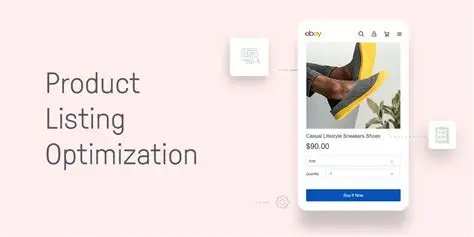
A product listing has an extraordinarily short window to succeed.
Sometimes less than a second.
A customer scrolls.
Pauses.
Glances.
Decides.
And moves on.
Or doesn't.
That moment determines more than many businesses realize.
It influences visibility.
Conversion rates.
Advertising efficiency.
Marketplace rankings.
Revenue.
Growth.
Entire product lines have succeeded because a listing communicated value clearly.
Entire product lines have failed because a listing did not.
The irony is that many businesses devote enormous energy to sourcing products, managing inventory, negotiating suppliers, and building operations while treating product listings as an afterthought.
A final administrative task.
A box to check before launching.
Yet in most digital marketplaces, the listing is the storefront.
The salesperson.
The product demonstration.
The first impression.
And often the deciding factor.
Optimizing product listings is not simply about algorithms.
Nor is it simply about customers.
It is about creating a bridge between what customers need and what products provide.
The strongest listings accomplish that elegantly.
The weakest listings leave customers uncertain.
And uncertainty is the enemy of conversion.
Product Listing Optimization Begins With Understanding Intent
Many sellers focus immediately on keywords.
Keywords matter.
Intent matters more.
Customers Rarely Search Randomly
Searches represent objectives.
Problems.
Questions.
Needs.
A customer searching for a product is trying to accomplish something.
Understanding that objective changes how listings should be constructed.
Features Are Not Always Motivations
Businesses frequently describe products from their own perspective.
Customers evaluate products from theirs.
Customers rarely purchase specifications.
They purchase outcomes.
Optimization begins when listings align with customer priorities.
Titles Determine Whether Listings Earn Attention
The title often becomes the first element customers encounter.
Its importance is difficult to overstate.
Clarity Outperforms Cleverness
Customers should immediately understand:
- What the product is
- Who it serves
- Why it matters
Confusion creates friction.
Friction reduces engagement.
Keywords Should Support Readability
Titles must remain searchable.
They must also remain human.
Overloaded titles frequently create poor experiences.
Optimization is balance.
Not excess.
Product Images Carry Enormous Influence
Customers evaluate visuals before reading descriptions.
Often before reading anything at all.
Images Create Instant Judgments
Visual presentation influences perceptions of:
- Quality
- Professionalism
- Trustworthiness
Customers draw conclusions quickly.
Demonstrate Usage
Products become easier to understand when customers see them in context.
Effective images answer questions before customers ask them.
That efficiency matters.
Multiple Angles Reduce Uncertainty
The strongest product images create confidence.
Confidence supports purchasing decisions.
Descriptions Should Sell Understanding
Descriptions frequently fail because they attempt to sell products too aggressively.
Customers need clarity before persuasion.
Explain Before Convincing
Strong descriptions answer:
- What does this product do?
- Why does it matter?
- Who benefits?
Understanding precedes action.
Focus on Benefits
Features provide information.
Benefits provide motivation.
Consider the difference.
A battery lasts twelve hours.
Useful.
A battery lasts through an entire workday.
Meaningful.
The second statement connects more directly with customer experience.
Bullet Points Improve Readability
Customers rarely read product pages linearly.
They scan.
Structure Supports Comprehension
Bullet points allow customers to absorb information quickly.
Common topics include:
- Key features
- Product dimensions
- Compatibility
- Benefits
Organization improves usability.
Prioritize Important Information
Not all information deserves equal prominence.
Critical details should appear first.
Visibility influences decision-making.
Keywords Still Matter
Search visibility depends partly on discoverability.
Keywords remain relevant.
Research Customer Language
Businesses often describe products differently than customers do.
Optimization requires understanding search behavior.
Not internal terminology.
Natural Integration Works Best
Keywords should enhance listings.
Not dominate them.
Listings exist for customers first.
Algorithms increasingly reward that reality.
Reviews Strengthen Listing Performance
Customer feedback influences both visibility and trust.
Reviews Provide Social Validation
Customers frequently seek reassurance before purchasing.
Reviews offer it.
Positive feedback reduces perceived risk.
Review Quantity Matters
Ten positive reviews create confidence.
One thousand positive reviews create something stronger.
Consensus.
Trust compounds.
Pricing Influences Listing Effectiveness
Pricing affects customer behavior.
Customer behavior affects performance.
Competitive Does Not Mean Cheapest
Many sellers confuse competitiveness with low pricing.
Customers evaluate value.
Not merely cost.
Context Matters
A premium product can outperform a lower-priced alternative when value is communicated effectively.
Optimization includes positioning.
Not simply pricing.
Inventory and Listing Optimization Are Connected
Many sellers view inventory management separately from listing optimization.
Customers do not.
Availability Influences Conversion
Products unavailable for purchase cannot generate sales.
Visibility without availability creates frustration.
Consistency Builds Momentum
Reliable inventory supports:
- Sales velocity
- Customer satisfaction
- Marketplace confidence
Optimization extends beyond the product page.
Comparing Core Product Listing Optimization Elements
| Element | Primary Objective | Impact on Performance |
|---|---|---|
| Product Title | Improve discoverability | High |
| Product Images | Increase engagement | Very High |
| Product Description | Improve understanding | High |
| Bullet Points | Improve readability | High |
| Keywords | Increase visibility | High |
| Reviews | Build trust | Very High |
| Pricing | Improve competitiveness | High |
| Inventory Availability | Support reliability | High |
| Shipping Information | Reduce uncertainty | Moderate to High |
| Product Attributes | Improve search relevance | High |
The strongest listings perform well across multiple categories simultaneously.
Optimization is cumulative.
Shipping Information Influences Decisions
Customers increasingly care about fulfillment.
Often as much as products themselves.
Delivery Expectations Shape Behavior
Long delivery windows reduce conversion.
Uncertainty creates hesitation.
Clear shipping information improves confidence.
Reliability Creates Trust
Customers value predictability.
Businesses frequently underestimate its importance.
Product Attributes Improve Discoverability
Attributes help marketplaces understand products.
That understanding influences visibility.
Complete Product Data Matters
Examples include:
- Size
- Color
- Material
- Compatibility
- Dimensions
Comprehensive information improves search matching.
Missing Information Creates Friction
Customers often abandon purchases when details remain unclear.
Optimization removes uncertainty.
Testing Creates Better Listings
Optimization is rarely completed during the first attempt.
Customer Behavior Provides Feedback
Businesses should monitor:
- Click-through rates
- Conversion rates
- Bounce rates
Data reveals opportunities.
Small Improvements Matter
Sometimes a new image improves performance.
Sometimes a revised title.
Sometimes improved copy.
Incremental gains often produce significant outcomes.
A Lesson I Learned After Rewriting a Product Listing
Several years ago, I worked with a seller struggling to gain traction.
The product itself was excellent.
Reviews supported that conclusion.
Yet performance remained disappointing.
The assumption was obvious.
The product category was too competitive.
The market was saturated.
After examining the listing, a different explanation emerged.
The title was unclear.
Images lacked context.
Descriptions focused on technical specifications rather than customer outcomes.
The product was strong.
The communication was weak.
After revising the listing, conversion rates improved substantially.
Traffic remained nearly identical.
Sales increased dramatically.
That experience reinforced an important lesson.
Listings do not merely describe products.
They shape perception.
And perception often determines performance.
Marketplace Algorithms Reward Effective Listings
Many optimization discussions focus exclusively on customer behavior.
Algorithms deserve attention as well.
Strong Listings Create Better Signals
Better listings often generate:
- More clicks
- More conversions
- Better reviews
Algorithms observe those outcomes.
Visibility frequently improves.
Customer Satisfaction Drives Rankings
Marketplace algorithms increasingly prioritize customer outcomes.
Optimization and discoverability have become closely connected.
Brand Consistency Strengthens Listings
Products rarely exist in isolation.
Customers evaluate broader signals.
Professional Presentation Matters
Consistent branding creates familiarity.
Familiarity reduces uncertainty.
Reduced uncertainty supports purchasing decisions.
Trust Extends Beyond Individual Products
Strong brands often improve performance across multiple listings.
Reputation scales.
The Future of Product Listing Optimization
Customer expectations continue rising.
Marketplaces continue evolving.
Artificial intelligence influences discovery.
Search becomes increasingly contextual.
Yet the fundamentals remain surprisingly stable.
Customers still want:
- Clarity
- Confidence
- Relevance
- Value
Technology changes.
Human decision-making changes more slowly.
Conclusion: Product Listings Are Really About Reducing Uncertainty
Most discussions about listing optimization focus on tactics.
Keywords.
Images.
Descriptions.
Reviews.
Those elements matter.
But they share a common purpose.
Reducing uncertainty.
Every customer arrives with questions.
Will this work?
Is it worth the price?
Can I trust this seller?
Is this the right choice?
Strong listings answer those questions quickly.
Weak listings leave them unresolved.
The businesses that optimize listings successfully understand that product pages are not technical documents.
They are decision-making environments.
Every image.
Every headline.
Every bullet point.
Every review.
Each element contributes to confidence.
And confidence remains one of the most valuable assets a product can possess.
Because ultimately, product listing optimization is not about pleasing algorithms.
It is about helping customers feel certain enough to act.
- Arts
- Business
- Computers
- Giochi
- Health
- Home
- Kids and Teens
- Money
- News
- Personal Development
- Recreation
- Regional
- Reference
- Science
- Shopping
- Society
- Sports
- Бизнес
- Деньги
- Дом
- Досуг
- Здоровье
- Игры
- Искусство
- Источники информации
- Компьютеры
- Личное развитие
- Наука
- Новости и СМИ
- Общество
- Покупки
- Спорт
- Страны и регионы
- World

 English
 Russian
 French
 Spanish
 Portuguese
 Deutsch
 Turkish
 Dutch
Dutch
 Arabic
 Romaian
 Portuguese (Brazil)
 Greek
Greek