
Which Marketplace Model Is More Profitable?
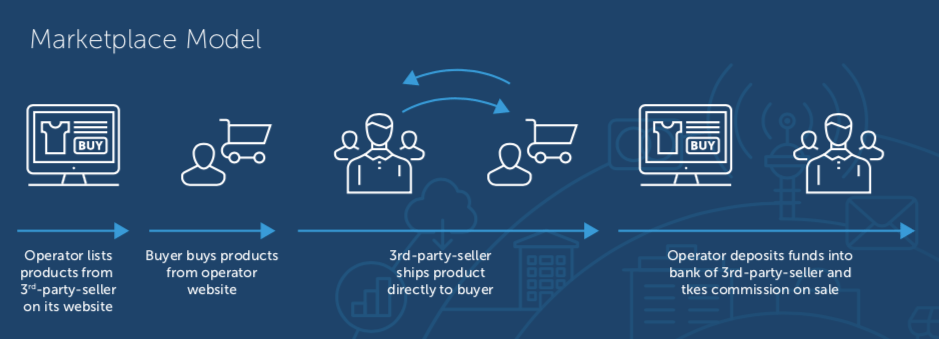
Profitability has a way of seducing entrepreneurs into asking the wrong question.
They search for the most profitable marketplace model.
They compare commission percentages.
Study transaction fees.
Analyze valuation multiples.
Examine revenue growth charts.
And somewhere along the way, they begin believing that profitability is hidden inside the model itself.
It rarely is.
A marketplace model is not a lottery ticket.
It is a framework.
A structure.
A mechanism for connecting supply and demand.
The profitability comes later.
From execution.
From liquidity.
From trust.
From scale.
Yet the question remains worth asking.
Because while no marketplace model guarantees success, some models do possess structural advantages that make profitability easier to achieve than others.
Others create extraordinary revenue potential but require immense patience.
Some generate cash flow quickly.
Others become enormously valuable only after years of investment.
The marketplace landscape is filled with these tradeoffs.
Understanding them can mean the difference between building a sustainable platform and building an expensive experiment.
First, Profitability and Revenue Are Not the Same Thing
This distinction deserves attention.
A marketplace generating millions in revenue may still struggle financially.
Another generating far less revenue may produce exceptional profits.
Revenue measures activity.
Profitability measures efficiency.
The two often move together.
Not always.
The most profitable marketplace model is not necessarily the one generating the largest gross transaction volume.
It is often the one creating the most favorable balance between:
- Revenue generation
- Customer acquisition costs
- Operational expenses
- Retention rates
- Scalability
That balance varies significantly across marketplace categories.
Understanding the Major Marketplace Models
Before comparing profitability, we need to establish the primary marketplace structures.
Product Marketplaces
These platforms facilitate the sale of physical goods.
Examples include:
- Consumer goods
- Collectibles
- Specialty products
- Secondhand merchandise
Revenue commonly comes through transaction commissions.
Service Marketplaces
These platforms connect service providers with customers.
Examples include:
- Freelance work
- Professional services
- Home services
- Consulting
Value comes from matching expertise with demand.
Rental Marketplaces
Rental marketplaces monetize temporary access rather than ownership.
Examples include:
- Equipment rentals
- Property rentals
- Vehicle rentals
These platforms frequently benefit from higher transaction values.
Lead Generation Marketplaces
Some marketplaces never process transactions directly.
Instead, they connect interested buyers with sellers.
Revenue often comes through:
- Referral fees
- Lead fees
- Advertising
Subscription-Based Marketplaces
Rather than emphasizing transaction commissions, these platforms charge participants recurring fees.
Revenue becomes more predictable.
Growth dynamics change significantly.
Comparing Marketplace Profitability Models
| Marketplace Model | Revenue Potential | Scalability | Margin Potential | Liquidity Difficulty | Long-Term Profitability |
|---|---|---|---|---|---|
| Product Marketplace | High | High | Moderate | Moderate | High |
| Service Marketplace | High | High | High | Moderate | Very High |
| Rental Marketplace | Very High | High | High | High | Very High |
| Lead Generation Marketplace | Moderate | High | Very High | Moderate | High |
| Subscription Marketplace | High | Moderate | Very High | Moderate | Very High |
| Hybrid Marketplace | Extremely High | High | High | High | Extremely High |
The table reveals an important truth.
Profitability depends on far more than transaction volume.
Why Service Marketplaces Often Generate Exceptional Margins
Many entrepreneurs focus on product marketplaces because they feel familiar.
Yet service marketplaces frequently outperform them financially.
No Physical Inventory
Inventory creates complexity.
Storage.
Shipping.
Returns.
Damage.
Service marketplaces avoid most of these challenges.
Higher Average Transaction Values
Professional services often command significant pricing.
A commission on a consulting project can exceed commissions from dozens of product transactions.
Strong Retention
Successful service relationships frequently repeat.
That repetition improves economics.
Acquisition costs become easier to recover.
These advantages make service marketplaces remarkably attractive.
Rental Marketplaces May Be the Hidden Champions
Rental marketplaces deserve more attention than they typically receive.
Asset Utilization Creates Value
Rental platforms unlock underutilized resources.
A vacant property.
Unused equipment.
Idle vehicles.
The marketplace creates value without owning the assets.
Large Transaction Sizes
Rental transactions often carry substantial monetary value.
Even modest commission percentages can generate meaningful revenue.
Repeat Usage Patterns
Many rental categories encourage recurring behavior.
This improves lifetime value significantly.
The challenge lies elsewhere.
Liquidity.
Liquidity Is the Real Profitability Engine
Many marketplace discussions focus on monetization.
Liquidity deserves equal attention.
What Is Liquidity?
Liquidity refers to the ease with which buyers and sellers successfully transact.
A marketplace with strong liquidity efficiently connects participants.
A marketplace without liquidity struggles regardless of revenue model.
Profitability Depends on Participation
The most elegant monetization strategy becomes irrelevant if transactions never occur.
Participation precedes profitability.
Always.
Why Lead Generation Marketplaces Produce Attractive Margins
Lead generation marketplaces often operate quietly.
Yet their economics can be impressive.
No Transaction Processing
Many platforms avoid payment handling entirely.
This reduces operational complexity.
Limited Customer Support Requirements
Compared with product marketplaces, support demands often decrease.
Strong Revenue Efficiency
Qualified leads carry substantial value.
Businesses frequently pay well for access to prospective customers.
Revenue can scale without proportional operational expansion.
The model lacks some of the defensibility of larger ecosystems.
But margins can be compelling.
Subscription Marketplaces Create Predictability
Predictability is often underrated.
Investors appreciate it.
Operators appreciate it even more.
Recurring Revenue
Subscription marketplaces generate consistent cash flow.
Revenue becomes easier to forecast.
Planning improves.
Risk declines.
Reduced Dependence on Transaction Volume
Transaction-based marketplaces experience fluctuations.
Subscription revenue often smooths volatility.
Strong Unit Economics
When retention remains healthy, subscription models can become exceptionally profitable.
The challenge lies in delivering ongoing value.
Recurring fees require recurring justification.
The Hybrid Marketplace Advantage
Increasingly, the most profitable platforms combine multiple revenue streams.
Commissions
Transaction fees remain foundational.
Subscriptions
Premium seller programs create recurring revenue.
Advertising
Visibility becomes monetized.
Value-Added Services
Payments.
Insurance.
Analytics.
Logistics.
Each additional service expands revenue opportunities.
This diversification often improves profitability dramatically.
A Lesson I Learned Studying Marketplace Economics
Several years ago, I worked with a founder obsessed with commission rates.
Every strategy discussion returned to the same topic.
Could the platform charge 15 percent?
20 percent?
25 percent?
The focus never changed.
Meanwhile, another marketplace in the same industry charged substantially lower fees.
Yet that platform generated far greater profits.
Why?
Liquidity.
The second platform completed significantly more transactions.
Sellers stayed.
Buyers returned.
Participation increased naturally.
The lesson was simple.
A smaller percentage of a larger ecosystem often beats a larger percentage of a smaller one.
Profitability frequently emerges from transaction density rather than fee maximization.
That lesson continues influencing how I evaluate marketplace businesses today.
Why Product Marketplaces Sometimes Struggle
Product marketplaces remain popular.
Their economics can be challenging.
Intense Competition
Product categories often become crowded.
Lower Margins
Physical goods frequently produce thinner economics than services.
Operational Complexity
Returns.
Disputes.
Shipping issues.
These factors increase costs.
Successful product marketplaces can become enormously valuable.
But profitability may require greater scale.
The Marketplace Model Investors Love Most
Investors generally favor businesses exhibiting three characteristics:
Network Effects
Participants create value for one another.
High Margins
Revenue grows faster than expenses.
Recurring Engagement
Customers return regularly.
Service marketplaces, rental marketplaces, and hybrid platforms often satisfy these criteria most effectively.
This partly explains their popularity among investors.
The Future of Marketplace Profitability
Marketplace economics continue evolving.
Artificial intelligence improves matching efficiency.
Automation reduces operational costs.
Trust systems become more sophisticated.
Yet the underlying principles remain remarkably stable.
The most profitable marketplaces generally exhibit:
- Strong liquidity
- High retention
- Multiple revenue streams
- Network effects
- Efficient customer acquisition
Technology may improve execution.
It rarely changes those fundamentals.
So Which Marketplace Model Is Actually the Most Profitable?
The answer depends on the stage of the business.
For early profitability, lead generation marketplaces often perform exceptionally well.
For predictable cash flow, subscription marketplaces offer attractive economics.
For long-term value creation, service and rental marketplaces frequently stand out.
For maximum upside, hybrid marketplaces often dominate.
If forced to identify a single category with the strongest combination of margins, scalability, and defensibility, service marketplaces deserve serious consideration.
They avoid inventory.
Generate substantial transaction values.
Benefit from recurring relationships.
And scale efficiently.
Yet even that answer comes with an important caveat.
Conclusion: The Most Profitable Marketplace Is Usually the One With the Strongest Liquidity
Entrepreneurs often search for the perfect marketplace model.
The perfect commission structure.
The perfect monetization strategy.
The perfect pricing formula.
Those elements matter.
But not as much as many assume.
Marketplace profitability rarely begins with revenue mechanics.
It begins with participation.
With buyers finding sellers.
With sellers finding buyers.
With transactions occurring repeatedly.
The marketplace models that generate extraordinary profits are not necessarily those with the highest fees.
They are the ones that become indispensable.
The ones participants rely upon.
The ones where liquidity becomes so strong that leaving feels irrational.
At that point, profitability stops being a goal.
It becomes a consequence.
And that is where the most successful marketplace businesses ultimately separate themselves from everyone else.
- Arts
- Business
- Computers
- Jocuri
- Health
- Home
- Kids and Teens
- Money
- News
- Personal Development
- Recreation
- Regional
- Reference
- Science
- Shopping
- Society
- Sports
- Бизнес
- Деньги
- Дом
- Досуг
- Здоровье
- Игры
- Искусство
- Источники информации
- Компьютеры
- Личное развитие
- Наука
- Новости и СМИ
- Общество
- Покупки
- Спорт
- Страны и регионы
- World

 English
 Russian
 French
 Spanish
 Portuguese
 Deutsch
 Turkish
 Dutch
Dutch
 Italiano
 Arabic
 Portuguese (Brazil)
 Greek
Greek