
What is creativity?
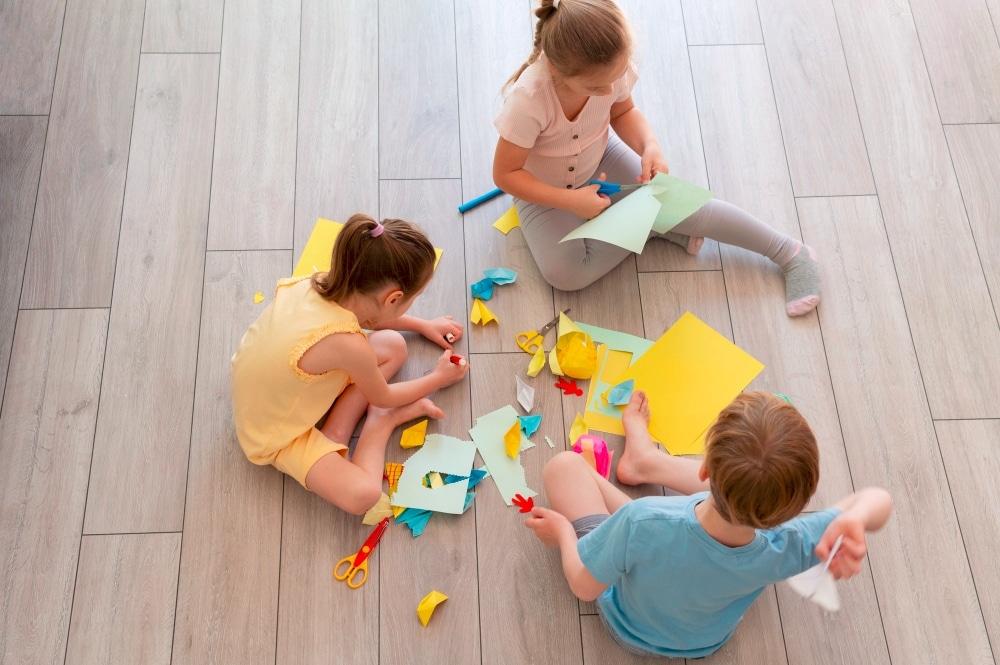
What Is Creativity?
A child picks up a stick and decides it is a sword.
Five minutes later, it becomes a fishing rod.
Then a magic wand.
Then something else entirely.
Nobody taught the child to do this.
No seminar was required.
No certification existed.
No productivity framework was consulted.
The transformation happened naturally.
One object.
Many possibilities.
Somewhere along the way, many of us lose access to this instinct.
Not entirely.
Just enough to become suspicious of it.
We begin valuing certainty over exploration.
Answers over questions.
Efficiency over curiosity.
And eventually creativity starts to feel like something reserved for other people.
Artists.
Musicians.
Writers.
Designers.
The supposedly gifted.
Yet creativity was present before any of those labels existed.
Before professions.
Before industries.
Before categories.
It existed the moment a human being looked at something familiar and imagined something else.
This is where the conversation should begin.
Not with masterpieces.
Not with innovation.
Not with genius.
With perception.
Because creativity is less about making things and more about seeing things.
The making comes later.
The Common Misunderstanding About Creativity
Ask ten people what creativity means and you'll likely receive ten different answers.
Some will describe artistic expression.
Others will mention innovation.
Some will associate creativity with problem-solving.
Others will connect it to imagination.
All are partially correct.
None are complete.
Creativity is often mistaken for a talent.
A trait.
A rare gift distributed unevenly among humanity.
The assumption is comforting for those who believe they possess it.
And discouraging for those who don't.
The truth appears more complicated.
Creativity is not a category of people.
It is a way of relating to reality.
A creative person sees possibilities where others see conclusions.
Questions where others see answers.
Open doors where others see walls.
This perspective can influence painting.
It can also influence engineering, parenting, entrepreneurship, teaching, science, leadership, and daily life.
Creativity is not confined to creative professions.
It travels anywhere possibility exists.
Creativity Is the Art of Making Connections
Most breakthroughs do not emerge from emptiness.
They emerge from combination.
An idea meets another idea.
A concept encounters an unrelated concept.
Something unexpected happens.
The connection creates value neither element possessed independently.
This pattern appears everywhere.
A musician borrows from architecture.
A scientist learns from nature.
A founder applies psychology to technology.
A writer uses personal experience to illuminate universal truths.
Creativity often resembles a bridge.
Its strength depends on what it connects.
The wider the gap, the more interesting the result.
This explains why diverse experiences frequently fuel creative work.
The mind collects fragments.
Observations.
Memories.
Conversations.
Questions.
Years later, those fragments combine into something new.
What appears spontaneous is often accumulated material revealing a hidden relationship.
Why We Think Creativity Is Mysterious
Part of creativity's reputation comes from timing.
Ideas often arrive unexpectedly.
During a walk.
In the shower.
Driving home.
Watching clouds move across the sky.
Rarely while staring aggressively at a blank page demanding brilliance.
This unpredictability creates the illusion of mystery.
And perhaps some mystery genuinely exists.
But mystery should not be confused with randomness.
The creative process frequently operates beneath conscious awareness.
Connections form quietly.
Patterns emerge invisibly.
The mind continues working when attention shifts elsewhere.
Then, suddenly, the insight appears.
The idea feels magical.
The preparation remains unseen.
Creativity isn't always creating something from nothing.
More often, it is recognizing something that was slowly forming all along.
A Comparison of Different Perspectives on Creativity
| Perspective | Definition of Creativity | Primary Focus | Example |
|---|---|---|---|
| Artistic | Expressing ideas or emotions | Original expression | Painting a mural |
| Scientific | Discovering new understanding | Exploration | Developing a theory |
| Business | Creating value through innovation | Problem-solving | Designing a new product |
| Psychological | Generating novel and useful ideas | Cognitive flexibility | Finding multiple solutions |
| Philosophical | Reimagining reality | Perception | Challenging assumptions |
| Personal Development | Expanding possibilities | Growth | Reinventing habits |
| Educational | Encouraging curiosity | Learning | Teaching through experimentation |
| Entrepreneurial | Identifying opportunities | Adaptation | Solving market needs |
The interesting observation is that creativity changes form depending on context.
Its essence remains remarkably consistent.
Novelty.
Connection.
Possibility.
Creativity Begins With Attention
Before creativity becomes expression, it begins as observation.
A detail noticed.
A pattern recognized.
A contradiction questioned.
Many people imagine creative individuals possess extraordinary imaginations.
What they often possess is extraordinary attention.
They notice things others overlook.
Small shifts.
Unusual behaviors.
Unexpected relationships.
The world constantly presents raw material.
Most of it passes unnoticed.
Attention determines what enters awareness.
Awareness determines what becomes available for creative use.
This explains why curiosity and creativity frequently appear together.
Curiosity extends attention.
Attention expands perception.
Perception generates possibilities.
The sequence matters.
The Difference Between Creativity and Talent
These concepts are often confused.
Talent refers to natural aptitude.
Creativity refers to possibility.
A talented musician may play flawlessly.
A creative musician may reinvent the song.
A talented writer may master language.
A creative writer may reshape perspective.
The two qualities often overlap.
Neither requires the other.
History contains examples of technically gifted individuals producing predictable work.
It also contains examples of imperfect technicians creating unforgettable work.
Creativity concerns exploration.
Talent concerns execution.
The most compelling work often emerges when both exist together.
My Lesson About Creativity
Years ago, I believed creativity belonged to moments of inspiration.
I waited for them.
Protected them.
Chased them.
When they arrived, work flowed effortlessly.
When they disappeared, frustration replaced momentum.
Eventually, I noticed something.
The most productive periods weren't necessarily the most inspired.
They were the most engaged.
Ideas emerged because attention was active.
Because observation continued.
Because experimentation never stopped.
One afternoon, while struggling to solve a problem, I stepped away from the desk and began walking without any destination.
The solution appeared twenty minutes later.
Not because walking magically created it.
Because the pressure disappeared long enough for connections to form.
The lesson was simple.
Creativity prefers participation over pursuit.
The harder I chased it, the farther away it seemed.
The more available I became, the more frequently it appeared.
Creativity Thrives in Questions
Many educational systems reward answers.
Creative thinking rewards questions.
Not ordinary questions.
Interesting ones.
Questions that expose assumptions.
Questions that create uncertainty.
Questions that reveal hidden possibilities.
Consider the difference:
"How do we improve this?"
versus
"What if we removed the thing everyone assumes is necessary?"
The second question alters the landscape.
The same problem remains.
The perspective changes.
Creativity often begins exactly here.
Not with answers.
With better questions.
The Relationship Between Creativity and Constraints
Freedom sounds ideal.
Unlimited options.
Infinite possibilities.
Total flexibility.
Yet many creators discover an unexpected truth.
Constraints can increase creativity.
A poet limited to a specific structure.
A filmmaker working with a small budget.
A designer restricted by available materials.
Boundaries force adaptation.
Adaptation encourages innovation.
Without constraints, possibilities become overwhelming.
With constraints, attention sharpens.
The mind searches for alternatives.
Unexpected solutions emerge.
The obstacle becomes part of the process.
Sometimes part of the final work itself.
Why Creativity Requires Courage
Creativity involves uncertainty.
This is rarely discussed enough.
Every genuinely creative act contains risk.
The possibility of failure.
Misunderstanding.
Rejection.
Embarrassment.
Predictable ideas feel safer.
They have already been validated.
Creativity asks for something different.
A willingness to enter territory without guarantees.
This courage need not be dramatic.
Often it appears quietly.
Sharing a new concept.
Trying an unconventional approach.
Questioning an accepted belief.
The action may seem small.
Its psychological significance can be enormous.
Creativity requires vulnerability because originality has no roadmap.
The Science of Creative Thinking
Researchers studying creativity frequently focus on divergent thinking.
The ability to generate multiple possibilities rather than pursuing a single solution.
Creative individuals tend to explore options broadly before narrowing focus.
They tolerate ambiguity longer.
They resist premature conclusions.
Neuroscientific research suggests that creativity involves communication between several brain networks rather than activity confined to a single region.
This matters because it challenges the myth of creativity as a mysterious gift.
Creative thinking appears trainable.
Expandable.
Developable.
The implication is encouraging.
Creativity behaves less like destiny and more like practice.
What Kills Creativity?
Creativity faces many obstacles.
Some obvious.
Some subtle.
Excessive Judgment
Ideas need room before evaluation.
Judgment arriving too early often prevents exploration.
Predictable Inputs
Identical experiences create identical thinking.
Variety fuels innovation.
Fear of Failure
Creativity requires experimentation.
Experimentation guarantees imperfection.
Constant Distraction
Attention fragmented across countless stimuli struggles to notice deeper patterns.
Obsession With Originality
Ironically, trying too hard to be original often produces artificial work.
Curiosity tends to create originality more effectively than ambition does.
Creativity Is Not Limited to Art
This misconception persists.
A person solves a workplace problem creatively.
Another redesigns a classroom experience.
Someone develops a better family routine.
Someone else invents a new business model.
Creativity exists wherever new possibilities emerge.
Art is one expression.
Not the only expression.
The broader definition matters because it expands participation.
People stop viewing creativity as a specialized skill.
They begin recognizing it as a human capacity.
Available everywhere.
Applicable everywhere.
The Role of Play
Play is frequently dismissed as unproductive.
Yet play creates conditions creativity loves.
Experimentation without pressure.
Exploration without immediate goals.
Curiosity without evaluation.
Children understand this instinctively.
Adults often forget.
Play loosens assumptions.
Encourages flexibility.
Introduces surprise.
Many creative breakthroughs begin as playful explorations that later reveal practical value.
The seriousness of a result does not require seriousness during discovery.
Creativity as a Daily Practice
Many people view creativity as an event.
A breakthrough.
A revelation.
A moment.
The more sustainable perspective views creativity as a practice.
Something cultivated daily.
Attention.
Observation.
Questioning.
Experimentation.
Connection.
These behaviors strengthen through repetition.
Creativity becomes less dependent on inspiration and more dependent on engagement.
The shift is profound.
Waiting transforms into participation.
The Strange Paradox of Creativity
The more aggressively people pursue creativity, the more elusive it often becomes.
This seems contradictory.
Yet it appears repeatedly.
Creativity resists force.
It responds to openness.
Curiosity.
Presence.
The goal is not manufacturing ideas.
The goal is becoming receptive to them.
Like tuning a radio.
The signal already exists.
The adjustment happens on our side.
Conclusion: Creativity Is Not Something You Have
Many people ask whether they are creative.
The question contains a hidden assumption.
It suggests creativity is a possession.
Something owned.
Or lacking.
Perhaps a more useful perspective exists.
Creativity is not something you have.
It is something you practice.
A way of seeing.
A way of questioning.
A way of engaging with reality.
It appears when assumptions loosen.
When attention deepens.
When curiosity survives long enough to discover something unexpected.
The child holding a stick understands this instinctively.
The stick becomes many things because possibility remains alive.
Perhaps creativity is not about acquiring something new.
Perhaps it is about recovering something old.
A forgotten willingness to imagine alternatives.
To notice hidden connections.
To remain curious in a world that constantly encourages conclusions.
Because creativity is not reserved for artists.
It is not confined to studios, stages, or galleries.
It exists wherever someone looks at what is and wonders what else might be possible.
And that question—simple, open, endlessly generative—may be the most creative act of all.
- Arts
- Business
- Computers
- الألعاب
- Health
- الرئيسية
- Kids and Teens
- مال
- News
- Personal Development
- Recreation
- Regional
- Reference
- Science
- Shopping
- Society
- Sports
- Бизнес
- Деньги
- Дом
- Досуг
- Здоровье
- Игры
- Искусство
- Источники информации
- Компьютеры
- Личное развитие
- Наука
- Новости и СМИ
- Общество
- Покупки
- Спорт
- Страны и регионы
- World

 English
 Russian
 French
 Spanish
 Portuguese
 Deutsch
 Turkish
 Dutch
Dutch
 Italiano
 Romaian
 Portuguese (Brazil)
 Greek
Greek