
What slows economic growth?
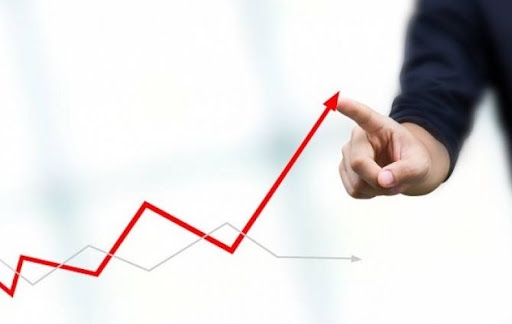
What Slows Economic Growth?
Economic growth has always occupied a peculiar place in public debate. It is celebrated when it arrives, lamented when it disappears, and frequently misunderstood in both cases. Politicians promise it. Investors anticipate it. Citizens depend on it, often without realizing how deeply their living standards, opportunities, and expectations are tied to it.
Yet the more interesting question is not what creates growth. It is what slows it.
The distinction matters. Economies rarely collapse because they suddenly forget how to produce goods, invent technologies, or educate workers. More often, they stumble because obstacles accumulate beneath the surface. Institutions become less effective. Innovation loses momentum. Resources are misallocated. Political incentives shift. What once propelled prosperity gradually transforms into a drag on it.
I learned this lesson years ago while visiting industrial regions that had once been celebrated as engines of development. The factories were still standing. The workers remained skilled. The infrastructure had not vanished. Yet growth had slowed dramatically. The missing ingredient was not capital or labor. It was dynamism. The rules, incentives, and institutions that once encouraged adaptation had become barriers to change. That experience reinforced a simple but powerful insight: economic growth rarely slows because societies run out of resources. It slows because they fail to use their resources effectively.
Understanding why this happens requires looking beyond short-term fluctuations and examining the deeper forces that shape prosperity over decades.
Growth Is Ultimately About Productivity
At its core, long-run economic growth reflects improvements in productivity—the ability of workers, firms, and societies to produce more value from the same resources.
Countries can temporarily boost output by increasing labor participation, expanding investment, or exploiting natural resources. But these sources eventually encounter limits. Sustainable growth depends on productivity gains.
This observation immediately shifts the conversation. If productivity is the engine of growth, then anything that undermines innovation, learning, investment, or efficient resource allocation becomes a potential brake on economic progress.
The challenge is that these obstacles often emerge gradually and invisibly.
Weak Institutions: The Silent Growth Killer
Among the many explanations for slow growth, institutional weakness stands out as one of the most important.
Institutions are the formal and informal rules that shape economic behavior. They determine who can start businesses, enforce contracts, protect property rights, and participate in markets.
When institutions function well, individuals have incentives to invest, innovate, and take risks. When institutions fail, uncertainty increases and economic activity suffers.
Consider a business owner deciding whether to build a new factory. If contracts cannot be enforced, regulations change unpredictably, or political connections matter more than competitiveness, investment becomes far less attractive.
The result is not necessarily immediate collapse. Instead, growth gradually slows as entrepreneurs become cautious and resources flow toward politically protected activities rather than productive ones.
This is why some countries remain trapped in stagnation despite abundant natural resources, educated populations, or favorable geography. The problem is not what they possess. It is how their institutions channel—or fail to channel—those assets.
The Innovation Slowdown Problem
Economic history is, in many respects, the history of innovation.
The steam engine transformed transportation. Electricity revolutionized manufacturing. Computers reshaped information processing. Digital networks altered communication and commerce.
Each wave generated enormous productivity gains.
But innovation is neither automatic nor guaranteed.
As economies mature, sustaining rapid innovation becomes increasingly difficult. New discoveries often require larger research investments, more specialized expertise, and longer development timelines.
Economists sometimes describe this as the “burden of knowledge.” Researchers must master ever-expanding bodies of information before reaching the frontier of discovery.
The implications are significant. If breakthrough innovations become harder to generate, productivity growth may slow even when research spending increases.
This does not mean innovation stops. Rather, the pace of transformative change may decline relative to earlier periods.
The question then becomes whether emerging technologies—particularly artificial intelligence, biotechnology, and advanced energy systems—can overcome this challenge and launch a new era of productivity growth.
Human Capital Constraints
Growth depends not only on machines and technologies but also on people.
A society's capacity to generate and adopt new ideas relies heavily on education, skills, and health.
When educational systems fail to adapt, economic growth suffers.
This problem appears in both developing and advanced economies. In some countries, millions lack access to quality education. In others, schools produce graduates whose skills no longer match labor market demands.
The mismatch creates a paradox. Employers struggle to find qualified workers while workers struggle to find high-quality jobs.
Human capital constraints also extend beyond education.
Poor health outcomes reduce productivity. Aging populations shrink workforces. Barriers to labor mobility prevent talent from moving where it is most productive.
Over time, these factors can significantly reduce growth potential.
When Markets Stop Allocating Resources Efficiently
One of the central strengths of markets is their ability to direct resources toward productive activities.
But this process does not always function smoothly.
In some economies, dominant firms suppress competition. In others, financial systems channel capital toward politically favored industries rather than innovative enterprises.
The consequences are profound.
When productive young firms cannot access financing while inefficient incumbents receive protection, economic dynamism declines.
Joseph Schumpeter famously described capitalism as a process of “creative destruction.” New firms emerge, old firms disappear, and resources shift toward more productive uses.
When creative destruction weakens, growth often weakens as well.
The economy continues operating, but its capacity for renewal diminishes.
Demographics and the Growth Equation
Demographic change represents another important source of slower growth.
Throughout much of modern history, expanding populations contributed to economic expansion. More workers meant greater production capacity and larger markets.
Today, many advanced economies face the opposite challenge.
Fertility rates have fallen. Populations are aging. Labor force growth has slowed or turned negative.
An aging society can still prosper, but demographic headwinds make growth more difficult.
Fewer workers must support larger retired populations. Public finances become strained. Consumption patterns shift. Innovation may slow as workforce expansion weakens.
Demographics are not destiny, but they shape the environment within which economic growth occurs.
The Politics of Stagnation
Economic growth is often presented as a technical challenge. In reality, it is deeply political.
Policies that promote growth frequently create winners and losers.
Competition threatens incumbents. Technological change disrupts existing industries. Regulatory reform challenges established interests.
As a result, powerful groups may resist changes that would increase overall prosperity.
This dynamic creates a troubling feedback loop.
Slow growth intensifies competition over existing resources. Political conflicts become more severe. Policymakers focus on redistribution rather than expansion. Reform becomes increasingly difficult.
The result is a political equilibrium that perpetuates stagnation.
History offers numerous examples of societies that possessed the resources necessary for growth but lacked the political conditions required to achieve it.
Comparing the Major Sources of Growth Slowdown
| Growth Obstacle | Primary Mechanism | Short-Term Impact | Long-Term Impact |
|---|---|---|---|
| Weak Institutions | Reduced investment and entrepreneurship | Moderate | Severe |
| Innovation Slowdown | Lower productivity gains | Limited | Severe |
| Poor Education and Skills | Reduced workforce quality | Moderate | Severe |
| Market Concentration | Less competition and dynamism | Moderate | High |
| Aging Populations | Smaller labor force growth | Gradual | High |
| Political Capture | Resource misallocation | Moderate | Severe |
| Financial Inefficiency | Capital flows to low-productivity sectors | Moderate | High |
| Regulatory Complexity | Increased barriers to entry | Moderate | High |
What is striking about this table is that most growth obstacles do not operate through sudden shocks. Their effects accumulate gradually. By the time stagnation becomes visible in national statistics, the underlying causes may have been developing for years or even decades.
Why Natural Resources Are Often Overrated
Many discussions of economic growth place excessive emphasis on natural resources.
Oil, minerals, and fertile land can certainly increase national income. Yet resource abundance alone rarely guarantees sustained prosperity.
In fact, some resource-rich countries experience slower long-run growth than resource-poor economies.
The reason is straightforward.
Resources generate wealth, but institutions determine how that wealth is used.
If resource revenues reduce incentives for innovation, weaken accountability, or encourage rent-seeking behavior, growth may suffer despite substantial national income.
Meanwhile, countries with few natural resources often develop stronger institutions, invest heavily in human capital, and become innovation leaders.
The contrast highlights a broader lesson: productive capabilities matter more than inherited assets.
The Emerging Challenge of Technological Inequality
A newer concern involves unequal access to advanced technologies.
Artificial intelligence, automation, and digital platforms have enormous potential to increase productivity.
Yet these gains may not spread evenly.
Large firms often possess the data, capital, and expertise required to exploit new technologies effectively. Smaller firms may struggle to keep pace.
If technological benefits remain concentrated, overall productivity growth could disappoint despite impressive advances at the frontier.
The challenge is not merely inventing new technologies. It is ensuring that they diffuse throughout the economy.
Historically, the largest productivity gains occurred when innovations became broadly accessible rather than remaining confined to a handful of organizations.
The Real Lesson About Growth
The most important lesson is also the least comforting.
Economic growth is not self-sustaining.
Prosperity does not emerge automatically from markets, technology, or globalization. It depends on a complex interaction of institutions, incentives, innovation, education, and politics.
When growth slows, the causes are rarely singular. More often, multiple frictions reinforce one another. Weak institutions discourage innovation. Slower innovation reduces productivity. Lower productivity intensifies political conflict. Political conflict obstructs reform.
The cycle becomes self-reinforcing.
That is why societies must continuously renew the foundations of growth rather than assume those foundations will endure indefinitely.
Conclusion: The Greatest Threat Is Complacency
The conventional image of economic decline is dramatic—a financial crisis, a recession, a market crash.
But history suggests a different danger.
The greatest threat to long-run prosperity is often complacency.
Growth slows not because societies suddenly lose their talent, resources, or ambition. It slows because institutions become rigid. Incentives weaken. Competition fades. Innovation loses momentum. Political systems grow more responsive to incumbents than to future opportunities.
The tragedy is that these changes frequently occur while prosperity still appears secure.
Economic growth, ultimately, is less like a machine that runs automatically and more like a garden that requires constant cultivation. The conditions that produce prosperity today may not produce it tomorrow.
The societies that thrive are not necessarily those with the most resources or the most advanced technologies. They are the ones that remain capable of adaptation—willing to challenge entrenched interests, embrace innovation, invest in people, and reform institutions before stagnation becomes visible.
That is the uncomfortable truth about economic growth: what slows it is rarely scarcity. More often, it is the gradual erosion of the mechanisms that allow societies to transform opportunity into progress.
- Arts
- Business
- Computers
- Giochi
- Health
- Home
- Kids and Teens
- Money
- News
- Personal Development
- Recreation
- Regional
- Reference
- Science
- Shopping
- Society
- Sports
- Бизнес
- Деньги
- Дом
- Досуг
- Здоровье
- Игры
- Искусство
- Источники информации
- Компьютеры
- Личное развитие
- Наука
- Новости и СМИ
- Общество
- Покупки
- Спорт
- Страны и регионы
- World

 English
 Russian
 French
 Spanish
 Portuguese
 Deutsch
 Turkish
 Dutch
Dutch
 Arabic
 Romaian
 Portuguese (Brazil)
 Greek
Greek