
Dropshipping and Fulfillment: The Invisible System That Determines Whether Your Business Thrives or Stalls
The most important part of an ecommerce business is often the part customers never see.
They see the product photo. They compare prices. They read reviews. They click “Buy Now.”
What they don’t see is the operational machinery humming behind the curtain—the network of suppliers, warehouses, inventory systems, shipping partners, and customer service processes that determine whether a purchase becomes a loyal customer or a refund request.
That hidden machinery is fulfillment.
And for entrepreneurs entering ecommerce, one of the earliest strategic decisions is whether to manage fulfillment directly or embrace dropshipping.
At first glance, dropshipping appears irresistibly simple. No warehouse. No inventory. No stacks of boxes in a garage. A customer places an order, and a supplier ships the product.
The appeal is obvious.
Yet the deeper question is not whether dropshipping is easier. The deeper question is whether dropshipping aligns with the business you are trying to build.
Because fulfillment is not merely a logistics decision.
It is a membership decision. It shapes trust, expectations, customer experience, and ultimately retention.
The Promise of Dropshipping
Dropshipping emerged as a solution to a classic entrepreneurial dilemma: how do you sell products before you have the capital to buy inventory?
The model is straightforward.
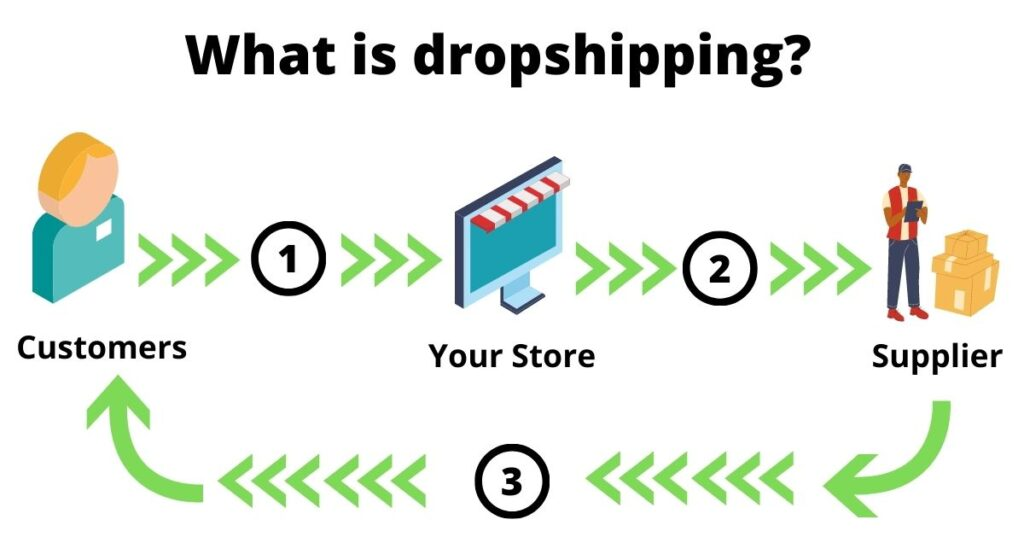
A retailer markets products online. When a customer purchases an item, the order is forwarded to a third-party supplier. The supplier packages and ships the product directly to the customer.
The retailer never physically handles inventory.
For many first-time founders, this dramatically lowers the barrier to entry.
Instead of investing thousands of dollars in stock, entrepreneurs can focus on testing demand.
That flexibility creates an important advantage: experimentation.
A business can introduce dozens—or hundreds—of products without committing capital to inventory that may never sell.
For a startup operating under uncertainty, that matters.
A lot.
Why Entrepreneurs Are Drawn to Dropshipping
Several factors explain the model's enduring popularity:
- Minimal upfront investment
- Lower operational complexity
- Reduced inventory risk
- Faster product testing
- Geographic flexibility
- Easier market entry
In many ways, dropshipping transforms fixed costs into variable costs.
You pay when sales occur.
That can be extraordinarily attractive during the earliest stages of growth.
But there is a tradeoff.
And it is a significant one.
The Control Problem
Every business creates value by controlling something important.
Some companies control product innovation.
Others control customer relationships.
Others control distribution.
Dropshipping often requires surrendering control over fulfillment.
That means another company determines:
- Shipping speed
- Packaging quality
- Inventory accuracy
- Damage rates
- Delivery reliability
The customer, however, does not distinguish between your brand and your supplier.
When a package arrives late, customers blame you.
When inventory data is inaccurate, customers blame you.
When a shipment disappears, customers blame you.
The supplier may have caused the problem, but your reputation absorbs the impact.
This is where many dropshipping businesses encounter friction.
The operational simplicity that looked attractive at launch becomes a customer experience challenge at scale.
Fulfillment as a Strategic Asset
Traditional fulfillment works differently.
A retailer purchases inventory, stores products in a warehouse or fulfillment center, and ships orders directly.
This approach requires more capital and more operational discipline.
Yet it offers something powerful:
Control.
Control over inventory.
Control over packaging.
Control over delivery standards.
Control over the customer experience.
The difference may seem subtle, but customers notice.
A branded package arrives on time.
The unboxing experience feels intentional.
Returns are processed efficiently.
Communication is proactive.
Trust accumulates.
And trust is often the most valuable asset an ecommerce company owns.
Comparing Dropshipping and Traditional Fulfillment
The decision becomes clearer when viewed through a strategic lens.
| Factor | Dropshipping | Traditional Fulfillment |
|---|---|---|
| Startup Cost | Low | Moderate to High |
| Inventory Ownership | Supplier | Merchant |
| Shipping Control | Limited | High |
| Profit Margins | Typically Lower | Typically Higher |
| Product Testing | Excellent | Moderate |
| Branding Opportunities | Limited | Extensive |
| Inventory Risk | Low | Higher |
| Customer Experience Control | Limited | Strong |
| Operational Complexity | Lower Initially | Higher Initially |
| Long-Term Scalability | Variable | Often Stronger |
Notice that neither column wins across every category.
That is precisely the point.
The choice depends on the business model.
A Lesson I Learned About Fulfillment
Several years ago, I worked with an emerging consumer brand that had built a passionate audience remarkably quickly.
Their marketing was excellent.
Customer acquisition costs were healthy.
Sales were accelerating month after month.
Everything appeared to be working.
Then the holiday season arrived.
Order volume doubled.
Then tripled.
Then surged beyond forecasts.
The company relied heavily on a supplier network that promised rapid fulfillment.
Unfortunately, those promises did not survive peak demand.
Inventory counts became unreliable.
Shipping estimates slipped.
Customer inquiries multiplied.
Support tickets exploded.
What struck me most was not the operational failure itself.
It was the emotional response from customers.
People felt betrayed.
Not inconvenienced.
Betrayed.
They had trusted the brand.
The lesson was unforgettable: customers experience fulfillment as part of the product.
A delayed shipment is not merely a logistics issue.
It is a trust issue.
Ever since, I have viewed fulfillment less as a back-office function and more as a core component of customer experience.
When Dropshipping Makes Sense
Despite its limitations, dropshipping remains an effective model in specific circumstances.
Market Validation
Entrepreneurs launching a new concept often face uncertainty.
Will customers buy?
Which products resonate?
What price points work?
Dropshipping allows rapid experimentation before significant investment.
Instead of guessing, founders can gather real-world demand signals.
Niche Product Discovery
Certain businesses thrive by curating specialized products for passionate communities.
In these cases, breadth may matter more than fulfillment perfection.
The ability to offer a large catalog can outweigh operational drawbacks.
Limited Capital Environments
Not every founder has access to substantial startup funding.
Dropshipping enables participation in ecommerce without large inventory commitments.
That accessibility has fueled countless entrepreneurial journeys.
When Traditional Fulfillment Wins
As businesses mature, priorities often change.
The focus shifts from experimentation to optimization.
From acquisition to retention.
From transactions to relationships.
That shift frequently favors traditional fulfillment.
Brand Differentiation
When products become commoditized, experience becomes the differentiator.
Packaging, speed, communication, and consistency all contribute to perceived value.
Traditional fulfillment provides greater influence over those elements.
Higher Margins
Owning inventory generally allows stronger purchasing economics.
Bulk purchasing often reduces per-unit costs.
Those savings can improve profitability or fund additional customer acquisition efforts.
Customer Loyalty
Membership businesses understand an important truth:
Customers stay when expectations are consistently met.
Reliable fulfillment supports that consistency.
Customers remember predictability.
They remember confidence.
And confidence drives repeat purchases.
The Rise of Hybrid Models
Increasingly, businesses are rejecting the notion that fulfillment must be an either-or decision.
Instead, they combine approaches.
A company might use dropshipping to test products while stocking proven winners.
Another might hold inventory domestically while relying on suppliers for experimental product categories.
Others leverage third-party logistics providers (3PLs), gaining operational efficiency without building warehouses themselves.
This hybrid approach reflects a broader trend.
Businesses are becoming more sophisticated about balancing flexibility and control.
Rather than committing entirely to one model, they design fulfillment systems around strategic priorities.
Questions Every Founder Should Ask
Before selecting a fulfillment strategy, consider these questions:
What Are Customers Actually Buying?
Are customers purchasing a commodity?
Or are they purchasing an experience?
The answer matters.
Experience-oriented brands typically require more fulfillment control.
How Important Is Speed?
Consumer expectations continue to evolve.
Delivery windows once measured in weeks are now measured in days.
Sometimes hours.
Businesses competing on convenience must account for those expectations.
What Happens If Demand Doubles?
Growth exposes weaknesses.
A fulfillment model that works at 100 orders per month may collapse at 10,000.
Scalability should be evaluated before it becomes urgent.
Where Does Trust Come From?
Trust is created through consistency.
The more your reputation depends on consistency, the more carefully fulfillment should be managed.
The Future of Fulfillment
The future is unlikely to belong exclusively to either dropshipping or traditional inventory models.
Instead, technology is making fulfillment increasingly adaptive.
Artificial intelligence improves demand forecasting.
Warehouse automation accelerates processing.
Distributed fulfillment networks shorten delivery distances.
Real-time inventory visibility reduces surprises.
As these capabilities expand, the distinction between fulfillment models may become less important than the customer outcomes they produce.
Customers rarely ask where inventory is stored.
They care whether promises are kept.
That is the standard.
And it is becoming increasingly unforgiving.
Conclusion: The Operational Choice That Reveals Your Strategy
Dropshipping is often presented as a fulfillment method.
It is more accurately understood as a strategic tradeoff.
You gain flexibility.
You reduce upfront risk.
You accelerate experimentation.
In exchange, you relinquish a degree of control over the very experience customers associate with your brand.
Traditional fulfillment asks for greater investment and operational rigor.
Yet it offers something increasingly valuable in a crowded marketplace: ownership of the customer experience.
The provocative question is not whether dropshipping works.
Clearly, it does.
The more revealing question is this:
If fulfillment is the moment when a customer discovers whether your promises are real, how much of that moment are you willing to place in someone else’s hands?
- Arts
- Business
- Computers
- Jocuri
- Health
- Home
- Kids and Teens
- Money
- News
- Personal Development
- Recreation
- Regional
- Reference
- Science
- Shopping
- Society
- Sports
- Бизнес
- Деньги
- Дом
- Досуг
- Здоровье
- Игры
- Искусство
- Источники информации
- Компьютеры
- Личное развитие
- Наука
- Новости и СМИ
- Общество
- Покупки
- Спорт
- Страны и регионы
- World

 English
 Russian
 French
 Spanish
 Portuguese
 Deutsch
 Turkish
 Dutch
Dutch
 Italiano
 Arabic
 Portuguese (Brazil)
 Greek
Greek