
How does imagination work?
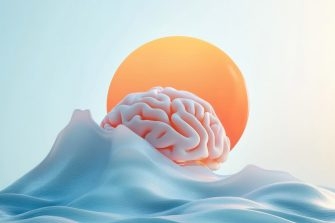
How Does Imagination Work?
There is a strange moment that happens before every creation.
A songwriter hears a melody that doesn't exist yet.
An architect walks through a building that has not been built.
A scientist sees a possibility hidden beneath accepted assumptions.
A child transforms a cardboard box into a spaceship.
Nothing has changed in the outside world.
The room is the same.
The materials are the same.
Reality remains untouched.
Yet something new has appeared.
Not physically.
Mentally.
The imagination has entered the conversation.
Most people treat imagination as a decorative feature of the mind. A pleasant accessory. Useful for artists, dreamers, and children playing in backyards.
Neuroscience tells a different story.
Imagination is not a luxury.
It is one of the brain's most essential functions.
Without imagination, humans could not plan.
Could not innovate.
Could not empathize.
Could not invent tools, create civilizations, or envision futures.
Even memory depends on some of the same systems.
The ability to imagine may be less about escaping reality and more about understanding it.
Which raises a fascinating question:
How does imagination actually work?
What is happening inside the brain when we picture something that isn't present?
The answer reveals something profound about the human mind.
Imagination is not separate from reality.
It is built from it.
Imagination Is the Brain's Prediction Engine
Many people assume imagination begins with fantasy.
Neuroscientists increasingly believe it begins with prediction.
The brain is constantly forecasting what comes next.
Every second.
Every conversation.
Every movement.
Before your eyes finish processing information, the brain is already generating expectations.
What will happen?
What might happen?
What could happen?
Imagination emerges from this same machinery.
The brain takes its predictive abilities and removes immediate constraints.
Instead of predicting the next second, it predicts alternate possibilities.
Future scenarios.
Hypothetical worlds.
Unseen outcomes.
A musician imagines a song before hearing it.
An entrepreneur imagines a company before launching it.
A traveler imagines a destination before arriving.
The brain becomes a simulator.
A rehearsal space.
A laboratory for possibilities.
This may be imagination's greatest purpose.
It allows us to test reality before reality arrives.
The Brain Doesn't Create From Nothing
One of the biggest misconceptions about imagination is that it produces entirely new material.
It doesn't.
At least not in the way most people think.
The brain is a collector.
It gathers experiences.
Images.
Conversations.
Textures.
Emotions.
Stories.
Memories.
Then it recombines them.
A dragon, for example, feels original.
Yet dragons are assembled from existing pieces.
Reptiles.
Birds.
Predators.
Fire.
Power.
Flight.
The imagination rearranges familiar elements into unfamiliar forms.
Even the most revolutionary ideas often contain fragments of previous experiences.
The brain is less like a magician pulling rabbits from empty hats.
It is more like a master editor rearranging footage into a new film.
Originality frequently comes from recombination.
Not creation from emptiness.
The Default Mode Network: Imagination's Home Base
When researchers study imagination, one network appears repeatedly.
The Default Mode Network.
This collection of brain regions becomes active when attention turns inward.
It includes:
-
Medial prefrontal cortex
-
Posterior cingulate cortex
-
Precuneus
-
Angular gyrus
For years, scientists mistakenly believed this network represented idleness.
The name itself reflects that misunderstanding.
The brain seemed to activate these regions when people weren't focused on tasks.
Researchers eventually realized the opposite was true.
The brain was working intensely.
Just internally.
When you daydream.
When you imagine future conversations.
When you mentally rehearse scenarios.
When you invent fictional worlds.
The Default Mode Network becomes highly engaged.
This network allows the brain to explore possibilities beyond immediate reality.
Without it, imagination would struggle to exist.
Memory: The Raw Material of Imagination
Imagine trying to write a novel without words.
Or compose music without sound.
Imagination faces a similar challenge.
It requires ingredients.
Memory supplies them.
The hippocampus, one of the brain's most important memory structures, plays a crucial role in imaginative thinking.
Interestingly, many of the same regions involved in remembering the past help imagine the future.
This discovery surprised researchers.
Remembering and imagining appear remarkably similar from the brain's perspective.
Both involve constructing mental scenes.
Both require assembling details.
Both depend on stored experiences.
When imagining a future vacation, the brain might borrow:
-
The ocean from one memory
-
A restaurant from another
-
A conversation from a third
-
An emotion from a fourth
The resulting scene feels new.
Yet it contains recycled pieces.
The imagination is often memory wearing a new costume.
Why Children Seem More Imaginative
Spend ten minutes with a young child.
The answer becomes obvious.
Children effortlessly transform ordinary objects into extraordinary worlds.
A stick becomes a sword.
A blanket becomes a fortress.
A living room becomes an unexplored continent.
Adults often lose access to this fluidity.
Why?
Partly because the adult brain becomes increasingly efficient.
Efficiency is useful.
It helps us navigate life.
Recognize patterns.
Make decisions quickly.
But efficiency has a cost.
The brain begins favoring familiar interpretations.
The child sees possibilities.
The adult sees categories.
A chair becomes "chair."
The child still sees a mountain, a spaceship, a castle, or a race car.
Creativity often involves temporarily reclaiming this flexibility.
Not becoming childish.
Becoming less constrained.
The Relationship Between Imagination and Creativity
People often use these words interchangeably.
They are related.
Not identical.
Imagination generates possibilities.
Creativity transforms possibilities into reality.
Imagination is seeing the sculpture inside the stone.
Creativity is carving it.
Imagination is hearing the melody.
Creativity is recording it.
Imagination is envisioning the bridge.
Creativity is building it.
One produces potential.
The other produces output.
Both depend on each other.
Without imagination, creativity lacks direction.
Without creativity, imagination remains invisible.
What Happens During Daydreaming?
Daydreaming has suffered from a public relations problem.
It is often portrayed as laziness.
Distraction.
Lack of discipline.
Research paints a more nuanced picture.
When attention relaxes, the brain begins exploring associations.
Ideas connect.
Memories surface.
Patterns emerge.
Problems continue processing in the background.
Some of history's most influential insights arrived during moments of apparent inactivity.
Walking.
Bathing.
Traveling.
Staring out windows.
These activities create mental space.
The brain shifts away from immediate demands and begins exploring alternatives.
Daydreaming isn't always productive.
But imagination frequently flourishes there.
A Lesson I Learned About Imagination
Years ago, I became obsessed with solving a difficult creative problem.
For days I sat at a desk attempting to force clarity.
The harder I pushed, the narrower my thinking became.
Eventually I gave up.
Not permanently.
Just for the afternoon.
I went outside and wandered without purpose.
No notes.
No objectives.
No deadlines.
Somewhere during that walk, the answer appeared.
Not fully formed.
Not dramatic.
Just enough.
A thread worth following.
The experience taught me something I continue to encounter repeatedly.
Imagination dislikes confinement.
It responds to space.
When the mind relaxes, connections often emerge that effort alone cannot produce.
This doesn't mean discipline is unnecessary.
It means imagination and control require balance.
Too much structure suffocates possibility.
Too little structure prevents execution.
The art lies between them.
How Imagination Changes the Brain
Imagination isn't merely entertainment.
It produces measurable neurological effects.
Athletes have used visualization for decades because mentally rehearsing actions activates some of the same neural pathways involved in performing them.
Musicians often imagine performances.
Public speakers rehearse presentations mentally.
Surgeons visualize procedures.
The brain partially responds as though the experience were occurring.
Not completely.
But enough to matter.
This phenomenon helps explain why visualization can improve performance.
Imagination acts as practice.
A simulation.
A training ground.
The mind prepares before reality arrives.
Brain Systems Involved in Imagination
The following table highlights major brain structures and their roles in imaginative thinking.
| Brain Region | Primary Function | Contribution to Imagination |
|---|---|---|
| Default Mode Network | Internal thought | Generates scenarios and mental simulations |
| Hippocampus | Memory processing | Supplies experiences for recombination |
| Prefrontal Cortex | Planning and decision-making | Organizes and evaluates imagined ideas |
| Temporal Lobes | Knowledge storage | Provides concepts and associations |
| Visual Cortex | Visual processing | Creates mental imagery |
| Parietal Cortex | Spatial awareness | Constructs imagined environments |
| Anterior Cingulate Cortex | Cognitive flexibility | Supports novel thinking and perspective shifts |
| Salience Network | Attention management | Identifies meaningful imaginative insights |
The pattern becomes obvious.
No single structure owns imagination.
The brain collaborates.
Different regions contribute different strengths.
Together they create experiences that feel seamless.
Why Some People Have Vivid Imaginations
Not everyone imagines in the same way.
Some individuals can generate remarkably detailed mental imagery.
Others experience imagination more conceptually.
Researchers have discovered enormous variation among people.
At one end exists hyperphantasia.
Individuals with extremely vivid mental imagery.
At the other end exists aphantasia.
People who struggle or cannot generate visual mental images.
Neither condition determines intelligence or creativity.
Both demonstrate how flexible imagination can be.
The mind possesses multiple routes toward original thought.
Visual imagery is only one pathway.
Some people imagine through language.
Others through emotion.
Others through abstract concepts.
The destination remains similar.
The journey differs.
Imagination and Empathy
One of imagination's most overlooked functions involves understanding other people.
Empathy requires simulation.
To understand another person's perspective, the brain must imagine experiences it has never personally lived.
What might they feel?
What might they fear?
What might they hope for?
Imagination becomes a bridge.
Without it, relationships become difficult.
Compassion weakens.
Understanding narrows.
The same neural machinery used to imagine fictional worlds often helps us imagine other human experiences.
This may explain why stories remain so powerful.
They expand our capacity to inhabit unfamiliar perspectives.
The Evolutionary Advantage of Imagination
Imagination consumes energy.
The brain would not maintain such an expensive function without substantial benefits.
From an evolutionary perspective, imagination provides remarkable advantages.
It allows humans to:
-
Anticipate threats
-
Plan strategies
-
Invent tools
-
Coordinate social groups
-
Explore alternatives
-
Learn from simulations rather than direct danger
Imagine two early humans encountering a predator.
One reacts only to immediate reality.
The other mentally rehearses possible outcomes.
The second individual gains an advantage.
Imagination improves survival because it allows learning before consequences occur.
The brain can test scenarios internally.
Reality becomes less expensive when mistakes happen inside the mind first.
The Shadow Side of Imagination
Every gift carries complexity.
Imagination is no exception.
The same ability that creates art can also create anxiety.
Fear often begins as imagination.
Worry is imagination focused on undesirable futures.
Catastrophic thinking is imagination unconstrained by evidence.
The brain does not always distinguish between productive simulation and destructive rumination.
Both activate similar systems.
The difference lies in direction.
One expands possibility.
The other narrows it.
Understanding imagination means acknowledging both sides.
The force that creates masterpieces can also create unnecessary suffering.
Mastery involves learning where to aim it.
Artificial Intelligence and the Question of Imagination
The rise of artificial intelligence has renewed debate about imagination.
Machines can generate images, music, stories, and designs.
At first glance, this resembles imagination.
Yet an important distinction remains.
Human imagination is rooted in lived experience.
Emotion.
Memory.
Embodiment.
Desire.
Loss.
Joy.
Curiosity.
The imagination of a person contains a lifetime.
Every conversation influences future possibilities.
Every heartbreak alters future stories.
Every success changes future expectations.
Human imagination is not merely the generation of novel combinations.
It is the transformation of experience into meaning.
That difference matters.
Perhaps more than ever.
The Real Mystery of Imagination
People often ask how imagination works.
Neuroscience provides increasingly sophisticated answers.
Networks communicate.
Memories combine.
Predictions evolve.
Simulations emerge.
All true.
Yet something fascinating remains.
The mechanics explain the process.
They do not diminish the wonder.
A collection of neurons somehow creates worlds.
A biological organ imagines futures that do not exist.
A physical brain generates possibilities beyond physical reality.
That remains extraordinary.
The imagination is not an escape hatch from life.
It is one of life's most powerful tools.
Every invention begins there.
Every movement.
Every artwork.
Every scientific breakthrough.
Every civilization.
Before something exists in the world, it usually exists in imagination.
The bridge appears there first.
The song.
The company.
The novel.
The solution.
The future.
Perhaps the most important thing to understand about imagination is this:
Reality itself is often shaped by people willing to spend time with things that are not yet real.
The imagination is where possibility rehearses before entering the stage.
And every human mind, regardless of profession or background, carries that theater within it.
- Arts
- Business
- Computers
- Spellen
- Health
- Home
- Kids and Teens
- Money
- News
- Personal Development
- Recreation
- Regional
- Reference
- Science
- Shopping
- Society
- Sports
- Бизнес
- Деньги
- Дом
- Досуг
- Здоровье
- Игры
- Искусство
- Источники информации
- Компьютеры
- Личное развитие
- Наука
- Новости и СМИ
- Общество
- Покупки
- Спорт
- Страны и регионы
- World

 English
 Russian
 French
 Spanish
 Portuguese
 Deutsch
 Turkish
 Italiano
 Arabic
 Romaian
 Portuguese (Brazil)
 Greek
Greek