
Does school limit creativity?
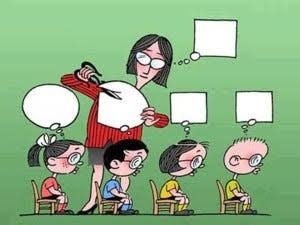
Does School Limit Creativity?
A child sits at a desk.
A blank sheet of paper rests in front of them.
The instruction is simple:
“Draw anything you want.”
The child begins immediately.
A purple sun appears.
A house floats above the ground.
Animals talk.
Trees have faces.
The rules of reality are flexible.
The imagination is wide open.
Then something changes.
Years pass.
The same student receives another blank page.
“Create anything.”
The hesitation arrives.
The questions begin.
“What are they expecting?”
“How will this be graded?”
“What is the correct answer?”
The blank page becomes heavier.
The imagination becomes quieter.
Something happened between those two moments.
The child did not lose creativity.
They learned to protect it.
This raises one of education’s most debated questions:
Does school limit creativity?
The answer is complicated.
School does not inherently destroy creativity.
At its best, education expands creativity by providing knowledge, tools, and opportunities to explore.
But certain educational structures can unintentionally restrict creative thinking.
When memorization replaces curiosity.
When conformity replaces experimentation.
When correct answers become more valuable than original questions.
The problem is not learning.
Learning is the foundation of creativity.
The problem is an environment where students learn that creativity is secondary.
Because creativity is not an optional feature of intelligence.
It is one of the ways intelligence operates.
The Relationship Between School and Creativity
School exists to create understanding.
It teaches language.
Mathematics.
Science.
History.
Critical thinking.
These foundations matter.
A person cannot create meaningful solutions without knowledge.
Creativity does not emerge from emptiness.
It emerges from connection.
The more information a person possesses, the more material the mind has available to combine.
A scientist needs scientific knowledge to develop theories.
A musician needs musical understanding to compose.
A writer needs language to communicate ideas.
Education provides ingredients.
Creativity determines what can be made from them.
The tension appears when education focuses so heavily on delivering information that students lose opportunities to transform it.
Learning becomes consumption.
Creativity requires participation.
Why Schools Sometimes Restrict Creative Thinking
The traditional classroom has certain priorities.
Efficiency.
Consistency.
Measurement.
Standardization.
These goals are understandable.
Teachers work with many students.
Schools need ways to evaluate progress.
Systems require structure.
But creativity does not always fit neatly inside these systems.
Creative thinking is unpredictable.
It produces different outcomes.
It follows unusual paths.
It asks unexpected questions.
A standardized environment can struggle with anything that does not have a single answer.
The result is not always intentional.
Schools rarely tell students:
“Do not be creative.”
Instead, students may receive subtle messages.
Follow instructions.
Avoid mistakes.
Stay within the expected boundaries.
Over time, these messages influence behavior.
The Power and Problem of Correct Answers
Correct answers are valuable.
They represent understanding.
A student solving a mathematical problem correctly demonstrates knowledge.
A student remembering historical facts demonstrates learning.
Accuracy matters.
The issue appears when correctness becomes the only measure of intelligence.
Creativity often begins where certainty ends.
A creative thinker asks:
“What else could be true?”
“What other approach could work?”
“What assumptions are hidden here?”
These questions may not immediately produce a correct answer.
They produce exploration.
And exploration is where innovation begins.
A classroom focused only on answers may unintentionally teach students to stop searching.
The Fear of Being Wrong
One of creativity’s greatest enemies is fear.
Not lack of intelligence.
Not lack of imagination.
Fear.
Students quickly learn what receives approval.
They notice which answers teachers celebrate.
They notice which mistakes create embarrassment.
They adapt.
A student who once freely experimented may eventually decide that safety is better than originality.
This is not because students become less creative.
It is because creativity requires vulnerability.
To create something new means risking something unfamiliar.
A new idea can fail.
A different approach can be rejected.
A unique perspective can be misunderstood.
Creative environments reduce that fear.
They communicate:
Try.
Explore.
Revise.
Learn.
A Lesson I Learned From a Classroom Moment
I once watched a student present a project that looked completely different from the work of everyone else.
The assignment had clear requirements.
Most students followed familiar formats.
The student chose another direction.
The presentation was unconventional.
The structure was unusual.
The visuals were unexpected.
The first reaction from some people was uncertainty.
It did not immediately look like the “best” project.
Then the student explained the thinking behind it.
The unusual choices were intentional.
Every decision connected to the central idea.
The project demonstrated something important.
The student was not ignoring the assignment.
The student was interpreting it.
That moment stayed with me because it revealed the difference between compliance and creativity.
A creative student does not simply complete a task.
They engage with it.
They transform it.
Creativity Requires Space
Creative thinking needs room.
Not unlimited freedom.
Space.
Space to question.
Space to experiment.
Space to reflect.
Many school environments are highly structured.
Students move from one subject to another.
One assignment to another.
One deadline to another.
Structure creates organization.
But excessive structure can leave little room for exploration.
A student who never has time to wonder may become skilled at completing tasks without developing curiosity.
Creativity requires moments where the mind can wander.
Where unexpected connections can form.
Where ideas can develop slowly.
Comparison Table: Traditional School Structures vs. Creativity-Focused Learning
| Learning Area | Traditional Approach | Creativity-Focused Approach |
|---|---|---|
| Primary Goal | Master established knowledge | Apply knowledge in new ways |
| Student Role | Follow instructions | Explore possibilities |
| Assessment | Focus on correct answers | Includes process and originality |
| Mistakes | Often penalized | Used as learning opportunities |
| Questions | Usually answer-focused | Encouraged as exploration |
| Assignments | One expected outcome | Multiple possible solutions |
| Teacher Role | Information provider | Guide and facilitator |
| Learning Style | Memorization and repetition | Experimentation and creation |
| Classroom Culture | Consistency and compliance | Curiosity and discovery |
| Problem Solving | Find existing solutions | Develop new approaches |
Neither approach exists in isolation.
Strong education requires knowledge and creativity.
The challenge is balance.
Does Testing Reduce Creativity?
Testing itself is not the enemy of creativity.
Assessment can reveal understanding.
The issue is what gets measured.
When students believe only measurable answers matter, they may prioritize performance over exploration.
Creative abilities are harder to evaluate.
How do you measure curiosity?
How do you measure originality?
How do you measure a question that changes how people think?
Some of the most valuable forms of intelligence are difficult to score.
This does not mean schools should abandon assessment.
It means assessment should recognize different forms of thinking.
The Role of Teachers
Teachers have enormous influence over creative development.
A teacher can transform the same curriculum into two completely different experiences.
One classroom says:
“Memorize this.”
Another says:
“Understand this. Then show me what you can do with it.”
The difference is profound.
Creative teachers encourage:
-
Questions
-
Discussion
-
Exploration
-
Alternative solutions
-
Personal interpretation
-
Experimentation
They do not remove structure.
They use structure as a foundation.
The goal is not chaos.
The goal is possibility.
Why Curiosity Often Declines
Young children ask endless questions.
Why?
Because the world is new.
Everything is worth exploring.
As students progress through school, many become more cautious.
They learn patterns.
They understand expectations.
They begin predicting what answers will be rewarded.
This ability can help academic performance.
But it can also reduce exploration.
The challenge is preserving curiosity while developing knowledge.
Education should not replace curiosity with certainty.
It should strengthen curiosity with understanding.
Creativity and Memorization Can Coexist
There is a common misunderstanding.
People sometimes believe creativity requires rejecting traditional learning.
It does not.
A creative person needs foundations.
A composer studies music theory.
An architect studies engineering.
A scientist studies existing research.
Knowledge creates possibilities.
The issue is not memorization itself.
The issue is stopping there.
Memorization provides the materials.
Creativity builds something new.
The Importance of Play in Education
Play is often associated with younger children.
But play represents a powerful learning method at every age.
Play encourages:
Experimentation.
Risk-taking.
Problem-solving.
Adaptation.
A student designing a game is learning systems thinking.
A student creating a model is learning engineering.
A student exploring an idea is practicing innovation.
Play removes some of the fear around failure.
It reminds students that learning can involve discovery.
Why Creative Students Need Autonomy
Creativity requires ownership.
When students have no control over their learning, they may become passive.
Autonomy changes the relationship.
A student choosing a topic.
Selecting a method.
Developing an interpretation.
Becomes personally connected to the work.
Ownership creates investment.
Investment creates deeper thinking.
Creative classrooms provide guidance while allowing independence.
The Hidden Creativity Within Every Subject
Creativity is often associated with art.
Painting.
Music.
Writing.
Design.
But every subject contains creative opportunities.
Mathematics involves discovering patterns.
Science involves imagining explanations.
History involves interpreting perspectives.
Language involves creating meaning.
Creativity is not a subject.
It is a way of approaching subjects.
Why Schools Should Not Be Blamed Completely
It is easy to criticize schools.
Some criticism is justified.
Some structures do limit creativity.
But the situation is more complex.
Schools reflect society.
They respond to expectations.
Parents.
Communities.
Institutions.
The pressure for measurable outcomes comes from many directions.
Changing education requires understanding the entire system.
Creativity is not restored by removing structure.
It is restored by creating a better relationship between structure and exploration.
The Future of Education and Creativity
The world students enter after school will not simply reward memorization.
It will reward adaptability.
Problem-solving.
Original thinking.
The ability to learn continuously.
Creativity becomes increasingly important because challenges rarely arrive with instructions.
Students need more than answers.
They need the ability to create answers.
Education’s purpose is not merely preserving what is known.
It is preparing people to discover what is not yet known.
The Real Question Is Not Whether School Limits Creativity
The deeper question is:
What kind of school environment are we creating?
A school can limit creativity.
A school can also expand it.
The difference lies in culture.
Do students feel safe asking questions?
Do teachers value unusual ideas?
Do assignments allow interpretation?
Are mistakes treated as information?
Are students taught to think or simply to remember?
Creativity does not disappear because students enter school.
It disappears when students learn that creativity is inconvenient.
The child drawing a purple sun was not wrong.
The child was exploring.
The student questioning a problem was not being difficult.
The student was thinking.
The unusual idea was not a distraction.
It was the beginning of something.
Education should not be the place where imagination goes to become smaller.
It should be the place where imagination gains tools.
Knowledge gives creativity direction.
Creativity gives knowledge purpose.
The greatest classrooms are not those where every student reaches the same answer.
They are those where students learn how to discover answers that nobody has considered yet.
- Arts
- Business
- Computers
- Игры
- Health
- Главная
- Kids and Teens
- Деньги
- News
- Personal Development
- Recreation
- Regional
- Reference
- Science
- Shopping
- Society
- Sports
- Бизнес
- Деньги
- Дом
- Досуг
- Здоровье
- Игры
- Искусство
- Источники информации
- Компьютеры
- Личное развитие
- Наука
- Новости и СМИ
- Общество
- Покупки
- Спорт
- Страны и регионы
- World

 English
 French
 Spanish
 Portuguese
 Deutsch
 Turkish
 Dutch
Dutch
 Italiano
 Arabic
 Romaian
 Portuguese (Brazil)
 Greek
Greek