
How are goods shipped internationally?
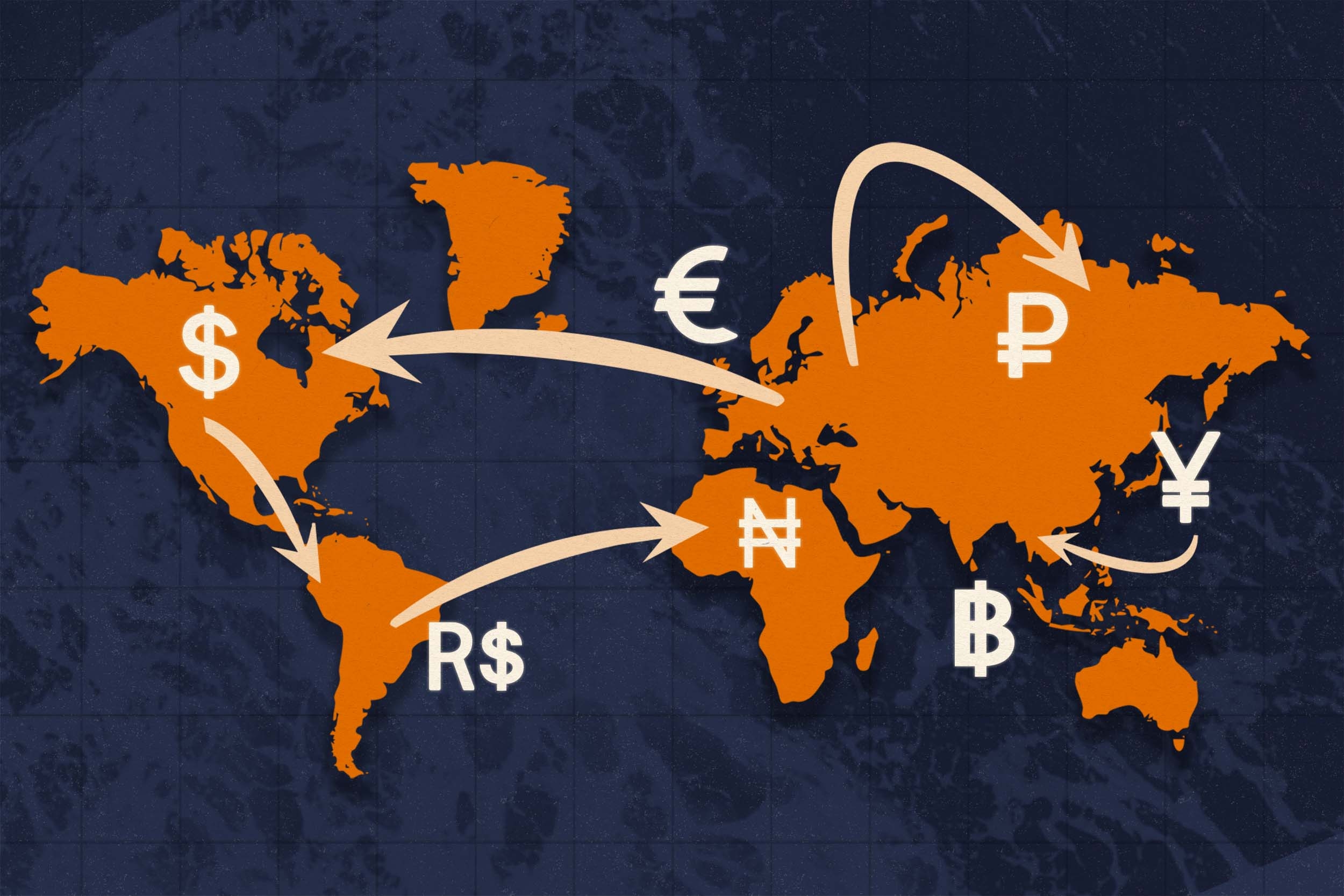
How Are Goods Shipped Internationally?
The Invisible Journey Behind Everything We Buy
A few years ago, I stood on the edge of a container terminal before sunrise, watching a crane lower a steel box onto a vessel bound for Asia. The operation seemed almost casual. No dramatic speeches. No frantic activity. A few radio calls, a burst of hydraulic motion, and another container disappeared into a stack hundreds of feet long.
Yet inside that box were machine components manufactured in Ohio, scheduled to arrive at a factory thousands of miles away with almost no room for delay. If they arrived late, production would stop. If customs paperwork contained an error, the cargo could sit idle for days. If a storm forced a rerouting, schedules across multiple countries could unravel.
That morning offered a useful reminder: international shipping appears simple only because an astonishing amount of complexity remains hidden.
Every imported coffee bean, smartphone, automobile component, and pharmaceutical ingredient travels through a choreography involving carriers, ports, customs agencies, freight forwarders, warehouses, insurers, and digital tracking systems. The global economy rests upon these movements. Yet few people understand how goods actually travel from one country to another.
The answer is neither singular nor straightforward. International shipping is a system of systems—a sprawling network designed to move cargo across oceans, borders, and continents while minimizing cost, time, and risk.
The Four Main Methods of International Shipping
International cargo generally moves through four transportation modes: ocean freight, air freight, rail freight, and road transport.
Each serves a distinct purpose.
| Shipping Method | Typical Transit Time | Relative Cost | Best For | Key Limitation |
|---|---|---|---|---|
| Ocean Freight | 15–60 days | Lowest | Large-volume cargo | Slow transit |
| Air Freight | 1–7 days | Highest | High-value or urgent goods | Expensive |
| Rail Freight | 10–25 days | Moderate | Eurasian trade routes | Geographic limitations |
| Road Transport | 1–14 days | Moderate | Regional cross-border trade | Limited range |
Despite headlines about aviation and high-speed logistics, ocean freight remains the backbone of global commerce. Roughly 80% of world merchandise trade by volume moves by sea.
That statistic often surprises people. We tend to associate globalization with airplanes. In reality, globalization travels inside steel containers stacked on vessels longer than aircraft carriers.
Ocean Freight: The Workhorse of Global Trade
Why Ships Dominate
A container vessel can carry tens of thousands of containers during a single voyage.
The economics are difficult to ignore.
Shipping a forty-foot container from East Asia to North America may cost thousands of dollars. Airfreight moving the same quantity could cost several times more. For commodities, consumer goods, industrial equipment, furniture, and raw materials, ocean shipping remains unmatched.
The process begins long before a ship leaves port.
Exporters prepare cargo and load it into containers. Those containers travel by truck or rail to a seaport. At the terminal, cranes transfer them into designated positions aboard a vessel according to detailed loading plans.
The ship then follows a scheduled route, often stopping at multiple ports before reaching its destination.
A single shipment may pass through several countries without ever being unloaded.
The Container Revolution
The modern shipping industry owes much of its efficiency to the standardized shipping container.
Before containers became widespread, cargo was loaded piece by piece. Crates, barrels, sacks, and machinery required separate handling. Loading a vessel could take days.
Containers transformed the process.
Today, a factory in Vietnam can load products into a container that remains sealed until it reaches a warehouse in Chicago. The cargo may travel by truck, ship, rail, and truck again without being repacked.
This simple steel box dramatically reduced costs, accelerated transit times, and reshaped international trade patterns.
Air Freight: Speed at a Premium
Sometimes waiting several weeks is not an option.
A semiconductor manufacturer facing a production shortage cannot afford a month-long ocean voyage. Neither can hospitals awaiting specialized medical equipment.
That is where air freight enters the picture.
Cargo aircraft transport goods across continents within hours. Even accounting for customs clearance and ground handling, shipments often arrive within a few days.
What Typically Travels by Air?
Air freight is commonly used for:
-
Electronics
-
Pharmaceuticals
-
Luxury goods
-
Critical spare parts
-
Fashion merchandise
-
Perishable products
The tradeoff is cost.
Air cargo rates can be several times higher than ocean freight rates. Consequently, businesses usually reserve air transportation for goods whose value or urgency justifies the expense.
The logic resembles choosing between a taxi and a cargo ship. One arrives quickly. The other arrives economically.
Rail Freight: The Middle Ground
Rail transportation occupies a fascinating niche.
Neither as fast as airplanes nor as inexpensive as ocean vessels, rail offers a compromise that has gained importance on routes connecting Asia and Europe.
Freight trains crossing Central Asia can transport cargo in roughly half the time required by ocean shipping while costing significantly less than air transport.
For manufacturers balancing inventory costs against transportation expenses, this middle option can be attractive.
Still, rail networks remain constrained by geography. Oceans cover much of the planet, and not every trade route benefits from continuous rail infrastructure.
As a result, rail complements rather than replaces maritime transportation.
Road Freight: The Essential Connector
No matter how sophisticated the global shipping network becomes, trucks remain indispensable.
A vessel cannot deliver cargo directly to a retail store. An aircraft cannot unload merchandise at a manufacturing plant.
Road transportation bridges these gaps.
Truck operators move shipments:
-
From factories to ports
-
Between warehouses
-
Across neighboring countries
-
From distribution centers to final destinations
In many respects, trucks perform the least glamorous yet most critical role in international logistics. They connect every other transportation mode into a functioning network.
Without them, global trade would resemble a collection of disconnected islands.
The Role of Freight Forwarders
Ask newcomers to international trade what happens after goods leave a factory, and many imagine the exporter simply calling a shipping company.
Reality is more layered.
Most businesses rely on freight forwarders.
A freight forwarder acts as an orchestrator rather than a transporter. These firms coordinate carriers, documentation, customs procedures, insurance arrangements, warehousing, and delivery schedules.
Think of them as travel agents for cargo.
Their expertise becomes especially valuable when shipments involve multiple transportation modes or several countries.
A shipment moving from a factory in inland China to a retailer in Germany may involve trucking, rail transport, ocean freight, customs clearance, warehousing, and final delivery. Freight forwarders coordinate these moving pieces into a single process.
Customs: The Border Nobody Can Ignore
Transportation receives most of the attention. Customs often determines whether shipments arrive on time.
Every country regulates imports and exports through customs authorities.
Before goods can enter a nation, importers typically must provide documentation describing:
-
Product classifications
-
Country of origin
-
Commercial value
-
Quantity
-
Applicable duties and taxes
Errors can prove expensive.
I once observed a shipment delayed because a product description lacked sufficient specificity. The cargo itself was perfectly legitimate. The paperwork was not.
Several days passed before the issue was resolved.
That lesson remains memorable: containers move quickly; administrative mistakes do not.
Documentation That Keeps Cargo Moving
International shipping depends heavily on paperwork and digital records.
Among the most important documents are:
Commercial Invoice
The seller's official bill describing the transaction.
Packing List
A detailed inventory of cargo contents.
Bill of Lading
A transport document issued by the carrier that serves as evidence of shipment and ownership rights.
Certificate of Origin
A document identifying where products were manufactured.
Customs Declarations
Required filings submitted to government authorities.
Without accurate documentation, even the fastest transportation system can grind to a halt.
Technology's Growing Influence
Modern international shipping increasingly relies on technology.
Real-time tracking allows companies to monitor shipments across oceans and continents. Automated customs systems accelerate regulatory reviews. Data analytics help carriers optimize routes and predict delays.
Yet technology has not eliminated uncertainty.
Weather disrupts schedules.
Port congestion emerges unexpectedly.
Labor disputes interrupt operations.
Geopolitical tensions alter established trade routes.
Global logistics remains a human enterprise operating within an unpredictable world.
The technology improves visibility. It does not guarantee perfection.
How a Typical International Shipment Moves
To understand the entire process, consider a manufacturer exporting products overseas.
-
Goods are produced and packaged.
-
Export documentation is prepared.
-
Cargo is collected by truck.
-
Shipment arrives at a port or airport.
-
Export customs clearance occurs.
-
Goods are loaded onto the carrier.
-
International transportation begins.
-
Cargo arrives in the destination country.
-
Import customs clearance takes place.
-
Duties and taxes are paid if required.
-
Goods move to a warehouse or distribution center.
-
Final delivery reaches the customer.
The sequence appears linear on paper.
In practice, dozens of organizations interact simultaneously. Coordination, not transportation, often becomes the greatest challenge.
The Economics Behind Shipping Decisions
Businesses rarely ask, "What is the fastest option?"
They ask a more difficult question:
"What is the most efficient balance between cost, speed, reliability, and inventory risk?"
A shipment of low-cost furniture may spend weeks crossing an ocean because transportation savings outweigh the value of faster delivery.
A shipment of specialized microchips may travel by air because production downtime would cost far more than premium freight charges.
International shipping is therefore not merely about movement. It is about optimization.
Every route reflects a financial calculation.
Every transportation choice reveals a tradeoff.
Conclusion: The Global Economy's Quiet Machinery
Most people never see the machinery that moves global commerce. They encounter only the outcome: stocked shelves, available products, and reliable supply.
Yet behind every imported item lies a journey involving containers, cranes, customs officers, freight forwarders, ports, trucks, trains, aircraft, and ships operating across multiple jurisdictions.
The remarkable fact is not that disruptions occasionally occur.
The remarkable fact is that the system functions at all.
Millions of shipments cross borders each year, threading through oceans, regulations, languages, and time zones. The process is neither elegant nor simple. It is messy, negotiated, and perpetually vulnerable to disruption.
And yet modern life depends upon it.
The next time a package arrives at a warehouse, a retail store, or a front door, consider the distance it has traveled. The true marvel is not the product itself. It is the vast logistical architecture that delivered it there—an architecture so effective that most of us rarely notice it exists.
- Arts
- Business
- Computers
- الألعاب
- Health
- الرئيسية
- Kids and Teens
- مال
- News
- Personal Development
- Recreation
- Regional
- Reference
- Science
- Shopping
- Society
- Sports
- Бизнес
- Деньги
- Дом
- Досуг
- Здоровье
- Игры
- Искусство
- Источники информации
- Компьютеры
- Личное развитие
- Наука
- Новости и СМИ
- Общество
- Покупки
- Спорт
- Страны и регионы
- World

 English
 Russian
 French
 Spanish
 Portuguese
 Deutsch
 Turkish
 Dutch
Dutch
 Italiano
 Romaian
 Portuguese (Brazil)
 Greek
Greek