
Why is critical thinking important?
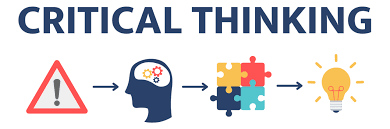
The Unseen Current
We are drowning in a sea of voices we didn't invite into the room.
From the moment we open our eyes in the morning, a relentless, invisible tide of information slams against our consciousness. It arrives via the glass rectangles in our pockets, the casual remarks of our neighbors, the architecture of our workplaces, and the unexamined habits of our families. Every voice claims to carry a fact. Every signal demands our immediate allegiance, our anger, or our currency.
Most of us do not live our lives. We are lived by the momentum of the crowd.
We assume we are driving the car because our hands are resting on the wheel. But if you look closely at the navigation system, you realize the destination was programmed by a stranger who died before you were born, or by an algorithm designed to keep your blood pressure slightly elevated so you stay glued to a screen.
   [ THE INCOMING FLOOD ] (Algorithms, dogmas, loudest voices)
              │
              ▼
    [ THE AUTOMATIC REFLEX ]   <─── Outrage, compliance, comfort seeking
              │
              ▼  (The Act of Friction / The Interrogation)
    [ THE CRITICAL FILTER ]
              │
              ▼
    [ THE SOVEREIGN SELF ]     ──► Action born from direct sight
To ask why critical thinking is important is to ask why a deep-sea diver needs an oxygen tank. It is not an ornamental skill for the academic elite. It is the solitary defense mechanism of the human soul against total colonization. Without it, you are not a person; you are an echo chamber for a broadcast you didn't choose to play.
The Price of the Unchecked Input
The mind is a highly resonant instrument. Whatever you place inside it will eventually determine the music it plays. If you allow the noise of the public square to enter your temple without an inspection at the border, you will inevitably begin to experience an internal thinning of the air.
You become predictable. You become manageable.
The Erosion of Sovereignty
When a culture stops practicing the difficult art of interrogation, it reverts to a primitive state of tribal mechanics. Safety is no longer found in truth; it is found in conformity.
-
The curated illusion: We are fed a diet of highly processed narratives. They are designed to feel clean, symmetrical, and emotionally satisfying. True reality is always jagged, contradictory, and entirely unconcerned with our emotional comfort.
-
The weaponization of the immediate: The modern landscape thrives on speed. We are pushed to have an opinion on complex historical events three seconds after they appear on our feed. This speed kills depth. It replaces the slow, heavy work of understanding with the cheap high of instant judgment.
-
The fatigue of the receiver: When the mind is constantly bombarded by alarms, the delicate internal wiring begins to fuse. We lose our capacity for nuance. We look at a multifaceted human being and reduce them to a single tag, a color, or an ideology.
The Sanctuary of the Friction
Critical thinking is the introduction of a deliberate, radical friction into this automated pipeline. It is the act of stepping back from the conveyor belt, looking at the object everyone is rushing to buy or condemn, and asking: What is this actually made of?
It requires you to be comfortable with the feeling of isolation. The moment you refuse to adopt the consensus view without an inspection, you become an anomaly in the system. The tribe will look at you with suspicion because your silence acts as a mirror to their own unthinking surrender.
A Lesson from the Overdriven Tape
A few years ago, I sat in a tracking room with an engineer who was widely considered a master of modern audio mastering. He had a reputation for making records sound incredibly loud. His mixes were punchy, aggressive, and jumped out of small consumer speakers with a terrifying amount of energy. On paper, and on the sales charts, his methodology was a triumph.
He had been hired to master an acoustic album for an artist whose music was born out of deep silence—sparse fingerpicking, long pauses between verses, and a voice that sounded like a whisper in an empty church.
The engineer went to work using his standard blueprint. He applied heavy dynamic compression. He raised the low-level signals so the quietest breath was just as loud as the loudest guitar strum. He polished the top end until it shimmered with artificial brightness. He brought the entire record up to the maximum volume allowed by digital formats.
[ Traditional Master Blueprint ] ──► Heavy Compression ──► Uniform Loudness ──► Flattened Peaks ──► Exhausted Ear
[ Critical Interrogation ]       ──► Embracing Silence ──► Restoring Valley ──► Dynamic Breath  ──► Pure Resonance
When he played the result for us, the sound was undeniably massive. It hit the chest like a wall of concrete. But within three minutes, my ears began to ache. The tension in the room skyrocketed. The singer sat on the couch, looking down at the floorboards with a look of profound sickness.
The engineer was ecstatic. He pointed to his meters. He showed us the digital graphs that proved the sound occupied every square inch of the available frequency spectrum. He was letting his tools tell him what taste looked like. He had a pre-recorded definition of success that he had imported from his work with pop and rock bands.
"Look at the meters," he said. "It’s statistically perfect. It will compete with anything on the market."
"The meters are correct about the volume," I told him. "But they are lying about the music. You have killed the valleys to save the mountain."
I reached over and turned the main monitor volume down by twelve decibels, then asked him to bypass all of his limiters and compressors, returning the file to its raw, unpolished state.
The immediate result felt small, quiet, and slightly dark. The engineer winced. But as we sat there in the lower volume, something miraculous happened. The room began to breathe again. You could hear the actual space of the timber walls where the microphone was placed. You could feel the terrifying weight of the silence between the words. The valleys were restored, and because the valleys were deep, the peaks felt like an explosion of genuine human emotion when they finally arrived.
The engineer had to confront the reality that his highly optimized definition of "excellence" was actually a form of violence against the specific truth of that artist’s soul. He had to think critically about his own tools—not because the tools were broken, but because his uncritical reliance on them had made him deaf to the actual event occurring in his ears. He had to unlearn his success to hear the music.
The Landscape of Sovereign Inquiry
Critical thinking is not a single, sterile act of calculation. It is a multi-layered discipline that shifts according to the nature of the distortion it encounters.
| The Layer | The Automatic Default | The Critical Action | The Sovereign Yield |
| Intellectual | Accepting information because it originates from an accredited hierarchy. | Demanding to see the raw matter beneath the institutional seal. | Protection from the professional class of narrative architects. |
| Somatic | Reacting to a provocative headline with immediate physical tension or outrage. | Pausing at the drop; tracking the chemical surge before choosing a response. | Autonomy over your own nervous system; refusing to be a puppet for an algorithm. |
| Cultural | Adopting the morals, aesthetics, and values of your immediate peer group for safety. | Standing on the edge of the circle; questioning the cost of your membership. | The ability to see your neighbors as individuals rather than a collective force. |
| Historical | Believing that the current way of living is the permanent, inevitable peak of human progress. | Studying the ruins; recognizing that every empire felt indestructible the night before it fell. | Liberation from the urgency of the present; alignment with geological time. |
The Trap of the Cynical Fortress
There is a subtle, elegant decay that happens to individuals who discover the tools of critical inquiry but lack the courage to remain vulnerable. They become cynics.
They use their intellect exclusively as a shield to keep the world from touching them. They point out the flaws in every creation, the hidden motives in every act of generosity, and the hypocrisy in every movement for change. They become virtuosos of destruction, sitting in the gallery and throwing stones at the people who are actually down in the dirt trying to build something out of the mud.
This is not critical thinking. This is just an advanced form of cowardice.
   [ THE CYNIC ] ──► Dissects to destroy ──► Seeks safety ──► Becomes a stone
   [ THE SEEKER ]──► Dissects to clarify ──► Seeks truth  ──► Becomes a window
The true purpose of the critical filter is not to isolate you from the world; it is to ensure that when you finally do love a thing, or trust a thing, or commit your life to a thing, you are doing so with your eyes wide open. It is meant to clear away the dead brush so the real fire has room to burn. If your critique does not eventually lead to a deeper state of devotion, it is just a sophisticated way of rotting on the branch.
We must remain slightly disrespectful of our own skepticism. If you only apply your critical tools to the things you already hate, you are just using logic to polish your own armor.
You must turn the knife upon your own preferences. You must ask why you are so eager to believe an ugly rumor about an enemy, and why you are so quick to forgive a lie told by a friend. If your critical thinking doesn't make your own identity feel uncomfortable at least once a week, you aren't thinking at all; you are just sorting your biases into a more attractive order.
The Awakening of the Receiver
We do not build the truth. We merely clear the field so it can show itself.
The world does not need more clever people who can construct elaborate arguments to defend their pre-existing tribal positions. The world is already choked to death by intelligence of that kind—it is the intelligence of the lawyer, the publicist, and the political operative. It is an intellect that serves power rather than reality. It is clean, it is well-funded, and it carries no life.
Critical thinking is the radical choice to return to the state of the witness.
It is the decision to lay down your credentials, your defense mechanisms, and your need to be viewed as correct by the crowd, and to simply stand before the raw phenomenon of existence without an intermediary. It is a terrifying way to live, because it means you can no longer rely on a script to tell you how to act on a Tuesday afternoon.
Turn off the machine that tells you how many people agree with your latest response. Walk away from the circle that demands you sign a pledge before you are allowed to see the sky. Sit in the quiet space until the vocabulary of the critics disappears from your nervous system. Trust the cold, clear sight of your own eyes, welcome the painful realization of your own illusions, and let the truth do the heavy lifting.
- Arts
- Business
- Computers
- Jogos
- Health
- Início
- Kids and Teens
- Money
- News
- Personal Development
- Recreation
- Regional
- Reference
- Science
- Shopping
- Society
- Sports
- Бизнес
- Деньги
- Дом
- Досуг
- Здоровье
- Игры
- Искусство
- Источники информации
- Компьютеры
- Личное развитие
- Наука
- Новости и СМИ
- Общество
- Покупки
- Спорт
- Страны и регионы
- World

 English
 Russian
 French
 Spanish
 Portuguese
 Deutsch
 Turkish
 Dutch
Dutch
 Italiano
 Arabic
 Romaian
 Greek
Greek