
How do employers evaluate critical thinking?
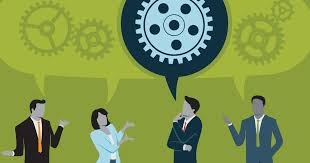
The studio is quiet. Most people, when they think about hiring, think about the resume. They think about the pedigree, the history, the checkboxes of a life lived in service to an industry. But the resume is just a list of things that have already happened. It’s an artifact.
If you’re looking for a person who can solve the problems you haven’t even named yet, you aren’t looking for a resume. You’re looking for a way of being. You’re looking for critical thinking.
The Myth of the Right Answer
In my work, I’ve found that the most interesting music doesn’t come from following a recipe. If you follow the rules of a genre, you’ll likely end up with something that sounds like everything else. It’s comfortable. It’s safe. It’s also invisible.
Employers often make the same mistake. They hunt for the "correct" answer in an interview. They ask a question, and they have a specific response in mind—a rigid, linear path from A to B. But life isn’t linear. Business isn’t linear. When we search for a specific answer, we miss the person who sees the room, the acoustics, and the energy. We miss the person who asks, "Why are we playing this song?"
Critical thinking isn’t about being smart. It’s about being awake. It’s the ability to step back, observe the structure of a problem, and realize that the frame you’ve been given might be the very thing preventing you from seeing the solution.
The Anatomy of Observation
A few years ago, I was working with a band that was struggling to capture the intensity of their live show in the studio. They were obsessed with the technical specs—the gear, the microphones, the isolation. They were so focused on the how that they’d lost the why.
I didn’t offer a technical solution. I just turned off all the lights. We sat in the dark for an hour. No talking. No playing. Just existence. When we finally started again, the sound changed. They weren’t playing to the equipment anymore; they were playing to the space.
When an employer evaluates a candidate, they should be looking for that same capacity to shift perspective. A person who can peel back the layers of a situation, identify the assumptions everyone else is taking for granted, and find the truth hiding in plain sight.
Evaluating Potential: A Framework
How do you measure something that isn’t a skill, but a state of mind? You don’t test for it with a multiple-choice sheet. You create a context for it to emerge.
| Method | Focus | Why It Works |
| Scenario Simulations | Applied logic in motion | Shows how they navigate uncertainty without a map. |
| Retrospective Analysis | The "why" behind past choices | Reveals the depth of their reflection and learning. |
| Cognitive Aptitude Tests | Raw pattern recognition | Filters for baseline logical consistency. |
| Peer/Manager Feedback | Real-world application | Validates how their thinking impacts the collective. |
The Art of the Provocative Question
Stop asking about accomplishments. Accomplishments are stories we tell ourselves after the fact. Instead, ask questions that force the candidate to build a world in front of you.
-
"Tell me about a time you were certain of something, only to discover you were completely wrong. What did that feel like?"
-
"If we had to solve [X] without using our usual resources, where would you start?"
-
"What is one industry ‘rule’ you think is actually a lie?"
These aren’t questions with right answers. They are invitations. They are prompts to see how a person processes information, how they handle the discomfort of the unknown, and whether they have the courage to trust their own observation over the established consensus.
Stillness as Strategy
There is a restlessness in the modern workplace. Everyone is in a rush to be productive, to output, to complete. But the most profound breakthroughs rarely happen during the scramble. They happen in the gaps.
If you are evaluating someone, look for the pause. Does this person jump to the first solution that pops into their head, or do they hold the question in their mind? Do they invite silence? Are they comfortable not knowing?
The best thinkers are the ones who aren't afraid of the empty page. They are the ones who understand that the most meaningful work begins only after we’ve stripped away the noise and returned to the essence of the problem.
The Final Note
We are all conditioned to look for someone who fits the shape of the hole we’ve cut out for them. But the people who change things don’t fit. They reshape the environment.
True critical thinking is an act of rebellion against the mundane. It is the ability to walk into a room, see the mess of data and conflicting opinions, and—instead of trying to organize the chaos—simply recognize the pattern.
Don't look for the candidate who knows the most. Look for the one who knows how to look.
- Arts
- Business
- Computers
- Juegos
- Health
- Home
- Kids and Teens
- Money
- News
- Personal Development
- Recreation
- Regional
- Reference
- Science
- Shopping
- Society
- Sports
- Бизнес
- Деньги
- Дом
- Досуг
- Здоровье
- Игры
- Искусство
- Источники информации
- Компьютеры
- Личное развитие
- Наука
- Новости и СМИ
- Общество
- Покупки
- Спорт
- Страны и регионы
- World

 English
 Russian
 French
 Portuguese
 Deutsch
 Turkish
 Dutch
Dutch
 Italiano
 Arabic
 Romaian
 Portuguese (Brazil)
 Greek
Greek