
How Do Gig Workers Get Paid?
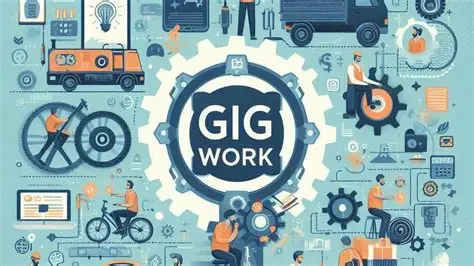
A customer orders dinner.
A driver picks it up.
The meal arrives twenty-seven minutes later.
The customer sees a receipt. The restaurant sees a sale. The platform records a transaction.
But what about the driver?
How does the money actually move?
It's a surprisingly important question because the gig economy depends on a delicate balance of incentives. Workers want flexibility, businesses want scalable labor, and customers want convenience. Payment sits at the center of that relationship.
If compensation feels unfair, workers leave.
If costs become excessive, platforms struggle.
If customers pay too much, demand declines.
The success of the gig economy depends not only on connecting people with work but also on creating payment systems that feel transparent, reliable, and worthwhile.
That is why understanding how gig workers get paid reveals far more than payroll mechanics. It provides insight into how modern labor markets function, how digital platforms create value, and why flexibility has become one of the defining characteristics of contemporary work.
What Is a Gig Worker?
A gig worker is an individual who earns income through short-term assignments, projects, or tasks rather than through traditional full-time employment.
Examples include:
- Ride-share drivers
- Delivery couriers
- Freelance designers
- Writers
- Consultants
- Virtual assistants
- Tutors
- Photographers
- Software developers
- Home service professionals
Rather than receiving a fixed salary, gig workers are typically compensated based on completed work.
The structure varies significantly depending on the platform and industry.
The Core Principle Behind Gig Payments
Traditional employees generally earn compensation based on time.
Gig workers typically earn compensation based on outcomes.
A completed ride.
A delivered package.
A finished design.
A successful consultation.
A published article.
The emphasis shifts from hours worked to value delivered.
That distinction fundamentally changes how income is calculated.
The Most Common Gig Payment Models
Not all gig workers get paid the same way.
Different industries rely on different compensation structures.
1. Per-Task Payments
This is the most recognizable gig payment model.
Workers earn money each time they complete a specific assignment.
Examples include:
- Delivering food
- Driving passengers
- Assembling furniture
- Completing home repairs
The more tasks completed, the greater the earnings.
This structure rewards productivity and efficiency.
2. Project-Based Payments
Many freelancers receive compensation for entire projects.
Examples include:
- Website design
- Marketing campaigns
- Video production
- Business consulting
- Content creation
Payment is tied to deliverables rather than individual actions.
The project outcome becomes the unit of value.
3. Hourly Contract Work
Some gig workers charge hourly rates.
This approach is common among:
- Consultants
- Coaches
- Tutors
- Technical specialists
- Legal professionals
The worker tracks time and invoices accordingly.
Although still flexible, this model resembles traditional employment more closely.
4. Retainer Arrangements
Experienced independent professionals sometimes establish recurring agreements.
Clients pay a fixed monthly fee for ongoing access to expertise.
Examples include:
- Fractional executives
- Marketing advisors
- Business strategists
- Legal consultants
Retainers introduce predictable recurring revenue for workers while providing clients with continuous support.
How Gig Platforms Process Payments
Most modern gig platforms manage payments internally.
The process generally follows a familiar sequence.
Step 1: Customer Pays
The customer completes payment through the platform.
Funds are collected immediately or authorized pending completion.
Step 2: Platform Holds Funds
The platform temporarily holds payment while verifying that services are completed successfully.
Step 3: Platform Deducts Fees
Service fees or commissions are removed according to platform agreements.
Step 4: Worker Receives Earnings
Remaining funds are transferred to the worker's account.
The process appears simple.
Behind the scenes, sophisticated systems manage compliance, fraud prevention, taxation, and payment security.
Understanding Platform Commissions
Many gig platforms generate revenue through commissions.
For example:
- A freelancer earns $500.
- The platform deducts a service fee.
- The worker receives the remaining balance.
The exact percentages vary considerably.
Workers effectively pay for access to customers, payment processing, trust mechanisms, and marketplace visibility.
The platform creates opportunity.
The commission funds the ecosystem.
The Growing Popularity of Instant Payouts
Historically, workers waited days or weeks for compensation.
Many platforms now offer near-immediate payments.
Popular payout options include:
- Daily transfers
- Instant withdrawals
- Debit card deposits
- Digital wallets
- Direct bank transfers
Faster access to earnings improves worker satisfaction and financial flexibility.
Income becomes available closer to the moment value is created.
Comparing Common Gig Payment Models
| Payment Model | How It Works | Best For | Income Predictability |
|---|---|---|---|
| Per Task | Paid for each completed assignment | Delivery, transportation | Variable |
| Project-Based | Paid per project | Creative and technical work | Moderate |
| Hourly | Paid by time worked | Consulting, tutoring | Moderate |
| Retainer | Fixed recurring fee | Advisory services | High |
| Commission-Based | Percentage of sales generated | Sales and partnerships | Variable |
Each model creates different incentives.
The optimal structure depends on the nature of the work.
Tips and Bonuses Matter More Than Many Realize
In some gig sectors, tips represent a meaningful portion of earnings.
Common examples include:
- Food delivery
- Personal services
- Hospitality-related work
Platforms may also offer:
- Peak-demand bonuses
- Referral incentives
- Performance rewards
- Completion milestones
These supplemental earnings can significantly influence worker behavior.
Payment structures shape participation.
What Gig Workers Actually Track
Many people assume gig workers focus exclusively on revenue.
Experienced workers often monitor something different.
Profitability.
Key metrics include:
- Gross earnings
- Platform fees
- Fuel expenses
- Equipment costs
- Software subscriptions
- Travel expenses
- Taxes
Income alone tells only part of the story.
Net earnings provide a more accurate picture.
Taxes and Independent Responsibility
One of the defining characteristics of gig work is personal financial responsibility.
Unlike traditional employees, many gig workers must manage:
- Tax withholding
- Retirement contributions
- Insurance planning
- Business expenses
- Record keeping
Flexibility increases autonomy.
It also increases accountability.
Successful independent workers often treat themselves as small business owners rather than temporary contractors.
A Lesson I Learned About Compensation
Several years ago, I worked with a membership organization exploring ways to recruit subject matter experts for educational programming.
Leadership focused almost exclusively on payment rates.
Would experts participate for a particular fee?
Should compensation increase?
Would higher rates attract stronger contributors?
Those questions mattered.
But interviews revealed something more interesting.
Many experts cared just as much about predictability as they did about compensation levels.
They wanted clear expectations.
Reliable payment schedules.
Transparent communication.
Respect for their time.
The organization simplified its payment process, standardized agreements, and improved communication.
Participation increased.
Not because payments became dramatically larger.
Because the overall experience became more trustworthy.
That lesson extends far beyond membership organizations.
People don't simply evaluate what they earn.
They evaluate how earning feels.
Why Transparency Matters
Gig workers make decisions constantly.
Which projects should they accept?
Which platforms should they prioritize?
Which clients deserve additional effort?
Clear compensation systems reduce uncertainty.
Workers generally want to understand:
- How earnings are calculated
- When payments arrive
- Which fees apply
- What bonuses are available
Transparency improves trust.
Trust improves retention.
Challenges Facing Gig Compensation Models
No payment system is perfect.
Several ongoing challenges continue shaping the gig economy.
Income Variability
Demand fluctuates.
Seasonality affects opportunities.
Worker earnings may change significantly month to month.
Platform Dependence
Workers sometimes rely heavily on a single marketplace.
Policy changes can affect income unexpectedly.
Fee Structures
Balancing platform sustainability with worker earnings remains an ongoing challenge.
Competitive Pressure
As marketplaces mature, workers often compete against larger pools of participants.
Differentiation becomes increasingly important.
The Future of Gig Payments
Payment systems continue evolving.
Artificial intelligence may improve project matching.
Real-time compensation forecasting may become more common.
Instant payouts will likely expand.
Cross-border payments will become easier.
Digital financial tools will give workers greater visibility into earnings and expenses.
Yet the underlying principle remains surprisingly stable.
Workers exchange expertise, effort, or time for compensation.
Technology changes the delivery mechanism.
It doesn't change the fundamental relationship.
Gig Workers Are Building Businesses, Not Just Completing Tasks
The public conversation often frames gig work as temporary.
A side hustle.
A transitional arrangement.
Sometimes that description fits.
Often it doesn't.
Many gig workers operate sophisticated independent businesses.
They cultivate clients.
Manage cash flow.
Invest in professional development.
Build reputations.
Develop recurring revenue streams.
They are entrepreneurs as much as contractors.
That distinction becomes increasingly important as flexible work continues expanding.
The Better Question
People frequently ask:
"How do gig workers get paid?"
The technical answer is straightforward.
Per task.
Per project.
Per hour.
Through retainers.
Via commissions.
Through platform payouts.
But a more revealing question is this:
"What kind of payment system keeps talented people engaged over time?"
The answer extends beyond compensation itself.
Workers want fairness.
Transparency.
Reliability.
Flexibility.
Predictability.
The most successful gig platforms understand that payment is not merely a transaction.
It is a relationship.
And the platforms that build strong, trustworthy relationships often discover something important.
When workers feel valued, customers receive better experiences.
When customers receive better experiences, businesses grow.
Payment becomes more than a transfer of money.
It becomes the mechanism that aligns value across an entire ecosystem.
- Arts
- Business
- Computers
- Jogos
- Health
- Início
- Kids and Teens
- Money
- News
- Personal Development
- Recreation
- Regional
- Reference
- Science
- Shopping
- Society
- Sports
- Бизнес
- Деньги
- Дом
- Досуг
- Здоровье
- Игры
- Искусство
- Источники информации
- Компьютеры
- Личное развитие
- Наука
- Новости и СМИ
- Общество
- Покупки
- Спорт
- Страны и регионы
- World

 English
 Russian
 French
 Spanish
 Portuguese
 Deutsch
 Turkish
 Dutch
Dutch
 Italiano
 Arabic
 Romaian
 Greek
Greek